
Retirement at age 65 is an artificial finish line that no longer fits our time.
More than 10 years ago, Peter broke the rules of conversation about retirement with his groundbreaking The New Retirement Story. He changed the story about retirement from one focused solely on money to one focused on creating a life and work you love and never want to retire from.
This seminar will discuss the confluence of four modern trends that herald the end of retirement thinking as we know it:
- The evolving pursuit of fulfillment in our times.
- The end of the paternalistic employer.
- The advent of dismantling ageism.
- Distribution-driven Armageddon for financial services.
Growing old with lots of money is no longer the goal. Dying rich can’t compete with living rich, and making a living doesn’t measure up to making a life. When the idea of retirement was born, people traded physical capital for a paycheck—and it was a practical necessity for people to retire. As a knowledge-based economy, intellectual capital, experiential capital, and relational capital are traded for a paycheck, leaving only one question to answer regarding the appropriate time to retire: What is the expiration date on my intellectual capital and on my experience? What those people still working in their 70s and even 80s will tell you is that they would be dead if they had not continued to engage their intellectual faculties.
Participants will understand the characteristics of the new story:
- Passion: If you don’t use you your body or your brain in your creative life and work, you lose them.
- Purpose: Money can fund purpose, but it cannot create purpose.
- Portfolio: There needs to be a balance between vacation and vocation.
- Power: A powerful story they tell themselves which gives them every day the energy to embark on physical, intellectual, and entrepreneurial adventures. Which are the hallmarks of those who continue to thrive as they age.
Peter will help seminar members find answers to the following questions:
- How will you spend your time? You have 168 hours a week; how will you make those hours meaningful?
- How will you invest yourself? How will you parlay what you know, what you’ve experienced, and who you are into the next phase of your life?
Practical Info
The price of this two day journey with Peter de Kuster is Euro 1.295 excluding VAT per person. There are special prices when you come with three or more travellers.
You can reach Peter for questions about dates and the program by mailing him at peterdekuster2023@gmail.com
TIMETABLE
09.40 Tea & Coffee on arrival
10.00 Morning Session
13.00 Lunch Break
14.00 Afternoon Session
17.00 Drinks
Read on for a detailed breakdown of The New Retirement Story
What Can I Expect?
Journey Outline
PART I OLD RETIREMENT MYTHS
- Times are Changing
- Old Messages, New Realities
- Illusions, Desillusions & Hype
- The Artificial Finish Line
- Retiring Old Stories about Retirement
- The Fatal Flaw
- Not My Parent’s Retirement
- 65 is old
- Retirement is Only about Money
- To Retire = Not Working
- A Life of Ease is the Ultimate Retirement Goal
- Remove Artificial Finish Lines
PART II PASSION NEVER RETIRES
- Re-inventing Retirement – New Pathways
- The Real Meaning of Work
- Brain at Work
- Testdrive Your Dreamjob
- Invest in Who You Are
- Collecting a Play Check
- Bridging the Gap between Means and Meaning
- The Seven Intangibles
- Return on Life
- Your Portfolio Life
- The Money/Life Puzzle
- Collecting Income for Life
- Maslow meets Money (Safety Money, Freedom Money, Money to Give, Dream Money)
- The Financial Freedom to Have a Creative Life
PART III. YOUR NEW STORY
- The Premise of your Story. The Purpose of your Life and Art
- The words on your tombstone
- Your ultimate mission, out loud
- Your Story about Working Longer
- Your Story about Living Longer
- The Seven Great Plots
- The Twelve Archetypal Heroines
- The One Great Story
- Purpose is Never Forgettable
- Questioning the Premise
- Lining up
- Flawed Alignment, Tragic Ending
- The Three Rules in Storytelling
- Write Your New Story
- Turning your story into action
- The Story Effect
- Story Ritualizing
- The Storyteller and the art of story
- The Power of Your Story
- Storyboarding
PART IV LIVE HAPPILY EVER AFTER
- Staying in the Zone
- Trust the Force
- The Power of Flow
- From Success to Purpose
- Meaningful Pursuits
- Your Next 100.000 Miles
- From Aging to S- Aging
About Peter de Kuster
Peter de Kuster is the founder of Passion Never Retires. Peter’s approach combines in-depth storytelling and marketing expertise, and for over 20 years clients have found it effective with a wide range of creative business issues.
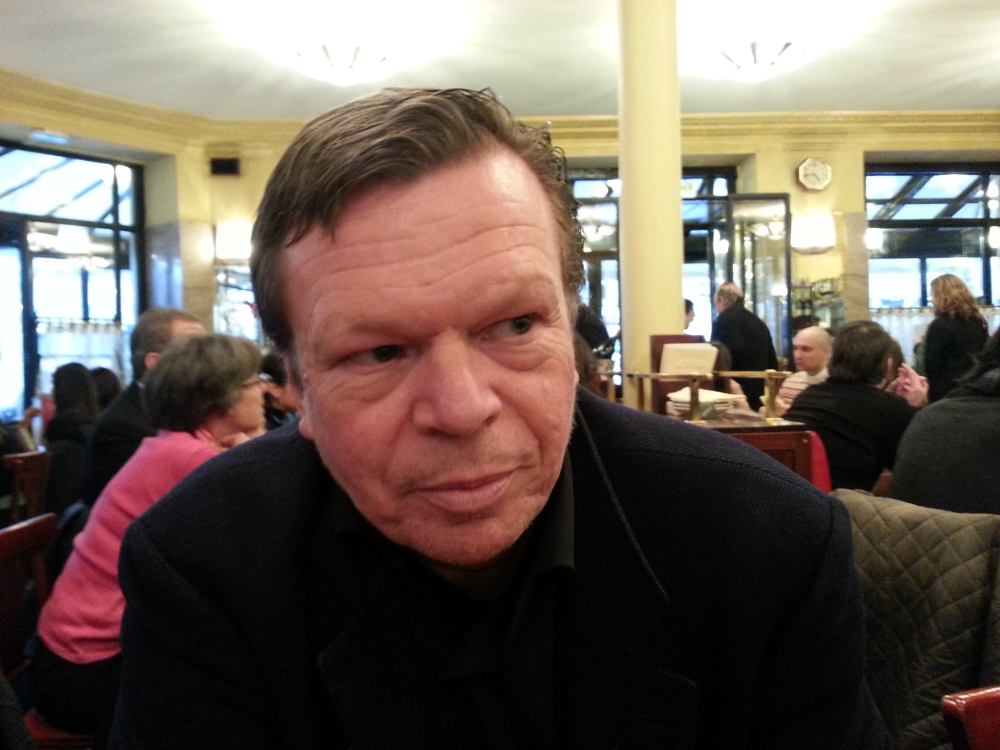
Peter is writer of the series The Heroine’s Journey and Hero’s Journey books, he has an MBA in Marketing, MBA in Financial Economics and graduated at university in Sociology and Communication Sciences.
Introduction: Times are Changing!
All you need to do is look around to see that times are changing. The vision of a retirement spent sipping martinis and playing golf can be more of a dead end than a dream. For many of us, retirement may span 30 years or longer and will not be viewed as an isolated economic event but rather a part of ongoing life planning.
The New Retirement Story is the ability to achieve the freedom to pursue your own goals, at your own pace, on your own terms … regardless of your age. The New Retirement Story will help you paint a detailed portrait of your own perfect future and show you how to achieve it.
One seminar I asked a group of business people: “What do you want to be when you grow up?”The emotional uncoiling that took place in the conversation that followed convinced me of a fact of modern life I was growing increasingly aware of: Far too many people are unhappy with the work they do.
Their responses revealed to me that many people deep down feel they have compromised, to varying degrees, who they are for what they can get. Even some of those who had the things they wanted often felt they were lacking in terms of fulfillment.
Have we become a lost generation that is huffing and puffing down a fast track to nowhere? Do we look only to the money sign for direction and have we lost recognition of all other standards for living? These questions led me ponder both what work and retirement have become in our society.
Traditional notions of retirement have evolved into something more. When people today talk of retiring, they are rarely speaking about retired living; they are usually speaking of emancipated living. They want to be free to pursue their goals, at their pace, and free to find a sense of balance in their lives.
Hundreds of personal interviews with professionals revealed two underlying problems:
1. Many people are indulging in their every material whim with little or no regard for their future, because they see no point in waiting until they are old to enjoy themselves.
2. Many others are burning the proverbial candle at both ends in jobs or environments they hate in order to get enough money to someday cut the cord and do what they want.
Both of these scenarios lead to the fatal flaw in traditional retirement – that work and enjoyment are compartmentalized into separate stages of life. I found people who had solved the retirement riddle by doing something they enjoy, feeling no need to quit (only slow down) and wanting to balance their lives among family, career, labor and leisure. They discovered a New Retirement Story in which they had nothing to retire from. And, they found the life they once thought was reserved for retirement.
The New Retirement Story recognizes how outdated and irrelevant the industrial age model of retirement has become in a day where ideas are the chief commodity of trade. this story recognizes the need for balance and the futility of trying to reserve work for one stage of life and leisure for the next.
This New Retirement Story requires a shift both in how we plan our lives and how we manage our resources. The work we must do is part philosophical and part fiscal. Those who have emancipated their lives have done so with wise, prudent resource management and with an uncompromising intolerance of all-consuming, dead-end working careers – no matter how materially satisfying those careers might be.
These changes are been in the air for some time. People intuitively recognize and agree with these changes. I was moved by the frustration and resignation I saw in so many people regarding retirement and I felt compelled to gather and articulate the ideas that consitute the New Retirement Story.
My hope is that you will see the goal for what it is – freedom. I want to see people embrace the truths that will bring freedom to them, both materially and philosophically. I find it difficult to believe that any life was designed for the sole purpose of gathering wealth. Although personal wealth can lead to greater autonomy, true freedom lies in discovering purpose in all aspects of our lives.
I hope this story can play a role in helping you define the life you want, at any age you choose.
Retiring Old Stories about Retirement
Face it, retirement is not a great idea, especially when you are 60+. In fact, retirement as we know it today is a relic from a time and a world that have long passed. In the context of our modern age conventional stories about retirement are not only inappropriate but they are counterproductive.
We are subjected daily to messages that pummel our brains with warnings that we should save more if we hope to leap off the economic cliff known as the retirement age. And many of us have been convinced that we want to jump off that cliff earlier – if possible, much earlier.
But do we really want to quit working? Sadly, because so many people are working in jobs, industries, and offices they hate, they have convinced themselves that the answer is the end of their working days (retirement). But the fact remains that they wouldn’t be obsessed with the idea of quitting if they were doing what they wanted with their life in the first place.
Many people think that the answer is to quit working altogether, because they don’t like the working circumstances they find themselves stuck in. This is akin to getting a frontal lobotomy simply because of a headache. Many others want to quit what they are doing now to be able to do something else; they need or want a change but are convinced that they need a mountain of money to make the switch. So they decide to postpone their dreams, assuming that when they finally acquire the required substance, they will have the drive and the desire necessary to follow their dreams.
People in these circumstances – and there are many – should stop to contemplate the psychologically sobering fact that as they drive themselves in a career they despise, they are running on tires with a slow leak. The ride often gets rougher and tougher until they find their aspirations in the ditch and little energy left to a new journey.
The same could be said for those who have a lukewarm approach to their work. Such a tepid approach results in a lack of growth, a lack of incentive and mental application, and compromised energy levels. When this lukewarm approach becomes our status quo, we are well on our way to a life and career of underachievement.
The Artificial Finish Line
Doing work we despise or being in circumstances we deplore depletes our spirit. The reason so many find themselves in such scenarios is because they have been sold on an idea about retirement that is flawed to the core: the idea that we should do what we do not enjoy to accumulate the money we need to someday do what we want.
This hope of doing what we want is why the concept of retirement is alluring to so many. Many individuals are not in the race they want to run in. They see getting to the retirement age with a mountain of money as the only way to get out that race. The problem is compounded when we realize that we have been convinced to run toward an artificial finish line in a race that was never meant to end. This artificial finish line is the retirement age, or whatever age you believe you should retire. The race is the employment of our skills and ideas as long as we still enjoy using them. If we truly love what we do, although we may slow down our pace or change the event we run in, we never truly quit the race.
And why have so many people given their life to work they don’t enjoy? The reason is simply because they need the money. Why do they need the money? So they can have enough to retire at a certain age and do what they want. Great! We sacrifice 40 prime productive years so we can have free reign for the autumn and/or winter years.
Although you may not have heard much about it, those who do get to the magic retirement age and drop out of the race are not altogether happy with their decision. They do it, however, because they felt as though they had to. Disillusionment rates are sky-high for retirees. According to one survey, 41 percent say retirement was the most difficult adjustment of their life and lack of intellectual stimulation that traditional retirement offers.
There is a good reason these retirees are not happy – retirement is an unnatural idea. The concept runs contrary to the preservation of the human spirit. Most people don’t want retirement as we know it. What they want is freedom to pursue their own goals and interests. They want to call their own shots. They want to do what they want, when they want, and where they want. They want change from the rut that their life of employment has become. We have been told that the right amount of money alone can buy that emancipation.
And that is why we are so vulnerable to the messages that tell us we need a certain amount of money to set ourselves free. But this simply is not true. This website is full of stories of people who are living the life they want – today – and not all have a lot of money. Because of twisted ideas about retirement, we have put the money cart ahead of the ‘life’ horse. We say we are saving money so that we can someday have a life, but in the process we are delaying having a life so that we can scrounge up enough money. Too many people wait far too long.
With some financial creativity and a new story regarding retirement you can both find and fund the life you really want – if not now, it is entirely possible within the next three to five years. Achieving emancipation from your working life will involve negotiating your lifestyle, philosophy and financial habits, and finding a way to put first things first. First, decide the heroine’s or hero’s journey you must take to do the work you love, and, second, put together a plan to pay for that privilege. We must adopt a much more resourceful approach if we hope to make the transition into a life of doing what we love.
Illusions, Delusions and Hype
If you were to ask me, ‘Who are the most tragic people you see’? I think my answer would surprise you. They are not the couples in their 50s who are discouraged to find out they will not be able to retire when they thought. They are not the people whose portfolios had had less than spectacular returns and must extend their plans for early retirement. They are the retirees who are bored out of their minds. These individuals feel like they have been removed from the mainstream of life, are watching from the sidelines and are not allowed to get back in.
Yet strangely enough, millions are in a mad rush to get to the place where these despondent people live – on the sidelines. Many of us, however, have already seen enough of our parents and forerunners’ retirement scenario’s to know that this is not the life for us. We have figured out that our life will be one of challenge, relevance, stimulation and occupational adventure. We are not interested in finishing this race!
Once people get the money they need, they are able to better understand what the money is all about – liberty to do what they want when they want. What is the point of using that kind of liberty to do nothing but play golf? It’s hard to convince someone who doesn’t have the money that it really is not about the money. It is about doing what you love, doing what you want. It is about balancing work and relationships.
This point became especially clear to me recently when a friend asked me if I had plans to retire early. I thought about it for a moment and then it dawned on me, I like what I do! I write, I speak, I travel with inspiring professionals about how to create a life and work they love. Why would i quit doing that? If I did quit, I think I would begin to self-destruct. This realization was important because it helped me to realize that I had no longer be concerned with having any specific amount of money at any age. There will always be something for me to do and I will always enjoy doing it. You don’t make plans to retire from your passion in life.
Does this idea cause me to spend away my future and disregard the value of my investment savings? To the contrary! Because I value freedom so much, I exercise the necessary discipline to maintain it. I know that I am just one foolish purchase or investment away from reattaching the chains of miserable employment to my life. There is wisdom in balance. Just because I love what I do does negate the need to plan for financial freedom. Life can present us wit vicissitudes that can radically alter our course: disability, a death in the family, divorce, and so on. We must plan ahead financially because we change our minds over time. What invigorates me today may bore me a decade from today. Investment savings are necessary to purchase the freedom to change course when we want.
Two types of people should forget their plans for complete retirement at 65 or earlier – those who can’t afford to retire at that age and those who can afford to retire at that age. Any age is an artificial finish line. A modern measure of success seems to be how many years you can retire ahead of age 65. Is accelerating your pace into boredom and despondency really such a good idea? On the other hand a modern measure of failure has been to measure how many years beyond 65 you had to wait so you could retire. The further past 65 you had to wait to retire, the greater failure you were in the context of retirement. Those measures are about to change. If the coming generation of 50+ year professionals has anything to say about it, those perceptions will be turned entirely on their head. Those who have to work will not be the losers, because they are still in the game and they will find that work keeps them vital, involved, and healthier. Those who will be able to drop out entirely will choose not to because they don’t want to enter a slow track of intellectual atrophy, boredom and monotonous leisure.
We are still in the early stages of a New Retirement Story – a modern story about what retirement really means. People are still haunted by the old rules and media hype that bemoan their lack of preparedness to reach the artificial goal line. You just can’t seem to get away from the news stories and the advertisements that beat this sorry old retirement horse to death.
Old Messages, New Realities
For many these stories and messages inspire urgency and thrift; for many others they inspire only fear, self – loathing, and hopelessness. Such messages as ‘You won’t have enough’ or ‘if you would have bought this fund 30 years ago it would be worth x million euros today’ create a sense of dread and failure in those listeners who were buying more ice creams and travels abroad with their disposable income 30 years ago.
For the millions of professionals who don’t own a fat nest egg these messages stir feelings of hopelessness because they are convinced that they will arrive at the age 65 economic leap with no safety net or precious metals parachute based on their current income and level of savings. They know they will never be able to amass the small fortune that ‘retirement experts’ tell them they must hoard to have anything but a beggar’s sunset in their life. The modern retirement portrait, as painted by the financial services industry, is truly a doubleheaded dragon, because the vision that has been promoted for the last 50 years is not only an illusion but is also unrealistic.
The illusion has been that of sipping tropical drinks on a beach and setting tee times for the rest of your waking life. “All this is yours” once you retire, and the earlier you retire the better. Possibly you’ve met some people who swalled this illusion and are living with the hangover of boredom and purposelessness in their life. I have met many such people and the look in their eyes inspired me to create Passion Never retires. Many who bought the story of retiring from the race find themselves bored with not being in the race. Many have found that this boredom has led them to self-destructive patterns of behavior. Many have accelerated their aging process as the chains of disenfranchised habits grew heavier and weighed on their health. It all adds up to one inescapable conclusion: retirement is an unnatural condition! Even if you can afford to retire, the worst thing you can do is withdraw completely from the race.
When you ask retirees how they’re doing, they often reply, ‘I’m keeping busy’. This is an acknowledgment of the activity void that retirement has brought. They are truly happy when they are busy doing what they love. If they are not busy, they are most likely not very happy.
The image of retirement that we have been sold has simply been untrue. According to recent surveys 40% of the retirees report that retirement was a difficult adjustment. The reason the adjustment to retirement is so difficult to so many is simple: retirement as it has been defined for us was never meant to be. Retirement is an illusion because those who can afford the illusion are disillusioned by it and those who cannot afford the illusion are haunted by it.
Which brings us to the dragon’s other head; many people cannot afford to retire in the manner that has been promoted by the retirement savings industry. It is simply unrealistic for many to find a way to put away enough money every month to have a million euros waiting to serve them at age 65 or at any other age for that matter. True, many people could save more as well as exercise more financial discipline. But why should the one-third of our population that is doing its best with what it has walk around feeling bad about today because it cannot reach a tomorrow that somebody else has defined for it?
Two problems are apparent with these pervasive and frequently reported scare tactics in the media. First, they can be easily disputed and disproven. Second these arguments are founded on a fabricated and now crumbling foundation – that is, we should retire at age 65 or even earlier if possible. Most of us will not completely retire at 65 or any other age for that matter. We, as a generation, are not interested in artificial finish lines.
The New Retirement Story Challenge
Quest-ion: Is the goal to be invested and well, or well and invested?
What is your story? Should I review my own story about retirement?
Research it: What am I saving? Where am I saving?
Decide and take action:
- Talk to my spouse or significant other about retirement.
- Collect and organize my financial information
THE GREAT RETIREMYTHS
We are going to talk now about the Retire Myths that have led to both dissatisfied retirements and the anxiety-ridden pursuit of a retirement dream. When you’ve finished this part, I hope you will have a more realistic picture of what you want from your money and your life.
You will be able to go to sleep at night knowing you no longer have to worry about being able to jump off an economic cliff at a certain age, an you will be able to wake each morning with a continuing sense of purpose for each upcoming day. Here are the myths that have ruled the concept of retirement up to the present:
- Age 65 is old
- Being retired means you’re not working
- You have to be 65 (or 66 or 67 or whatever fixed age) to do what you really want to do
- Retirement is an economic event exclusively
- A life of ease is the ultimate retirement goal
We will look further into these “Retire Myths”
65 IS OLD
Old ain’t what it used to be! Remember when the age for retirement was set; most people didn’t even live until retirement age. Now we live 20 to 30 years past the retirement age. The age of 65 in this day and age has little resemblance to the age of 65 in, say, 1960. Most people are not old at 65 today. They may or may not have slowed down.
It is ironic that our society, rather than adjusting to this longevity trend, continues to promote a retirement age that was established over 100 years ago when people lived to the ripe old age of 46. Even more ironic is that many, with wealth supplied by a robust and resilient economy, have convinced themselves to take up early retirement. Many of these people have failed to comprehend that if they retire at 55,for example, they will spend as many years in their retirement as they did in their entire working career. This is great if you have some invigorating and challenging pursuits before you in those 30 years. If you don’t, history shows that you will never see those 30 extra years.
How old will you be when you really become old? It seems that the answer to that question is as individual as the person answering it. We know that the marker for old is no longer 65. Some recent surveys show that most seniors now feel that the marker for old is somewhere between 80 and 5. Expect that number to keep moving up. Further in this story I will guide you in figuring out how old you truly ware in mind and body, and introduce you to people who are defying the so-called limitations of age. These individuals have not bought into the idea that they need to move aside for the next generation – or anyone else for that matter. They will leave the race when they are good and ready!
Retirement Means Not Working
The retirement of the future will no longer be a “cold turkey” abstinence from labor. The retirement of the future will be defined by one person – you! You will decide how much you want to work where you want to work, and when you want to work. The growing trends in workplace flexibility motivated by a tight labor market spell only freedom for you and your future.
People will design a retirement they can live with. This will mean working part-time for some and entering and exiting the job market as they wish for others. The two extremes of the old retirement model – all works or no work – is simply a relic of the past. In this story we explore the manifold possibilities for you and your work at any age.
You Have To Be 65 To Do What You Want to Do
Millions of people are sacrificing the present in hopes of following their heart at 65, or whatever other age they retire. Many people who want to pursue a passion or a new focus see this as their only hope. We have discovered many other options that people have exercised to free their life from the drudgery of draining and stressful toils to the avocational pursuits they had previously entertained only in their daydreams. There are many creative approaches available that you may have not yet considered – approaches that integrate your assets and your income with your passions and your life.
Is your life about making money or is your money about making a life? A theme that is strongly promoted in our society is that we should always choose the path with the biggest bucks. Consequently, many people put their soul’s work on the back burner while they travel a career path with the biggest bucks. Why? So they can someday have enough money to do what they really want. This flawed philosophy of putting first things second in our career and life is the reason why so many today are so motivated to retire, that is, so they can do what they want. They have chosen to use their life to make money rather than to use money to make a life. By using some innovative approaches to financial storytelling you can make the transition into what you want with your life.
This story provides a portrait of those who discovered what it takes to do what they want with their life – sooner instead of later. Many of these people have found work that feels like play. They are doing the thing that comes naturally and are getting paid to do it! With proper planning and prioritization, you can liberate yourself into a fulfilling pursuit of your uncharted passions within five years or less. All you have to decide is…. what you want to be when you grow up.
Retirement is an Economic Event
This implication has been the biggest mistake of the retirement savings industry. The idea that retirement is simply an economic cliff for which we must have a parachute ready at age 62, 65 or whatever age has been like the primary motivational message the industry has offered for the last 40 years.
The problem is that many people are preparing a golden nest egg that will be placed in a dying tree. The nest egg is their retirement savings and the dying tree is their retirement life. Retirement is a life event, not an economic event. We must stop treating retirement as an exclusive economic event. We need to develop a more holistic approach that integrates an individual’s aspirations, life stage, familial responsibilities, health issues and concerns about money. People want to explore the connection between their money, their soul and their life as a whole.
There are many wise advisors in the retirement planning industry that have realized the importance of a life planning approach versus the monotonous money – crunching retirement planning. In the story of life money is just one character. It is not the story, it is not its core. People today want to talk to advisors who recognize the need to look at the stage of life where they are and the stage of life they are approaching and then explore the money issues that are relevant to these stages. In one of the next chapters of this story I introduce you to an idea called the money quotiënt. It is a way to measure both your practical and emotional knowledge of money issues and how they are affecting your quality of life. You will be guided down a well-defined path of money intelligence.
A Life of Ease is the Ultimate Retirement Goal
A life of total ease is one step from a life of disease. The reason so many retirees are ill at ease is because without the contrast and paradox of meaningful labor, leisure loses its meaning. First you become bored and then you become boring. Fishing and golfing are great fun, but they make poor full-time occupations for a period of 25 years for most. There are far too many “grumpy old men” roaming the retirement landscape. They are grumpy because they are bored.
This story debunks the myth of fulfilling full-time leisure as pictured in the retirement brochures. Many of us find meaning and purpose in our work and a needed catharsis in our leisure. It’s difficult to enjoy the one without the other. It is a necessary paradox in our lives. This is the reason that over one third of male retirees go back to some form of work within one year of retirement, and over two thirds of them take full time jobs. They would die if they didn’t. There is a way to a balanced approach to retirement planning that can provide both fun and fulfillment.
A NEW STORY ABOUT RETIREMENT
We need a sexier story about retirement. It doesn’t fit anymore. Retirement has been built on outdated myths. The concept of retirement is going through a slow but seismic redefinition; for 85 percent of us, it is no longer about dropping out the race. It is a chance to refire, rehire, relaunch – anything but retire. It is our opportunity to capitalize on everything we have learned about work and about life. A failure is a person who has blundered and not been able to cash in on the experience. We need to begin to call retirement and retirement savings money what they really are: a second chance and emancipation money. Many of you are simply looking forward to launching a brand-new you. Many of you want to try something out of the ordinary. many of you want to play around with ideas you have had for years. Many of you want to hunker down with loved ones and simplify your life for the time being.
The reason no one else can define retirement for you is because it is about your life and your dreams. My goal is for you to take yourself through one simple mental exercise. Ask yourself this one question, “What if there were no finish line?”. How would it change the way you live today and plan for tomorrow if you stopped running toward an artificial goal of retiring at age X? Remove this contrived finish line from your mind and your life, and it will liberate both. Disentangle yourself from retirement myths and deal with life’s realities. Once the finish line is removed we are left to ponder our present realities and future hopes. We will stop sacrificing the present to pursue an illusion of bliss in the sweet by-and-by. We will begin to focus on doing work today that capitalizes on our gifts and gives expression to our deepest-felt avocational desires. We will begin our quest to find work that feels like play.
Once the finish line is removed we take the ever – present fiscal pressure at a certain age with so much money. When this pressure is removed, we an begin to make choices that are not based on money but on doing work that brings us a sense of purpose and satisfaction. A strange phenomenon that is hard to explain is how money seems to find its way to those who follow their hearts and pursue their interests with passion. Something else comes your way when you follow your heart – contentment – and that’s a precious commodity that no amount of money can buy.
Passion Never Retires is
- Asking yourself, What is it about retirement that has been drawing or repelling me?
- Asking yourself, What am I most looking forward to?
- Asking yourself, What am I most concerned about?
END OF THE WORK/RETIRE ULTIMATUM
A tight labor market is a motivating factor for many senior employers to stay in their current jobs, at least on a part time basis. The baby boomer generation was followed by a birth dearth that is going to place an even higher premium on senior working skills for the next 20 years.
The Talent Shortage
Labor shortages may become a fact of life, even after a Covid 19 crisis. In 2021 there are several million fewer people aged 35 to 54 than in 2000. The law of supply and demand is moving to the side of the employee for many years to come. What this spells for individuals looking forward to working retirement years is the ability to write their own ticket in terms of job flexibility and responsibilities. Your workplace will need your experience, and it will grow increasingly willing to let you work on your own terms.
As stated earlier, two things must change to extend our working lives; those things are the story we tell ourselves about retirement and the way our corporations think. Having read this far, I hope you are convinced that work will always be integral, even if reduced, part of your life. Our corporations are beginning to see that they will need to change their attitude and culture toward an aging workforce if they hope to compete in the next decades. Companies that do not begin to respond to the new age working realities are in for a rude wake-up call. The models of hiring, developing and retiring employees that have worked in the past will backfire if used in the next decade. Two simple facts point to this looming employer crisis. First the baby boom generation, the largest segment of the workforce until recently, is aging fast. Second, the shortage of young talent is growing more acute with each passing day. These unstoppable demographic trends will have very profound implications for how companies manage their people.
These trends will force companies to:
- Rethink how they attract and retain people
- Change how they motivate and reward their help
- Work out how an aging workforce will affect innovation and productivity.
The companies that begin to address these demographic realities and begin catering to the valuable, but aging, employee will thrive in the coming years as they attract the best talent available. Employers are just beginning to feel the first tremors of a talent shortage that will reach ‘workquake” proportions within the next 20 years.
Attraction and Retention of Top Talent
Attracting and keeping the top talent is already a major issue for companies that are fervently competing for the skills of available young workers. As the resource pool of younger workers begins to dry up, employers will begin to look to the ranks of more mature people aged 45 and older to fill the void. All the existing paradigms about work, reward, advancement, motivation and personal growth will have to change to attract the much needed 45 year old and older employee.
The carrots that attract and retain a 24-year-old may not necessarily trip the trigger of a 48-year-old. If companies want to attract the gray-haired crowd in the future, they wil have to deal with some prevalent ageist biases today. Business today is characterized as high performance and innovative; and these two descriptors conjure up images of youth. Are high productivity and innovation the exclusive mindscape of the young?
The Watson Wyatt study “Managing the Workplace of the Future” states:
The acceptance of the psychological link between innovation and youth is so strong that many employers will need to develop ways to create innovative cultures that are age irrelevant… They will need to create cultures that engage people and motivate performance regardless of age. In the same way that companies have invested in the renewal of their operations over the past decade, they will now have to invest in the renewal of their human capital.
Productivity and Competitiveness
The changing demographics are bound to affect an organization’s ability to produce and compete in the marketplace. What will happen to a company’s productivity if all of its experience and intellectual capital continue to take the “retirement” exit ramp with no one to fill the voids? How long will it take this company to replace and retrain to the level of the departing talent? Technological advancements can help in dealing with some of the human capital loss issues, but there is no technology available to fill the void of personal knowledge and experience. At first glance the popular high-performance work culture of today seems at odds with a predominantly older workforce. Companies may have to overcome the idea that high performance means youth. Then again, maybe they won’t have to convince the 50+ generations of that idea at all. I would expect the 50+ generations to contradict the paradigms of youth-related innovation, productivity and competitiveness, just as they’ve crashed through every other paradigm in their revolutionary life span.
THE BRAIN DRAIN
“There is a knowledge problem in organizations. All the history is going out the door” – William C. Byham, president and chief executive of human resources, Development Dimensions International
What would we all have lost when Richard Attenborough would have been forced to retire at age 62 or any other age?
We are in the early stages of a human capital drought that companies need to address to have any hope of retaining valuable talent past their intended retirement age. This impending demographic drought has already been recognized by the more sagacious companies in our culture, who are already making the necessary changes needed to retain valuable experience and knowledge before it walks out the door. It is a coming corporate crisis that was characterized by Business Week magazine as a “brain drain”.
Older executives, who were given generous pensions, are getting set to leave the workplace en masse just as many of their companies are facing management crunches. Firms like Deloitte Consulting are responding by allowing some of their valuable partners, who have less fiscal incentive to stay, to literally design their dream job. Deloitte is allowing these individuals to restructure their jobs almost any way they want. Some are shifting from working full-time to part-time, and others are moving from consulting to mentoring up-and-comers in the organization. Douglas MacCracken, Deloitte’s managing director for the Americas at the time, said: “We looked at the demographic risk of losing significant partners: the firm was vulnerable. We’re dealing with it.” Deloitte has been early in its recognition and response to a problem that all organizations are about to face head-on: the age related brain drain. Add to this picture that most companies are already feeling the crunch of a shortage of competent managers.
Some companies, including Prudential Insurance, are now tailoring contracts for senior employees to work parttime and on a consulting basis. The wisdom and experience of their senior employees has been utilized to temporarily fill critical skill gaps, to travel the world as corporate diplomats, and to transfer their lifetime of learning to younger colleagues. It is hoped that this shift in attitude toward maturity and age as a source of wisdom and experience will spill out into other industries – and into our society as a whole. The time has come to bury ageist biases that have relegated older individuals to spectator status in our society.
“If companies continue to require that working for them is an all-or-nothing proposition, they will find people reaching 55 and going to work for competitors who are offering flexible employment opportunities.” – Dennis R. Coleman, principal PricewaterhouseCoopers
Flexible, part-time, the virtual office, telecommuting, innovative consulting arrangements, and phased retirements are all signs that old ideas about employment have turned to ashes. Although the majority of companies do not yet practice all these fluid and flexible employment principles, their adoption rate is on the rise. Companies have no choice but to become more flexible or risk the exodus of top talent to companies that are. This is especially true of those employees who possess the greatest asset of all: experience. This fact portends more self-designed employment for all of us as we reach ages and life stages where we want to slow down, change course, change settings, or experiment with new challenges.
Companies can no longer afford to dictate and ignore this issue. Two factors work against the company that resists change. One we live in a knowledge-based economy, and two, the baby bust generation (1965 – 1980) cannot supply the necessary workers. The trend toward a more mature workplace is already fixed. Because we saw so much downsizing in the last two decades, may businesses have not yet seen the demographic writing on the wall and consequently will find themselves shorthanded if they are not doing everything in their power to retain and cater to their most experienced people.
Several companies have created Senior Leaders Programs the past years which help them to hang on to their aging talent. The need for this type of programs serves to illustrate just how foolish and archaic mandatory retirement ages are, no matter where they are set. Remember that when the age of 62 or 63 or 65 was set in different western countries in the 1930’s/1940’s people had a life expectancy of 63. Today we live to an average of 83 – 85 years. Mentoring is one of the better examples of the immeasurable contribution senior stars can bring to the competitive workplace. What is the point of relegating all the wisdom and experience to the grandstand to watch? Many retired indiviuals are growing more miserable each passing day by sitting on a lifetime of knowledge that no one seems interested in anymore.
What business does not have problems to solve that could not be adressed in part by the skills and savvy of a largely ignored population of 65 plus? And the idea that more mature workers are afraid of technology is fading as well. Surveys now show that those over 55 are among the heaviest computer users and spend more time online than any other group.
PassionNeverRetires.com is a web site that is aimed at 50+ professionals; it pulls over 1 million visits per month and has signed on over 10,000 people for online courses. About a third of the people who work for Passion Never Retires are over 50 and tech savy – exploding the myth that the new world of technology is the exclusive domain of pimple-faced revolutionaries.
Working for a Playcheck
For some folks in the retirement age group, the prospect of being able to work on something of significance is reward enough, especially after spending a considerable amount of time watching the clock and the world go around in traditional retirement. One company that has offered retirement age workers an opportunity to collect a “playcheck”(where the chief reward desired is the satisfaction of doing good work) is the Prudential Insurance Company, which offers a couple of ways to get involved. Prudential offers both a temp service staffed by retirees and has launched Retirees Offering Community Service, a group of volunteers who meet monthly to organize such projects as food distribution and reading fairs.
“I fear that I won’t work in the theatre again. I’m sad about that. But I won’t retire” – Maggie Smith
We do not all work simply for a paycheck. There is so much more to defining the rewards of work than in strictly monetary terms. Currently, a vast array of experienced and eager individuals over 60 want to put their skills, their wisdom, and their hearts to work as well as their hands. All the companies and individuals I have mentioned thus far who are working past the traditional retirement boundaries are doing it, in part at least, to collect a playcheck. They derive a sense of satisfaction from the work, a sense of familial fraternization from the workplace and a sense of personal identity from what they accomplish. It is soft-pedaling to simply call the ultimatum of retirement unnatural, for in some cases it is cruel. When the ultimatum of retirement removes an individual from the identity, satisfaction, and fellowship that brings a sense of purpose simply on the basis of age, that is indeed cruel.
Clearly the time has come for all companies to read the demographics, accept the fact that retirement should not be an either-or-proposition, and begin offering its workforce the more natural and flexible phased retirement. The either-or-approach to work and retirement does not work well for most retirees, and considering the demographics of the next 20 to 30 years, it will not work well for the corporation.
The New Retirement Story Challenge
Do I have a plan for the future, or just a future with no plan?
Think about it: Do I have an ultimatum to retire? What might be my options? Can I see myself working for fun and reward rather than just a paycheck?
Research it: What are the retirement policies of my current employer? What will be my resources, money, and skills at age 55, 60, 65, 70? What are my options and future alternatives for work as I see it now?
Decide and take action:
- I will plan the balance of my life with transitions in mind
- I (we) will begin to explore what life transitions may mean for me (us)
PASSION NEVER RETIRES: THE NEW RETIREMENT STORY
Work May Always Be a Part of Your Life
As many professionals begin to enter their 60s and realize they may be able to retire, they will have to grapple with the decision of whether they will be happy doing little work or doing no work. An informal survey conducted by Businessweek Online found that a high percentage of people are oncerned that their skills won’t be used to the fullest as they near and pass retirement. Following are some of the answers to the poll:
- Do you agree that over-55 workers constitute a talent pool that too many companies leave untapped? * Very much – 64% * Somewhat – 27%
- Are you concerned that your skills won’t be used to their fullest as you approach retirement and after retirmement? * Very much – 27% * Somewhat – 38% * Slightly – 13%
- If your current employer offered you the opportunity to continue working on a less than full-time basis as you approach retirement or afterward, would you be interested? * Very much – 48% , * Somewhat – 30%, * Slightly – 8%
- If a new employer offered you the same opportunity, would you be interested? * Very much – 47%, * Somewhat – 30%
- Are you concerned that without some kind of employment, your postretirement years would be lacking? * Very much – 23%, * Somewhat – 29%, * Slightly – 21%
Bear in mind when looking at these numbers that they refer to people who are looking ahead to retirement. As we’ll see later in this seminar, the illusion of a blissful workless retirement diminishes the closer one gets to actual retirement and all but evaporates once one actually tastes a few months of retirement life. Generally speaking, we are not a species that is engineered to be happy doing nothing.
Imagine your average day in retirement. You get out of bed at 10 am, wander around the house in our pajamas drinking a cup of coffee. You then turn on the TV, grab a book, and go to the club for lunch and your 2.00 PM tee-time. You come home after the round of golf for an evening of viewing series on your laptop or television. How does this day sound to you? The people who feel imprisoned by their job impulsively say’ ‘Yeah, That would work for me!’ But the reality check is in contemplating this routine for the next 10,950 days of your life. If you were to retire at age 55, you have got another 30 years of your life to invest!. The reality check is also asking what you are going to do on the days that it rains. I can’t count the number of people I have met who reached this early retirement scenario by obsessing over investing their financial assets and gave little or no thought to how they would invest their chief asset – their life and energy.
What is missing in this scenario? Let’s add one more activity to this portrait and see what a difference it makes. You get out of bed at 7.00 AM and wander around the house in your pajamas drinking your coffee and contemplating your consulting work for the morning which includes a conference call with a client at 11.00 AM. After that your day is over and you turn on your laptop to watch a favorite series and then on to the club. If it rains, you have hobby activities to occupy your afternoon. Could you endure a routine like this for the next 10,950 days of your life? By adding engaging work to this portrait, we make it a much more inviting and desirable picture.
The Significance of Work
We need to come to grips with the significance that work brings into our life. Rather than viewing retirement as a cold turkey exit from the working world or a jump from the cliff of employment, we need to view it as a transition. The transition ramp may be a gradual decline of hours spent on the job. It may be ramping up into free agency or another career. Why do so many retirees come back to work soon after they retire? Obviously they miss the significant aspects that work brings into their life.
Why do over 85% of us say we want to continue working in some way, shape or form? Because we realize that for all that we give to our work, our work gives something back to us. When we strip away the annoying personalities and the frustrating tasks that our current job offers, we realize that work can provide great intanglible rewards to our mind and spirit; camaraderie; shared victories and disappointments; identity; the adrenaline rush of the chase; building something out of nothing; moving from an concept to a reality ; the realization that our efforts have influenced or helped people and the world we live in ; relationships and a sense of accomplishment. These benefits should not be underrated when assessing the place of work in our life.
Motives for Working in Retirement
Survey questions Retirees Workers
Enjoy work and want to stay involved 64% 62%
To have money to make ends meet 37% 26%
To have money to buy extras 36% 26%
To keep employee benefits 37% 16%
To help support children or other family 18% 5%
To try a different career 16% 5%
By an overwhelming majority (62 percent) retirees have decided that the best reason to keep involved is because of the vitality, energy and perspicacity that work arouses. They have recognized the enjoyment that work brings even if part of their motive is the need for money (26 percent). The realization comes to the majority of retirees sooner or later that the choice to retire entirely from work is not a good one.
End of the Ultimatum
We live in a society that still largely presents retirement as an ultimatum. Either you work or you retire. This ultimatum is foolish, counterintuitive, and counterproductive for the good of society. We are no longer forced into patterns born in the industrial age. We can forge patterns for the information age, an age in which work is more closely attuned to life. The marketing of retirement has produced a society that’s ill at ease and full of contradictions. Retirement as an ultimatum is full of irony. Think about it. Isn’t there something wrong when we sketch that people with limited skills collect welfare rather than work – but ask our most valuable contributors to spend their days on a golf course?
Yes there is something wrong with this picture. In this seminar you will be taken on a tour revealing how our generation feels about the place of work in our life and how and why we want to continue working. Our collective voice is exerting upon the corporate world to desert the ultimatium, the either-or-approach to working and retirement. A few years from now, retirement as a cold turkey choice will no longer exist except in the most backward of corporate locales. Soon mature employees will determine how long and how much they will work. This idea – phased retirement – is gaining a foothold, an your voice will help to firmly entrench the idea as a permanent fixture in the work/retirement landscape.
First we must reshape our ideas about work and retirement and then we must reshape our institutions. Once our ideas become grounded in the realities of the age we live in, the institutions will have no choice but to follow. It is just a matter of time before the New Retirement Story that will govern the next few decades rises from below the surface to shape the policies and programs of our corporations, our government, and the retirement savings industry as well. This new story of retirement will be significantly accelerated as employees begin to assert their expectations and demands for ‘working retirement’.
New Retirement Realities
What do people want to do in retirement? A study from the Gallup organization reveals that the vast majority (85 percent) expect to continue with work to some degree. It doesn’t seem to be work itself that people want to escape from but quite possibly the people they work for. This study reveals that the majority would like to try their hand at being their own boss. I suspect that this desire for autonomy has as much to do with the frustration of working for the inept, the control freak, and the duplicitous as much as it has to do with self-sufficiency. That aside, this study reveals four basic but distinct motivations for retirement:
- Work as long as I can in the job I’m in (15 percent) – ‘I’m going to die with my boots on’. The people in this group do not want to stop working. they enjoy the people they work with as well as the work they do. The only thing that will stop this group from working is waking up one day to face their inability to do the job – or not waking up at all! These individuals have found their niche and have no illusions about leaving.
- Become an entrepreneur or seek a new job (60 percent) – It’s time to do my own thing’. The people in this group see retirement as a chance to start their own business and follow their own dreams. First, there are those who like to start a full-fledged business but want the security of retirement to take on such a venture. Second, there are those who would like to turn their hobby or passion into an income-producing venture.
- Seek work-life balance (10 percent) ‘there’s more to life than making money. The people in this group recognize the need for balance in their life. Many have been speeding along on a career carousel and feel that a preoccupation with work has caused much of life to go past them in a ablur. They want to continue working but at a reduced or saner pace. They want to balance their work with the considerations of family, leisure, and general peace of mind. Many in this group want to find a way to work part-time or as a consultant. The marks of this motivation are in more relaxed pace and a trend toward simplification.
- Enjoy a ‘traditional’ retirement (15 percent) – This is the group that has had enough of work and just desires to spend the rest of their life enjoying the fruit of their labors. Their plans include travel, leisure, and sitting around contemplating how much they enjoy not having to go to work anymore. Some of the individuals in this group enjoyed their work throughout their career but simply feel that they have had enough of work and desire to travel and do what they want – with no deadlines or agendas. Others in this group so hated the work that they did and the toll of stress and hardship it exacted that they now have a strong enough aversion to work to keep them from ever going back. This group might also include some who are just inherently lazy and probably spent much of their ‘working’ career dodging work anyway.
Some interesting patterns emerge from a closer look. For example much can be learned about the philosophical shifts of maturity from the gradual increase in the Segment I response: Work as long as I can. The percentage of people saying they want to continue in their current job as long as they can rises dramatically with each age group, peaking with the 50 – to 64 year old. There are two conclusions we could draw from this trend in age-based thinking:
- The more you mature, the more you appreciate the value of work in your life
- THe increasing desire to work as you age will allay some of your fiscal fears and pressures of retirement
Let’s examine these conclusions more closely.
You appreciate the value of work i your life more as you mature
It is possibly a condition of youth to undervalue the better aspects of meaningful labor. It is unlikely that the young worker who sits and dreams of retiring at 35 has seriously contemplated the realitie of 50 years of worklessness. There is no doubt that the closer today’s workers get to retirement, the less thrilled they are with the thought of a workless life. The desirability of their career seems to grow in attraction as people age. This parallel between age and the desire to stay in one’s current job might also be an indication that by the time people reach a certain age, they have settled in careers they are quite comfortable with. We might ask for example, if you haven’t found the work you like by the time you are 45 to 50 years old, are you ever going to find it? If a person hasn’t found work he or she likes by the age of 50, the law of averages is against that person making such a move after 50 for financial security reason. Research shows that as the workforce ages, it becomes less mobile. This is true of every generation. When people reach a certain age (45 and older), they look for a much more secure working situation. The average job tenure for a 45 year old male or feamle worker is typically twice that of a 35 year old worker (6 to 8 years versus 3 to 4 years). The average tenure for a 55 year old is three times that of the 35 year old (12 years). As people age their job tenures also rise dramatically. Another reason people will change jobs much less as they age and will begin to look for more paternalistic cultures is to feel more of a sense of safety in their mature years. Because many baby boomers have insufficient savings when they reach 45 or beyond, they will be looking more to employers for retirement security.
A majority of people have already made a number of career shifts by the time they reach these later working years and have an increased level of comfort in the jobs they find themselves in. When you look at the age at which people are expecting to retire based on their current age the same pattern of mature workers desiring continued work emerges – at least for males. Thirty two percent of males aged 50 to 64 expect to work past age 66 into their 70s, compared with only 15 percent of males aged 35 to 49. About one third of the respondents who expected to keep working stated the reason was finances compared with two thirds who stated that it was a matter of choice. It could be said that it is an illusion of youth to desire a ‘workless’ life.
Once we find work we really enjoy, the payoff becomes more than the paycheck. Why walk away from a meaningful payoff if you don’t need to? As people age, they must be careful to not confuse the desire to cut back on working hours with the choice to retire altogether. Many participating in this seminar may have parents who are living according to the old paradigm of the work or retirement ultimatum. They may be grudgingly accepting a situation they are not going to be happy with. In such cases the children may need to play the role of explaining the options that corporate’s climate might offer to the parent. For the person who really wants to continue working, there is a way to make it work.
The Societal Payoff
The increasing desire to work as you age will allay some of your fiscal fears and pressures of retirement. It is this simple desire to keep working that will redeem not only the solvency of social security systems but our personal retirement scenarios as well. As traditional retirement continues to go out of style; economies will benefit in many ways:
- Governments will realize an enormous tax windfall, assuming tax rates continue as they are
- Much more money will be added to Social Security thereby postponing or eliminating the risk of insolvency
- By working through retirement years, people will delay the jettisoning of their financial assets. The fact that they are working will give them more time to add to their savings.
- We can safely speculate that retaining the talent and abilities of this experienced group in the workplace will end up fueling economic growth.
Many of you will continue working because you want to. Some of you will continue working because you need to; even if this is the case, you will one day realize that it was not a bad thing. Freud observed that love and work were essential to finding meaning and happiness in life. Understanding how these two forces work together can lead to lasting happiness. Lasting love requires work. Lasting work requires that we love what we do.
The New Retirement Story:
- Seeking retirement with meaningful work as a part of it
- Knowing that work can play a significant role in your life at any age
- Finding work that you enjoy and that keeps you sharp and involved
The New Retirement Story Challenge
Is my financial information easily available or is it scattered in the drawers and files of neglect?
Think about it: Am I willing to do the work to put my financial information in order? Am I really challenged and invigorated by work?
Research it: What monies do I have now?
Company pension plans: How much? Where?
Personal tax-deferred savings?
Life insurance with cash value?
Other long term savings accounts? Real Estate? Stock or business ownership? Other assets?
Decide and take action:
- What more (or less) can I (or should I) do?
- Are we in agreement on the necessity of developing a plan for our future?
YOU’RE ONLY OLD WHEN YOU THINK YOU ARE
Mapmakers in medieval times faced a real problem. They were given the job of charting the continent but were not exactly well traveled themselves. So when they came to a border they had not crossed, they drew fire-breathing dragons toward their own country’s boundaries. These maps, when viewed by the common masses, caused pepole to believe that if they crossed the border they would be consumed by these infernal beasts. Needless to say, travel agents were having a tough go of it.
Being fully enlightened today, we know there are no dragons to fear. Yet the great majority of the masses never cross the restricting borders they face.
Many people, when challenged to try new things, to go to new places or to try doing things in a different way, please refuse. When asked ‘Why’ they simply replied ‘I don’t know – I just don’t want to’.
We can alle try new ventures, we can all stretch our abilities, we can all give more than we do. Each of us has the ability to test our endurance a bit further. Without taking risks, we settle into a quicksand called ‘complacency’. You can make the decision to cross a new border – unless of course you believe in dragons.
How old is old? What exactly do we mean when we say someone is old? Are we referring to the person’s years on the plent or the person’s state of being? Or both? By old, do we mean that a person is in a state of decline? Is there a predictable age when this decline commences for all people? Is ‘old’ a manmade border? And do the dragons of decline exist mostly in our mind? I believe that when a person stops learning, he is old, whether he is 29 or 65.
The cornerstone of retirement is the premise that a person is old at 65. When retirement was invented, a person could expect to live a few months to a couple of years past her retirement age. It is safe to say that, at that time 65 was old. Today however, if you retire as a 65 year old, you can expect to live another 20 years. Where does your maker for old fall? 70? 80? 90?
We are as a generation obsessed with youthfulness and longevity. Most of us have no interest in becoming old. Although some choose only superficial fixes to delay the ascetic signs of aging, most of us are interested in the internal and lifestyle fixes that will delay the process of aging and becoming old. In this part of the journey we will discover just how the definition of old is changing and exactly what we can do to keep aging at bay. We can all keep aging at bay. We can all become the fortunate recipients of the insights gained from modern studies on aging and longevity. As it turns out, one of the greatest enablers of the aging process is the old, wornout concept of retirement. If not put to use, the fruit extracted from the vine will simply rot. For many, the date of retirement is the date of extraction. We will explore the beneficial findings about successful aging and hear the stories of those who live and breathe these truths in their later years.
THRIVING NOT JUST SURVIVING
I have personally always found a great deal of inspiration from active, vital people in their later years of life. I enjoy studying their habits but their personalities, attitudes and stories they tell as well I think a holistic view of successful aging is necessary because there are always exceptions to the lists of aging do’s and don’ts . I have met individuals who eat hearty portions of eggs and bacons every morning, drink whiskey and are living vibrant, productive lives in their 90s. Although I realize they are violating all the recommended physical habits, there is something in their overall approach to life that has h elped them survive and thrive as long as they have. Some would argue that it is simply a matter of good genes- but good genes help us only to survive, not thrive.
In studying how people thirve late into life, I have read numerous biographies of people whose life and careers outlasted their peers. While reading these I have searched for the intangibles that these people had in ommon. People like Winston Churchill, Albert Schweitzer, Linus Pauling, Peter Drucker and many more of longer lives. The common thread through all these stories is that they outlasted their peers not only in longevity but in usefulness and purposeful living as well.
Hardening of the Attitudes
What impressed me in the long lasting crowd is that they have a certain pugnacity and stubbornness that led them to not giving in to social norms and expectations. It is an attitude that says “No one but me will define what my life will be’. Such attitudes seem to be carried by those with a strong independent streak who, at times, seem as though they have something to prove. That ‘something’ they have to prove seems to be that age shows up in the mind long before it shows up in the body.
Enduring Attitudes
Other characteristics apparent from biographies of the ‘enduring’ are their ready wit and lively sense of humor – especially regarding themselves. That those exchibiting longevity seem to share a self – deprecating approach to life tells me that such an approach is crucial to reducing stress. The connection between stress and illness is well established. The connection between one’s attitude and stress level is obvious. The ‘enduring’ seemed to possess not only a lively sense of humor but other survivor attitudes toward life’s stressors. most were forward-looking and concerned about the future as well as the present. Most refused to succumb to society’s limiting views of age-related behavior and activity. They were people who truly believed they could control their own destiny. When I give a keynote speech and share insights into the lives of the ‘enduring’ and then ask the audience to answer the question: ‘How old would you be if you didn’t know how old you were?’. Most people can immediately give an age – and that age is often 15 to 20 years less than the one on their driver’s license.
Author Dr. Michael F. Roizen has written a bestseller entitled ‘Real Age’ that enlarges on this idea of locating each individual’s real age which is the true reflection of one’s physical and mental state. Roizen and his associates, after poring over 25.000 clinical studies, came to the conclusion that age is much more than a chronological marker. Dr Roizen presents physical, mental and lifestyle criteria by which each individual can gauge his or her own aging process. In fact, Roizen and his associates came up with over 100 different health behaviors, ranging from diet to stress control, that enable you to assess your real age. More than a chronological marker, age is really the rate at which your internal guardians of health – cardiovascular and immune systems – decline. There is much we can do to slow that decline.
In this seminar we will take a real age test that you can take to see how old you really are. This test covers a broad range of health factors, including habits and conditions (smoking, sex, diet, exercise, driving, drinking, prescription drugs, exposure to dangerous activities), nutritaional intake, weight, health history, family genes, stress, social connections and relaxation practices. After this assessment we will challenge travellers to develop an Age Reduction Program. We will look at evidence that such a program helps you live and feel up to 26 years younger: many physical, mental and spiritual practices can add years to our lives.
Keeping Our Shine
‘How dull it is to pause, to make an end, to rust unburnished, not to shine in use! As though to breathe were life’ – Alfred Lord Tennyson
When Tennyson wrote Ulysses, he took up the story of Ulysses where Homer left off. He is now an older man who finds that the home and the love he longed for while sojourning are not enough for contentment in these years. A life of idleness became a burden. Tennyson’s story is a shing articulation of what can happen in traditional retirement. Retirement today puts people on society’s back burner and tells them they should be happy to be there – but many are not. Many of those in retirement want to ‘shine in use’. Tennysons’s conclusion in poetry was also reached by Freud in science – that is love and work are essentials in human life.
A MacArthur Foundation study on aging described how one ages successfully. It used the therm a sense of mastery to describe how individuals must believe in their ability to infulence events and control their outcomes to be positive and productive in their later years. They found that during a period of less than three years, those who increased their sense of mastery also increased their productivity. The opposite also held true – those whose sense of personal mastery decreased saw a significant reduction in their involvement in productive activities. What exactly is personal mastery. It is self – reliance.
A person who takes a passive approach to life and lacks the ability to take action will experience a lack of productivity at any age. Typically as people age, their belief in their abilities and their power to control their own destiny grows. However, this belief can, if allowed to do so, reach a point of diminishing returns. Experiments and experience have shown that if people are willing to try new things in their mature years their self reliance and effectiveness can flourish to all-time highs. Stories abound of people creating new boundaries in their life in their later years – those who are flying on airplanes, who have never flown, those who are taking up new courses of study, and those who are dabbling in new ventures and careers at ages others would consider old.
Habits of the Self-Reliant
What exactly does it take to become more self-reliant and shift our life into a higher state of confidence and healthy, active living? Three important factors come into play:
- An opportunity to undertake a specific action that challenges one’s sense of self-sufficiency without overwhelming it
- The presence of supporting and reassuring others
- The experience of succeeding at something with confirming feedback from others
A sense of confidence works on the same dynamics at any age. We imagine ourselves doing something. We muster the courange and abandon our inhibitions to try it. We look for feedback for our efforts from the people around us. A historical pitfall of aging is the narrowed radius of the comfort zones that can control a person at age ’65’. ‘I have never done that’ or ‘I don’t know anything about this’ or ‘I am too old to start that now’ are examples of verbal stories and indicators that the fossilizing process is already under way. The fact that you often hear 50 year old people making such statements is proof that old can start at any age.
OUT WITH THE OLD
Old itself is on the verge of becoming old. The 65 plus population is no longer content to be defined by classic definitions of ‘old’ and ‘senior’. With the advent of baby boomers into the ranks of the mature, this trend only continued. A major component in this shifting paradigm of life is the evolving nature and definition of retirement. At one time, retirement was the shortest stage of a personal life. Now it may be the longest stage. An individual may now spend 30 years in so-called retirement. I would prefer to call it emancipated living because, for a majority of us, there is going to be nothing retiring about it. The reasons for the changing definition of old in a modern world become quite clear. Longer working lives – either paid or volunteer – are a cornerstone of this shifting definition. As long as people are civically, socially and economically engaged, they will refuse to age as their predecessors in retirement did.
Not My Parents Retirement
The message financial services firms are sending is not resonating with the baby boom generation (and the next generation!). The message basically is: ‘You are not saving enough; you spend too much; you’re too shortsighted. Shame on you’ The industry assumed that the problem was simply that this generation lives for the here and now. Although that may be somewhat true, it does not get at the core of the delayed investment toward retirement.
The problem is, if you can call it that, is that people don’t want their parent’s retirement. Over 80 percent of the baby boom generation want to continue work for different reasons and at varying paces throughout their lives. They’ve already witnessed what happens after working 40 years: a golf membership, a motor home and a retirement community – a virtual transplant to the fringes of society.
Today the picture being painted by new retirees is a whole new image. They no longer embrace retirement as a time to just stay busy but rather as a time to engage in meaningful activities that mark a new beginning and not the commencement of a gradual decline. Having a full schedule is no longer enough. It is having a fulfilled life that matters. Today’s retirees have learned many lessons from viewing the leisure – focused ‘golden years’ retirees that preceded them; namely a life focused only on ease and leisure has very short-lived rewards. A life of ease preceded a life of disease.
It seems as though everyone knows people who fit the description of retirees who have worked their entire life for a vision of the golden years. They chased an illusion – a life spent in leisure – as a reward for all their years of hard work. It didn’t take long however for many in this group to discover that boredom was public enemy number one. They then began to focus on being busy. As many of today’s current retirees or older citizens how things are going and you are more likely to hear ‘I am keeping busy’ They are conscious of the devil named boredom and are running from him.
Bored in retirement is just one of many stereotypes that today’s retirees are striving to change. They have very strong objections to other ideas that people have about their age group. When asked what stereotypes about the 65-plus age group bothered them most, they expressed a number of concerns including these:
- Their intellectual abilities are diminished;
- Their activities are greatly limited by physical weakness or poor health.
- They don’t really want to learn new things or start new activities
- Their opportunities to make a difference are mostly behind them.
- They are just interested in leisure activities like golf and bridge.
HOW OLD WOULD YOU BE?
The New Retirement Story means we keep ourselves connected to the community and the world around us. We do not move out. We do not go south. Retirement doesn’t mean we’re tired of living or absorbed in our own decline. Purpose does not leave with oage. The flow of activity can someday slow to a trickle but it will not turn off. We can stay engaged to our dying breath, and by virtue of being engaged, we will prolong that breath for many years.
Aging has far less to do with our age than was previously thought. The longevity revolution is not exclusively attributable to medical breakthroughs, although they are foundational to longer living. This revolution is also the result of people awakening to the self-responsibiility aspects of aging. They are discovering that by forming and following healthy habits physically, mentally, socially, occupationally, and spiritually, they can not only increase their years but can multiply contentment in life as well.
There are people who feel old at 37. That aged feeling is the compostie view of their habits, attitudes and approach to life. There are others who feel young and energetic at 75. If old were strictly a matter of age, this paradox would not be possible. Older men and women, when given more help than they need, may not be assertive enough in discouraging that help. The more unneeded assistance they receive will eventually take a toll. Older individuals who do not help, or are prevented from helping, themselves edge their way into a state knowd as ‘learned helplessness’. This is one course the lifetime learner does not need to take. Self-sufficiency, self-efficacy, and self-confidence all play major roles in successful aging.
One way to keep these powerful internal forces alive in our life is to continue being engaged in work and activities that place a demand on our physical, mental and creative resources. As more and more people discover they are not as old as society tells them they ought to be at age 65 they will continue to be engaged in work and society. They will be movers and shakers. Their pace may slow some, but they will still be in the race and not in the bleachers.
It is only when we start looking backward and talking about life in the past tense that we know the process of old has begun in our life.
The New Retirement Story is
- Not talking about getting old as if you are used up
- Marking your age by your physical and mental well-being and not by your date of birth
- Working until the age you wish to work
- Planning to be self-reliant and to thrive in later years
STAYING CONNECTED TO THE WORLD
The modern retiree has no patience with aged stereotypes about aging and is establishinig new cornerstones for a redefined retirement living. The new definition of retirement overwhelmingy advocated by today’s retiree is one that empasizes activity and engagement over leisure and rest. About 70% in a survey of those aged 50 to 75 (both retired and not yet retired) who were surveyed said they view retirement as ‘a time to begin a new chapter in life by being active and involved, starting new activities, and setting new goals’. It is time to break out of the coccon, not go into one. Only 28 percent of those in this age group preferred the definition offered by traditional retirement as ‘a time to take it easy, take care of yourself, enjoy leisure activities, and take a much deserved rest from work and responsibilities’.
It is important to note the diversity of the group that embraces this new definition. It appeals equally to men and women, liberals and conservatives, all regions of the country, people in their 50’s as well as people in their 70s, people who are limited by physical or medical conditions and those who are not. It is an especially appealing definition to the better educated and higher-income seniors. Fifty-six percent of those with a high school education chose the new definition of retirement, whereas 73 percent of those with a college education chose the same. The better educated and more affluent people seem to express with even greater intensity a desire to continue to find new challenges in retirement to supplement their hardsought professional identities.
One way many seniors are incarnating this new definition is by refusing to leave the workplace altogether. They see it as the glue that guarantees an active and challenging life. Forty two percent of nonretired people aged 50 to 75 report that they plan to work either part-time or full-time or part-time at another job after retiring from their main job. The number of people who are retired from their principal career and continue to work at another job will rise steadily in the next 10 to 30 years. The prevailing motive for remaining at work for these people is ‘to stay active and involved’ rather than financial need.
Ageism lawsuits are on the rise and will continue to escalate. People are beginning to refuse to be defined and categorized as unproductive because of their age. There is a widespread bitterness among older people about being shut off from mainstream workplaces and society, and being tagged with disliked titles such as ‘senior citizen’ and ‘golden ager’. These terms, many feel, are thin veneers for ‘used up’ and ‘useless’.
Today’s employer will have to reassess hiring and retirement practices tainted with ageism. Gray hair and wrinkles are no reason to refuse admittance to or invite departure from a workforce. We will be hearing more about age prejudice and ageism settlements in the next few years. Societal and corporate laws and practices will have to change to accommodate updated definitions of old in our society. And have no doubt about it, the 50 plus boomer crowd has the clout to get the job done. This is a generation that will be defined by their abilities – not by their date of birth.
Other priorities esteemed by this age group underscore the acceptance of the new retirement definition. Their priorities include;
- Volunteering and being involved in community service
- Being involved in sports and fitness activities
- Taking courses for continuing educaton
These priorities prove that we are preparing for a new era of retirement living. It will be a vigorous and involved stage of life as opposed to a withdrawing and ‘retiring’ stage. Why is it that when we talk of maturity of money, we think of it as a positive form of growth; but when we talk about the maturity of people, we think of it as a time of depreciation? Within a decade or so we will see many examples of people’s greatest harvest of accomplishment and contribution coming after the age of 65. There are thousands of examples out there right now – we just need to take notice.
Do you now see the need for renaming this stage of life something other than retirement?
Keys to Living Long
An elaborate study on aging concluded that the three indicators of successful aging are:
- Avoiding disease and disability
- Maintaining mental and physical function
- Continuing engagement with life
Many factors come into play in order to age successfully. The physical, intellectual, social and spiritual aspects of our being must be attentended to equally if we hope to hold back the hands of time. We can readily observe the effect of not attending to one or more of those areas in the lives of people we know who practiced such negligence. It does not take long for the aging process to kick into high gear if we let down our guards of discipline and purposefulness.
The first key to aging successfully is to take an interest in yourself. It doesn’t take long in the company of elderly people to figure out which ones are feeling sorry for themselves and which ones are extracting every ounce of life’s possiblities. Those who succeed are self-respecting enough to keep their bodies fit, their minds challenged, and their hearts engaged. There are many paths one can take to attend to the body, mind, and heart. Here I will touch on a few of the key ones:
- Maintaining a social network of friends and associates
- Continuing education and mental challenge
- Exercising your body
- Giving to others and being needed
Staying Connected
A study found that in retirement, psychological well-being increases for some individuals and decreases for others. The researchers analyzed variables of physical health, income level, traumatic life experiences in recent years, age, gender and other factors that might affect the psychological well-being of an individual. They found that the most powerful predictor of life satisfaction right after retirement were not health or wealth but the breadth of a person’s sociall network.
The researchers concluded that new retirees need a social network more than they did when they were working. They wrote ‘Just having a number of people who provide emotional support, listen to your concerns, and let you know that you are still valued right after you retire seems to make a big difference.
Many people fail to contemplate the necessity of having others in their life. Close relationships with friends, family and associates constitute an emotional safety net that helps to buffer us from the traumas of life changes and loss. Some people don’t care for the idea that humans are designed as an interdependent species. We need others in our life to varying degrees in order to remain healthy and engaged. When people leave the work they enjoy with people they enjoy working with, they must think about replacing that social network in their life. Successful aging requires us to build social networks we look forward to engaging in.
Connections ost must be replaced. Those who wish to have friends must show themselves friendly. It may require building new networks in new realms and places Before simply packing up and moving south it is important for individuals to consider whether they will enjoy the type of people they are moving near. It will require keeping up with old and established relationships, which are hard to come by and may be nearly impossible to replace. Longevity does not favor the ‘Lone Ranger’. Both long life and happiness are tied to the quality of your connections.
Continuing Education and Mental Challenge
Many studies through the years have demonstrated that the more years of education individuals have, the more likely they are to be productive in later life? Why is this so? There are a couple of explanations that help to clarify the reasons that education helps to play both a preserving and empowering role as people age.
First, education ultimately affects our socioeconomic status, which in turn affects our access to opportunities. Plainly stated, the more you educate yourself, the more likey it is that you’ll make the money you need to do what you want and go where you want. Does this mean you have to be wealthy to be productive in later years? Absolutey not. It simply means you’ll have a better likelihood of doing the things you want in those later years. You’ll be productive in ways you want and at the pace you desire. I believe that there is an even more important reason than economic opportunity to be pursuing knowledge throughout your life.
As long as we are curious, we are growing. I hold little hope for the aging individuals who live with the delusion that they have ‘seen and heard it all’. Those who have curiosity racing through their brains are guaranteed an exiciting existence. Curiosity fuels both optimism and hope. Lifetime learners have the attitude that their quality of life will rise with their application of earning. This older entrance into new realms of education is, and will continue to be, a growing trend with the end of retirement as we know it.
Recently retired people are awakening to the realization that they can look forward to some 20 more productive years and can begin a whole new dream career. And if they decide they don’t like that, so what, they’ll move on to something else. They’ve got their retirement income to fall back on, so life has become an adventurous scavenger hunt for them. It is important to note here that a job of some sort may be the most important source for cognitive demands because it is a primary source of mental stimulation. Rowe and Kahn in their book ‘Successful Aging’ wrote: ‘Remember the old adage, ‘we become what we do’? People whose jobs promote self-direction, use of initiative, and independent judgement tend to boost their intellectual flexibility – that is, their ability to use a variety of approaches in order to solve mental problems.’ In short, mental flexibility is as important as intellectual curiosity as we age, and being active in challenging work can nurture such mental elasticity. An old and changing stereotype of aging is the old man or woman who won’t listen to new ideas. Mental curiosity and flexibility are the answer to that old problem.
Curiosity guarantees a pulse in the brain and a reason to keep our bodies healthy. The role of mental alertness cannot be overestimated and neither can the benefits of a desire to grow. Once a person reaches a point where they no longer want to learn or grow, it is time to order the tombstone. It need not be formal education that one pursues; it can be self-taught or experiental learning. The important thing is to have the curiosity and the desire to grow. Age is an uphill road. Learning and tasks that demand mental alertness keep us in gear. Those individuals who stay neutral in this area will quickly find they are going backward Rigorous mental function helps both to facilitate productivity in later years and to strengthen our need and desire to be active – factors that in turn affect our physical well-being.
Pumping Iron at 80
Researchers have seen 90 year old weaklings restored to greater strength levels than they possessed 30 years earlier. There are some powerful periphera intangible benefits that are observed in people who begin improving their physical state at any age. They become more active, they have more energy, and maybe, most important they gain self-confidence and a more positive outlook on life. Older people who engaged in strenuous physical activity at home were more likely to maintain their high cognitive function. A cyclical relationship exists between body, mind and spirit. It is difficult at times to explain, but, once experienced, it is well understood. Once lethargy infects a person’s body, it seems that within a short time the lethargy invades the mind and spirit as well Soon energy levels are lower, the mind is less perspicacious and optimism is affected as well. We cannot wait to feel energy to become fit. We foster a discipline of fitness i order to gain energy. The action precedes the feeling. Positive physical regimens like walking (those who walk just three to five miles a week add five or more years to their lifespan), weight lifting, dietary discipline, and regular physical checkups all add years to the years we live. Why live to be 90 if we’re going to drag through 30 of those years with low energy and waning enthusiasm? Use your mind, engage your body, and nurture your spirit.
In the old Greek myth of Narcissus, the man consumed with his own image, he eventually dies of starvation because he cannot stand to leave the pool of water where he beholds his own image. We use the term narcissm to describe individuals who are consumed with themselves. In the study of successful aging a lesson seems to appear later in life, this time as a wrinkled Narcissus beholds his image in the same pool of water. But instead of being enamored with himself, now he becomes self pitying at the sight of his decline and appearance. He wallows in so much self pity that he will not leave to do anything to reverse his decline.
The New Retirement Story has no time for a self-pitying stare into our aging image. We must follow the ageless image we have within us and stay connected to this world.
The New Retirement Story is:
- Leaving the workplace when you are good and ready
- Continuing your education and mental challenge throughout life.
- Maintaining a positive social network of friends and associates throughout life-stage changes
- Looking for ways to say engaged and make a contribution in your later years.
YOU DON”T HAVE TO BE 67 TO DO WHAT YOU WANT TO DO
A wealthy businessman was horrified to see a fisherman sitting beside his boat, playing with a small child.
‘Why aren’t you out fishing?’ asked the businessman.
‘Because I caught enough fish for one day’ replied the fisherman.
‘Why don’t you catch some more?’
‘What would I do with them?’
‘You could earn extra money’ said the businessman, ‘then with the extra money, you could buy a bigger boat, go into deeper waters and catch more fish. Then you would make enough money to buy nylon nets. With the nets, you could catch even more fish and make more money. With that money you could own two boats, maybe three boats. Eventually you could have a whole fleet of boats and be rich like me. ‘
‘Then what would I do?’ asked the fisherman.
‘Then’ said the businessman, ‘you could really enjoy life’
The fisherman looked at the businessman quizzically and asked, ‘What do you think I am doing now?’
What do you want to be when you grow up? I began asking that question a couple of years ago, not to children but to professionals and executives between 30 and 50 years old. The answers not only surprised me but the enthusiasm with which they answered the question was the most telling of all. I met a lawyer who wanted to be a travel guide; a marketing executive who wanted to be a business coach, a coporate communications professional who wanted to be a radio personality; a doctor who wanted to fix old cars; a musician who wanted to be a teacher; and on and on the scenarios went. It seemed that almost everyone I talked to was harboring a desire to do or try out something else to see what it was like.
I was most intrigued by how animated these discussions became. A smirk would often break out and their eyes would shine like a child exploring a new playground. People seemed genuinely fascinated with the opportunity to explore the occupational playground that often lies latent within them; the responses were noticeably visceral. While some spoke with enthusiasm, others talked with a tone of resignation, as if they had given up on the idea of ever doing something for a living that was actually fun. This tone of resignation seemed to be rooted in the idea that others had defined for them the path they were following. I do not mean in the literal sense that their parents demanded, ‘You are going to be a doctor or lawyer’ but more in the sense of someone else designing the values that guided their career decisions.
A Path Paved with Fools Gold
When I asked the individuals why they chose the path they did, many inevitably pointed to a set of values that led to the axiom. ‘Choose the path paved with the most money’. They had contemplated their heartfelt desires in younger days, but those passionate desires to pursue a particular career were mentally dismissed because they would prove not to be materially substantive. These individuals often admitted feeling tacit disapproval and sometimes heard vocal disapproval from family and friends on those rare occasions when they did articulate their ‘working soul’. Material compensation was the be-all and end-all of the career decision for many of these people. What many later discovered was that by not pursuing their working soul, they ended up on a path paved with fool’s gold.
When the path was chosen on the basis of material compensation, many said that by the time they realized that they may have traded a calling for a job, they were so far down the one-way street of material reward that turning back or leaving that path would be too materially painful to contemplate.
Others, like the electrician who wanted to be a private eye or the teacher who wanted to be a musician, felt that at the time they chose their career, they were unsure, confused, or pressured as time ticked away. Once these individuals began a job, they often married and then had a family, followed by a mortgage and a world of obligation – and the days of dreaming were over. They had made their employment bed and now had to sleep in it. Their obligations now demanded money, and to change in midstream would cause too much stress. So the life that might have been was put out of their mind in hopes of feeling more content with the life that was. Many of these people told me that they planned on doing what they really wanted when they reached retirement age if they could afford to.
It is an odd but impressionable emotional stew that one witnesseses when asking the question, ‘What do you want to be when you grow up?’ There is wishfulness and wistfulness. There is passion and pensiveness. There is self-affirmation and self-loathing. There is always self-examination, which is why I so enjoy asking the question with its inference that we have not yet grown up until we express our sould through the work we do. Every soul finds its own expression. Everyone discovers his or her own sense of meaning.
Discovering meaning in work is a highly idiosyncratic process. Some working souls find expression by fixing things and others by fixing people. Some find expression by connecting people with people and others by connecting people with places, products, or experiences. Some souls find satisfaction by minimizing risks and others by accentuating and enabling risk. The question that we all need to ask our own working soul is: ‘what is it that I do with my hands and my head that gives my heart the most pleasure?’When we find the answer or answrs to that question, we have at least discovered the path we should be on. Many of us possess an eclectic soul that needs to express our head and our hands in diverse ways to give our hearts satisfaction.
RUSTY SUCCESS MODELS
A common philosophical misconception lies just below the surface of many individual’s career choice: you must sacrifice job contentment in varying degrees to have material gain. This subtle myth reveals itself by the fact that people (1) choose to stay in careers they do not enjoy because the pay affords them the material status they desire, and (2) relegate doing the things they really enjoy to a distant retirement date. This subconscious belief is impregnated with such corollary deceptions as “I need to continue doing what I do not enjoy in order to gather enough money to be able to do what I do enjoy.” In fact, money is the chief motivation for many people who are saving for retirement. They see retirement as the time when they can do what they want. This philosophy reveals that material gain has been placed at the true north position on their life compass. If following our heart had been stressed to all of us as the true north when we were young, would we have made different choices? It is safe to assume that many of us would have. The underlying perception that many people have unwittingly bought into is “If I do the thing I really desire, I will have to make many material sacrifices’. We all need to take a closer look at this assumption before resigning ourselves to a routinized career grind.
WHAT DO YOU HAVE TO LOSE?
If you were to go through the thought processes of evaluating your present contentment and current level of compensation and then compare them with your desired work scenario and its associated level of potential compensation, would your contentment rise or fall? Notice that I did not ask if your material standard would rise or fall but if your contentment would rise or fall. One psychological fact of life that all individuals must awaken to if they ever want to grow up into the work of their soul is this: the philosophy of materialism is hinged on discontent. As long as I believe what I need most is to be happy, I will never truly be happy. It is well advertised that there is always somebody just around the corner who has more, no matter how much you have. If you are serious about treating your life as something other than a dress rehearsal, then you must ask yourself which of the following categories you fall into on the work/contentment continuum.
- I dread my work and the pay is terrible
- I dread my work but the pay is decent
- I hate this work but the pay is excellent
- This work is OK but the pay isn’t good
- This work is OK and the pay is OK as well
- This work is OK and the pay is excellent
- This work is great but the pay isn’t
- This work is great and the pay is OK
- The work is great and the pay is excellent
- I’m having a blast and can’t believe I get paid this kind of money to do it!!!
Where do you land on this continuum of contentment? First, place yourself and then ask yourself, ‘What do I need to do to make my life a ’10’ or a ‘9’? God forbid that you should settle for less than you are capable of. Let’s take a hard look at what it means to be at different locations on the contentment continuum.
Discontented and poor – I dread my owrk and the pay is terrible or I dread my work but the pay is decent.
To be in this spot, you must have given up, you’re apathetic, or you just haven’t discovered that there are ways to enjoy your working life. The people I have met who placed themselves at this point on the contentment continuum talked about a lack of education and beging stuck after they got married and had a family. This group also included those who believed that all work was a grind and you had to just tough it out until you were old enough to collect social security.
Some of those I interviewd who placed thmselves in this spot expressed regret at not pursuing more education and also at handicapping themselves early in life with suffocating levels of debt. Others felt as if they had jumped on a workplace treadmill and didn’t have the confidence or daring to jump off and enter a new arena.
If you find yourself in this category, it is time to get a life, get a new job, or get a frontal lobotomy so you stop feeling pain. If you’re willing to work for less than desirable wages, which you’ve already demonstrated, then why not earn them by doing something that you at least halfway enjoy? Individuals could go from a 1 to a 4 on the contentment continuum simply by finding a job that expressed their interests.
If you are willing to labor for less than prosperous wages, then do it on a job you’ll enjoy doing. Once people get this low in contentment, they have often lost the confidence to believe they can climb any higher as well as the desire for self-improvement that would spawn such confidence. At this point your problem is not your job; it is either your lack of initiative or lack of self-regard – or both. Every step you take toward self-education, self-improvement, and self-promotion will build your sense of personal confidence, which in turn energizes your willingness to embrace opportunity and challenge. Unfortunately, the opposite also holds true – allow yourself to stay in a place that feels condescending in both task and pay, and eventually your confidence will be depleted until lethargy and apathy set in.
Discontented and materially satisfied – I hate this work but the pay is excellent. Individuals who allow themselves to settle in this category (of which there are many in a materialistic culture) are in a place in life where they may have exchanged their life’s calling or soul work for an alluring counterfeit – pretty things. Once a person begins to collect pretty things for the purpose of self-affirmation and a sense of identity, it becomes a consuming force of perpetual motion from which few can turn away. If you live in a culture, a city, or even a neighborhood that has embraced the glitter and greed of materialistic identity, you suffer from the consternation of trying to turn your back on materialism when surrounded by it.
The growing subculture of simplicity seekers affirms this fact in that those who seek a simpler, less hectic, less materialistic, and more balanced lifestyle often find that they must first change associations, locations and spending habits to achieve a downshifting lifestyle. It is well nigh psychologically impossible to find material contentment when you base your life’s work on the money you can make instead of the actual work you do. Those who say they hate their work but stay because the money is excellent put themselves at risk in the following ways:
- They have chosen to put their dreams of achievement and maybe even their most important talents on the back shelf
- Their life and health more than likely suffer from some imbalance as a result of misplaced priorities
- Their relationships may be suffering at home and at work because of their lingering distaste for the work they do (it is emotionally exhausting to spend energy on work that drains rather than energizes you).
- Because they don’t care to identify with their work, they may identiy with and affirm themselves through the things they buy.
In a study by AO 1,800 workers identified ‘opportunities for personal growth’ as a top reason for job loyalty; and they also identified ‘the business satisfies customer or societal needs’ as another top motivation for staying in their job. We all want to feel that we are making a contribution, making a difference, or doing something that feels meaningful to us. This need cannot be satisfied by the size of a paycheck. It can, however, be anesthetized by a large paycheck. Under the anesthetic we are able to temporarily ignore the need to do something meaningful and the direction our life needs to take to fulfill it.
One does not have to be feeding children who are starving or performing open-heart surgery to be involved in a meaningful career. The definition of meaningful is idiosyncratic. For some people it means doing something that has a direct impact on their well-being. For others, it is being part of developing and distributing a product that has an impact in the lives of others. For some, it is a matter of doing something that connects them to a cause, idea or purpose they love.
It is a matter of deciding what interests you most and where your skills and interests can best be utilized. For some, this contemplation may lead to a career change, and for others it may simply lead to a change in career circumstances). I have taken many people through a series of questions that are presented in the next part of our journey to get to the heart of this issue of doing work that provides meaning in their life. After answering these questions, many have found that there is meaning in the work they do and that all they need to do is simply change their perspective and purpose in approaching their work each day. Others will look at the following questions on meaningful work and have a sort of epiphany, realizing they are wasting their precious assets, abilities, and energy where they are – and that a change is due. It should be welcome news to all of us that we don’t have to be 62, 65, or whatever age to do what we want to do.
The New Retirement Story is
- Finding work you can do until the day you die
- Keeping your priorities straight regarding work and pay
- Fully capitalizing on your gifts in the work you do
The New Retirement Story Challenge
Why am I working?
Think about it: What does my family tell me about why I work? How much is money the motivation for my work? How much is money the reward for my work?
Research it: What percentage of my current assets are designated for long-term use? What does that amount to? What does it take for me (us) to live today if we had no children? And the house was mortgage free? Should I count on any inheritance?
Decide and take action:
- Will I continue working in retirement?
- In today’s money value, what will I plan to earn?
DON’T SETTLE FOR A LUKEWARM LIFE
Answer the following questions to give you an idea where you are with your current work. I warn you that this may take some time and thought before you can fill in all the blanks but the excercise is worth the introspection because of the clarity it provides.
- What I want out of life is…..
2. Work is ….. (write your own definition)
3. The satisfaction I want from my work is……..
4. The job or work I enjoy most is that which allows me to ….
5. The challenges I enjoy most are……
6. The most meaningful experiences I have had with my work are……
7. The stress/pressure I most hate with my current work is….
8. My dream working scenario is….
Foolish and playful pursuits. When completing this process of work examination, people find either affirmation in the work they do or a disconnection between their work and their heart. Some people who get through this examination realize they have grown tired of the work they do and it’s time for a change. They no longer have the passion or enthusiasm they once had for their present work. They have met and exceeded the challenges or realized that the work was not the best expression of who they really are. Examples are plentiful. It is fairly common for certain personality types to hunger for some sort of new and exciting challenge in their life. It is just as common for people to face up to the fact that they secretly harbor a desire to do sometehing that would be viewed as a step down in society’s eyes. There are a thousand stories about people who decided there was a way to unite their heart and their work. All of these people had to negotiate some sort of resourceful transition to get to the place where they could truly enjoy their playful and foolish pursuits that some would call a job. The difference is they always wanted to do it and are having the time of their life (some would call a job). The difference is they always wanted to do it and are having the time of their life (some are also making the best money of their life) by folding their passions, interests and dreams into their work.
Out of the boxes
We need to get rid our minds of old, outdated paradigms about how life should be lived. The passé paradigm is one where education, work and leisure are compartimentalized into nice, neat little boxes along the course of life. The desired life course is one that integrates all of these aspects of life into a balanced approach to everyday living. A great life is one in which we are constantly learning something new, engaging in work that challenges and fulfills us, and reserving time for rest and relaxation. It is a most unnatural life that tries to squeeze three activities into one box of the lifeline. Happiness and fulfillment for a lifetime come when we learn to fluidly integrate all three.
EDUCATION WORK LEISURE
Up to age 22 or so Age 22 to 65/67 65/67 to death
Education
The only way to keep pace and flourish in the fast-paced information age is to be a lifetime learner. Gone is the day when your diploma defines who you are. If your education stopped when you got a diploma, you’re on your way to fossilization. Educational versatility and intellectual curiosity are the hallmarks of today’s success story. Make a list of the things you are curious about, afraid of, and need to know, and then begin educating yourself today. Today’s world has no patience for the intellectually lazy and lethargic.
Work
Extinct is the 40 year company man. You change jobs and careers six to ten times before you’re 60. There is a discovery course for your growing interests and abilities. It is ridiculous that we expect 18 year olds to decide on a course of study for employment that will engage them for the rest of their life. How utterly delusional to think most people have a clue to what their life will evolve into. Work is simply a testing or plowing ground for finding what fits each individual’s own soul and purpose. As many have discovered, if you can’t find a job that fits you, then you’ll have to go ahead and design one that does. Today, we have thousands of consultants and free agents who have done just that – designed their own working life.
If your résumé shows that you’ve moved around, be proud and not embarrassed. Your résumé’s value is not how long you spent where but what you learned while you were there. Write a résumé that shows where you have been and what skills you have developed while you were there. If you are a lifetime learner, you’ll find that you’ve developed an impressive résumé of skills, competencies, and abilities that you could parlay into future opportunities. Don’t allow a job description to limit your personal learning curve. Continually put yourself in positions to learn more.
Leisure
What’s the point of never taking a break? People work like oxen for years with no vacation. In their mind, they relegate leisure and relaxation to retirement years. When they get there, they’re miserable because they have no idea how to relax. They can’t relax now with their spouse or children. They can’t just sit doing nothing but enjoying nature or the thoughts running through their head. They have surrendered their potential for reflective living to a ‘perpetual motion disease’ that they call work. Leisure and relaxation need to be integrated on a regular basis into a healthy lifestyle.
We need to learn to break out of ‘the boxes of life’ and integrate curiosity, work, and leisure into one fluid lifeline. We need to discover a life course that needs no finish line and no retirement date. Then we will be living in the New Retirement Story.
What is Stopping You?
The question we need to ask ourselves after we determine what it is we would rather be doing is. ‘What’s stopping me from doing it’? Try articulating what obstacles you would need to overcome to get from here to there. Are you willing to take such risks? If you are not really willing to leap over these obstacles, you have just taught yourself the finite difference between dreaming and daydreaming. If you are able to convince yourself that you are duly motivated to overcome these impediments, then you are ready to define what steps you’ll need to take to start your journey.
In this journey I will present many ideas and strategies that others have utilized (at all income levels) to make the transition into more meaningful work. You may very well be able to use some of the financial and career-switching ideas that worked for them. I have heard many of these individuals say ‘I would do this if they paid me nothing’ because they now derive such joy and satisfaction from their pursuits. They have found working contentment. Most people can move up to some degree on the working contentment scale unless they are already at 10 – ‘I’m having a blast and can’t believe I get paid this kind of money to do it!’ If you’ve settled in at 5 (this work is OK and the pay is OK as well), you may be settling for a lukewarm life. Seriously question yourself if there is a way to get your work to follow your soul. There is no greater feeling than to love what you are doing – and to be paid well for it is a bonus.
You can do what you really want to do when you get serious about doing it. For some, the motivation comes from facing the inward loathing they carry toward their work and toward themselves for not doing something about it. They are tired of lukewarm waters. For others, the motivation comes from facing the dreams, passions and energies they have stored up within themselves that are not being expressed through their current work. I want both sets of contemplators to arrive at the same conclusion: life was not meant to be a lukewarm experience. Once you decide what you have always wanted, you erase the need to ever fully retire.
The New Retirement Story is…
- Not allowing lethargy to creep into your working life
- Taking an honest look at what you put into and get out of work
- Bringing a balance of work, learning and leisure to your life.
HOW MUCH IS YOUR PAYCHECK COTING YOU
As a result of thousands of discussions with people as the one below, I cannot help but believe that responsesto these questions are signals from our souls guiding us to choose, change or alter our mind set and the application of our abilities. Answering these questions positively is a signal that we are following the work path that our soul requires for contentment. When we answer negatively, however, it is a signal that we are on an unrewarding work path or are bringing the wrong attitude to the right place. I might add a question that pertains to those who bring the wrong attitude to the right kind of work: ‘What’s the point of climbing the ladder of success if you’re only going to look down”.
Directionis: Rate yourself on these issues with 1 being the least and 5 being the most
- I feel as though my natural talents and abilities are expressedd through my work 1 2 3 4 5
- I have a continuing enthusiasm about the work I do 1 2 3 4 5
- I have a sense of serenity and fulfillment regarding my work: 1 2 3 4 5
- I enjoy the people I work with: 1 2 3 4 5
- I feel my work helps me to grow intellectually and personally 1 2 3 4 5
- I feel that I bring some benefit to others through my work 1 2 3 4 5
- I often feel energized by the work I do 1 2 3 4 5
Add total
The lowest you could score on this self-assessment is 7 and the highest is 35. If you scored anywhere below 28, I wold like you to consider the following questions:
- Is there some sort of work you know of that may give greater expression to who you are?
- Could you raise your sense o fulfillment by taking your talents to another company or realm?
- Is it the things you do or the people you work with that rob you of a higher sense of fulfillment? Or both?
If you scored below 21 on this self-assessment, I would like to pose some even tougher questions:
- What kind of work gives you the greatest satisfaction?
- What do you do in your work now that gives you a sense of satisfaction?
- Are you willing to sacrifice fulfilling who you are for predictability and material safety?
- Do you lack fulfillment because of the attitude you bring to your work?
Nine out of ten people who call me, desperately looking to change their careers, wind up staying in their jobs. How do you know if you’re one of the one in ten who needs to move on? I suggest looking for these three telltale signs:
- Your work does not mesh with your life. If the work severely clashes with the rest of your life, you need to move on.
- You have outgrown your job; your job needs to jibe with who you are today
- You have fixed the things that drive you nuts. And you are still miserable. Your job dissatisfaction has become chronic. You won’t get better without a change..
Many people – nine out of ten – who were suffering much discontentment and job-related stress discover that they begin to see their work through a new set of eyes when they shift from a mind-set of expecting happiness to looking for growth. It is easy to grow disturbed and agitated in our work when we are constantly looking around at what others make and what others get to do instead of trying to capitalize on the growth opportunities that our job offers us. When we are driven by a sense of psychological entitlement that demands things to go our way., it doesn’t take long for ingratitude, envy, and stress to dominate our mental realm. On the contrary, when we shift our focus on growing and exceeding the various demands of our work, we begin to discover a new sense of anticipation and fulfillment in our work.
It is quite easy, however, to let the annoyances of frustrating personalities and circumstances at work rob us of the joy and growth we could harvest from our work. It doesn’t take long for stress to get the best of us and for our mind to start wandering by wondering if we would be happier doing something else somewhere else. When career coaches guide their clients through a thorough examination of that question, they often find the clients realizing that their work does, in fact, have many opportunities for growth and satisfaction – and maybe isn’t such a bad deal after all.
‘the last of our human freedoms is to choose one attitude in any given circumstance – Victor Frankl
A periodical attitude evaluation usually helps to pull us back to the reality that there is no perfect world and that familiar and predictable trouble is always preferable to unfamiliar and unpredictable trouble. A simple attitudinal exercise you can do is to take inventory of the opportunities for personal development that your current job affords you and determine what skills you are developing and can develop that will make your résumé look that much better tomorrow.
Personal development inventory
- Does my work provide the opportunity for desired intellectual growth?
- Am I forming valuable relationships and contacts in this work?
- Can the tribulations of my current work contribute to needed skills in future work?
- In my response to current conditions, am I rising above it or living under the circumstances?
- Am I seeking the company of the groaners or the growers?
If opportunities for growth still exist, it might be best to bloom where you’re planted. If such opportunities do not exist and you’re beginning to feel like you’re going in circles, it might be time to uproot.
Calling in Sick
I learned in my personal wrestling match with the issues described abouve that I would never feel a higher sense of work fulfillment until I cut my ties to the work that in the first part of my career required less than my highest level of interest and ability. I decided that I needed to dedicate myself to the story I had already established, which was doing work that challenges people to think about their relationships and their quality of life. This seminar is an expression of that philosophy. I sense that as long as I follow this direction, I have the inward contentment of being on the right path. There are always risks associated with such decisions, but, in my opinion, these risks are far less dangerous than the risks of compromising deeply seated visions and desires for your own life. The risk of ignoring those desires is the depletion of your physical, emotional, intellectual and spiritual strength. Once these precious resources are depleted, you find yourself getting sick in both a physical and emotional sense.
Subtle Counterfeits
When you are allowing yourself to compromise what you want to do with your life for what we can accumulate with our labor – your paycheck has proceeded to rob you blind. One of the first signs that this process of compromise may already be under way is when you derive material satisfaction only form your work. Once this happens, people begin to measure themselves by their possessions rather than their contributions. They have exchanged their work fulfillment for a counterfeit, material significance. The ultimate scenario we can achieve is to do fulfilling work and be rewarded materially in such a way that causes us to feel truly grateful. This is not to say that gratitude is not possible at various levels of compensation. This sense of gratitude has much to do with a person’s level of material wants and preferences. Once a person opts for the counterfeit and makes material gain the sole purpose and not the result of meaningful labor, it’s only a short time before workaholism and neglect of relationships begin to surface.
Man’s Search for Meaning
It is important to pay attention to the feeling of purpose and meaning and whether it is being fulfilled in your present circumstance. As great as money is, no person was designed to simply make money. People are designed to make a difference, and material gain is simply a chief by-product.
We are often quick to calculate the material benefits of the work we do but are reticient to calculate the emotional, physical and relational liabilities we may have to trade to receive those benefits. Every inch we gain in this world costs us something. The question to be answered: ‘Is this paycheck taking away more than it is giving? When I realized that the work I was doing was chipping away at the energy, creativity and optimism that had made me what I was, I knew that sort of paycheck deduction was too high a price to pay.
What does all this have to do with the New Retirement Story? Everything! Many people’s retirement fantasies are fueled by the idea of escaping employment that has had an eroding effect on their person over the years. Some people feel at 50 that they are just a shadow of what they were at 38. This is a sad statement about life and employment. Retirement from a career that has robbed us of personal qualities, irreplaceable relationships, and prime years of physical health will not replace what is lost. Retirement, for some, has given them time to repair their health, relationships, and desire to follow their soul’s work.
Don’t just look in the mirror; look around you. Look at the price some people are paying for a paycheck. There is something to be learned by observing what people allow themselves to trade for their paycheck. I have made notes of the people I have met over the years who have made inequitable trades. I have seen firsthand what people have chosen to trade for their paychecks:
- A redeemable marriage or relationship
- Meaningful relationships with children
- Personal dignity
- Dreams and ideas
- Physical well-being
- Optimism for life
- Balance and relaxation
No paycheck on the planet Earth is worth any of the aforementioned trades. When we find work we love and carry on that work in balance with the rest of our life, we eradicate the need for retirement. Life was not designed for us to work myopically for 40 years to the neglect of all else and then try to catch up for lost time in retirement. With some introspection, proper guidance and persistence, we can find work we will always enjoy. If we find that this work comes with a good paycheck, we will enjoy it even more.
The New Retirement Story is:
- Finding a sense of self-expression and satisfaction in the work you do
- Not allowing work to depreciate your physical and psychological health
- Seeking employment that offers vitality, integrity, tolerance, appreciation and latitude
- Counting the cost of your paycheck as well as its benefit
- Getting your head back in the game.