Attention all artists, musicians, filmmakers, designers, actors, and anyone working in creative fields — even if your chosen profession is not the most traditional one, cultivating and growing a successful, financially rewarding career is still your goal. In Career Management for Heroes in Paris Peter de Kuster provides you with expert advice on overcoming some of the specific challenges faced by right-brainers who want a career that is both satisfying and successful.
Freelancers, those thinking about changing careers midstream, and even creative people working in corporate environments need a set of skills that will turn their passion into a viable career. These skills include:
* How to chose the career that best suits your talents
* Setting realistic goals using right-brain techniques
* How to avoid the pitfalls that ruin a creative career
* How to schmooze your way to success
* How to create a business plan when you are the business
* How to be disciplined when you are your own boss
When you find an outlet for your creativity in the form of a career, you’ll discover a freedom in your working life that you can live with for the long term. You can follow your passion, build a brilliant career, and have financial security — if you know which skills to use. Let Peter de Kuster show you the way.
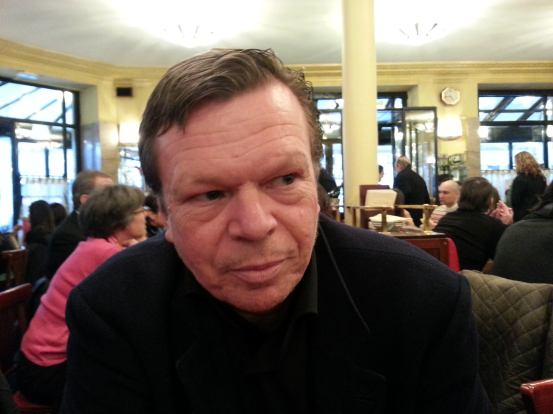
About Peter de Kuster
Founder of The Hero’s Journey project, Peter helps participants build lives from core stories (values, traits, skills). With MBA in Marketing & Finance, Sociology/Communication degrees, and 20+ years, his books (Heroine’s/Hero’s Journey series) blend narrative and strategy for breakthroughs.
Choose Your Paris Hero’s Journey
Live the one great story of creative professionals on making money doing what you love.
Four Paris travel options with Peter de Kuster. Excluding travel and hotel costs.

Choose Your Travel Style
1. Travel Solo with Peter online (€295 excluding VAT)
90-minute online coaching call with Peter de Kuster + Paris Hero digital toolkit.
What’s Included:
- 90-minute 1:1 video coaching: Peter maps your personal Hero’s/Heroine’s Journey
- Paris Hero City Guide (Hemingway cafes, Lutetia, Picasso Museum)
- Hero’s Journey workbook
- One-page Hero Business Plan template (customized during call)
Perfect for: Freelancers wanting personalized Paris methodology before group travel.
Duration: 90-minute call + lifetime digital access.
Access: Book within 48 hours, session within 7 days.
“Peter’s 90 minutes gave me my €5K design contract roadmap. Solo coaching = gold.” – Marie D., Graphic Designer
2. Travel in a Group with Peter as your guide (€695 excluding VAT per person)
Full-day seminar walking Paris creative landmarks (2-4 participants).
Complete Itinerary (8:30 AM – 9:30 PM):
- Shakespeare and Company: Career assessment
- Hemingway Cafes (Les Deux Magots → Café de Flore): Choose your creative career
- La Closerie des Lilas: Right-brain goal setting (lunch included)
- Picasso Museum: Avoid career pitfalls
- Place des Vosges: Schmoozing masterclass
- Lutetia Hotel Bar: Craft your Hero Business Plan
- Le Procope: Discipline rituals + certificates
What’s Included:
- French lunch + wine (€85 value)
- One-page Hero Business Plan
- Paris Creative Hero Certificate (LinkedIn ready)
- Group photo with Peter
Perfect for: Creative teams, freelance friends committing together.
Group Size: Intimate 2-4 person transformation.
“€695 rewrote our design careers. Closed €15K project using Lutetia networking.” – Amsterdam Design Team
3. Business Tour (€1,295 per person)
Corporate creative team transformation day (5+ professionals from one organization).
Corporate-Focused Experience:
- Custom Kickoff: Peter briefs your Creative Director
- Hemingway Discipline: Team cafe productivity mapping
- Picasso Resilience: Corporate “Threshold Guardian” workshop
- Pathé CEO Case Study: €1.2M transformation applied to your team
- Lutetia Team Networking: Agency decision-maker introductions
- Custom Deliverables: Team Hero roadmap + individual business plans
What’s Included:
- Team Hero’s Journey PowerPoint roadmap
- Individual one-page business plans for all participants
- Corporate Paris Creative Hero certificates
- 30-day L&D support + success metrics
Perfect for: creative departments, programmers, design studios.
Minimum: 5 participants (€6,475 corporate invoice).
ROI Proof: “Transformed our 8-person team. Won three €50K+ pitches.” – London Agency CD
4. Private Tour (€1,497)
Bespoke 1:1 full day with Peter de Kuster at Paris creative landmarks.
Your Custom Transformation:
- Morning: Exact career assessment
- Afternoon: Private Picasso Museum + personal Threshold Guardians workshop
- Evening: Lutetia Bar Joséphine – 2h 1:1 coaching + creative introductions
- Your Story Added: Tell and share your story for The Hero’s Journey online
What’s Included:
- Custom Hero Business Plan (your roadmap)
- 3 private Paris creative introductions
- Personal Paris Creative Hero Certificate
- Lifetime digital access + priority future booking
Perfect for: Executives at career crossroads, CEO-level breakthroughs.
Duration: 10 hours bespoke (9 AM – 7 PM).
Result: “Unlocked €180K cinema programming role. Peter’s network delivered.” – Paris Creative Executive
Introduction: Rewrite Your Story. Transform Your Life and Business. Hotel Lutetia.
There is no such thing as a Tooth Fairy, Santa Claus, or the Easter Bunny – and there’s certainly no such thing as the perfect career. That is what many people really think, and it is sad, because there are plenty of rewarding, challenging, and fulfilling career opportunities that allow creative people to use their gifts and be rewarded handsomely for their efforts. Those who settle for less than the best simply haven’t found the right job – yet. You can have it all when it comes to a creative career – if you know how.
“We eliminated everything that didn’t have enough history attached, and we have rehabilitated everything that had.” Jean-Michel Wilmotte architect of the renovation of Lutetia.
The fact is that most people hate their jobs. They would rather be doing something else – anything else. It doesn’t have to be that way. What if I told you that you would never have to work another day in your life? Would you be interested? When you find the right fit in a career, it no longer feels like work. You wake up every day excited about how you earn your living. This perfect harmonizing of your talents, skills, personality and work style creates a passion and a desire as well as a feeling of contentment that is worth more than gold.
“We decided to create a garden in the heart of Lutetia… This garden will be the new heart of the hotel.” Jean-Michel Wilmotte
It can all be yours, if you will read this travel guide and apply its principles.
The challenge is that the creative arts are very different from other fields. To go ahead, you sometimes have to zigzag to the top. Let me show you when to zig and when to zag to make the most of the opportunities out there.
Finding contentment in your career is a lot like looking for treasure. Using a map, you embark on a journey, an adventure in search of yourself. The thing is, there isn’t a pot of gold waiting for you when you get to the spot marked ‘X’ on the map. The buried treasure is within you. The pursuit of the gold (or the goal) is the reward. Because, when it comes to a career, there is no ‘there’ there. It is all a search. Enjoying the search is what success is all about.
This is the age of opportunity for the creative person. Innovation and ideas are gold. Ridicule and red tape are being replaced with respect and rewards for the clever and creative person The work environment and job market are changing, and they are changing for the better – for you. Are you ready for these exciting times ahead? This guide will put you in a position to prosper. What parents, teachers, and bosses might see as problems (sloppiness, habitual tardiness, short attention span, nonconformism) can actually be hidden assets in the search for work in a rewarding and interesting creative career. Intuition, emotion, divergent thinking, daydreaming, thriving on chaos, big picture thinking, cleverness, open-mindedness, and an ability to play and have fun are virtues in the right setting.
“Under layers of paint, we discovered exquisite frescoes, which we meticulously uncovered and revived… It felt akin to rediscovering a segment of the building’s 1910 history.” Jean-Michel Wilmotte
Even so it is not exactly easy to build a career in the creative arts. You have to be able to deal with heaping helpings of rejection. It is a part of everyday life for the creative person.
There is also that funny feeling that you don’t quite fit in – and you don’t. Thank God. An unconventional person with unconventional ideas, you are often seen as immature, temperamental, moody, difficult, distracted, irresponsible and irrational.
“Our vision was to cultivate a powerful image so that this five-star hotel would emerge as the Palace of the Rive Gauche.” Jean-Michel Wilmotte
The truth is, you can be your wonderful self and still get ahead in the corporate world – or work for yourself, as many creative people do. Whichever you choose, this guide will help you manage your career using a whole brain approach that takes advantage of the way you are, without forgetting the way the world works.
Your Call To Adventure
It is time to move on, move up and move out with a new mission. This guide is about taking charge of your destiny. Be the author of your life story. Its hero.
“By being natural and sincere, one often can create revolutions without having sought them.” – Christian Dior
Most guides on careers are very thorough when it comes to identifying and informing you about the problems and pitfalls of a career as creative professional. What they lack, however, is the WHAT THE HELL AM I SUPPOSED TO DO ABOUT IT? part. I decided this was going to be a real life guide with stories and examples of creative heroes of past and present who tried or succeeded to make money doing what they love. A guide heavy on concrete help and light on lengthy explanations of the challenges. You already KNOW what those are – you deal with them every day. So let’s go on a hero’s journey and tackle these monsters head-on. I’ll try to ease up on the Zen stuff and instead offer as many practical and applicable tips and techniques as possible.
“Everything I know, see or hear, every part of my life is transformed into dresses. They are my daydreams, but they have passed from dreamland into the world of everyday items to wear.” – Christian Dior
New creative careers are popping up all the time. More media (internet, AI) means more content. There has never been a better time to strike out on your own and make your way as an entrepreneur (or freelance your way to success). This is your time to shine as a creative person. The future looks bright. Many of the current trends favor your preferred mode of operation – self-reliance, zigzagging to the top, rapid change, multitasking, chaos, adaptability, intuition, training and retraining.
“My weakness… is architecture. I think of my work as ephemeral architecture, dedicated to the beauty of the female body.” – Christian Dior
This guide will show you how to find, create and tell your unique story, and then how to earn a living doing what you love. You will learn how to overcome the challenges the hero faces, and how to make your nature and your creativity work for you. You’ll learn how to market yourself and your art even in a crowded marketplace, survive and thrive in the battlefield that is the creative business, be your own boss and work for others, take the ‘free’ out of ‘freelance’, rise to the top without stepping on too many toes, and use your natural abilities to find a perfect pitch and harmony in your work world.
Your story is your life
The title of this seminar includes the words ‘career management’ but in reality we are talking about ‘life management’. There is a direct, undeniable correlation between the story you tell yourself about you and your career and your life story. It is less about what you do for a living than what you can live with doing. Finding fun and fulfillment at work spills over into the rest of your life. Without it, your health will suffer, your creativity will suffer, your work will suffer – and so will everybody around you. You don’t need to live that way.
If you are thinking of giving up on a creative career and getting a ‘real’ job, stop right there. When you settle for less than what is best for you, you instantly get less than you settled for. Don’t sell yourself short. The regret will eat you up inside. Don’t miss your chance; it may be right around the corner. Instead, get going and go for it – be bold.
“In a machine age, dressmaking is one of the last refuges of the human, the personal, the inimitable.” – Christian Dior
Don’t let others push boulders in your path and fill your head with factoids like ‘most businesses fail in the first year’, ‘it is too competitive out there’, ‘there are NO jobs’, ‘you don’t have enough experience or talent’, ‘only the top can make a living’. It is bad enough that these insecure and misinformed people are telling you why you cannot succeed. It is worse if you believe them. Don’t let anyone talk your dreams down.
This guide is for creative people in all walks of life – composers, brand gurus, painters, poets, musicians, magicians, designers or dj’s, writers or actrices. It is not meant to apply to just the glamour jobs; whatever form your creativity takes, you can apply this information.
“My dream? To make women happier and more beautiful.” – Christian Dior
For everyone who tells you ‘you can’t make a living doing that’ there are hundreds of stories of creative people like Christian Dior who found a way to turn something they thought was fun and would even do for free into a fulfilling career.
I will help you take your powerful creative energy and harness it, and you will beat the odds, making a living doing what you love to do. Your life will become a legend. A work of art.
Christian Dior was born in 1905 in Granville, Normandy, into a comfortable bourgeois family—his father a wealthy fertilizer manufacturer, his mother dying young from tuberculosis, leaving him the eldest of five to navigate a strict Catholic upbringing. Yet even in relative stability, young Christian began telling himself a story of quiet rebellion: I am not the dutiful son bound to chemicals and convention; I am the dreamer who sees beauty in sketches and silhouettes. That inner narrative—of sensitivity amid rigidity, of art over inheritance—led him from political science studies (abandoned for the bohemian life) to selling charcoal fashion illustrations on Paris streets in the 1920s, dreaming of a world beyond his father’s expectations.
The 1929 crash shattered the family fortune, forcing Dior into odd jobs—ghost-designing for society ladies, illustrating Le Figaro—while he whispered to himself, Failure is not my end; it is the sketch before the masterpiece. By 1938, hired by Robert Piguet, then Lucien Lelong during WWII, he dressed Nazi officers’ wives and French Resistance figures alike, honing a wartime aesthetic of restraint amid rationing. His story evolved: In scarcity, I see abundance; in uniforms, I imagine femininity reborn. Post-liberation in 1946, textile magnate Marcel Boussac offered him a dying house; Dior refused, demanding his own: I will not revive the old; I will author the new. Backed by Boussac’s millions, he founded the House of Dior at 30 Avenue Montaigne, with 85 staff, vowing total creative control.
On February 12, 1947, his “New Look” debuted—nipped waists, padded hips, full skirts cinched with corsets, 20 yards of fabric per gown—scandalizing a war-weary world still in short hems and square shoulders. Dior’s inner script roared: I reject the poverty of rationing; I drape women in joy, in excess, in the femininity they starved for. Carmel Snow of Harper’s Bazaar gasped, “It’s quite a revolution, dear Christian,” and the world followed: Dior employed 2,000 by 1950, exported to five continents, spawning copycats from Tokyo to New York. He told himself, I am the liberator of silhouettes, turning postwar gray into golden curves. Yet privately, in his green-marble bathtub, sketching amid bubbles, he confided to friends his fear: What if they tire of my hourglass?
Expansion was relentless. In 1947, Miss Dior perfume launched, inspired by his Resistance-hero sister Catherine, tortured at Ravensbrück—sampling 10 scents, picking the fifth (his lucky number). Shoes with Roger Vivier (1953), lipstick, furs, ties followed, as licensing deals flooded America. Dior’s narrative swelled: I am not just a couturier; I am an empire of elegance. But cracks showed—health fragile from overwork, superstitions (lucky shamrocks pinned inside suits), a closeted homosexuality in judgmental times. He dressed royalty (Princess Margaret), stars (Marlene Dietrich), yet mourned his mother’s early death, weaving loss into opulence: From absence, I create presence.
By 1957, at 52, a heart attack felled him in Italy—rumors swirled of overeating, but his story ended mid-sentence: I have dressed the world; now it wears me. Yves Saint Laurent, his 21-year-old protégé, succeeded him, but the house endured under LVMH, its New Look a pivot from austerity to allure. Dior’s life proves the power of self-authored narrative: born privileged yet constrained, he rejected inheritance for invention, scripting scarcity into splendor. Like his cinched waists flaring to fullness, Christian Dior turned personal restraint into global revolution—the story he told himself about himself, from fragile boy to fashion king, draping history in his vision.
Your Hero’s Journey
Few people know what they want to be when they grow up, and even fewer creative people want to grow up. Maybe you won’t discover your true calling until you make some Hero’s Journeys. Testdrives in your dreamjobs by exploring stories of heroines you are interested in. Meeting your rolemodels and interviewing them for the Hero’s Journey.
Is it not better to make a testdrive in your dreamjob, meeting people who do what you believe you will love to do for a living, using that incredible imagination of yours, than waste years on a dead – end job? One of the key things you will work on here is finding and creating your story about what you want to do (not for the rest of your life, but what you want to do now) and eliminating the careers that are not a fit. The choices that lead to a life of creative expression and financial security are there for the making. The catch is that creative careers are often unconventional and in some cases completely unchartered. The challenge is that there are a million different things you could do.
The key to success in any career is clarity in your story. Becoming clear about who you are and what you want is the first part of this Heroine’s Journey. Then how you get what you want is covered in great detail. It is hard work, but this is your chance to reinvent yourself. Don’t let it pass by you.
Philippe Starck was born in 1949 in Paris into a family of engineering and invention—his father an aeronautical creator who designed aircraft propellers, instilling in young Philippe a story of practical magic: I am not just a maker of objects; I am the inventor who fuses function with fantasy. That inner narrative—of rebellion against the ordinary, of everyday items reborn as art—led him from the École Camondo design school to crafting radical furniture in the 1970s, dreaming of a world where chairs whisper poetry and toothbrushes provoke thought.
The 1968 student uprisings electrified his youth, but economic realities forced Starck into nightclub design—Les Bains Douches, a pulsating Paris hotspot—while he told himself, Chaos is my canvas; nightlife is the laboratory for democratized design. By 1982, François Mitterrand appointed him “Officier des Arts et des Lettres” at age 33, the youngest ever, launching his global ascent. His breakthrough came with the Étoile de Vienne chair for XO, followed by the Dr Sonderbar juicer (1983)—a grinning plastic citrus squeezer that sold millions, proving his mantra: Ugly tools deserve ugly faces; beauty hides in whimsy. Whispering to himself, I turn the mundane into manifesto, he partnered with Kartell, Alessi, and Flos, scripting scarcity of imagination into abundance.
In 1984, Starck redesigned Paris’s Café Costes—plush velvet, starlit ceilings, a sensual haven—then the Royalton Hotel in New York (1988), birthing “design hotels” with Philippe Plechac lobby swagger. His inner script roared: I reject sterile spaces; I drape rooms in seduction and surprise. The lemon squeezer became iconic, but so did the Ghost Chair (2002, transparent polycarbonate), the Bubble Club sofa, and the Prince Albert teapot—playful yet precise. Private commissions followed: yachts for Roman Abramovich, private jets for Steve Jobs (the black-and-white iPod-inspired interior), the French presidential plane. He told himself, I am the people’s poet of plastic, dressing elites while arming the masses. Yet privately, sketching at dawn, he fretted: Will they see past the gimmick to genius?
Expansion was audacious. Starck launched Starckeyes sunglasses, Bonk compression socks (with compression for “lazy blood”), even coffins (“Democratic Death”). His Good Design for All manifesto birthed affordable lines: the Apollo toothbrush for Kartell, the Spoutnik kettle. Collaborations spanned Vitra chairs, Flos lamps (Tite LED, 2014), and hotels like the Flamingo Las Vegas redesign (neon tamed into chic). Starck’s narrative swelled: I am not a designer; I am a citizen-architect of joy. Cracks emerged—health strained by 500+ annual projects, a vegetarian eco-warrior railing against consumerism (“Design must be useful, durable, economic”), his private life shielded (five children across relationships). He dressed presidents (Mitterrand’s Elysee interiors), stars (Salma Hayek’s rose), yet mourned lost simplicity: From prototypes, I conjure poetry.
By his 70s, Starck—still wiry, bespectacled, philosophizing—launched Pleyel pianos, electric bikes, even a low-cost house (Seedhouse, solar-powered). Rumors of burnout swirled, but his story endures unfinished: I have squeezed the world’s lemons; now it juices me. Successors like Eugeni Quitllet carry his torch at Kartell, but the Starck empire thrives under his vision. Starck’s life proves self-authored narrative’s power: born to engineers yet unbound, he rejected utility for utopia, scripting plastic into poetry. Like his Dr Sonderbar’s eternal grin, Philippe Starck turned functional frustration into global glee—the story he told himself about himself, from propeller kid to design democrat, squeezing history’s juice into whimsy.
What is Right About Being Right- Brained?
Success for a creative hero can be tremendous. Not just in money, but in creative freedom. Look at the list of highest paid entertainers and entrepreneurs, they are all people who don’t fit any mold, but they are also people who used that fact to their benefit.
You can do it, too, in your own way, on your own time, reaching your own goals. Unmire yourself from the myths about creative people. Don’t be afraid to look at your strengths and weaknesses. Face the fact that traditional business management, which is left brain, logical and linear (not to mention rigid, boring and counterproductive) doesn’t work for you. It isn’t much fun, and if it is not at least a little bit of fun, you are not going to do it. It is that simple. If it is not fast, fun, flexible and easy, you are less likely to embrace it. Be willing to work within a story system as long as it is one you create and one that works with you as well for you.
You Could Be Even More Heroic
Creative heroes can have an insatiable hunger to achieve, create, accomplish. They want to be recognized and heard, receive applause and take home awards. They desire change, to create a body of work, to earn, to make deals. Many people who don’t know what they want actually want too much, too fast.
“The first principle of architectural beauty is that the essential lines of a construction be determined by a perfect appropriateness to its use.” – Gustave Eiffel
The key to success is learning how to focus on what is most important. It is counterproductive to try to do too many things at once, nor is it good to focus on only one area of your life. One way to whittle it down (focus) and spread it around (balance) is to have an integrating great story about your life. With one top goal for every area of your life united by your one great story.
Take a good hard look at who you are and what you want from life. Sometimes having everything to be just okay, having an adequate job and a moderate life, is the biggest tragedy of all. Take the time now to find yourself, so you can live your life without getting lost and make good decisions that will lead you to the success and happiness you desire.
“I ought to be jealous of the tower. She is more famous than I am.” – Gustave Eiffel
We are all born creative. What happens to us from kindergarten to college shapes how much of that creativity stays with us. Some, despite the best efforts of the school system and corporate system to stamp out the creative spirit, slip through the cracks, creativity intact. You are still not safe. Ninety eight percent of the people in the world are living the left brained life. Society tends to reward the left brain (structure, status quo) and reprimand the right brain (chaos, creativity, innovation).
You can stunt your creative spirit with disuse. You cannot lose a talent, but your skills can certainly atrophy. Yet almost any job can be done creatively. Creative careers are everywhere. Entrepreneurs must be creative to survive, managing people can be done creatively, marketing certainly involves a degree of creativity, even distribution can be a right brained affair. What makes any career interesting, exciting, and vital is the creative approach you take to it.
“Whatever branch you choose in your future life, apply yourself to making some progress, however small it may be. You will do general good.” – Gustave Eiffel
Research shows that people who ignore their creative gifts in their careers are frustrated and unhappy by midlife (or much sooner). Contentment comes from finding your greatest gifts and abilities and then developing and using them in the work you do.
Gustave Eiffel was born in 1832 in Dijon, France, into a modest family of salt merchants and winemakers—his father a veteran of Napoleon’s army, his mother running the family trade while raising him amid the humdrum predictability of provincial life. Even in this stable but stifling world, young Alexandre-Gustave began telling himself a story of upward defiance: I am not the merchant’s son destined for ledgers and casks; I am the builder who lifts iron into the sky. That inner narrative—of precision engineering as poetry, of structure as soaring ambition—led him from the École Centrale des Arts et Manufactures in 1855 to apprenticeships in bridges and factories, dreaming of a world where metal sang symphonies against gravity.
The 1850s industrial boom tested his mettle; Eiffel designed his first bridge in 1860 near Bordeaux, whispering to himself, Failure bends but does not break; each rivet is a verse in progress. By the 1870s, he pioneered prefabricated ironwork, erecting viaducts across Portugal and the Douro River—structures that withstood floods and quakes—while honing a wartime ethos during the Franco-Prussian siege: In chaos, I forge order; in invasion, I erect endurance. His story evolved: Scarcity of stone yields abundance of steel; uniforms of war birth frameworks of peace. In 1876, the colossal Garabit Viaduct—540 meters long, 122-meter arch—proved his mastery, a “viaduct cathedral” that awed engineers worldwide. He told himself, I am the skeleton-maker of landscapes, turning rivers into reverence.
By 1880s Paris, hosting the Universal Exposition, Eiffel won the tender for the Exposition Universelle centerpiece: a 300-meter iron tower, initially mocked as “Eiffel’s useless giraffe” by artists and writers (including Guy de Maupassant, who lunched there to avoid seeing it). His inner script thundered: I reject the scorn of aesthetics; I drape the horizon in audacity, proving height is humanity’s hymn. Opened March 31, 1889—for France’s centennial revolution—it drew 2 million visitors, funding his labs and silencing critics. Wind-tested to 200 km/h, lit by electric arcs (first in Europe), it stood as the world’s tallest until 1930. Privately, amid blueprints and calculations, he confided fears: What if the wind topples my dream? Yet crowds ascended, gasping at Seine vistas, validating his mantra.
Expansion was visionary. Eiffel’s designs spanned continents: the São Paulo dos Campos viaduct (Brazil, 1884), Statue of Liberty’s internal pylon (1887, collaborating with Bartholdi—”I give her bones”), locks for Panama Canal (abandoned amid scandal, but his equatorial frame aided telescope foundations). Trains, greenhouses, markets followed—over 700 structures. His narrative swelled: I am not mere constructor; I am citizen-engineer of progress. Cracks appeared—bankruptcy threats post-Exposition, 1893 Panama trial (acquitted, but reputation scarred), a closeted life amid Victorian mores. He aided humanity (1898 meteorograph for weather, 1913 wireless telegraphy tower), yet mourned lost simplicity: From rivets, I raise redemption.
By 1923, at 91, Eiffel died in his Paris home, honored by the Académie des Sciences—his tower enduring, now a global icon (65 million visitors yearly). Successors like his grandson built on his lattice, but Eiffel’s legacy thrives: UNESCO sites, engineering schools named for him. Eiffel’s life proves self-authored narrative’s power: born bourgeois yet earthbound, he rejected trade for transcendence, scripting iron into immortality. Like his tower’s elegant taper—strong at base, graceful at peak—Gustave Eiffel turned structural restraint into skyward revolution, the story he told himself about himself—from salt-boy to spire-lord—hoisting Paris into eternity.
The Right Brain
Creativity and creative careers involve a whole brain story, an interaction between the left hemisphere of your brain (the detail-oriented, accountant side) and the right hemisphere (the big picture, artistic side). The right brain comes up with the ideas and the left brain implements them. Too much right brain and nothing gets done; too much left brain and life is dull and uninspiring.
As a right – brainer, you are absolutely unique (and wonderful). There has never been anyone like you and there never will be again. Ponder that for a moment. Beneath all the self-doubt, guilt, fear, remorse and distorted beliefs is a gem of a person who, more than anything, deserves to be happy, successful and fulfilled. To have a career that is rewarding and challenging. A career that fits like a glove and is such a joy that you would do it for free – but is so valuable to others that you are paid well. And why not? You have found your place in the universe, you are making a contribution with your talent and creativity.
Once you understand yourself and what work you enjoy doing, you can work with your natural abilities and tendencies rather than against them. It makes life much easier. This is something that is unique to you. It is what will work best for you. So don’t breeze past the questions in this guide. Make the time to really give some thought to who you are, what you want to do, and what would be the best way to go about doing it. I have always said that to find yourself you need to get lost. you need time for reflection, away from the hustle and bustle of your busy life, to open yourself to new possibilities.
Do you honestly love what you do now? Are you excited to go to work on monday? Do you go home happy? If you answered no to any of these questions, there is a better way.
I was the perfect choice to tell this story for two reasons. The first is that I am the classic creative type. I have reinvented myself more times than Edison has patents. My career path is a zigzagging, winding road rather than a straight line. I am an artist, a musician, a writer, a trainer, a storyteller, a coach and an entrepreneur. The second reason is that, when all was said and done, I found a way to use my natural skills and abilities in my work. As a result, I have had both happiness and success – and I am on the path, however wiggly, that best suits me. Now, let’s talk about you.
Are You in Your Right Mind?
The following quiz gives you an indication of where your creative tendencies lie – left brain, right brain or whole brain. Answer honestly and quickly. Don’t dwell on the answers and do not try to figure out where we are looking for. There is no ‘right answer’.
- When it comes to emotions
a. I can articulate my feelings to others
b. I am better at expressing my emotions through my work - I have always been told
a. I would make a great accountant
b. I was a natural born artist - Success is
a. closely related to annual income
b. unrelated to the money I make - When trying to explain how I came up with an idea a. I am able to put in into terms others can understand b. I feel like an alien from another planet.
- When I am working on a project a. I am not happy until it is done b. I enjoy the process
- It is a beautiful summer day, but I have work to do. I will a. get my work done first and then go to the beach b. go to the beach and deal with my work later
- When it comes to a big project, my strength is in seeing a. The worm’s eye view (details) b.The bird’s eye view (the big picture)
- When I have several unfinished projects going on at once, I feel a. frustrated b. stimulated
- When it comes to decorating my office a. I find an arrangement that works and stick with it b. I rearrange everything at least every six months
- Multitasking for me is a. doing two things at once b. doodling, talking on the phone, sending an email, searching for a file in a teetering pile of work on my desk, watching a movie, reading a book, and sorting through my mail on Linkedin at once.
- Before I speak a. I think it through and censor it in my head b. I say the first thing that pops into my head
- When it comes to problem solving a. I analyze things from a logical perspective b. I consult my ‘gut’ for an answer
- My car is a. practical and safe b. stylish and fun to drive
- I am best at remembering a. names b. faces
- Whenever there is a crisis in my life, a. I retreat into myself and try to solve it on my own b.
- In making decisions, a. I tend to focus on the actualities b. I tend to focus on the possibilities
- When someone asks about my vacation a. I give them names and places and brag about how much I saved on airfare (elapsed time, three minutes) b. describe in intricate detail how wonderful it felt to be away, and talk about all the things I saw, the wonderful people I met, and the fun I had (elapsed time, three hours)
- I am a natural born a. learner b. teacher
- If I had two yearlong projects to choose from, I’d pick a. an analysis of the company’s past and future profit centers b. working on the company’s marketing materials
- When I meet a prospective client or employer, a . I have a written list of questions to cover b. I talk off the top of my head, taking my cue from them
- I believe a. you can make things happen through sheer force of will b. there is a force in the universe that brings things together
- My idea of organization is a. making a list of all the things to be done and then prioritizing the tasks b. playing with my Post-it Notes, putting them on the wall in some sort of order
- I am ready to leave for work, and a. I know exactly where my car keys are b. I go on a search and destroy mission until the keys turn up (in the fridge)
- When I log on to the internet, I do it with a. a plan and a purpose; get in, get out b. a sort of stream of consciousness, pausing to look at whatever catches my fancy
- When researching a project a. I find as many books and articles as I can and read them from front to back b. I ask someone for tips on the best places to look and skim those
In the above quiz a. answers count zero, b. answers count 1. If your total is 8 or less you might read this guide for somebody else because you are a serious left brainer. A total of 9 to 15 indicates a fairly balanced whole brain approach to the world. You will go far if you can learn to loosen up a little. With a total over 15 you can consider yourself a right brainer with all the blessings and curses attached thereto.
 The Hero's Journey