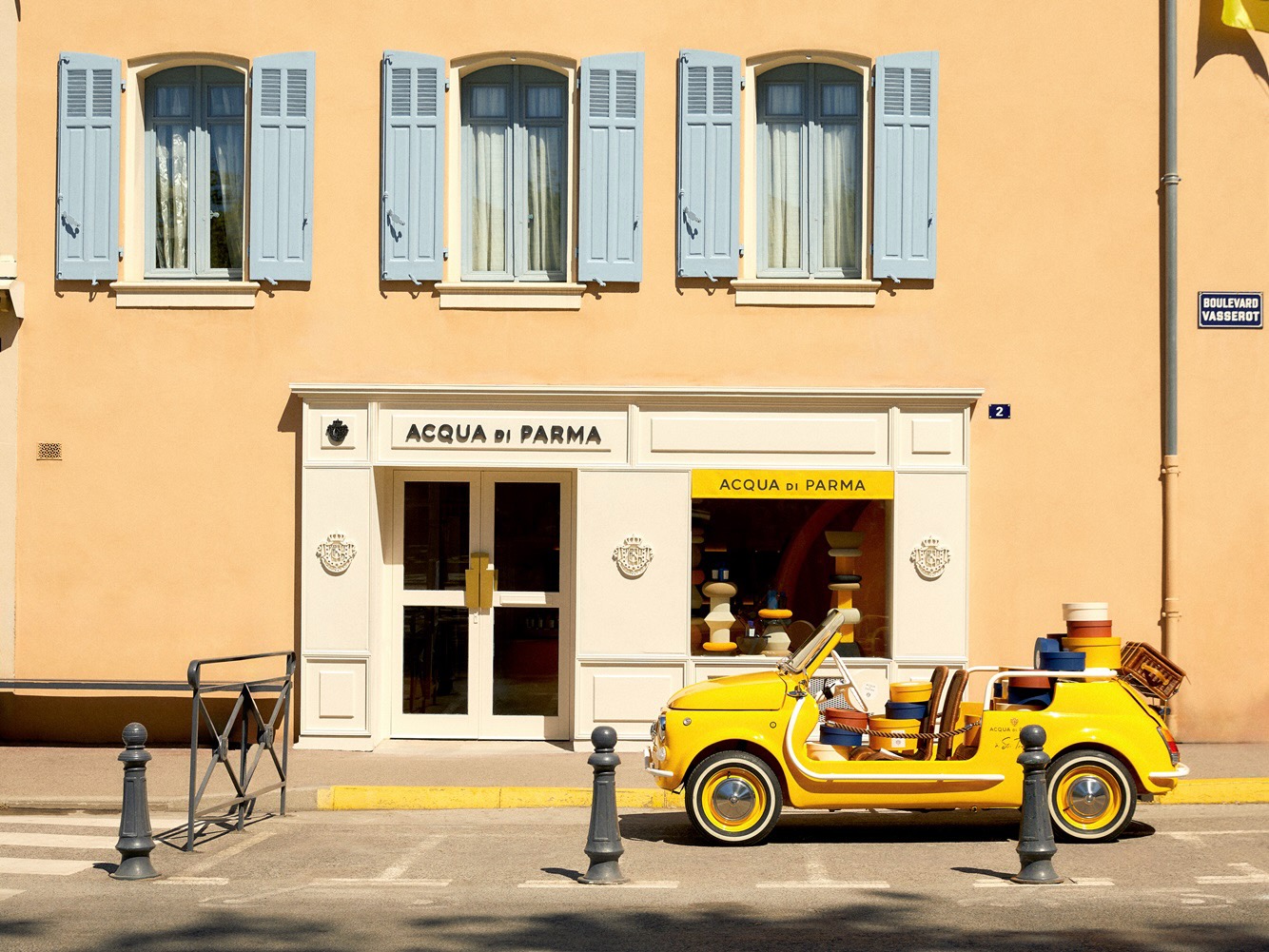
Aqua di Parma: A Hero’s Journey Through Scent and Time
Aqua di Parma’s story unfolds much like a mythic odyssey—a narrative of discovery, crisis, rebirth, and transcendence. Founded more than a century ago, the brand began as a small artisanal vision that defied the conventions of its time. Through near-oblivion and inspired revival, the house of Aqua di Parma has continually reinvented itself while staying true to an essence rooted in Italian refinement. It is not merely the tale of a fragrance, but of a spirit: the pursuit of effortless elegance and authenticity in a world of fleeting trends. When viewed through the lens of the Hero’s Journey, Aqua di Parma’s evolution mirrors a timeless myth—one that charts the path from humble origins to luminous legacy.
Ordinary World
The story begins in 1916, when Baron Carlo Magnani created a scent that captured the lightness and radiance of his native Parma, a small city known for its art, culture, and golden-hued architecture. Living in the midst of early 20th-century European opulence, Magnani found himself surrounded by the dark, heavy perfumes that dominated the aristocratic scene. Yet, his heart yearned for something different—something that distilled the warmth of Italian sunlight, the zest of citrus orchards, and the understated grace of Mediterranean living.
In a modest workshop nestled in Parma’s historic center, Magnani and a team of local perfumers crafted Colonia, a scent that defied convention. Its notes of Sicilian citrus, lavender, and rosemary expressed clarity, cleanliness, and optimism—an olfactory portrait of la dolce vita long before the phrase became iconic. The fragrance quickly became a secret favorite among the city’s well-tailored gentlemen and opera enthusiasts. Its simple glass bottle wrapped in a signature sunny yellow box—a hue reflecting Parma’s gilded walls and Renaissance luminosity—became a subtle emblem of Italian sophistication.
At this stage, Aqua di Parma existed comfortably in its ordinary world, a niche artisanal brand, quietly admired but far from the international phenomenon it would become. Its charm lay in being personal and local—rooted in craft, emotion, and understated luxury.
Call to Adventure
As decades passed, the perfume landscape began to change. New designers, global influences, and synthetic blends flooded the market. By the late 20th century, Aqua di Parma found itself fading into obscurity, its classic simplicity overshadowed by louder, more modern trends. The brand that once epitomized sunlit optimism began to vanish into the shadows of the evolving luxury industry.
This decline was the call to adventure—a pivotal moment when Aqua di Parma was challenged to rediscover its purpose. Could it survive in a marketplace obsessed with novelty? Could an old-world fragrance still resonate with a new generation seeking identity through scent? These existential questions summoned the brand to reinvent itself while remaining loyal to its original ideals of purity, elegance, and craftsmanship.
Meeting the Mentor
In 1993, salvation arrived in the form of three visionaries: Luca Cordero di Montezemolo of Ferrari, Diego Della Valle of Tod’s, and Paolo Borgomanero of La Perla. These Italian entrepreneurs, each with a deep appreciation for heritage and style, recognized the dormant magic within Aqua di Parma. To them, the brand symbolized a forgotten ideal of authentic luxury—handmade, minimal, and unmistakably Italian.
Acting as the “mentors” in the Hero’s Journey, they infused new belief and resources into the house, guiding it into a new era. Under their direction, headquarters moved from Parma to Milan—Italy’s beating heart of fashion and design—symbolizing the transition from the artisanal world into the broader stage of global luxury. In 1998, the first Aqua di Parma boutique opened on Milan’s Via del Gesù, known as “La Via degli Uomini” or “Men’s Street,” reinforcing the brand’s roots in masculine elegance and bespoke craftsmanship. Their mentorship laid the foundation for a brand rebirth that honored history while embracing modernity.
Crossing the Threshold
By the dawn of the new millennium, Aqua di Parma had crossed the threshold from local heritage to international prestige. The acquisition by LVMH in 2001 marked a decisive transformation. Under the guidance of the luxury conglomerate, Aqua di Parma expanded beyond fragrance, exploring the full sensorial spectrum of Italian lifestyle.
The brand introduced the elegant Profumo for women (1999) and the Blu Mediterraneo line (2000), evoking the breezy landscapes of Capri and Sicily through marine and citrus accords. The expansion into men’s grooming (2006), home fragrances, candles, and sumptuous leather goods extended the identity of the brand from mere scent to a holistic aesthetic—a philosophy of living well. In 2008, the opening of the SPA at Porto Cervo in Sardinia brought this philosophy into the physical realm: the art of pampering infused with Italian mindfulness and natural beauty.
Having crossed from artisan legacy into the realm of global luxury, Aqua di Parma entered a world where every detail reflected a balance between tradition and innovation—a hallmark of true mastery on the hero’s path.
Tests, Allies, and Enemies
The next chapters were marked by trials. The fragrance landscape became increasingly competitive, saturated by celebrity endorsements and designer perfumes. Aqua di Parma faced the challenge of maintaining authenticity in an era of mass marketing. Each new product line was a test: could the brand evolve without losing its soul?
Its allies were craftsmanship, Italian identity, and loyalty to citrus freshness—the DNA of Colonia. The brand continued to handcraft its bottles, employ local artisans, and source natural ingredients, ensuring continuity between heritage and modern creation. Its enemies were imitation and the dilution of meaning—a threat faced by any legacy brand entering global markets.
Despite these trials, Aqua di Parma remained distinct. Its minimalist design, amber-tinted glass, and bold yellow label signified timeless confidence. Celebrities, designers, and intellectuals quietly adopted it as their signature scent—a fragrance that whispered, rather than shouted, elegance. More recently, the appointment of Michael Fassbender as brand ambassador in 2026 marked a symbolic alignment: like Aqua di Parma, he embodies an uncontrived, intelligent sophistication.
Ordeal and Reward
Every hero must face an ordeal—a confrontation with loss or transformation. For Aqua di Parma, that ordeal was survival itself: navigating decades of shifting tastes without losing identity. What emerged from that struggle was clarity. The brand realized that its true strength lay not in following trends but in being timeless. Its reward was rediscovery: the global recognition of Colonia as a “modern classic,” a fragrance alive with the same radiance it carried in 1916.
LVMH’s influence allowed Aqua di Parma to flourish without compromising authenticity. The brand became synonymous with the Italian art of living—elegant, relaxed, and soulful. Its expansion into lifestyle products and bespoke collections turned it into a cultural ambassador for la dolce vita, translating Magnani’s original dream into a modern language of luxury.
Return with the Elixir
Every hero returns from the journey carrying wisdom or gifts to share. Aqua di Parma’s “elixir” is the aesthetic philosophy it now offers the world—a way of life that values harmony, craftsmanship, and the beauty of the everyday. Through its fragrances, home collections, and leather accessories, the brand continues to echo the light of Parma: that golden intersection of past and present, heritage and innovation.
More than a century after its birth, Aqua di Parma stands as a reminder that true elegance is eternal. It is not bound by fashion but guided by essence. The brand’s journey—from a single artisan’s dream to a symbol of global luxury—mirrors the hero’s transformation itself: renewed, radiant, and perpetually authentic.
In every bottle of Colonia, one can still sense Baron Magnani’s longing for home, his belief that beauty resides in simplicity, and his quiet defiance against excess. That spirit, distilled through time, remains Aqua di Parma’s greatest triumph—a living myth carried not in words or images, but in scent.

A man on the run in a world turned upside down — that image defines this year’s Academy Awards. Every nominated story begins with flight: from injustice, from fear, from the crumbling order of a society that no longer makes sense. The heroes of these films are not invincible saviors; they are fugitives, struggling to preserve their humanity in times that threaten to erase it. Their journeys, frantic and perilous, mirror our own attempts to find purpose in disruption.
At a moment when Hollywood hesitates between artistic freedom and political caution, these films do what great myths always do — they pack their truth inside spectacle. The chases, shootouts, and melodies become symbols of rebellion, survival, and renewal. Cinema, like every hero, must keep moving to stay alive.
Ordinary World
Before any quest begins, there is the hum of normal life — the ordinary world that feels safe until it isn’t. Yet even from this calm space, the air trembles with unease. Today’s filmmakers know that calm is an illusion. Their art begins where comfort ends.
The Renaissance once celebrated copia — abundance — as the highest expression of creativity. To depict the wealth of existence, artists filled their canvases with richness and intricacy. This ancient impulse has returned to Hollywood. The new films embrace copia not merely in visuals but in emotion. They are lush, chaotic, too full of everything — exactly like the world they depict.
The Call to Adventure
The nominations themselves are calls to adventure. Sinners — a fever dream of twin gangsters, both played by Michael B. Jordan, running a juke joint in 1930s Mississippi — mixes musical ecstasy with terror. Its Ku Klux Klan, vampires, and the blues merge into one surreal tableau of defiance.
One Battle After Another, with Leonardo DiCaprio as a betrayed soldier hunted across cities and deserts, invites viewers into perpetual chase. Marty Supreme, a ping‑pong caper set in the jittery 1950s, gambles love and redemption on a game that never pauses. Each film is a modern myth shouting the same challenge: will you run or rise?
Crossing the Threshold
For audiences and filmmakers alike, entering these films is crossing a threshold — from realism into dream, from argument into allegory. Today’s directors seem to believe that truth hides inside excess.
These cinematic journeys are long — Sinners with a record sixteen nominations, One Battle with thirteen, Marty Supreme with nine — but not indulgent. Their length feels like mythic testing, each reel another trial. Viewers emerge dazed yet liberated, as heroes do after the first crossing.
Tests, Allies, and Enemies
Every hero’s path tightens with opposition. This year’s antagonists wear familiar masks — injustice, exploitation, racism, greed — yet the struggle feels newly personal. In Sinners, segregation haunts as fiercely as any vampire. In Frankenstein, another nine‑time nominee, the scientist’s genius depends on an arms dealer’s money and corpses from the battlefield — creation stained by complicity.
In One Battle, militias hunt immigrants across a ravaged, fictional America, while a secret cabal of white supremacists controls the state from within. Marty Supreme tackles prejudice more intimately. Its Jewish hustler faces a world of crooked cops and cruel tycoons, and in a devastating flashback, a Holocaust survivor recalls smearing his body with honey to feed starving prisoners. The sequence arrives like the hero’s darkest ordeal — brutal honesty searing through genre.
Everywhere, we witness heroes tested and remade. Their allies — musicians, lovers, strangers — appear and vanish. Every betrayal, every brief act of kindness, is another step in the maze.
The Ordeal
Midway through these sprawling stories, the chase slows, and revelation slips through the cracks. The heroes discover that the real enemy is not the system but despair. Their escape scenes become metaphors for self‑knowledge.
In Sinners, a single blues number conjures the ghosts of Black artists past and future — a creative lineage rising from oppression’s grave. In One Battle, a nightmarish car sequence, headlights darting along a dipping road, suggests that the pursuit of freedom has no finish line. In Marty Supreme, laughter dissolves into grief, reminding us that even clownish dreamers carry the weight of history.
The ordeal is shared beyond the screen. Filmmakers wrestle with meaning as commerce chases art. Audiences face their complicity as spectators. At the Oscars, those dual struggles meet under one golden light.
Reward
Survival itself becomes the prize. The heroes do not claim thrones or treasures; they reclaim their voices — the ability to speak, sing, and keep moving. The films too achieve a strange reward: integrity wrapped in spectacle, politics veiled by imagination. The storytelling is dense and daring, yet emotionally direct. Crowd‑pleasers that take risks, they satisfy both the intellect and the appetite for wonder.
The reward is also revelation: that the old hero, though reinvented a thousand times, still walks among us. He may wear sneakers instead of sandals, carry a camera instead of a sword, but the journey remains the same — leave the familiar, confront the fear, transform, return wiser.
The Road Back
Just as the films test their characters, the Oscar stage tests Hollywood. Amid worries about audience fatigue and cultural division, the Academy seeks to rediscover purpose. The ceremony has become its own journey, a road back to belief in cinema as communion — not distraction, but dialogue.
In that sense, each nominated work serves as mentor and mirror. They remind the industry that artistry and risk go hand in hand. To stay relevant, it must keep wandering into danger, refusing confinement in formula or apology.
Resurrection
Then comes Hamnet, gentle yet searing, the year’s quiet miracle. It follows Shakespeare’s wife, Agnes, through the rituals of domestic life — childbirth, loss, survival. Here the hero is not a runaway but a mourner. Her cries echo through timbered rooms and muddy lanes with the force of a thousand explosions. Where the other films shout, Hamnet breathes.
It stands as the story of resurrection, of finding dignity within grief. The hero’s rebirth is inward: out of stillness come understanding and endurance. At this year’s Oscars, it will provide the final act — a soft yet thunderous reminder that silence has its own epic scale.
Return with the Elixir
When the last speeches fade and the golden statues rest in trembling hands, a deeper narrative endures. Hollywood, for all its noise, has retold the oldest story in the world — humanity’s perpetual journey through darkness toward meaning. The elixir it brings back is courage: the courage to dream fearlessly, to confront injustice, to bear witness, and above all, to feel.
The roads in One Battle After Another stretch endlessly, the songs in Sinners echo with ghosts, the laughter in Marty Supreme falters into tears, and Hamnet ends where myth always does — with love surviving loss.
The Hero’s Journey isn’t confined to a single protagonist. This year, it belongs to all of them — and to us. Every director who risked ridicule, every actor who bared a wound, every audience who sat still in the dark — each plays a part in cinema’s eternal adventure: leaving the familiar world behind and returning with a story worth telling.
 The Hero's Journey