‘Without having seen the Sistine Chapel one can form no appreciable idea of what one man is capable of achieving – Johan Wolfgang von Goethe
In this groundbreaking new hero’s journey in Michelangelo’s Florence and Rome we examine the way we tell stories about ourselves to ourselves — and, most important, the way we can change those stories to transform our business and personal lives.
Your story is your life. As human beings, we continually tell ourselves stories — of success or failure; of power or victimhood; stories that endure for an hour, or a day, or an entire lifetime. We have stories about our work, our families and relationships, our health; about what we want and what we’re capable of achieving. Yet, while our stories profoundly affect how others see us and we see ourselves, too few of us even recognize that we’re telling stories, or what they are, or that we can change them — and, in turn, transform our very destinies.
Telling ourselves stories provides structure and direction as we navigate life’s challenges and opportunities, and helps us interpret our goals and skills. Stories make sense of chaos; they organize our many divergent experiences into a coherent thread; they shape our entire reality. And far too many of our stories are dysfunctional, in need of serious editing. First, we ask you to answer the question, “In which areas of my life is it clear that I cannot achieve my goals with the story I’ve got?” We then show you how to create new, reality-based stories that inspire you to action, and take you where you want to go both in your work and personal life.
For decades, at the Hero’s Journey has been examining the power of story to increase engagement and performance. Thousands of individuals from every walk of life have sought out and benefited from our life-altering stories.
Our capacity to tell stories is one of our profoundest gifts. The Hero’s Journey approach to creating deeply engaging stories will give you the tools to wield the power of storytelling and forever change your business and personal life.
Join us for a truly transformational five day vacation for the mind in Florence & Rome in the footsteps of Michelangelo
DAILY TIMETABLE
09.40 Tea & Coffee on arrival
10.00 Morning Session
13.00 Lunch Break
14.00 Afternoon Session
What Can I Expect?
Here’s an outline of the THE HERO’S JOURNEY in Rome: The Michelangelo Way
Journey Outline
OLD STORIES
- What is your Story?
- Are you even trying to tell a Story?
- Old Stories
- Tell your current Story
- Is this Really Your Story?
YOUR NEW STORY
- The Premise of your Story. The Purpose of your Life and Art
- The words on your tombstone
- You ultimate mission, out loud
- The Seven Great Plots
- The Twelve Archetypal Heroines
- The One Great Story
- Purpose is Never Forgettable
- Questioning the Premise
- Lining up
- Flawed Alignment, Tragic Ending
- The Three Rules in Storytelling
- Write Your New Story
TURNING STORY INTO ACTION
- Turning your story into action
- The Story Effect
- Story Ritualizing
- The Storyteller and the art of story
- The Power of Your Story
- Storyboarding your creative process
- They Created and Lived Happily Ever After
About Peter de Kuster
Peter de Kuster is the founder of The Heroine’s Journey & Hero’s Journey project, a storytelling firm which helps creative professionals to create careers and lives based on whatever story is most integral to their lifes and careers (values, traits, skills and experiences). Peter’s approach combines in-depth storytelling and marketing expertise, and for over 20 years clients have found it effective with a wide range of creative business issues.
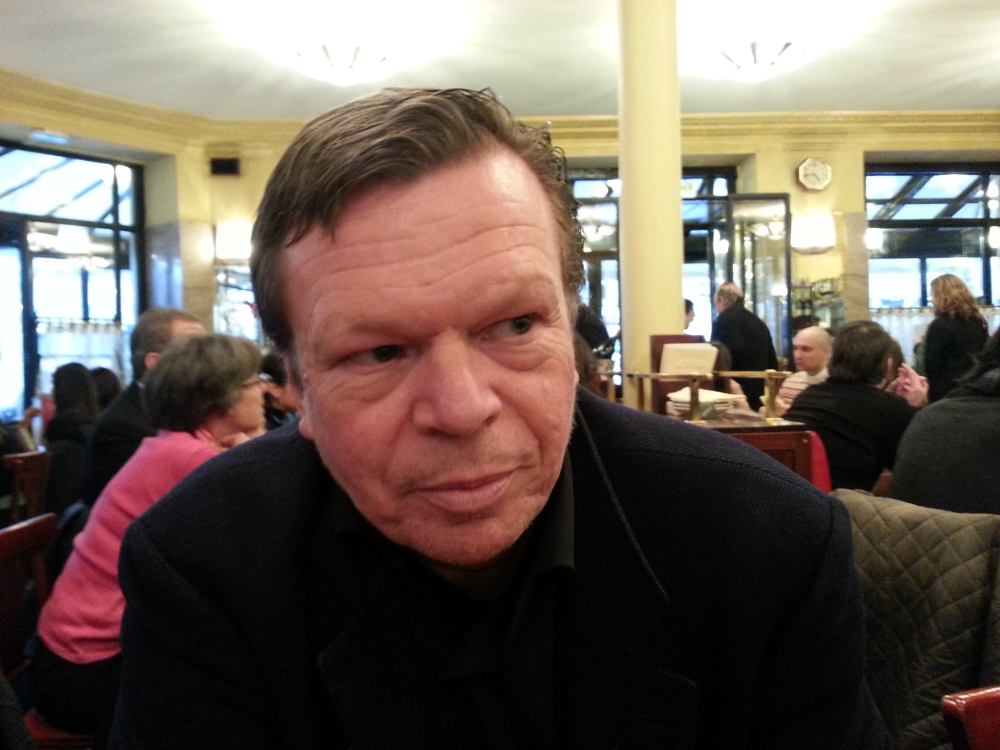
Peter is writer of the series The Heroine’s Journey and Hero’s Journey books, he has an MBA in Marketing, MBA in Financial Economics and graduated at university in Sociology and Communication Sciences.
INTRODUCTION
“The greatest artist has no conception which a single block of marble does not potentially contain within its mass, but only a hand obedient to the mind can penetrate to this image” – Michelangelo Buonarroti
You can find masters working in an endless array of fields – in art; in science; in government; in business; in sales and marketing; in engineering; in photography, cooking, dancing, singing and acting; in accounting – in any activity that people devote their lives to with relish. There are at least a few thousand masters, maybe more, in every field. And not through history, but right now. To think that mastery is possible, not just for names scrawled in the musty pages of history, but for all of us. It is. Right now, mastery is living inside of all of us. Inside of you. In fact, your masterpiece is already there, just waiting to be revealed. To understand what that masterpiece is, you simply need to have a powerful story which enables you to see inside yourself,to understand your personal values, passions and talents that will lead you to its expression.
What do I mean with ‘story’? I don’t intend to offer tips on how to fine-tine the mechanics of telling stories to enhance the desired effect on listeners.
I wish to examine the most compelling story about storytelling – namely, how we tell stories about ourselves to ourselves. Indeed, the idea of ‘one’s own story’ is so powerful, so native, that I hardly consider it a metaphor, as if it is some new lens through which to look at life. Your story is your life. Your life is your story.
When stories we watch touch us, they do so because they fundamentally remind us of what is most true or possible in life – even when it is a escapist romantic story or fairy tale or myth. If you are human, then you tell yourself stories – positive ones and negative, consciously and, far more than not, subconsciously. Stories that span a single episode, or a year, or a semester, or a weekend, or a relationship, or a season, or an entire tenure on this planet.
Telling ourselves stories helps us navigate our way through life because they provide structure and direction. We are actually wired to tell stories. The human brain has evolved into a narrative-creating machine that takes whatever it encounters, no matter how apparently random and imposes on it ‘chronology and cause – and – effect logic’. We automatically and often unconsciously, look for an explanation of why things happen to us and ‘stuff just happens’ is no explanation.
“I have as much pride in our name as anyone. Why can’t I learn to do fine work that all Florence will be proud of, as they are of Ghiberti’s doors and Donatello’s sculptures and Ghirlandaio’s frescoes? Florence is a good city for an artist” – 13 year old Michelangelo is defending his vocation’s choice towards his disapproving father
Stories impose meaning on the chaos; they organize and give context to our sensory experiences, which otherwise might seem like no more than a fairly colorless sequence of facts. Facts are meaningless until you create a story arond them.
By ‘story’ I mean those tales we create and tell ourselves and others, and which form the only reality we will ever know in this life. Our stories may or may not conform to the real world. They may or may not inspire us to take hope – filled action to better our lives. They may or may not take us where we ultimately want to go. But since our destiny follows our stories, it is imperative that we do everything in our power to get our stories right.
For most of us, that means some serious editing.
Exploring the lives and stories of heroes who went before us – like Michelangelo – can help you rewrite your story. There are valuable lessons to be learned from the life story of Michelangelo and the way he approached his work and life – lessons that, when applied to your life, enable powerful breakthroughs that reveal your personal path to mastery. This hero’s journey ; The Michelangelo Way unveils these strategies and provides real-life lessons in applying them to design an extraordinary life that works for you. The strategies described by Peter de Kuster are drawn directly from Michelangelo’s actual life and work, which were remarkably well documented by his own writings (he was a prolific letter writer and poet) and firsthand accounts of his contemporary biographers, Giorgio Vasari and Ascanio Condivi.
In this journey in Florence and Rome with Peter de Kuster you’ll learn how to do the following:
- Identify your personal masterpiece already within you, just as Michelangelo envisioned his David within a huge slab of uncut stone.
- Find your unique quest by connecting your strengths, passions and values.
- Build on your strengths to develop the talents and abilities necessary to achieve your vision.
- Commit to your vision with the confidence needed to achieve success.
- Remove the internal and external blocks that hold you back.
- Develop the supportive network necessary for you to discover and pursue your vision.
- Fight for your vision by gathering your energy and resources to overcome obstacles.
- Push your limits and take appropriate risks to create your personal masterpiece.
- Creatively connect and blend your life experiences to allow you to master new challenges.
We invite you to begin to create your own extraordinary life using the empowering questions and discovery exercises included in each part of the journey. The Hero’s Journey in Rome: The Michelangelo Way will empower you to create a life story that fits and energizes you while fulfilling your unique purpose.
YOUR STORY IS YOUR LIFE
To rewrite your story, you must first identify it. To do that you must answer the question: In which important areas of my life is it clear that I cannot achieve my goals with the story I have got?
Only after confronting and satisfactorily answering this question can you expect to build new reality – based stories that will take you where you want to go.
Your life is the most important story you will ever tell, and you are telling it right now, whether you know it or not. From very early on you are spinning and telling multiple stories about your life, publicly and privately, stories that have a theme, a tone, a premise – whether you know it or not. Some stories are for better, some for worse. No one lacks material. Everyone’s got a story.
And thank goodness. Because our capacity to tell stories is, I believe just about our profoundest gift. Perhaps the true power of the story metaphor is best captured by this seemingly contradiction: we employ the word ‘story’ to suggest both the wildest of dreams (it is just a story ……) and an unvarnished depiction of reality (okay, what is the story?). How is that for range?
The challenge? Most of us are not writers. That is what I intend to do here in this hero’s journey. First, explore with you how pervasive story is in life, your life, and second, to rewrite it.
YOUR LIFE IS YOUR STORY
“I saw the angel in the marble and carved until I set him free” – Michelangelo
Story is everywhere in life. Perhaps your story is that you are responsible for the happiness and livelihoods of dozens of people around you and you are the unappreciated hero. If you are focused on one subplot – your business – then maybe your story is that you sincerely want to execute the major initiatives in your company, yet you are restricted in some essential way. Maybe your story is that you must keep chasing even though you already seem to have a lot (even too much) because the point is to get more and more of it – money, prestige, power, control, attention. Maybe your story is that you and your children just can’t connect. Or your story might be essentially a rejection of another story – and everything you do is filtered through that rejection.
“A look of rapture came over Michelangelo’s face. This was the happiest he had been. With pen in hand he was an artist thinking out loud, probing his mind, searching his heart for what he felt and his hand for what he could discern about the object before him. He wanted to spend hours at this work desk, redrawing models from a hundred different angles” – From Irving Stone’s The Agony and the Ecstasy
Story is everywhere. Your body tells a story. The smile or frown on your face, your shoulders thrust back in confidence or slumped roundly in despair, the liveliness or fatigue in your gait, the sparkle of hope and joy in your eyes or the blank stare, your fitness, the size of your gut, the tone and strength of your physical being, your overall presentation – those are all part of your story, one that’s especially apparant to everyone else. We judge books by their covers not simply because we are wired to judge quickly but because the cover so often provides astonishing accurate clues to what is going on inside. What is your story about your physical self? Does it truly work for you? Can it take you where you want to go in the short term? How about ten years from now? What about thirty?
You have a story about your company, though your version may depart wildly from your customer’s or business partners. You have a story about your family. Anthing that consumes our energy can be a story, even if we don’t always call it a story. There is the story of your relationship. The story of you and food, or you and anger, or you and impossible dreams. The story of you, the friend. The story of you, your father’s son or your mother’s daughter. Some of these stories work and some of them fail. According to my experience, an astounding number of these stories, once they are identified are deemed tragic – not by me, mind you but by the people living them.
Like it or not, there will be a story around your death. What will it be? Will you die a senseless death? Perhaps you drank too much and failed to buckle your seat belt and were thrown from your car, or you died from colon cancer because you refused to undergo an embarrassing colonoscopy years before when the disease was treatable. Or after years of bad nutrition, no exercise, and abuse of your body, you suffered a fatal heart attack at age fifty – nine. ‘Senseless death’ means that it did not have to happen when it happened; it means your story did not have to end the way it ended. Think about the effect the story of your senseless death might have on your family, on those you care about who you are leaving behind. How would that story impact their life stories? Ask yourself, Am I okay dying a senseless death? Your immediate reaction is almost certainly, “No!, of course not!
Unhealthy storytelling is characterized by a diet of faulty thinking and, ultimately, long – term negative consequences. This undetectable, yet inexorable progression is not unlike what happens to coronary arteries from a high-fat, high-cholesterol diet. In the body, the consequence of such a diet is hardening of the arteries. In the mind, the consequence of bad storytelling is hardening of the categories, narrowing of the possibilities, calcification of perception. Both roads lead to tragedy, often quietly.
The cumulative effect of our damaging stories will have tragic consequences on our health, engagement, performance and happiness. Because we can’t confirm the damage our defective storytelling is wreaking, we disregard it, or veto our gut reactions to make a change. Then one day we awaken to the reality that we have become cynical, negative, angry. That is now who we are. Though we never quite saw it coming, that is now our true story.
We enjoy the privilege of being the hero, the final author of the story we write with our life, yet we possess a marvelous capacity to give ourselves only a supporting role in the ‘storytelling’ process, while ascribing the premier, dominant role to the markets, our family, our kids, fate, chance, genetics. Getting our stories straight in life does not happen without our understanding that the most precious resource that we human beings possess is our energy.
It is our storytelling that drives the way we gather and spend our energy. Stories determine our personal and professional destinies. And the most important story you will ever tell about yourself is the story you tell to yourself.
So, you would better examine your story, especially this one that is supposedly the most familiar of all. Participate in your story rather than observing it from afar, make sure it is a story that compels you. Tell yourself the right story – the rightness of which only you can really determine, only you can really feel – and the dynamics of your energy change. If you are finally living the story you want, then it need not – it should not and won’t – be an ordinary one. It can and will be extraordinary. After all you are not just the author of your story but also its main character the hero. Heroes are never ordinary.
In the end your story is not a tragedy. Nor is it a comedy or a romance or a thriller or a drama. It is something else. What label would you give the story of your life, the most important story you will ever tell. To me that sounds like a hero’s journey.
End of story.
WHAT IS YOUR STORY?
“While Michelangelo was having the tomb of Julius II finished, he gave directions to a stone-cutter: “Cut away this today, smooth out in this place, and polish up in that.” In the course of time, without being aware of it, the man found that he had produced a statue, and stared astonished at his own performance. Michelangelo asked, “What do you think of it?” “I think it very good,” he answered, “and I owe you a deep debt of gratitude.” “Why do you say that?” asked Michelangelo, “Because you have caused me to discover in myself a talent which I did not know that I possessed” – Life of Michelangelo, Giorgio Vasari, 1508
With relatively few variations, heroes and heroines tell stories about basically five major subjects.
- Work
- Family
- Health
- Friendships
- Happiness
By asking yourself basic questions about how you feel about what you do and how you conduct yourself – and by trying honestly to answer them, of course – you begin to identify the dynamics of your story.
Your Story around your Work
You have a story to tell about your passion for your work and what it means for you. And because more than half our waking life is consumed by working at your business, how we frame this story is critical to our chance for passion and happiness.
“The panel took five days of concentrated work. Michelangelo alone was not permitted to apply paint. He was torn: part of him felt that though he had been in the studio for only three months he was as qualified to work the wall as the other thirteen-year-olds. At the same time an inner voice kept telling him that all of this feverish activity had nothing to do with him. Even when he felt most unhappy about being excluded, he wanted to run out of the choir and the studio to a world of his own” From Irving Stone’s The Agony and the Ecstasy
How do you characterize your relationship to your work? Is it a burden or a joy? Deep fulfillment or an addiction? What compels you to get up every day and go to work? The money? Is the driving force increased prestige, power, social status? A sense of intrinsic fulfillment? The contribution you are making? Is it an end in itself or a means to something else? Do you feel forced to work or called to work? Are you completely engaged at work? How much of your talent and skill are fully ignited?
“Standing before the brilliant panel, the boy realized that Ghirlandaio loved Florence. The city was his religion. He was spending his life painting its people, its palaces, its exquisitely decorated rooms, its architecture and streets thronging with life. And what an eye he had. Nothing escaped him. Michelangelo walked out of the church feeling depressed. The forms were superb; but where was the substance? His eyes hazed over as he tried to formulate words to shape the thoughts pushing against each other inside his head. He too wanted to learn how to set down accurately what he saw. But what he felt about what he saw would always be more important” From Irving Stone’s The Agony and the Ectasy
What is the dominant tone of your story – inspired? challenged? disappointed? trapped? overwhelmed?
Does the story you currently tell about work take you where you want to go in life? If your story about work is not working, what story do you tell yourself to justify it, especially given the tens of thousands of hours it consumes?
Suppose you did not need the money: Would you continue to go to work every day? Write down five things about working at your business that, if money were no issue, you would like to continue.
Your Story Around Family
What is your story about your family life? In the grand scheme, how important is family to you? So … is your current story about family working? Is the relationship with your husband, wife, or significant other where you want it to be? Is it even close to where you want it to be? Or is there an unbridgeable gap between the level of intimacy, connection and intensity you feel with him or her and the level you would like to experience?
Is your story with your children working? How about your parents? Your sibblings? Other family members?
If you continue on your same path, what is the relationship you are likely to have, years from now with each of your family members? If your story is not working with one or more key individuals, then what is the story you tell yourself to allow this pattern to persist? To what extent do you blame your business for keeping you from fully engaging with your family? (really?) Your business is the reason you are disengaged from the most important thing in your life, the people who matter most to you? How does that happen? According to your current story, is it even possible to be fully engaged at work and also with your family?
Your Story Around Health
What is your story about your health? What kind of job have you done taking care of yourself? What value do you place on your health, and why? If you continue on your same path, then what will be the likely health consequences? If you are not fully engaged with your health, then what is the story you tell yourself and others – particularly your spouse, your kids, your doctor, your colleagues and anyone who might look up to you – that allows you to persist in this way? If suddenly you awoke to the reality that your health was gone, what would be the consequences for you and all those you care about? How would you feel if the end of your story was dominated by one fact – that you had needlessly died young?
Do you consider your health just one of several important stories about yourself but hardly toward the top? Does it crack the top three? top five? If you have been overweight, or consistently putting on weight the last several years; if you smoke; if you eat poorly; if you rest infrequently and never deeply; if you rarely, if ever, exercise; what is the story you tell yourself that explains how you deal, or don’t deal, with these issues? Is it a story with a rhyme or reason? Do you believe that spending time exercising or otherwise taking care of yourself, particularly during the workday, sets a negative example for others?
Given your physical being and the way you present yourself, do you think the story you are telling is the same one that others are hearing? Could it be vastly different, when seen through their eyes?
Your Story about Friends
What is your story about friendship? According to your story, how important are friends? How fully engaged are your with them? (that is don’t calculate in your mind simply how often you see them but what you do and how you are when you’re together). If close friendships are important to you, yet they are clearly not happening in your life, what is the story you tell yourself that obstructs this from happening?
To what extent are friendships important to your realizing what you need and want from life? If you have few or no friends, why is that? Is this a relatively recent development – that is, something that happened since you got married for example, or had a family, or got more consumed by work, or got promoted, or got divorced, or experienced a significant loss, or moved away from your hometown?
When you think of your closest friendships over the last five years, can you say any of them has grown and deepened? People who have a best friend at work are seven times more likely to be engaged in their work, get more done in less time, have fewer accidents and are more likely to innovate and share new ideas.
Suppose you had no friends – what would that be like? This may seem like a morbid exercise but write down three ways in which being completely friendless might make your life poorer (no one to turn to in times of crisis and celebration, no one to mourn your passing, etc.)
 The Hero's Journey