This remarkable and monumental seminar of Peter de Kuster at last provides a comprehensive answer to the age-old riddle of whether there are only a small number of ‘basic stories’ in the world. Using a wealth of examples, from ancient myths and folk tales via the plays and novels of great literature to the popular movies and TV soap operas of today, it shows that there are seven archetypal themes which recur throughout every kind of storytelling. Including and most important – the stories you tell yourself, about yourself, to yourself about who you are and what you are doing.
But this is only the prelude to an investigation into how and why we are ‘programmed’ to imagine stories in these ways, and how they relate to the inmost patterns of human psychology. Drawing on a vast array of examples, from Proust to detective stories, from the Marquis de Sade to E.T., Peter de Kuster then leads us through the extraordinary changes in the nature of storytelling over the past 200 years.
Peter analyses why evolution has given us the need to tell stories and illustrates how storytelling has provided a uniquely revealing mirror to mankind’s psychological development over the past 5000 years.
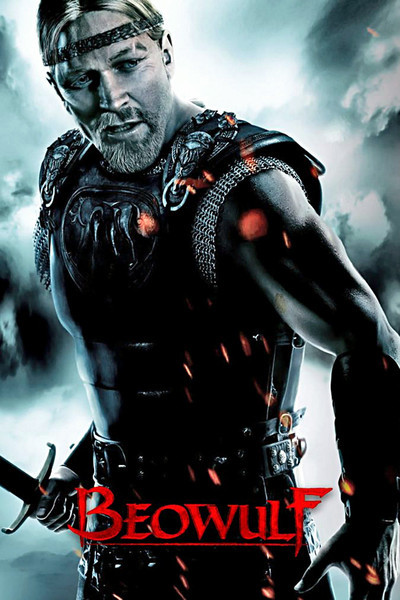
You can watch the movie “Beowulf” following this link
This online seminar opens up in an entirely new way our understanding of the real purpose storytelling plays in our lives, and will be a talking point for years to come.
Practical Information
Start Date: Any Date You Want
Duration: 5 weeks
Time: 1 hour each week personal coaching with Peter de Kuster
Language: English
Price: Euro 699 excluding VAT
Book your place by mailing us at peter@wearesomeone.nl
About Peter de Kuster
Peter de Kuster is the founder of The Heroine’s Journey & Hero’s Journey project, a storytelling firm which helps creative professionals to create careers and lives based on whatever story is most integral to their lives and careers (values, traits, skills and experiences). Peter’s approach combines in-depth storytelling and marketing expertise, and for over 20 years clients have found it effective with a wide range of creative business issues.

Peter is writer of the series The Heroine’s Journey and Hero’s Journey books, he has an MBA in Marketing, MBA in Financial Economics and graduated at university in Sociology and Communication Sciences.
What Can I Expect?
Here’s an outline of “The Hero’s Journey – The Seven Stories of your Life” itinerary.
Journey Outline
PART I THE SEVEN STORIES OF YOUR LIFE
- Overcoming the Monster
- Rags to Riches
- The Quest
- Voyage and Return
- Comedy
- Tragedy
- Transformation
The Dark Power: From Shadow into Light
PART II THE COMPLETE HAPPY ENDING
- The Twelve Dark Characters
- In the Zone
- The Perfect Balance
- The Unrealised Value
- The Drama
- The Twelve Light Charactres
- Reaching the Goal
- The Fatal Flaw
PART III MISSING THE MARK
- The Ego Takes Over
- Losing Your Plot
- Going Nowhere
- Why Sex and Violence?
- Rebellion Against ‘The One’
- The Mystery
PART IV WHY WE TELL STORIES
- Telling Us Who We Are: Ego versus Instinct
- Into the Real World: What Legend are You Living?
- Of Gods and Men: Finding Your Authentic Story
- The Age of Loki: The Dismantling of the Self
Epilogue: What is Your Story?
Introduction
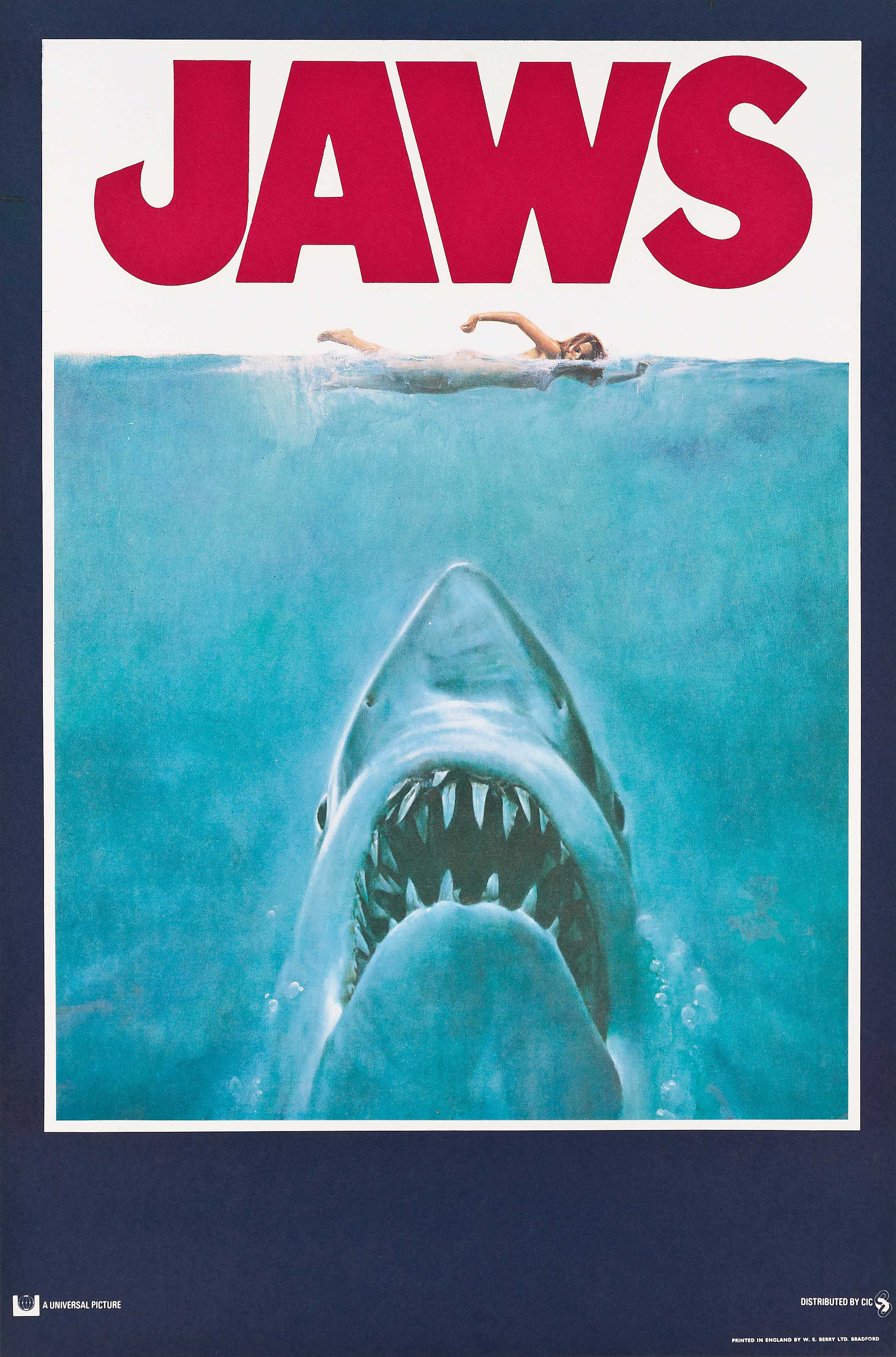
In the mid 1970s queues formed outside cinemas all over the Western world to see one of the most dramatic horror films ever made. Steven Spielberg’s Jaws told how the peace of a little Long Island seaside resort, Amity, was rudely shattered by the arrival offshore of a monstrou shark, of almost supernatural power.
For weeks on end the citizens are thrown into a stew of fear and confusion by the shark’s savage attacks on one victim after another. Finally, when the sense of threat seems almost too much to bear, the hero of the story, the local police chief Brody sets out with two companions to do battle with the monster. There is a tremendous climactic fight, with much severing of limbs and threshing about underwater, until at last the shark is slain. The community comes together in universal jubilation. The great threat has been lifted. Life in Amity can begin again.
It is safe to assume that few of the millions of sophisticated twentieth – century moviegoers who were gripped by this tale as it unfolded from the screens of a thousand luxury cinemas would have paused to think they had much in common with an unkempt bunch of animal-skinned Saxon warriors, huddled round the fire of some draughty, wattle – and – daub hall 1200 years before as they listened to the minstrel chanting out the verses of an epic poem.
The first part of Beowulf tells us how the little seaside community of Heorot is rudely shattered by the arrival of Grendel, a monster of almost supernatural powwer, who lives in the depts of a nearby lake. The inhabitants of Heorot are thrown into a stew of fear and confusion as, night after night, Grendel makes his mysterious attacks on the hall in which they sleep, seizing one victim after another and tearing them to pieces.
Finally when the sense of the threat almost too much to bear, the hero Beowulf sets out to do battle, first with Grendel, then with his even more terrible monster mother. There is a tremendous climactic fight, with much severing of limbs and threshing about underwater, until at last both monsters are slain. The community comes together in jubilation. The great threat has been lifted. Life in Heorot can begin again.
In terms of the bare outlines of their plots, the resemblances between the twentieth century horror and the eight century epic are so striking that they almost be regarded as telling the same story. One which moreover has formed the basis for countless other stories in the literature of mankind, at many different times and all over the world.
So what is the explanation?
You can watch the movie “Jaws” following this link
Why Do We Need Stories?
It is a curious characteristic of our modern civilisation that, whereas we are prepared to devote untold physical and mental resources to reaching out into the furthest recesses of the galaxy, or to delving in to the most delicate mysteries of the atom – in an attempt, to discover every last secret of the universe – one of the greatest and most important mysteries is lying so close beneath our noses that we scarcely even recognise it to be a mystery at all.
At any given moment, all over the world, hundreds of millions of people will be engaged in what is one of the most familiar of all forms of human activity. In oue way or another they will have their attention focused on one of those strange sequences of mental images which we call a story.
We spend a phenomenal amount of our lives following stories: telling them, listening to them, reading them, watching them acted out on the television screen or in fims or on a stage. They are far and away one of the most important features of our everyday existence.
Not only do fictional stories play such a significant role in our lives, as novels or plays, films or operas, comic strips or TV ‘soaps Through newspapers or television, our news is presented to us in the form of ‘stories’. Our history books are largely made up of stories. Even much of our conversation is taken up with recounting the events of everyday life in the form of stories. These structured sequences of imagery are in fact the most natural way we know to describe almost everything in our lives.
But it is obviously in their fictional form that we most usually think of stories. So deep and so instinctive is our need for them that, as small children, we have no sooner learned to speak than we begin demanding to be told stories, as evidence of an appetite likely to continue to our dying day.
So central a part have stories played in every society in history that we take it for granted that the great storytellers, such as Homer or Shakespeare, should be among the most famous people who ever lived. In modern times we have not thought it odd that certain men and women such as John Wayne and Bradd Pitt or Marilyn Monroe and Sophia Loren should come to be regarded as among the best known figures in the world, simply because they acted out the characters from stories on the cinema screen. Even when we look out from our own world into space, we find we have named many of the most conspicuous heavenly bodies – Venus, Mars, Jupiter, Orion, Perseus, Andromeda – after characters from stories.
Yet what is astonishing is how incurious we are as to why we indulge in this strange form of activity. What real purpose does it serve? So much do we take our need to tell stories for granted that such questions scarcely even occur to us.
In fact what we are looking at here is really one mystery upon another. Because our passion for storytelling begings from another faculty which is itself so much part of our lives that we fail to see just how strange it is: our ability to ‘imagine’, to bring up to our conscious perception the images of things which are not actually in front of our eyes. We have this capacity to conjure up the inward images not only of places, people and things not present to our physical senses, but even of things, such as a fire – breathing dragon, which have never existed physically at all.
And it is of course this ability to conjure up whole sequences of such images, unfolding before our inner eye like a film, which enables us to have dreams when we sleep, and when we are awake to focus our attention on these mental patterns, we call stories.
What I set out to show is that the making of these stories serves a far deeper and more significant purpose in our lives than we have realised; indeed one whose importance can scarcely be exaggerated. And the first crucial step towards bringing this into view is to recognise that, wherever men and women have told stories all over the world, the stories emerging to their imaginations have tended to take shape in remarkably similar ways.
The Basic Stories

We are all familiar with the teasing notion that there may be only seven (or six or five or two) stories in the world. It is tantalising.
I found my attention focusing on the 1001 great stories I have ever read or seen. They included stories in literature like a Shakespeare play Macbeth and Vladimir Nabokov’s novel Lolita, stories in the movies like The Deerhunter, The Godfather, Thelma and Louise, myths like the one of Icarus, legends like Faust. On the face of it, these stories might not seem to have much in common. But what intrigued me was the way, that at a deeper leve, they all seemed to unfold rond the same general story we – as humans – tell ourselves.
Each begins with a hero, or heroes, in some way unfulfilled. The mood at the beginning of the story is one of anticipation, as the hero seems to be standing on the edge of some great adventure or experience. In each case he finds a focus for his ambitions or desires, and for a time seems to enjoy almost dream-like success. Macbeth becomes king, Humbert embarks on his affair with the bewitching Lolita, Icarus discovers that he can fly; Faust is given access by the devil to all sorts of magical experiences. But gradually the mood of the story darkens.
The hero experiences an increasing sense of frustration. There is something about the course he has chosen which makes it appear doomed, unable to resolve happily. More and more he runs into difficulty; everyting goes wrong until that original dream has turned into a nightmare. Finally, seemingly inexorably, the story works up to a climax of violent self-destruction. The dream ends in death.
So consistent was the pattern underlying each of these stories that it was possbile to track it in a series of five identifiable stages from the initial mood of anticipation. Through a ‘dream stage’ when all seems to be going unbelievably well, to the ‘frustration’ stage when things begin to go mysteriously wrong, to the ‘nightmare stage’ where everything goes horrendously wrong, ending in that final moment of death and destruction.
Think about a good many dramatic tragedies such as Romeo and Julia or Carmen, the story of Don Juan, the dreams turned to nightmare of those two unhappy heroines, Emma Bovary and Anna Karenina, both ending in suicide. Or Bonny and Clyde, describing the two young lovers who lightheartedly embark on a career as bank robbers and end up riddled with a hail of bullets.
Again and again through the history of storytelling it was possible to see this same theme, of a hero or heroine being drawn into a course of action which leads initially to some kind of hectic gratification and dream-like success, but which then darkens inexorably to a climax of nightmare and destruction. And at this point two questions began to intrude.
First, why was this so? Why has the imagination of storytellers in the history of mankind seemd to form so readily and regularly round the same theme? Why do we recognise it as such a satisfactory shape to a story. Secondly, were there other patterns like this underlying stories, shaping them in quite different ways? What about all those stories which have ‘happy endings’? Were there any similar basic patterns underlying these too?
The Big Question
As soon as I began to look at stories in this light, a number of basic themes in the great stories began to suggest themselves. There were, for instance, all those stories about ‘overcoming of a monster’ like Jaws or Beowulf, in which our interest centers on the threat posed by some monstrous figure of eveil, who is then challenged by the hero and finally, after a climactic battle, killed.
There is the theme of ‘enormous personal growth’ like The Ugly Duckling or Cinderella, where our main interest lies in seeing some initally humble and disregarded little hero or heroine being raised up to a position of immense success and splendour. There were stories based on the theme of a great quest, like the Odyssey or The Lord of the Rings, where our interest centres on the hero’s long, difficult journey towards some distant, enormously important goal.
I embarked on a quest, looking and reading through hundreds of stories of every type of story imaginable: from the myths of ancient Mesopotamia and Greece to James Bond and Star Wars; from ET and Close Encounters of the Third Kind to Proust; from the Marx Brothers to the Marquis de Sade and the Texas Chainsaw Massacre; from the biblical story of Job to Orwell’s Nineteen Eighty -Four; from the tragedies of the Roman myths to Sherlock Holmes; from the operas of Wagner to The Sound of Music; from Dante’s Divine Comedy to Amelie. And it was not long before I began to make a startling discovery. Not only did it indeed seem to be true that there were a number of basic themes or plots which continually recurred in the storytelling of mankind, shaping tales of very different types and from almost every age and culture. Even more surprising was the degree of detail to which these ‘basis story plots’ seemed to shape the stories they had inspired; so that one might find, for instance, a well – known nineteenth-century novel constrected in almost exactly the same way as a Middle Eastern folk tale dating from 1200 years before; or a popular modern children’s story revealing remarkable hidden parallels with the structure of an epic poem composed in ancient Greece.
The stories seemed to be completely diverse: several were classic children’s stories, like Peter Rabbit, Peter Pan and Alice in Wonderland; there were a long list of novels, from Robinson Crusoe to Brideshead Revisited; there were science fiction stories, like H.G. Well’s The Time Machine; there were films ranging from The Third Man and the Wizard of Oz to Gone with the Wind. The further my journey proceeded, the more clearly two things emerged. The first was that there are indeed a small number of story plots which are so fundamental to the way we tell stories that it is virtually impossible for any storyteller ever entirely to break away from them. The second was that, the more familiar we become with the nature of these shaping forms and forces lying beneath the surface of stories, pushing them into patterns and directions which are beyond the storyteller’s conscious control, the more we find that we are entering a realm to which recognition of the plots themselves proves only to have been the gateway. We are in fact uncovering nothing less than a kind of hidden, universal story language; a nucleus of situations and figures which are the very stuff from which stories are made.
And once we become acquainted with this symbolic story language, and begin to catch something of its extraordinary significance, there is literally no story in the world which cannot be seen in a new light: because we have come to the heart of what stories are about and why we tell them.
Our Program
This is a great hero’s journey. Before we embark I should set out a brief route map, so that it will become clear how the different stages of this hero’s journey build on each other in working towards the eventual goal.
This hero’s journey is divided in four parts.
Part One, The Seven Stories of Your Life examines each of the seven great stories of mankind. At first kind, each is quite distinctive. But as we work through the stories, we gradually come to see how they have certain key elements in common, and how each is in fact presenting its own particular view of the same central preoccupation which lies at the heart of storytelling.
Part Two, ‘They Lived Happily Ever After, looks more generally at what all this main story types have in common. In particular we find that they are not only basis plotsto stories but a cast of basic figures who reappear through stories of all kinds, each with their own defining characteristics. As we explore the values which each of these archetypal stories represents, and how they are related, this opens up an entirely new perspective on the essential drama with which storytelling is ultimately concerned. But we also come to see how there are certain conditions which must be met before any story can come to a fully resolved ‘they live happily ever after’ ending. This leads on to part three to an hero’s journey into one of the most revealing of all factors which govern the way stories take shape in the human mind.
The third part of this hero’s journey, ‘The Tragedy” concentrates almost entirely on stories from the last 200 years, explores how and why it is possible in a storyteller’s imagination, for a story ‘to go wrong; or as we say end tragically. The first two parts of the seminar have been primarily concerned with those stories which express the archetypal patterns underlying them in a way which enables them to come to a fully resolved and satisfactory ending. In the third section of the seminar we see how, in the past two centuries, something extraordinary and highly significant has happened to storytelling in the western world. Not only do we look here at such an obvious question as why in recent times storytelling should have shown such a marked obsession with sex and violence. As we look at how each of the basic story plots has developed what may be called its ‘dark’ and ‘light’ versions we see how a particular element of disintegration has crept into modern storytelling which distinguishes it from anything seen in history before. But this in turn merely reveals one of the most remarkable features of how stories take shape in the human imagination; because we also see how those archetypal rules which have governed storytelling since the dawn of history have in no way changed.
This third part of the seminar ends with a discussion on what are arguably the two most centrally puzzling stories produced by the Western imagination, Sophocles’s Oedipus Tyrannos and Shakespeare’s Hamlet. Only at this point have we at last completed the groundwork which is necessary to looking at the deepest questions of all. Just why in our biological evolution has our species developed the capacity to create these patterns of images in our heads? What real purpose does it serve? And how do stories relate to what we call ‘real life’?
These are the questions we look at in the fourth and final part of the journey ‘Why We Tell Stories’, which begins with two very significant types of story we have not looked at before. This relates myths about the creation of the creation of the world and the ‘fall of innocence’ to the evolution of human consciousness and our relations with nature and instinct. In unravelling these riddles, what we see is how and why the hidden language of stories provides us with a picture of human nature and the inner dynamics of human behaviour which nothing else can present to us with such objective authority. We see how a proper understanding of why we tell stories sheds an extraordinary new light on almost every aspect of human existence: on our psychology; on morality; on the patterns of history and politics, the nature of religion and most importantly on the underlying pattern and purpose of our individual lives. We look at the question what the storytellers tell about the power of the story you tell yourself – about yourself – and how you can rewrite your story and thus transform your destiny.
Once Upon a Time
Imagine we are about to be plunged into a story – any story in the world. A curtain rises on a stage. A cinema darkens. We turn to the first paragraph of a novel. A narrator utters the age – old formula ‘Once upon a time….’
On the face of it, so limitless is the human imagination and so boundless the realm at the storyteller’s command, we might think that literally anything could happen next
But in fact, there are certain things we can be pretty sure we know about our story even before it begins.
For a start, it is likely that the story will have a hero, or a heroine, or both; a central figure, or figures, on whose fate our interest in the story ultimately rests; someone with whom, as we say, we can identify.
We are introduced to our hero or heroine in an imaginary world. Briefly or at length, the general scene is set. The purpose of the formula ‘Once upon a time ‘ whether the storyteller uses it explicitly or not, is to take us out of our present place and time into that imaginary realm where the story is to unfold, and to introduce us to the central figure with whom we are to identify.
Then something happens: some event or encounter which precipitates the story’s action, giving it focus. In fact the opening of the story is governed by a kind of double formula ‘once upon a time there was such and such a person, living in such and such place… then, one day, something happened.’
We are introduced to a little boy called Aladdin, who lives in a city in China… then one day a Sorcerer arrives and leads him out of the city to a mysterious underground cave. We meet a Scottish general, Macbeth, who has just won a great victory over his country’s enemies… then, on his way home, he encounters the mysterious witches. We meet a girl called Alice, wondering how to amuse herself in the summer heat… then suddenly she sees a White Rabbit running past, and vanishing down a mysterious hole. We see the great detective Sherlock Holmes sitting in his Baker Street lodgings… then there is a knock at the door and a visitor enters to present him with the next case.
This event provides ‘the Call’ which will lead the hero or heroine out of their initial state into a series of adventures or experiences which, to a greater or lesser extent, will transform their lives.
The next thing of which we can be sure is that the action which the hero or heroine are being drawn into will involve conflict and uncertainty, because without some measure of both there cannot be a story. Where there is a hero there may also be a villain (on some occasions, indeed, the hero himself may be the villain). But even if the characters in the story are not necessarily contrasted in such black – and – white terms, it is likely that some will be on the side of the hero or heroine, as friends and allies, while others will be out to oppose them.
Finally we shall sense that the impetus of the story is carrying it towards some kind of resolution. Every story which is complete, and not just a fragmentary string of episodes and impressions, must work up to a climax where conflict and uncertainty are usually at their most extreme. This then leads to a resolution of all that has gone before, bringing the story to its ending. And here we see how every story has in fact leading its central figure or figures in one of two directions. Either they end as we say, happily with a sense of liberation, fulfilment and completion. Or they end unhappily, in some kind of discomfiture, frustration or death
To say that stories either have happy or unhappy endings may seem such a commonplace that one almost hesitates to utter it. But it has to be said, simply because it is the most important single thing to be observed about stories. Around that one fact, and around what is necessary to bring a story to one type of ending or the other, revolves the whole of their extraordinary significance in our lives.
It was Aristoteles in Poetics who observed first that a satisfactory story – a story which, as he put it, is a ‘whole’ – must have a beginning, a middle and an end’. And it was Aristotle who, in the context of the two main types of stories first explicitly drew attention to the two kinds of ending a story may lead up to. On the one hand, as he put it in the Poetics, there are tragic stories. These are stories in which the hero’s or heroine’s fortunes usually begin by rising, but eventually ‘turn down’ to disaster (the greek word catastrophe means literally a down stroke, the downturn in the hero’s fortunes at the end of a tragedy). On the other hand, there are, in the broadest sense, comedies: stories in which things initially seem to become more and more complicated for the hero or heroine, until they are entangled in a complete knot, from which there seems no escape. But eventually comes what Aristotle calls the peripeteia or ‘reversal of fortune’. The knot is miraculously unravelled. Hero, heroine or both together are liberated; and we and all the world can rejoice.
This division holds good over a much a greater range of stories than might be implied just by the terms ‘tragedy’and ‘comedy’. Indeed, with qualifications, it remains true right across the domain of storytelling. The plot of a story is that which leads its hero or heroine either to a ‘catastrophe’ or an ‘unknotting’; either to frustration or to liberation; either to death or to a renewal of life. And it might be thought that there are almost as many ways of describing these downward or upward paths as there are individual stories in the world. Yet the more carefully we look at the vast range of stories thrown up by the human imagination through the ages, the more clearly we may discern there are certain continyally recurring shapes to stories. It is at the most important of these underlying shapes of stories that we now look.
Overcoming the Monster
In 1839 a young Englishman, Henry Austen Layard, set out to travel overland to Ceylon, the island now known as Sri Lanka. Halfway through his journey, when he was crossing the wild desert region then known as Mesopotamia, his curiosity was aroused by a series of mysterious mounds in the sand. He paused to investigate them, and thus began one of the most important investigations in the history of archaeology. For what Layard had stumbled on turned to be the remains of one of the earliest cities ever built by humankind, biblical Niniveh.
Over the decades which followed, many fascinating discoveries were made at Niniveh, but none more so than a mass of clay tablets which came to light in 1853, covered in small wedge-shaped marks which were obviously some unknown form of writing. The task of deciphering this ‘cuneiform’ script was to take the best part of the next 20 years. But when in 1872 George Smith of the British Museum finally unveiled the results of his labours, the Victorian public was electrified. One sequence of the tablets contained fragments of a long epic poem, dating back to the dawn of civilisation, it was by far the earliest written story in the world.
The first part of the Sumerian Epic of Gilgamesh tells how the kingdom of Uruk has fallen under the terrible shadow of a great and mysterious evil. The source of the threat is traced to a monstrous figure, Humbaba, who lives half across the world, in an underground cavern at the heart of a remote forest. The hero, Gilgamesh, goes to the armourers who equip him with special weapons, a great bow and a mighty axe. He sets out on a long, hazardous journey to Humbaba’s distant lair, where he finally comes face to face with the monster. They enjoy a series of taunting exchanges, then embark on a titanic struggle. Against such supernatural powers, it seems Gilgamesh cannot possibly win. But finally, by a superhuman feat, he manages to kill his monstrous opponent. The shadowy threat has been lifted. Gilgamesh has saved his kingdom and can return home triumphant.
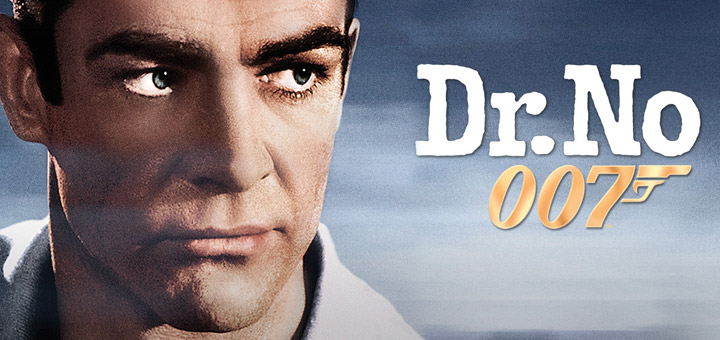
In the autumn of 1962, 5000 years after the story of Gilgamesh a fashionable crowd converged on Leicester Square in London for the premiere of a new film. Dr No was the first of what was to become, over the next 40 years, the most popular series of films ever made (even by 1980 it was estimated that one or more of the screen adventures of James Bond had been seen by some 2 billion people, then nearly half the earth’s population). With their quintesssentially late – twentieth century mixture of space – age gadgetry, violence and sex, anything more remote from the primitive world of those inhabitants of the first cities who conceived the religious myth of Gilgamesh might seem hard to imagine.
Yet consider the story which launched the series of Bond films that night in 1962. The Western world falls under the shadow of a great and mysterious evil. The source of that threat is traced to a monstrous figure, the mad and deformed scientist Dr No, who lives half across the world in an underground cavern on a remote island. The hero James Bond goes to the armourer who equips him with special weapons. He sets out on a long, hazardous journey to Dr No’s distant lair, where he finally comes face to face with the monster. They enjoy a series of taunting exchanges, then embark on a titanic struggle. Against such near – supernatural powers, it seems Bond cannot possibly win. But finally, by a superhuman feat, he manages to kill his monstrous opponent. The shadowry threat has been lifted. The Western world has been saved. Bond can return home triumphant.
Any story which can make such a leap across the whole of recorded human history must have some profound symbolic significance in the inner life of mankind. Certainly this is true of our first type of story, the plot which may be called ‘Overcoming the Monster’.
The Essence of the Monster
The realm of storytelling contains nothing stranger or more spectacular than the terrifying, life-threatening, seemingly all-powerful monster whom the hero must confront in a fight to the death.
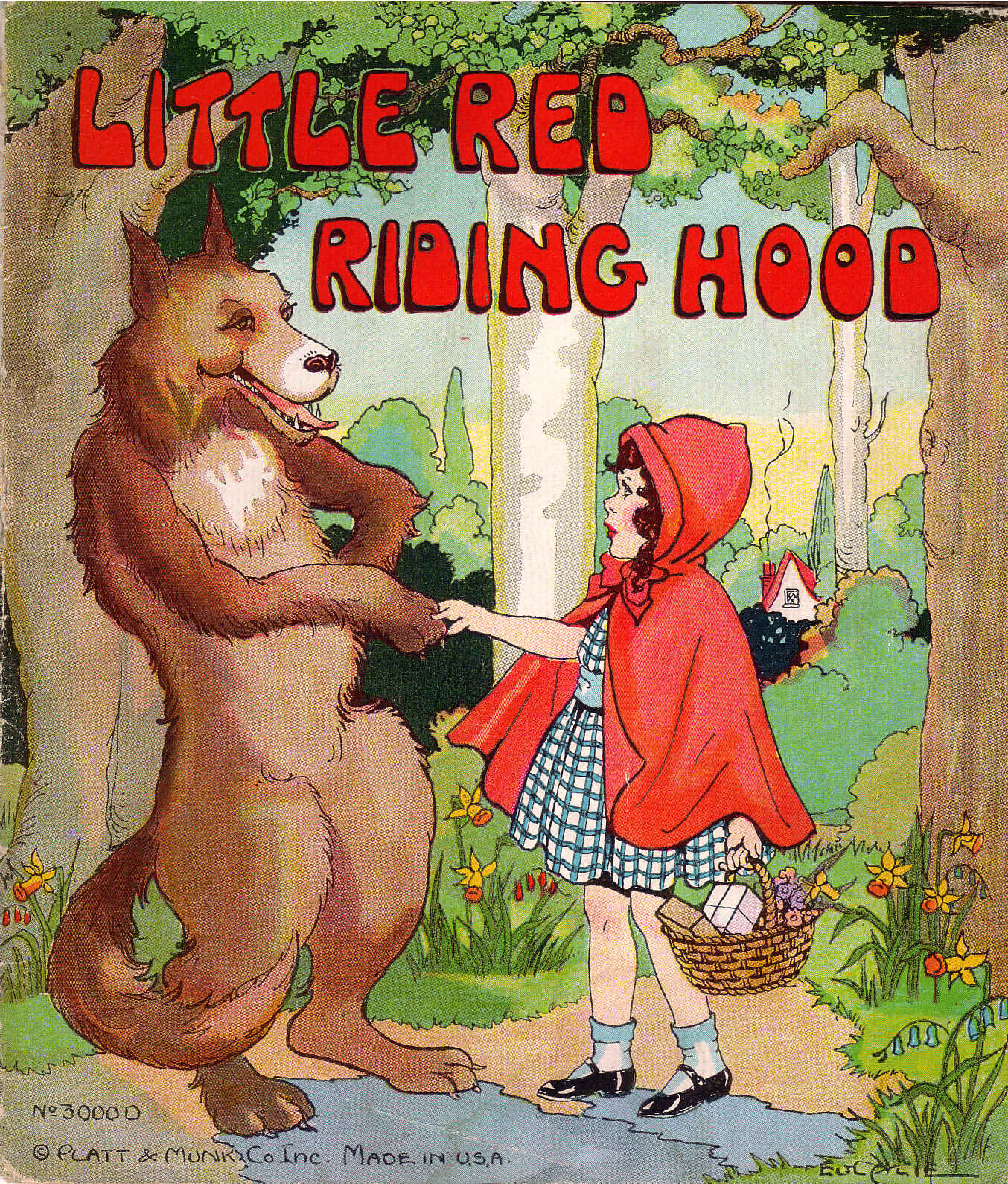
We first usually encounter these extraordinary creations early in our lives, in the guises of wolves, witches and giants of fairy tales. Little Red Riding Hood goes off into the great forest to visit her kindly grandmother, only to find that granny has been replaced by the wicked wolf, whose only desire is to eat Red Riding Hood. In the nick of time, a brave forester bursts in to kill the wolf with his axe and the little heroine is saved.
Hansel and Gretel are cruelly abandoned to die in the forest, where they meet the apparantly kindly old woman who lives in a house made of gingerbread. But she turns out to be a wicked witch, whose only wish is to devour them. Just when all seems lost, they manage to push her into her own oven and burn her to death, finding, as their reward, a great treasure with which they can triumphantly return home.
Jack climbs his magic beanstalk to discover at the top a new world, where he enters a mysterious castle belonging to a terrifying and bloodthirsty giant. After progressively enraging this monstrous figure by three successive visits, each time managing to steal a golden treasure, Jack finally arouses the giant to what seems like a fatal pursuit. Only in the nick of time does Jack manage to scramble down the beanstalk, and bring it crashing down with an axe. The giant falls dead to the ground and Jack is left to enjoy the three priceless treasures he has won from its grasp.
The essence of the ‘Overcoming the Monster’ story is simple. Both we and the hero are made aware of the existence of some superhuman embodiment of evil power. This monster may take human form (e.g. a giant or a witch), the form of an animal (a wolf, a dragon, a shark) : or a combination of both (the Minotaur, the Sphinx). It is always deadly, threatening an entire community or kingdom, even mankind and the world in general. But the monster often also has in its clutches some great prize, a priceless treasure.
So powerful is the presence of this figure, so great the sense of threat which emanates from it, that the only thing which matters to us as we follow the story is that it should be killed and its dark power overthrown. Eventually the hero must confront the monster, often armed with some kind of ‘magic weapons’ and usually in or near its lair, which is likely to be in a cave, a forest, a castle, a lake, the sea, or some other deep and enclosed place. Battle is started and it seems that, against such terrifying odds, the hero cannot possibly win. Indeed there is a moment where his destruction seems all but inevitable. But at the last moment, as the story reaches its climax, there is a dramatic reversal. The hero makes a ‘thrilling escape from the death’ and the monster is slain. The hero’s reward is beyond price. He wins the treasure. He has liberated the world – community, kingdom, the human race – from the shadow of this threat to its survival. And in honour of his achievement, he may well go on to become some kind of ruler.
The Monster in Greek Myths

There have been few cultures in the world which have not produced some version of the Overcoming the Monster story. But a civilisation we particularly associate with such stories is that of the ancient Greeks, whose mythology was swarming with monsters of every kind, from the original Titans overcome by Zeus or the one-eyed giant Polyphemus blinded by Odysseus to the mighty Python strangled by Apollo or the riddle-posing Sphinx who could correctly answer her riddle (for which he was chosen to be king over Thebes).
One of the most celebrated of the Greek monster – slaying heroes was Perseus, who had to overcome not one monster, but two, one female, one male. When, as a young boy, he is cast adrift in the world with his beautiful mother, the Princess Danae, the two fall under the shadow of the cruel tyrant Acrisius, who demands that Danae should succumb to his advances. In a desperate bid to save his mother from this fate, young Perseus offers to perform any task the tyrant should set him. The cruel Acrisius therefore sends the boy off to the end of the world to obtain the head of the dreadful Gorgon Medusa, the mere sight of whose face is sufficient to turn a man to stone.
Perseus is equipped by the gods with magic weapons, a pair of winged sandals, enabling him to fly, a ‘helmet of invisibility’ and a brilliantly polished shield, in which he will be able to see the Medusa’s reflection without having to look at her directly. Perseus reaches the Gorgon’s lair at the Western edge of the world, and severs the Medusa’s snake-covered head. It might seem that he has triumphantly concluded the task that has been set him; but we now learn that this was merely the essential preparation for a further immense task which awaits him on his journey home. As he flies back with his prize, he looks down to see a beautiful, weeping Princess Andromeda, chained to a rock by the sea. She has been placed there as tribute to appease a fearsome sea-monster, which has been sent by Poseidon to ravage her father’s kingdom. Perseus sees the huge reptile rising out of the deeps to seize Andromeda and swoops down to engage in battle. He is able to use the trophy of his first victory, the head of Medusa, to turn the monster to stone. He is rewarded with the hand of the Princess, for liberating her father’s kingdom from the awful threat. He returns home, where he uses the Medusa’s head to turn the tyrant Acrisius to stone, and eventually goes on to become king of Argos.
Another celebrated monster – slayer was Theseus, who also grows up alone in the world with his mother. On coming of age he goes to rejoin his father, King Aegeus in Athnes, having to kill a series of monsters and villains on the way. But when he arrives he finds his father’s kingdom under a terrible shadow, cast by a rival kingdom across the sea in Crete, ruled over by the grim tyrant King Minos.
Every ninth year the Athenians must pay a tribute to the tyrant, by sending the flower of their city’s youth to feed the frightful monster the Minotaur, half – bull, half man, which lives iat the heart of the mighty Labyrinth. A dark, enclosed stone maze from which no one has ever found a way out. Theseus volunteers to lead the party of young men and maidens who are to be sacrificied to this creature; and on arriving in Crete he wins the love and support of the tyrant’s daughter Ariadne, who secretly supplies him with the ‘magic aids’, a sword and a skein of thread, he needs to win victory.
Finding his way to the centre of the Labyrinth, unravelling the thread, he confronts the Minotaur and kills it. Ariadne’s thread enables him to retrace his way back through the maze of tunnels to the open air. It is true that, when they then flee together back to Athens, Theseus abandons his Princess on the island of Naxos. And as he comes within sight of the mainland, and forgets to hoist a white rather than a black sail to show his father that he has returned victorious, King Aegeus throws himself in grief into the sea which afterwards bore his name. But this also means that, like many another monster-slaying hero, Theseus succeeds to the kingdom, becoming the greatest ruler Athens ever had. He also eventually marries the Princess, by making Ariadneś sister Phaedra his queen.
The Monster in the Dark Ages
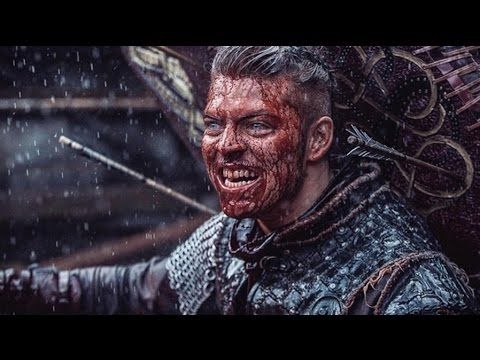
Another notable constellation of monster tales were those which loomed up in the imaginations of the inhabitants of northern Europe, amid the mists and darkness of the first millenium of the Christian era. The world has rarely seen such a parade of giants, dragons, trolls, treacheous dwarves, foul fiends and ‘loathly worms’ as infested the Norse sagas and Germanic and Celtic epics of these times. And here the hero’s immediate reward for slaying the monster was likely to be a fabulous treasure.
One such tale, later to achieve wider currency from its adaption by Wagner, was the episode in the Volsunga Saga which tells of how the young hero Sigurd, with the aid of his ‘magic weapon’, the great sword Gram, slays the horrible monster Fafnir, who sits in the middle of a wilderness brooding over a great treasure, which includes access to all sorts of runic knowledge, such as an understanding of the song of the birds. But he then goes on to discover ‘the beauteous battle-maiden’ Brynhild, lying asleep on a mountain top guarded by a ring of magic flames which only the true hero can enter; and it is the treasures and the secret knowledge he has won from his victory over Fafnir which enable him to waken her and win her love.
Another celebrated Overcoming the Monster story from the Dark Ages is that of Beowulf. Again we begin with the familiar image of a kingdom which has fallen under a terrible shadow: the little community of Heorot which is nightly menaced by the predatory assaults of the mysterious monster Grendel. The young hero Beowulf comes from across the sea and eventually in a great nocturnal battle, deals the monster a mortal wound: only to disover when he tracks the trail of Grendel’s blood that he must confront the monster’s even more terrible mother, in the lair at the bottom of a deep lake where she is brooding over the body of her dead son. Although Beowulf’s immediate reward for his victory over the two monsters is a rich hoard of ‘ancient treasures and twisted gold’ from a grateful king whose kingdom he has saved, he then returns home to become king over his own kingdom (many years later, at the end of his life, he has to confront a third monster, in a profoundly symbolic episode which we shall look at much later in this seminar).
Of the many Overcoming the Monster stories thrown up by Christian Europe in the Middle Ages, probably the most familiar is that of St George and the Dragon, which appears to be a Christian adaptation of the Perseus myth. The hero comes to a kingdom which is being ravaged by a dragan and, like Perseus finds a beautiful Princess tethered by the edge of the sea, where she has been placed by her countrymen in a last desperate bid to buy off the monster’s attacks. The monster approaches and George slays him; but unlike Perseus, George is not then able to marry the Princess he has freed. Since this is rather self consciously a ‘Christian’ version of the tale, his reward is simply to insist that all the inhabitants of the country should be baptised: in other words, that they should all succeed in another ‘kingdom’, the kingdom of Christ.
The Bloodsucking Monster
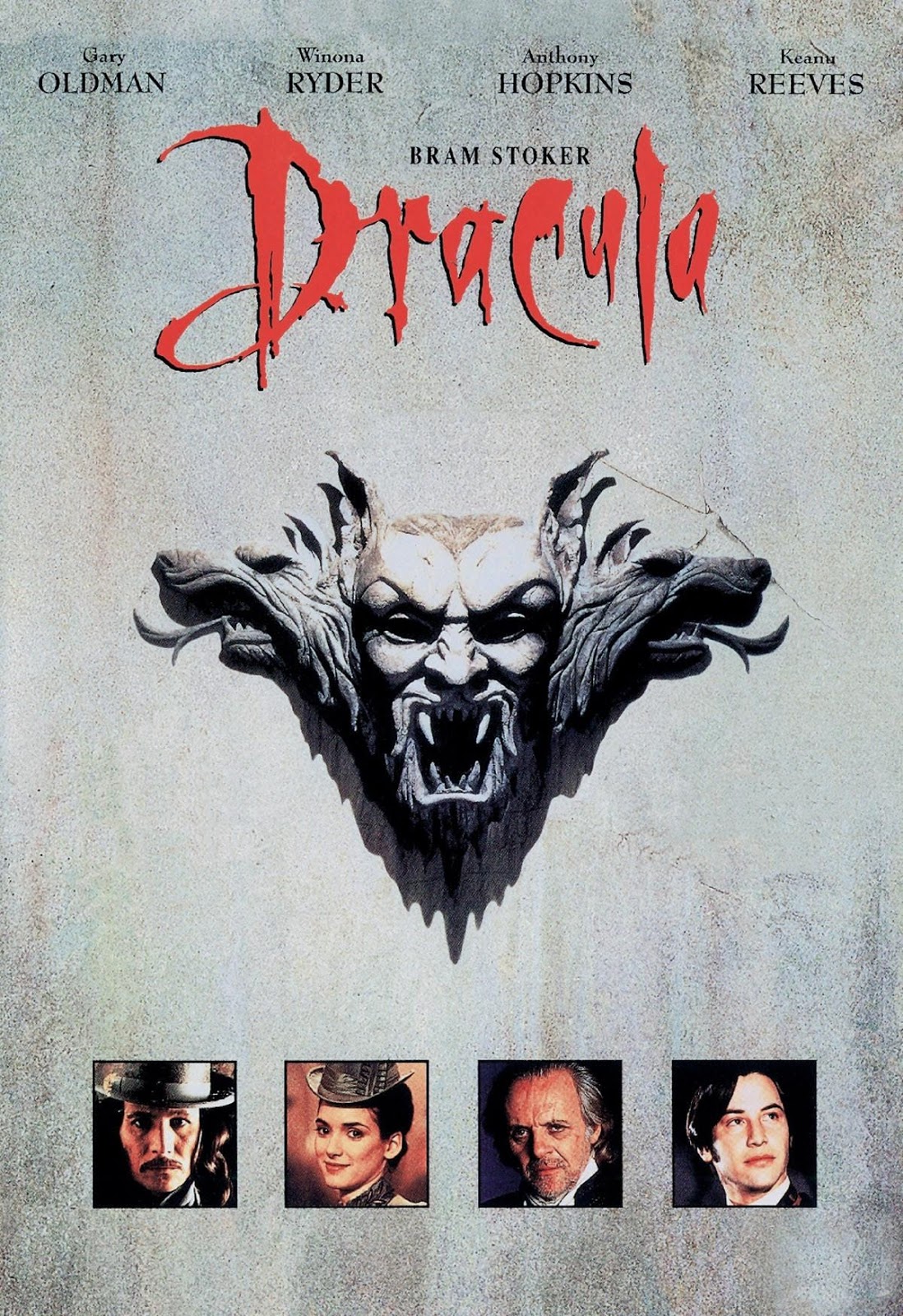
During the centuries of diminishing faith in the supernatural which followed the Middle Ages and the Renaissance, the more obviously fantastic dragons and monsters of old slipped below the horizon of European storytelling (although it never faded away altogether). But then, in a way which to the rationalistic age of the Enlightment or even through most of the literal, materialistic Victorian era would have seemed wholly improbable, fabulous and terrifying ‘monsters’ came back into vogue in a quite remarkable fashion.
It all happened quite suddenly, in the closing years of the nineteenth century. Over the previous 100 years there had been a number of premonitory signs notably in the taste for ‘Gothic horror’ which had been such an important reflection of the rise of the Romantic movement with stories as Mary Shelley’s Frankenstein. But in the space of just a few years in the 1890’s there appeared in England a rash of stories of the kind which have played such a dominant part in popular entertainment ever since – ghost stories, tales of horror, science fiction – in which monsters of the most grotesque and improbable variety once again surged to the forefront of Western popular storytelling.
An Anglo-Irish former civil servant, Bram Stoker published in 1897 Dracula. Stories blood-drinking vampires had been told at various times before in history but Stoker’s version was conceived on a new plane of horror. The story divided in two parts. In the first, the hero, a young English lawyer named Harker, makes a visit to a mysterious, ruined castle deep in the wolf-infested forests of Transylvania. There is an air of indescribable evil, both about the place and about his client, Count Dracula, a man with sharp, protruding teeth and unnaturally red lips.
Harker discovers that he is trapped by a man who can crawl face downwards on the castle wall by moonlight; whom he finds one day lying as if dead, ‘bloated’with blood, ‘like a filthy leech, exhausted with his repletion’ ; who seems to be in command of a whole army of equally horrible supernatural spirits.
Just how the hero escapes from seemingly certain doom is never made clear, but the second part of the story tells of how Dracula ‘invades’ England, and in particular the battle by Harker and a group of friends to prevent the monster taking over two young girls, one of them Harker’s intended wife Mina, to recruit them into his shadowy army of the living dead. The first of them, Mina’s friend Lucy, falls fatally into Dracula’s power. Having destroyed one ‘princess’, Dracula then turns his nocturnal attacks on the other, the hero’s financée Mina. Gradually we see her sinking away into the monster’s deadly power. Harker and his friends eventually Dracula down and pursue him back to his Transylvanian lair where, just in the nick of time before Mina finally expires, they manage to operate their ‘magic weapon’by plunging a stake into the monster’s heart (the only way a vampire can be killed).
‘before our very eyes, and almost in the drawing of a breath, the whole body crumbled into dust and passed from our sight.’
Mina – and mankind – are saved!
In 1898, the year after Dracula, H.G Wells published ‘The War of the Worlds’. Again, it was by no means the first science fiction story, but the comparatively cosy fantasies of Jules Verne had contained nothing like this. Puffs of fire are seen on Mars, huge meteorites flash across the sky and some come to earth in southern England. The initial mood of excited curiosity changes to alarm, when it appears that these mysterious, half buried cylinders contain life.
The nightmarish realisation dawns that these huge ‘fungoid’monsters climbing out of the cylinders are implacably hostile. They assemble great ‘tripod machines’whih stride across the countryside, armed with ‘Heat Rays’and the deadly ‘Black Smoke against which mankind has seemingly no defence. Southern England is laid waste, as towns and cities burn, corpses pile up and the countryside is gradually submerged beneath the horrible ‘Red Weed’. Can the world survive?
Then as the hero cowers in a cellar in south London, all alone and imagining his wife to be dead, he hears floating across the deserted, half ruined city a ghastly, wailing cry ‘Ulla, ulla, ulla. He cautiously picks his way up to Primrose Hill, where he sees the great machines standing silent, the dead Martians hanging out of them as strips of decaying meat. The invading monsters have fallen prey to humble earthly bacteria, the one thing against which they had no defence. Mankind is saved and the story ends on the image of the hero being joyfully reunited with his wife who turns out, like him, to have miraculously survived.
The Purpose of the Monster

What is this monster which, since time immemorial, has so haunted the imagination and fantasies of mankind?
It is a question of deepest importance to the understanding of stories, relevant to tales of many kinds other than just those centred on the plot we have been discussing. The question may be put in the singular – speaking of one ‘monster’ rather than many – if only because of the essential characteristics of this creature are so unvarying, regardless of the variety of outward guises in which he (or she) appears.
For a start, throughout the world’s storytelling, we find the monster being described in strikingly similar language. It tends, of course, to be highly alarming in its appearance and behaviour. It may be:
- horrible, terrible, grim, mis-shapen, hate-filled, ruthless, menacing, terrifying
As goes without saying, it is mortally dangerous:
- deadly, bloodthirsty, ravening, murderous, venomous, poisonous
It is deeply and tricky opponent to deal with:
- cunning, treacherous, vicious, twisted, slippery, depraved, vile
There is also often something about its nature which is mysterious and hard to define. It may be:
- strange, shapeless, sinister, weird, nightmarish, ghastly, hellish, fiendish, demonic, dark.
In other words, in its oddly elusive way, we see this ‘night creature’ whether it is a giant or a with, a dragon or a devil, a ghost or a Martian, representing (often vested in a kind of dark, supernatural aura) everything which seems most inimical, threathening and dangerous in human nature, when this is turned against ourselves.
Then there are the monster’s physical attributes. And here we must not be misled by the fact the monster is so often represented as an animal, or even a composite of several animals: e.g. the dragon. Such monsters may be animal in form, but they are invariably invested with attributes no animal in nature would possess, such as a peculiar cunning or malevolence. They are in fact preternatural, having qualities which are at least partly human.
Not Completely Human

There are many monsters in stories which are human, but invested with animal attributes, either directly, like the Minotaur, half-man, half-bull. They are seen as less than wholly human. And even when monsters are shown as entirely human in appearance, they tend to be in some way physically abnormal: abnormally large (giants), abnormally small (dwarves) or in some way deformed (e.g. missing an eye or a limb, or hunchbacked).
By definition, the one thing the monster in stories can never be is an ideal, perfect, whole human being.
Then there are the monster’s behavioural attritutes. We invariably see it acting in one of three roles:
- In its first ‘active’ role, the monster is Predator. It wanders menacingly or treacherously through the world, seeking to force or to trick people into its power.
- The monster’s second, more ‘passive’ role is as Holdfast. It sits in or near its lair, usually jealously guarding the ‘treasure’ it has won into its clutches. It is in this role a keeper and a hoarder, broody, suspicious, threatening destruction to all who come near.
- When its guardianship is in any way challenged, the monster enters its third role as Avenger. It lashes out viciously, bent on pursuit and revenge.
In fact, we may often see the same monster acting out all three roles at different stages of the same story. In Jack and the Beanstalk, for instance, we first see the giant as Predator, prowling about, demanding human food. We next see him as Holdfast, brooding in miserly fashion over his treasures. We finally see him, when Jack steals the treasures, running angrily in pursuit, as Avenger. And the point about these three roles is that they represent all the main aspects of the way human beings behave when acting in an entirely self-seeking fashion. When people are at odds with the world, behaving selfishly or anti-socially, they are after ‘something’ as Predators; wanting grimly to ‘hold on to something, as Holdfasts; or as Avengers, resentfully trying ‘to get their own back’.
One may sum up by saying that, physically, morally and psychologically, the monster in storytelling thus represents everything in human nature which is somehow twisted and less than perfect. Above all, and it is the supreme characteristic of every monster who has ever been portrayed in a story, he or she is egocentric. The monster is heartless; totally unable to feel for others, although this may sometimes be disguised beneath a deceptively charming, kindly or solicitous exterior; its only real concern is to look after its own interests, at the expense of everyone else in the world.
Such is the nature of the figure against whom the hero is pitted, in a battle to the deat. And we never have any doubt as to why the hero stands in opposition to such a centre of dark and destructive power: because the hero’s own motivation and qualities are presented as so completely in contrast to those ascribed to the monster. We see the hero being drawn into the struggle not just on his own behalf but to save others: to save all those who are suffering in the monster’s shadow; to free the community or the kingdom the monster is threatening; to liberate the ‘Princess’ it has imprisoned. The hero is always shown The hero is always shown as acting selflessly and in some higher cause, in a way which shows him standing at the opposite pole to the monster’s egocentricity.
And even though the monster wields such terrifying power that, almost to the end, its dark presence is the dominant factor holding sway over the world described by the story, it has one weakness which ultimately renders it vulnerable. Despite its cunning, its awareness of the reality of the world around it is in some important respect limited. Seeing the world through tunnel vision, shaped by its egocentric desires, there is always something which the monster cannot see and is likely to overlook. That is why, by the true hero, the monster can always in the end be outwitted: as was the mighty Goliath by little David, who was able to stay out of reach of the giant’s strength by using his little slingstones. As was the Medusa by Perseus with his reflecting shield, which meant he did not have to look at her directly; as was Minos by his own daughter secretly presenting Theseus with the sword and thread; as were Well’s Martians by their overlooking even something as apparently insignificant as the destructive power of bacteria. It is this fatal flaw in the monster’s awareness which is ultimately its undoing. Despite its power, the monster is shown not only as heartless and egocentric. It is also, in some crucial respect which turns the day, blind.
The Monster in Melodrama
The shadowy figure is of the greatest significance in stories, not just because of the more obvious and lurid appearances it makes in myths, folk tales, horror stories and science fiction, but because to a greater or lesser extent these characteristics describe the dark, negative and villainous characters who appear in stories of almost every kind.
Indeed, once we have identified the monster’s essential attributes, we can see how there are a great many types of story shaped by the Overcoming the Monster plot other than just the more literal examples we have so far been looking at. As in Melodrama.
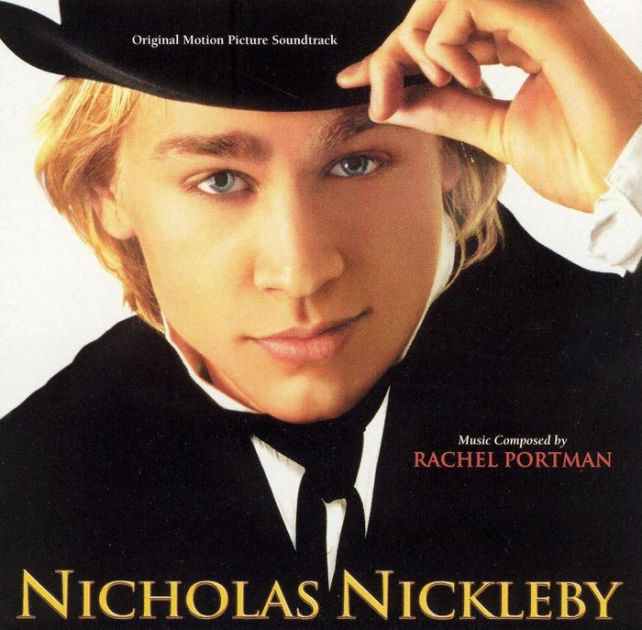
There were, for instance, many of those melodramatic tales beloved of the nineteenth century which may be caricatured as ‘the hero having to rescue the beautiful maiden from the clutches of the wicked Sir Jasper’. A familar example is Charles Dickens’s Nicholas Nickleby. Like the hero of many a fairy tale, young Nicholas is left orphaned by the death of his father and having to provide for his penniless mother and sister. He is taken in hand by a seemingly kind uncle, Ralph, who arranges a teaching post for him at the grim Northern school Dotheboys Hall. And when we meet the tyrannical owner of this establishment Mr Squeers we might think we had met the story’s chief ‘monster’. But no sooner has Nicholas overcome this particular villain, by giving him a thrashing and escaping from the school, than it gradually emerges that the hero and his family are in fact threatened by a kind of mysterious, Hydra headed conspiracy, of which Squeers had merely been one lesser ‘head’.
In fact the chief monster at the centre of this web of evil is the wicked usurer, Uncle Ralph himself. The action centres first on the liberation of Nicholas’s sister Hawk, another ‘Hydra-head; then on the even more hazardous rescue of his own chosen ‘Princess, the beautiful Madeleine Bray, from a vile plot to marry her off to yet another Hydra – head, the unpleasant old Arthur Gride.
Finally all Ralph’s wicked schemes are exposed and brought to naught. Nicholas, the triumphant hero, is free to marry his ‘Princess’ who, it is then discovered, has inherited a great ‘treasure’ from her father.
The Monster in War Movies
A very different kind of tale shaped by the Overcoming the Monster theme is the war story, particularly those set at the time of the Second World War. In the past 70 years the immense drama of World War Two has inspired many more fictional stories than any other real – life episode in history. One reason for this was the way Hitler’s Nazis, and to a lesser extent their Japanese allies, provided storytellers with such an extraordinarily rich store of ‘monster-imaginery’.
In countless films from the 1940’s on, we saw Hitler’s Germany cast as invading Predator, with all the diabolic paraphernalia of the blitzkrieg as Holdfast, exercising ruthlessly tyrannical sway over Occupied Europe; or as Avenger, lashing out at resistance heroes, prison camp escapers or anyone else who dared challenge its murderous authority. The vast majority of such stories were based on the plot of Overcoming the Monster, with the underlying pattern of the story in almost every instance the same. At first there is a preparatory stage of anticipation, as of some great forthcoming ordeal. We see the seemingly insuperable power of the German war machine. There is then a gathering sense of danger, as battle is joined, and the heroes seem to have all the odds stacked against them. Then comes the climactic confrontation and finally the miraculous victory. The Nazi (sometimes Japanese) monster is overthrown. The dark armadas of the Luftwaffe (as in Battle of Britain) are hurled back. The great Predator ship (as in The Sinking of the Bismarck) is destroyed. The invasion of Europe (as in the Longest Day) is successfully achieved. The Nazi’s counter-offensive (as in the Battle of the Bulge) is fought off. The beautiful city of Paris (in Is Paris Burning), like a rescued Princess, is at the last moment saved.
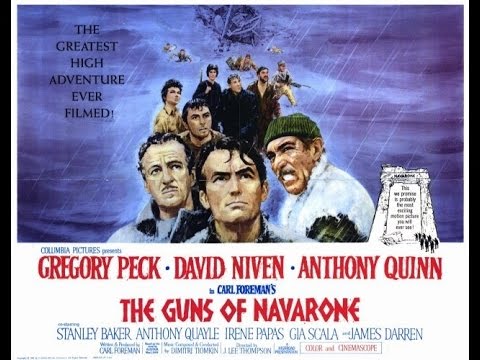
But never far from the surface of these apparently modern, and even ‘historically accurate’ accounts were the patterns and imaginery of a story as old as the imagination of man. Alistair Maclean’s The Guns of Navarone, a typical fictional Second World War adventure story, tells how five heroes land on a closely guarded Aegean island to destroy two huge German guns concealed in a clifftop cave, which holdfast like dominate a narrow strait. We are aware that this is the only way through which a large number of beleaguered Allied soldiers can be lifted to safety from a nearby island. Thousands of lives are at the mercy of these mighty engines of destruction. Painfully the heroes make their way across the island, narrowly escaping every kind of disaster, until at last they reach the cave and see, against the night sky:
‘crouched massively above, like some nightmare monsters from another and ancient world, the evil, the sinister silhouettes of the two great guns of Navarone.’
Evading detection as they catch the sentries on their ‘blind spot’ the heroes fix their little explosive charges against the guns, like ‘magic weapons’ against something so massive and overpowering. Finally, as the ‘tremendous detonation tore the heart out of the great fortress it is at one level not just the guns of Navarone which are being destroyed, but Humbaba, the Minotaur, Dracula and every other monster who has ever been. After the mounting suspense of the long ordeal, penned in at every moment by the prospect of sudden death, liberation is here! Life has triumphed over death! Humanity can breathe again!
The Monster in Hollywood Western

So basic is the outline of the Overcoming the Monster plot that there is almost no limit to the variety of story-types it can give rise to. We can recognise it wherever our interest in a tale is centred on the steady build-up to a climactic battle between the hero and some dark, threatening figure, or group of figures, whether this be the wicked witch in a fairy tale or invading aliens from outer space, Spielberg’s flesh-eating dinosaurs in Jurassic Park or the outlaw gang in a Western.
The Magnicifent Seven begins in classic Overcoming the Monster style by showing a community living under the shadow of a monstrous threat: a little Mexican farming village being terrorised by an outlaw gang, led by the villainous Calveros, who regularly arrive at the village to rob the famers of food. We see one such predatory visit, when one old farmer tries to protest. Calveros shoots him in front of the villagers, thus underlining just what a heartless and predatory tyrant he is.
A wise old man living nearby advises the farmers that the only way to stop this reign of terror is that they should buy guns. Three of them ride over to the American border where they see two professional gunmen ( played by Yul Brynner and Steve McQueen) fearlessly standing up to the inhabitants of a small town in insisting that an Indian who has died in the town should be buried in the whites only cemetery. This establishes that the two heroes are not racially prejudiced and are willing to fight against injustice. For a small sum of money, all they can afford, the Mexicans persuade the two gunmen to come back to their village to defend them against the outlaws. The two recruit another five, and the seven gunmen arrive in the village to train its inhabitants in self-defense.
When Calveros’s gang next returns it is beaten off with heavy losses. But when the seven ride out into the countryside to see what the gang is up to, Calveros outwits them by secretly occupying the village in their absence. When they return they discover they have fallen into his clutches. In front of the cowed villagers, he removes their guns, and allows them to leave. Foolishly, however, showing the monster’s blind spot, he allows their guns to be returned to them when they have left town. He cannot imagine that, as mere hired gunmen, they will not just ride away to avoid any further trouble, leaving him free to carry on oppressing the villagers. But, bruised by the humiliation, the seven ride back into town for a final climactic battle, in which Calveros and his gang are routed, not least because the villagers recover their courage and join in. Four of the seven are dead. One decides to remain in the village because he has fallen in love with a village girl, which allows the story to end on the image of a man and woman united in love. But the two original brave heroes ride off into the wide blue yonder, having overcome the monster and saved the community.

Another classic Hollywood Western based on this plot was Fred Zinnemann’s High Noon (1952. Again we see a community living under the shadow of a monstrous outlaw gang., the little town of Hadleyville in the old West. The story begins on the morning when the hero Will Kane (played by Gary Cooper) having resigned as town marshal is getting married to the pretty young Quaker (Grace Kelly). No sooner is the ceremony over than Kane unpins his badge of office and he and his new bride prepare to leave the town for ever. But then shocking news arrives. Some years earlier Kane had been responsible for arresting Frank Miller, a psychopathic gang leader who terrorised the town, and now Miller has been released from prison. He is heading back to Hadleyville on the noon train, due to arrive in just two hours time. The three unsavoury members of his gang are already at the station waiting for him and for the moment when they can settle their score with Kane and reimpose their reign of terror.
Scarcely have the newly-weds set out from town than Kane realises he cannot leave the townsfolk defenceless. He turns back, hoping to round up a posse of townsfolk to help defeat the gang. But the people are so cowed that they dare not help. Just like some of the villagers in The Magnificent Seven they would much rather Kane left them, in the appeasing hope that trouble might be avoided. Amy herself, as a Quaker, refuses to have anything to do with bloodshed and leaves for the station to catch the same train. Suspense mounts, as clocks tick away the two hours, and Kane finds no one to support him. At last a distant whistle is heard from across the plan. The train approaches. Miller disembarks to join his gang and the four men swagger into the now deserted town looking for a showdown with the solitary hero.
The gun battle begins and Kane manages to kill first one of his opponents, then another. But finally he is trapped in a building, its exits covered by Miller and the other outlaw. It seems all is lost and he is at their mercy. Then a miracle takes place. A shot rings out from across the street and a third villain lies dead. At the last minute Amy has jumped off the train and returned to town and she is standing at a window with a smoking gun in her hand. Frank Miller seizes her, pushes her out in front of him into the street and tells the hero, that unless he comes out to surrender,s he will be killed. As Kane emerges, Miller pushes Amy aside to fire, bravely she jogs his arm, giving the hero a chance to get his shot in first. All four outlaws are dead. Hero and heroine embrace as the shamefaced townsfolk emerge from their hiding places to cluster round their saviours. The loving couple can at last ride happily off together to start their new life.
Beneath this comparatively modern trappings (guns, the train) there is nothing about this story which could not have been presented in the imagery of an ancient myth or egend: with the little town as a kingdom threatened by the approach of a terrifying dragon, and Kane as a princely hero who, against all odds, finally slays the monster – although, like Theseus, he only manges to do this with the help of a loving ‘Princess’, who unexpectedly comes to his aid just when all seems lost.
The Monster in Thrillers
Another genre of story usually shaped by the Overcoming the Monster plot is the thriller: and here again we see how often thriller writers unconsciously fall back on the age-old stock of ‘monster imagery’, as they look for the kind of language which will help them to build up their hero’s chief antagonist into a shadowy figure of immense menace and evil.
In that early thriller-adventure story Dumas’s The Three Musketeers (1844), the action centres on the long struggle between the hero D’Artagnan and the evil Lady de Winter, who lures the hero’s chosen Princess, the beautiful young Madame de Bonancieux, into her clutches. When we look at the imagery used to describe Lady de Winter, whose sinister influence extends all over France, we see her not only characterised explicitly as ‘a monster’ who has ‘committed as many crimes as you could read of in a year’, but as a ‘panther’, a ‘tiger’, a ‘lioness’ and several times as ‘a serpent’.
When in The Final Problem Conan Doyle wished to create a villain who was at last a worthy match for the powers of his hero Sherlock Holmes, he conjured up the ‘reptilian’ Moriarty, like Dracula a ‘fallen angel’, a man of ‘extraordinary mental powers’ who has perverted them to ‘diabolic ends’. ‘For some years past’ says Holmes, ‘I have been conscious of some deep organising power which stands forever in the way of the law’. He realises that it is the shadowy Moriarty, eternally elusive, a master of disguise, ‘the most dangerous criminal in Europe’ who:
‘sits motionless, like a spider in the centre of his web, but that web has a thousand radiations, and he well nows every quiver of them’.
The thrillers of John Buchan made lavish use of similar imagery. In ‘The Thirty Nine Steps, for instance, the hero Richard Hannay learns of the materialising of some vast, shadowy threat to the ‘peace of Europe’: behind all the governments and the armies, there was a big subterranean movement going on, engineered by some very dangerous people. When he tracks down the chief villain at the heart of this immense conspiracy to a remote Scottish moor, he is a German master-spy described as ‘bald-headed’ like ‘a sinister fowl’.
In those most successful of all twentieth – century thrillers Ian Fleming’s James Bond stories, the imagery again and again quite explicitly builds up the ‘monster’ with echoes of myth and fairy tales. Le Chiffre, the villain of Casino Royale is ‘a black-fleeced Minotaur’; Sir Hugo Drax in Moonraker has ‘a hulking body’ with ‘ogre’s teeth’; Mr Big in Live and Let Die has ‘a great football of a head, twice the normal size and nearly round’ the villain of Dr No, bald and crippled, with steel pincers instead of arms, ‘looked like a giant venomous worm, wrapped in grey tin-foil’.
Indeed one of the key reasons for the initial success of the Bond stories, even before they wer translated to the cinema screen was precisely the way they tapped so unerringly into those springs of the imagination which had given rise to similar stories for thousands of years. So accurately did the typical Bond novel follow the age old archetypal pattern that it might almost serve as a model for any Overcoming the Monster story.
As conceived by Fleming, the basic Bond story unfolds through five stages rather like this:
- The Call to Adventure. The hero, a member of the British Secret Intelligence Service, is summoned by ‘M’, head of the service and told of suspicious goings-on somewhere in the world which appear to pose a deadly threat to Britain, the West or mankind as a whole.
The Monster in Science Fiction

Just when Ian Fleming was publishing his first Bond novels, some of his British contemporaries were producing particularly striking examples of that type of story which in the past century has revived the imagery of archetypal monsters more grotesquely inhuman than anything seen in storytelling since the Dark Ages and the myths of ancient Greece. In the early 1950’s, as the world awaited the imminent arrival of the space age, two genres of science fiction story swept into fashion: the first, following H.C. Wells centred on deadly invasions of the earth by monsters from outer space; the other featuring some world threatening catastrophe unleashed by mankind’s ow growing technological ability to interfere with nature.
In 1953, just after the Queen’s Coronation had prompted millions of Britons to install their first primitive television sets, the first serial on the new medium to catch the nation’s imagination was Nigel Kneale’s The Quatermass Experiment, with its hero a shrewd and robust scientist, Professior Bernard Quatermass. As head of the world’s first manned space-flight project, Quatermass is horrified when the spaceship returns with only one of the three astronauts alive. Gradually it becomes clear that the survivor, Victor Caroon, has not only absorbed the personalities of his two dead colleagues but has been taken over by some diabolically ingenious extra-terrestrial power which is using his body as a vehicle to take over the earth.
The ‘frustration stage’ sets in when Caroon appears to be turning into a cross between a cactus and a fungus., then disappears. When next sighted he has become a huge and fast-profilerating fungoid monster spreading over the interior of Westminster Abbey, about to throw out millions of spores which will wipe out humanity, allowing the aliens to take over. In this ‘final ordeal’ Quatermass confronts the monster and somewhat implausibly persuades the three human beings who are still mysteriously part of it to resist its influence, even though this will involve their own suicide. This leads to the ‘miraculous escape’by which humanity is saved.
The underlying five-stage pattern of these stories is only too familiar. As each of them begins with the arousal of curiosity, then continues with frustration as the monster’s true deadly nature becomes apparent, leading to a ‘nightmare stage’ when catastrophe seems inevitable, finally ending in the ‘miraculous escape’, their pattern is exactly the same as that which we first came across in some of the simplest stories of our childhood, such as Jack and the Beanstalk or Little Red Riding Hood.
The Monster in Star Wars

As a last example, to underline just how fundamental a pattern to storytelling this is, we may look at what became the most successful science fiction film ever produced in Hollywood, George Lucas’s Star Wars (1977)
The Star Wars story is set in the distant future, when the many planetary worlds of our galaxy are ruled by one government. For centuries this had exercised benevolent sway as ‘the Republic’, with the aid of the brave and honourable Jedi Knights. But the government has now been seized by a conspiracy of power-crazed politicians, bureaucrats and corporations, headed by a shadowy ‘Emperor’ and no-one, it seems wields greater power in this tyrannical new ‘Empire’ than the ruthless ‘Dark Lord’ Darth Vader, once himself a Jedi knight, now, like Lucifer, a ‘fallen angel’. Scattered across remote reaches of the galaxy dispossessed supporters of the old order, ‘the rebel Alliance’, are hoping one day to overthrow the dark Empire, to reclaim the universe for the forces of light.
The story opens with a rebel spaceship being attacked by an ‘Imperial cruiser’ captained by the terrifying Vader, whom we only see hidden in menacing black armour. As his Imperial forces take over the rebel ship, a tiny spacecraft escapes, containing See Threepio and Artoo Deetoo, two ‘androids’or humanised computers, who land safely on the surface of a nearby planet, Tatooine. Still on the rebel ship is the beautiful Princess Leia, daughter of the leader of the rebel Allicance, whom Vader takes prisoner.
We thus begin with the familiar image of a Princess falling into the clutches of the ‘monster’. But the one thing the ‘Dark Lord’ is desperate to discover is the whereabouts of the rebel organisation’s secret headquarters, so he can destroy it, thus making the victory of the Empire complete. What he does not realise is that the resourceful Princess has programmed Artoo Deetoo with this vital information, along with an urgent appeal for help, before the androids bail out. By the fatal mistake of allowing them to escape, because he thinks their little craft is unmanned, the arrogant Vader has revealed a first ‘blind spot’.
Only now do we at last meet the young hero of the story, Luke Skywalker, who lives with his uncle and aount on a lonely farmstead on Tatooine, dreaming of future glory as a space – pilot. When the two androids arrive at the foarm, Artoo lights up with a hologram of the Princess. Luke is at once smitten by her beauty. She utters the baffling message ‘Obi – wan Kenobi, you are my only remaining hope’. Which Luke vaguely connects with a mysterious bearded hermit, ‘a kind of sorcerer’ who lives in an even more remote part of the desert. He and the androids set off to find him and, after Kenobi has miraculously intervened to save them from death at the hands of desert-dwelling monsters, they find themselves in the ‘wizard’s’ cave. The old man reveals he is one of the last surviving Knights of the Jedi, with supernatural powers, and that Luke’s lost father had been another, one of the bravest of all. Interpreting the Princess’s cry for help, Kenobi asks Luke to accompany him on a hazardous mission to rescue her.
This marks the end of the ‘Anticipation Stage’. The hero has received the ‘Call’; giving him and the story a focus. We can see now what the story is centrally to be about; and the hero’s sense of being impelled towards this mysterious new destiny is reinforced when they return to the farmstead to find that the uncle and aunt who have brought him up have been vapourised by Imperial troops. There is nothing left to keep him at home.
Despite further threats, fought off with Kenobi’s supernatural aid, Luke gradually assembles a team to make the journey; and in the nick of time, pursued by Imperial soldiers, they make a ‘thrilling escape’in a deceptively battered old spacecraft, piloted, solely for the money, by a reckless mercenary Han Solo. This enables them to throw off their pursuers as they head off faster than light to their mystery destination. On the journey Kenobi imparts some of the ancient Jedi secrets to Luke, not least the importance of the mysterious ‘force’ with which the Knights learn to ally themselves, giving them supernatural powers. As the wise old man explains, this is ‘an energy field, and something more. An aura that at once controls and obeys, a nothingness that can accomplish miracles’. He describes the optimal experience of ‘flow’. During this phase of the story, the hero and his companions seem to enjoy a magical immunity to danger: the “Dream Stage’. But we are reminded of the dark reality prevailing elsewhere, as we glimpse the Princess being subjected by Vader to horrific tortures, trying to force her into giving up the secret whereabouts of the rebel headquarters, the distant planet Alderaan.
Then suddenly, as they near their destination, they see the horrifying sight of a vast, mysterious man-made structure floating in space ahead of them. It is the Empire’s own secret weapon, the Death Star, a spaceship so powerful it can destroy a whole planet. This is where the Dark Lord Vader is holding the Princess prisoner. Even as they approach, this monstrous engine of death pulverises Alderaan, including the Princess’s father, to atoms. At the same time, the hero and his companions feel their own small spacecraft itself being sucked inexorably down a powerful beam into the heart of the Death Star. As their ship comes to rest it seems they are the monster’s prisoners. Like Bond, when he penetrates the lair of one of his monstrous opponents and falls into his clutches, they have reached the ‘Frustration Stage’.
Now begins the terrible ordeal of the ‘Nightmare Stage’. Pursued all the way threatened by one horror after another they wander through the endless, dark, metallic labyrinth of this huge structure, first to track down and release the Princess from her prison cell; then to thread their way back to their own spacecraft, having first immobilised the gravity beam which had taken it prisoner. Finally, thanks to old Kenobi sacrificing his life in a hand-to-hand struggle with his one time pupil, the Dark Lord, they make their miraculous escape, with the freed Princess on board – hurtling through space to another unknown planet where, hidden beneath ancient ruins in a jungle, is the true secret command headquarters of the rebel Alliance.
Here indeeds begins the true ‘final ordeal’ of the story as a small team of space pilots, including Luke, who has now captivated the Princess as surely as the had entranced him, set off for a final showdown with the Dark Empire, on which the whole future of the universe will rest. Thanks to Artoo having programmed himself with the entire layout of the Death Star, they have learned its vital secret. There is just one tiny aperture on the entire face of that immense, impregnable structure where a perfectly-aimed missile might penetrate to the central reactor which is at its heart. After a deadly prolonged aerial battle between two groups of small spacecraft, more reminiscent of a World War Two dogfight than anything belonging to the space age, Luke and Darth Vader, hero and monster, finally come face to face. Just when it seems all is lost for the hero, he is miraculously saved. Han Solo, after refusing to risk his life in the battle because his only interest was money, had decided after all to intervene, arriving in the nick of time to blast Vader’s craft helplessly out into space. Simultaneously, even more miraculously, Luke has become at one with Kenobi’s supernatural ‘force’uncousciously managing to launch his missiles at just the right split – second to hit the mark. Scarcely have Luke and Solo withdrawn to a safe distance than the whole articifical planet explodes into a trillion fragments, in a sunburst which lights up that corner of the cosmos for days.
The monster has been overthrown. The victorious heroes return to a tumultuous welcome at the Alliance headquarters. In a vast temple hall, before a delirious crowd respresenting peoples from all over the universe, they walk up to a dais to be presented with gold medals by a radiant figure dressed in flowing white. As Luke receives his prize, he can scarcely hear the cheers. His thoughts are solely occupied by the smiling face of the Princess before him.
The Thrilling Escape from Death

Again and again in all these expressions of the Overcoming the Monster plot we see a moment which is of fundamental significance to storytelling: one whih, like the characteristics of the monster itself, is relevant to stories of many kinds other than just those shaped by this particular plot.
To the huge relief of the hero (and of ourselves as the audience, identifying with his fate), just when it seems all is lost and that his destruction is inevitable, he makes a miraculous escape. Always it is only in the nic of time, just when all seems lost, that Luke Skywalker escapes from the final deadly assault by Darth Vader; that Quatermass saves mankind from the extra-terrestrials; that James Bond escapes from the clutches of his villains; that Well’s invading Martians are killed by bacteria; that the guns of Navarone are blown up; that Gary Cooper in High Noon is saved by the unexpected shot fired by his wife; that Jack manages to scramble back down the beanstalk; that the forester bursts in to save Red Riding Hood from the devouring wolf. From the constricting sense of imminent death, often physically represented by some dark, enclosing space in which the hero or heroine is trapped, they, and we the audience, are suddenly liberated.
The significance of the thrilling escape from death runs very deep. It is one of the most consistent motifs in storytelling, cropping up again and again in stories of every kind, and it is hardly surprising that we should find stories based on little else but the build up to a thrilling espace. For instance, Daniel Defoe’s Journal of the Plague Year and Camus’s La Peste are both stories set in a city which has been attacked by a mysterious, deadly pestilence. From small beginnings, we feel the virulence of the plague becoming more and more obvious and terrifying until it seems no one can possible survive: then suddenly, as by a miracle it fades away. The mysterious plague in such stories is playing the part of the monster, all – conquering, deadly, remorseless in its power: except that we never see this particular monster face to face because it cannot be directly personified, but remains just a shadowy, increasingly threatening presence. Similarly the hero is not personally responsible for overcoming the monster. At the story’s climax, the reversal comes when the threat suddenly recedes. We experience such stories, in fact, through the eyes of a hero who is merely a more or less helpless observer, sucked into a nightmare which seems certain to end in his death, until brought to an end by agencies beyond his awareness or control.
Stories on this pattern have again become familiar in recent times in the form of those ‘disaster movies’ so popular from the 1970s onwards such as ‘Airport’. This film is centred on a group of passengers caught in the ‘enclosing space’ of a crowded airliner at night, threatened with imminent destruction by the presence of a madman armed with a bomb. At least here the threat is partly personified, and when the bomb explodes and the madman is sucked out into the darkness, it might seem that the ‘monster’ has been ‘overcome’: except that the real source of the nightmare is not the madman himself, as it would be if he were a true monster, but simply the fear of the plane crashing; and this remains unitil, with enormous difficulty and to universal relief, the plane is at last brought safely to the ground.
In fact this story of the hero’s delivrance from the nightmare of being trapped in some dark, enclosing spae, threatening death is one of the oldest in the world. An obvious example is the tale of Jonah, who falls overboard an is swallowed by the ‘great fish’. For three days he lies in its cavernous interior, sure he is about to die:
‘the water encompassed me round about, even to the soul; the depth closed me round about, the weeds were wrapped about my head. I went down to the bottom of the mountains; the earth with her bars was round me forever’
Then miraculously his prayers are answered and the fish ‘vomited out Jonah on the dry land’.
Jonah does not, of course, kill his ‘whale’, which is why again this adventure cannot be considered strictly an Overcoming the Monster story. But this is only one of the countless tales of a hero swallowed by a monster, found in mythology and folk tales from Europe, North America, Polynesia, Japan and almost all over the world in many of which the hero does actually slay the monster from within.
Overcoming the Monster: Summing Up

One way in which a story seems naturally to form in the human imagination shows the hero being called to face and overcome a terrible and deadly personification of evil. This threatening figure is defined by the fact that it is heartless, egocentric and seemingly all-powerful although we ultimately see that it has a blind spot which renders it vulnerable. As the story is usually presented, there is a long build-up to the final decisive confrontation, and the story is likely to run through these five stages:
- Anticipation Stage and ‘The Call to Adventure’. We usually first become aware of the monster as if from a great distance, although in some stories we may be given some striking glimpse of its destructive power at the outset. Although initially we may see it as little more than a vaguely menacing curiosity, we gradually learn of its fearsome reputation, and how it is usually casting its threatening shadow over some community, country, kingdom or mankind in general. The hero then experiences a ‘Call to Adventure’ to confront it.
- Dream Stage: As the hero makes his preparations for the battle to come (e.g. as he travels towards the monster or as the monster approaches), all for a while may seem to be going reasonably well. Our feelings are still of a comfortable remoteness from and immunity to danger.
- Frustration Stage: At last we come face to face with the monster in all its awesome power. The hero seems tiny and very much alone against such a supernaturally strong opponent. Indeed it seems that he is slipping into the monster’s power (he may even fall helplessly into the monster’s clutches), and that the struggle can only have one outcome.
- Nightmare Stage: The final ordeal begins, a nightmare battle in which all the odds seem loaded on the monster’s side. But at the climax of the story, just when all seems lost, comes the ‘reversal’.
- The Thrilling Escape from Death, and Death of the Monster. In the nick of time, the monster is miraculously dealt a fatal blow. Its dark power is overthrown. The community which had fallen under its shadow is liberated. And the hero emerges in his full stature to enjoy the prize he has won from the monster’s grasp: a great treasure; union with the ‘Princess’; succession to some kind of ‘kingdom’.
Constriction and Release

So powerful is the effect on us of one element in this plot – the growing sense of nightmare as the hero seems to be slipping into the monster’s power, followed by the surge of relief at his thrilling escape from death – that a whole subgroup of tales has grown up which use just this element in the story to make a plot in itself. And this serves to introduce another very important general aspect of the way stories are constructed, and the way in which we all experience them.
At the most basic level, whenever we identify with the fate of a hero or heroine, we share their experience as the story unfolds in a particular sense. As they face ordeals, or come under threat, so we feel tense and apprehensive; even in extreme cases so terrified that we can scarcely bear to watch or listen. As the threat is lifted, we can relax. Our own spirits are enlarged. In other words, along with the story’s central figure, we feel a sense either of constriction or of liberation; either of being shut in and oppressed, or of being opened out. And in a story which is well-constructed, these phases or constriction and release alternate, in a kind of systole – diastole rhythm which provides one of the greatest pleasures we get from stories.
But of course these alternations are not evenly pitched throughout the story. As it unfolds, the swings from one pole to the other may become more extreme until usually the most violent of all comes just before the end, with the story’s climax. This is the point where the pressure of the dark power is at its greatest and most threatening, followed by the miraculous reversal and release of the ending.
If again we take Jack and the Beanstalk as a simple example, we initially feel, as Jack and his mother become poorer and poorer, a vague sense of constriction. How are they going to escape from their plight? As we then follow Jack up the beanstalk and his exhilarated discovery of a whole new mysterious world at the top, our spirits expand. As Jack enters the castle, and begins to pass under the menacing shadow of the giant, we feel a more violent constriction setting in. Three times this happens, punctuated by Jack’s escapes with the golden treasures (each more valuable than the last). But on the third occasion the giant is roused to angry pursuit; and, as Jack runs back to scramble down the beanstalk in a nighmare chase, it seems he is about to be caught by the giant thundering ever closer behind him. This is the climax of the story, when constriction is at it most acute, until in the nick of time Jack manages to bring beanstalk and giant crashing to destruction. The shadow is at last lifted. We feel a surge of liberation; and as it fades, we are left with the warming knowledge that, in the treasures he has won from the giant’s grasp, the hero has some much deeper hold on life which will last indefinitely into the future. As the phrase has it, he will ‘live happily ever after’.
In other words, the inmost rhythm of our experience of the story is of an initial sense of constriction, followed by a phase of relative enlargement, followed by a more serious constriction. Then the story works up to its climax, when the threatening pressure on the hero is at its greatest. This is released in a final, much deeper act of liberation, coupled with the sense that something of inestimable and lasting value had been won from the darkness.
Such is the underlying structure of most Overcoming the Monster Stories. But, as we shall see, this fundamental rhythm is so central to the way we tell stories that we find it, in different guises, almost all through storytelling.
We can now move on to our second great story plot.
“Once Upon a Time”
Early in our lives, most of us became familiar with a story which ran something like this.
Once upon a time there was a young hero or heroine, not yet embarked on adult life, living in lowly and very difficult circumstances. This humble little figure, almost certain an orphan, was regarded as of little worth by most people around, and may even have been actively maltreated. But one day something happend to send our hero or heroine out into the world where they met with a series of adventures which eventually brought about a miraculous transformation in their fortunes. Emerging from the shadows of their wretched former state, they were raised to a position of dazzling splendour, winning the admiration of all who beheld them. The hero won the hand in marriage of a beautiful Princess; the heroine won the love of a handsome Prince. They succeeded to rule over a kingdom. And from that day forth they lived ‘happily ever after’.
So familiar did this plot become to us in childhood that we take its almost unvarying regularity for granted. It is of course the story of how the little orphan Cinderella, dressed in rags and forced to sit in the ashes by her cruel stepmother and vain stepsisters, is enabled by her fairy godmother to go out to the ball – which eventually wins her the hand in marriage of her Prince. It is the story of how the little orphan Aladdin is led out of the city by his wicked ‘uncle’, the Sorcerer, to retrieve the magic lamp, thus embarking on the strange series of adventures which transform him into a rich and admired national hero, winning the hand of the Princess and finally succeeding to the kingdom of her father, the Sultan.
Most of the variations on this Rags to Riches story we met in childhood were adapted from folk tales, and it is perhaps not until we begin reading through folk stories from many different countries and cultures that we come to appreciate how universal this type of story is. The basic outline of the story we know as Cinderella is reckoned by the students of folklore to have given rise to well over a thousand different versions, found in every corner of Europe, in Africa, in Asia and among the indigenous peoples of North America. Other permutations on the Rags to Riches theme appear so often in folklore that on this score alone it must be regarded as one of the basic stories in the world.
But the story of the humble, disregarded little hero or heroine who is lifted out of the shadows of a glorious destiny is by no means, of course, confined only to only folk tales. We have already touched on such familiar examples as the opening episodes in the mediaeval story of King Arthur; or the modern fairy-tale transformation of the ragged little flower-girl Eliza Doolittle into a grand and beautiful lady which made one of the most popular stage and film musicals of our time, My Fair Lady (although without Shaw’s original happy ending in Pygmalion, where Eliza finally marries and lives happily ever after).
We can find the Rags to Riches theme in almost every form in which stories have been told. It is as ancient as the biblical story of Joseph, the little dreamer so despised by his brothers that they want to kill him, who eventually rises to a position as the Pharaoh’s chief minister, ruler over the might kingdom of Egypt. It is as modern as the countless versions produced in our own time by Hollywood, so that the very phrase ‘rags to riches story’ is these days likely to conjure up for many people the type of film which shows how a poor, obscure chorus girl dances her way to stardom or a poor boy from the slums battles his way to the top to become a world boxing champion.
Indeed there are certain categories of popular storytelling which seem so naturally drawn to the Rags to Riches plot, that we often think of this kind of story, with its ‘fairy tale happy endings’as being essentially rather simple and sentimental, the stuff of wish fulfillment rather than great literature. The Rags to Riches theme has, for instance, traditionally been associated with that type of romantic fiction which was mainly written by and for women, telling how some poor and beautiful (or plain and disregarded, but secretly admirable) heroine rises from obscurity to win the heart of a prince, dashing duke or millionaire.
But equally the Rags to Riches plot has inspired some of the most serious and admired novels in Western literature. An obvious example is David Copperfield, in which we see how an unhappy, persecuted little orphan goes out into the world and eventually rises, after many adventures, to become a rich and famous writer, at last happily united in the closing pages to his ‘true angel’. Agnes Woodward. In Jane Eyre, we again follow the fortunes of an unhappy, persecuted little Cinderella like orphan as she goes out into the world, where she eventually becomes an heiress and, against all odds, marries her adored ‘Prince’ Mr Rochester. In each of these novels the fundamental plot shaping the story is precisely that of the childhood fairy tales: that of the unhappy and disregarded little child at the beginning gradually developing and maturing through the vicissitudes of life to the fulfillment, united at last with a beloved ‘other half’.
In general terms, such a story obviously makes some profound appeal to the human imagination. But when we come to look more closely at a wide cross section of such stories, we find that they have, we find that they have much more in common than just a vague, generalised outline. Wherever we find the Rags to Riches theme in storytelling, we may be struck by how constantly certain of its features recur.
Features of the Rags to Riches Story

First of these is that, more consistently than in any other type of plot the Rags to Riches story first introduces us to its hero or heroine in childhood, or at least at a very young age before they have ventured out on the stage of the world. As yet they are not fully formed, and we ware aware that in some that in some essential way the story is concerned with the process of growing up.
When we first see them in this initial state, it is always emphasized how the little hero or heroine are at the bottom of the heap, seemingly inferior to everyone around them. Often they are the youngest child and disregarded for being so. They thus begin in the shadows cast by more dominant figures around them, who not only can see no merit in them but are usually deeply antagonistic to them.
These ‘dark’ figures who overshadow the hero or heroine in the early stages of the story fall into two main categories. Firstly they may be some adult figures, often acting in the place of a parent, such as Cinderella’s wicked stepmother, who replaces her loving real mother; or David Copperfield’s cruel stepfather Mr Murdstone and his grim sister Miss Murdstone, who replace his real parents when they die; or Jane Eyre’s guardian Aunt Reed, and the fearsome Mr Brocklehurst who takes her away to an orphanage. Secondly there are those figures nearer to the hero or heroine in age and status: Cinderella’s vain, scornful stepsisters, Joseph’s hostile older brothers, who want to kill him; the Ugly Duckling’s fellow ducklings who, along with the other animals of the farmyard, jeer at him for his awkwardness and ugliness.
Whichever of these categories they fall into, these dark figures are always presented in the same light. In their scornful attitude to the hero or heroine, they are both hard-hearted and blind: they can neither feel for them nor perceive their true qualities. They are also, like Cinderella’s stepsisters, wholly self-centred: vain, puffed-up, short-tempered, deceitful, concerned only with furthering their own interests. Later in the story, other ‘dark’ figures may emerge to stand between the hero or heroine and their ultimate goal: as we see in David Copperfield’s rival for the hand of Agnes, the treacherous Uriah Heep; or in Jane Eyre’s egrerious suitor St John Rivers. But these characters are typified by precisely the same negative qualities; they are defined by their egocentricity, their blinkered vision, their incapacity for true, selfless love.
What we see in the ‘dark’ figures of Rags to Riches stories is thus a combination of characteristics already familiar from our first plot, Overcoming the Monster. Psychologically, they share the same essential attributes as the monster. And against this we see the hero or the heroine themselves set in complete contrast. The hero or heroine begin the story largely unformed, in the shadows cast by the more dominant figures around them. But it is central to the story, as they gradually emerge from these shadows toward the light, that the hero or heroine are not marked by these same hard, self-centred characteristics. We always see them as a positive against the overshadowing negative: and in this sense, as the story unfolds, they do not change their essential character. All that happens is that they develop or reveal qualities which have been in them, at least potentially, all the time: to the point where, by the end of the story, two things have happened.
Firstly, all the dark figures have either been discomfited or have just faded away. And seconly, the hero or heroine have at last emerged fully into the light, so that everyone can at last recognise how exceptional they are. It is this which has essentially been happening in the story, and the fact that their material circumstances may also have gone through such a transformation – e.g., that they have exchanged their original poverty and rags for riches and fine clothes – is only an outward reflection of what has inwardly happened to them, lending it dramatic emphasis.
Even in the simplest folk-tale versions of the Rags to Riches plot, we can see how carefully this point is brought out. By the end of the story, no one ever doubts that the originally derided and humble little hero or heroine should be worthy of their final glorious destiny, however improbable it might have seemed from their circumstances at the beginning that they have already revealed along the way qualities which show their true inner worth. When Cinderella goes to the ball and meets her Prince for the first time, it is not just the magnificent clothes in which she has been dressed by her fairy godmother which catch every eye; it is her innate beauty and obvious sweetness of nature, which fine clothes have only helped to ‘bring out’ (it is a telling detail at the end that when the Prince finally sees her in her rags, he at once recognizes her as the girl he loves; she does not need external trappings to be seen as beautiful in the eyes of the right person). Similarly, when Aladdin is decked out by the genie of the lamp in all sorts of splendor for his wedding to the Princess, the formerly scorned little urchin win all hearts by his generosity and noble bearing, and astonishes his prospective father-in-law the Sultan by his ‘eloquence and cultured speech’, his ‘gallantry and wit’.
Yet obviously these dazzling young heroes and heroines are not exactly the same people that we saw, unhappy, confused and rejected, in the earlier scenes of their stories. What has happened to them is that they have at last revealed or developed what was potentially in them all the time. They have matured. They have grown up. They have fully realised everything that was in them to become. In het best and highest sense, they have become themselves.
An example of a Rags to Rigs story which makes this point particularly clearly – because, stripped down to this essence, the story consists of very little else – is Hans Christian Andersen’s The Ugly Duckling. Being a duckling, the hero can hardly make the journey from literal rags to literal riches. But he is certainly looked down on by everyone at the beginning, and almost our entire interest in the tale centres round the contrast between that long initial period of misery and confusion when he suffers because he does not know who he really is, and that final moment of joyful self-realisation when he flowers into his true self as a beautiful swan.
In the majority of Rags to Riches tales, however, the joy and perfection of the central figure’s final state are also expressed by those two other ingredients which equally have nothing to do with literal riches, but which are so fundamental to the world’s storytelling that they are almost synonymous with our notion of a ‘happy ending’.
The first is that, somewhere along the way the hero should have met the girl of his dreams, a beautiful maiden or ‘Princess’. The heroine has met her handsome ‘Prince’. Nothing more profoundly conveys our sense of resolution at the end of the story that they should be united ,two lovers brought together in perfect love.
The second is that the hero, or the newly united pair, should then succeed to some kind of kingdom, inheritance or domain, over which they can rule. There we can leave them, with the sense that, after a long period when it seems that dark forces and uncertainty ruled the day, everything has at last been brought or restored to where it should be. We may at this point be told that ‘they lived happily ever after’ and we do not necessarily need to know anything more about them: because we have reached that mysterious central goal in storytelling, where everything seems to be perfect and complete.
The Central Crisis

At first sight it might seem that the process whereby the hero or heroine of a Rags to Riches story eventually reaches this goal is fairly simple. But the more systematically we examine such stories, the more we may be struck by the way the hero or heroine’s emergence from the shadows is rarely presented as a simple, unbroken climb. In fact there is usually a particular moment in the story when, after an initial improvement in the hero’s or heroine’s fortunes (sometimes so great that it might in itself seem the cue for a happy ending), they suddenly hit a new point of crisis, when all hopes of a happy ending seem to have been snatched away forever.
A central moment of crisis and despair is in fact so natural to the pattern of the Rags to Riches story that there are few examples where in some form or another it does not appear. Even in the Ugly Duckling there is no moment when the hero’s spirits are at a lower ebb than after his first glimpse of the ‘kingly’ swans: a prevision of the unthinkable glories life might hold. But then the swans disappear, leaving the duckling alone to face the hardships of a long, terrible winter. He has never been so cold, short of food or miserable. It is only when he has been through this last greatest ordeal that at last spring arrives, bringing with it the miraculous moment of his transformation into a ‘kingly’ swan himself, ‘the most beautiful of them all’.
Similarly in Cinderella, there is no moment when everything seems more hopeless for the heroine than after her third visit to the ball. Three times she has left her rags and ashes to dance with the Prince, winning universal admiration and catching a glimpse of the unthinkable happiness life might hold for her. Now, as she returns to her miserable, imprisoned life as a maid-of-all-work, with no prospect of ever seeing the Prince again, all seems blacker than ever. But of course, in her headlong flight from the palace on the third visit, she has left behind her dainty slipper; and, quite unknown to her, the Prince has found it, and sent out far and wide across the kingdom to see whose foot the slipper will fit. As with Arthur and the sword in the stone, the trying on of the slipper is a version of that motif familiar from many of the world’s myths, legends and folk tales, ‘the test which only the true hero, or heroine, can pass.’ Cinderella comes through her ordeal triumphantly. The Prince at once recognises her in her rags, and they proceed to the traditional happy ending.
In each of these examples we see the same essential structure to the story, as it falles into two distinct stages, separated in the middle by the central crisis. First there is the initial rise in the hero’s or heroine’s fortunes, as they are taken out of their original state of helpless misery and may have a glimpse of the glorious state they might one day attain Then comes the terrible crisis, when all seems lost again. Then comes the second half of the story, which shows them being prepared unwittingly for their final reversal of fortune, their final emergence into the light and the glorious state of completeness at which they arrive at the end.
We can already see this pattern at work in by far the earliest example of a Rags to Riches story of which we have record, the story of Joseph from the biblical book of Genesis When young Joseph’s jealous brothers, after first planning to leave him to die in the desert, then sell him into slavery in Egypt, he eventually rises to rule as an overseer over the household of Potiphar, the captain of the king’s guard. This is an important position, and considering Joseph’s earlier plight, when he faced death in the desert, it might seem like a miraculous happy ending to the story. But just then Joseph is falsely accused by Potiphar’s temptress wife of attempting to seduce her. He is thrown into prison and his life seems irrevocably in ruins. Only after a long time of utter despair is Joseph’s talent for interpreting dreams (the very thing for which he had nearly been murdered by his brothers) quite unexpectedly brought to the attention of Phaoroah himself. Through this he is eventually raised up to infinitely greater heights as chief minister, the second most powerful man in the kingdom. But even then, as Joseph enjoys his position of immense wealth and splendor, there is a crucial piece of unfinished business remaining before the story can come to a completely happy conclusion: Joseph’s rift with his brothers. As famine stalks the land of Israel, they come to Egypt pleading with this mighty, powerful figure to be given enough corn to survive. At first Joseph rejects them, until he is so moved by the sight of his youngest brother, ‘little Benjamin’, who had not been party to his earlier persecution, and by the thought of his aged father Jacob starving back in Israel, that he relents. He gives them the food they need. Only when he has passed this final test, and been reunited with his family in a state of love and forgiveness, can the story end on an image of complete resolution.
Equally it is by no means just in the older and more traditional forms of the Rags of Riches tale that we see this pattern of the story’s division into two ‘halves’ interrupted by a ‘central crisis’. We are just as likely to find it in versions as far removed from the world of the traditional folk tale or biblical legend as could be imagined.
Rags to Riches in Hollywood
An early instance of the fondness of Hollywood for the Rags to Riches theme was Charlie Chaplin’s silent classic The Gold Rush (1921). The first half of the story shows Chaplin in his familiar ‘tramp’ role, as an unsuccessful little Alaskan gold prospector, whose dreams of happiness centre on Georgia, a dance hall hostess he has met in a nearby town, and with whom he has fallen in love. He invites her to a New Year’s dinner in his shack, and all might seem set fair for a happy ending to his years of loneliness. But she had only accepted the invitation as a joke and fails to turn up. The central crisis has arrived. He has not discovered any gold; he has lost the girl who had become the dearest thing to him in the world; his life is in ruins. But then comes the second half of the story, when he helps his friend Big Jim to discover a lost gold mine and is rewarded with a share which makes him fabulously rich. We see him embarking on a ship back to San Francisco as a multi – millionaire, posing on the deck for photographers in his tramp’s clothes.
He slips and falls down onto a lower deck, where who should be first to see him but Georgia, travelling steerage on the same boat. From his clothes she imagines he must be a stowaway and offers to pay his fare but revealing his good fortune, he invites her to join him in first class and the film ends with the couple in joyful embrace.
Another form of the Rags to Riches theme particularly beloved by Hollywood has been the story of the poor, struggling artist, inventor or scientist who for long is scorned by an uncomprehending world – but who is eventually recognised as a genius and ends in a blaze of universal acclaim (usually in fond embrace with the wife or girl he loves, who alone has stood by him during the years of rejection and apparant failure).
Typical of this genre was The Benny Goodman Story, made in 1956 about the life of the 1930s bandleader. And although the film was based, as they say, on a ‘true story’ it is fascinating to see how the scriptwriters chose to arrange their material to mae it into a satisfactory story for the screen.
A poor Jewish boy, born into the Chicago slums in the early years of the twentieth century takes up the clarinet and is early spotted by his wise old white haired teacher to have remarkable talent. Growing up in the ‘Jazz Age’ of the 1920s he is drawn to the unconventional new music and eventually after various struggles and rebuffs becomes leader of his own band. He enjoys initial success, rather as Cinderella enjoys her initial moments of success at the ball. But then comes the crisis. The band’s new brand of ‘swing music’ has developed beyond the point where public taste seems ready to follow. As the musicians travel on a make-or-break tour across America, audiences dwindle, bookings fall off, money runs out and it seems the orchestra will have to disband. Failure stares Goodman in the face. When they reach California, they have just one last engagement left, at the Palomar ballroom in Los Angeles. A huge crowd of dancers has turned up, but when the band begins to play straight dance music, they seem bored. It seems like the final moment of rejection, until in a final gesture of defiance, Goodman decides to go down fighting, by switching to the hottest music his musicians can play. The dancers break off from dancing and cluster round the bandstand simply to listen. Suddenly cheering breaks out. It is clear that ‘swing’is just what America has been waiting for. Headlines pour across the screen recording the band’s success, until the film ends with Goodman winning the hand of his ‘Princess’, his rich young impressario’s beautiful upper-class sisten, while the band faces its final test, a concert in Carnegie Hall, the first time a mere jazz orchestra has ever been permitted into the hallowed citadel of America’s classical music. A close-up shows the feet of the heroine’s elderly, conventional, rich parents surreptitiously beginning to tap to the rhythm of the music. The entire audience rises to give Goodman an ovation. The slum-born hero has triumphantly won his way into the ‘kingdom’.
Rags to Riches: Aladdin’s Story

We are now in a position to see how, as it unfolds in the mind of the storyteller, a story based on the Rags to Riches story plot tends to take on a certain, quite specific shape. The longer and more fully developed such a story becomes, the more apparent this is likely to be, and this may be illustrated in some detail by way of two last examples. On the face of it, these stories could scarcely seem more dissimilar: one is the ancient Middle Eastern folk tale of Aladdin; the other a well known nineteenth century English novel, Jane Eyre. But as we follow the essence of what is happening to the central figure in each of these stories, we begin to see clearly what this structure of the Rags to Riches plot is really about.
The story of Aladdin and his Enchanted Lamp supposedly comes from the famous collection of Middle Eastern tales The Thousand and One Nights dating back to the eight century. The story begins with Aladdin as an unruly little good-for-nothing orphan living alone with his mother in a great city. His father is dead and nothing can be done to control him. But one day a mysterious ‘Sorcerer’appears, claiming to be the dead father’s long lost brother. Aladdin’s new uncle makes a great show of taking a fatherly interest in the boy and leads the young hero out of the city to a remote spot in the shadow of a great mountain. Here a mysterious hole appears in the ground. The Sorcerer gives Aladdin a magic ring to protect him in case of trouble, and the boy is sent down into the underground cave where he finds three rooms containing a fabulous treasure, jewels and finely worked gold and silver, shining in the darkness.
But Aladidin has been instructed on no account to touch any of this. He must venture right to the back of the caves, where in a niche he will see an unprepossessing – looking old lamp. This he must bring back to the surface. When he does so, the Sorcerer turns out to be a wicked trickster. He asks Aladdin to hand the lamp up to him, but when the boy refuses, a rock closes over the entrance and the hero finds himself trapped. After three days of imprisonment in the darkness, he is just about to give up all hope when, in the nick of time, he inadvertently rubs the ring. A genie appears, who has the power to free him. Aladdin returns home, where he eventually discovers the much greater powers of the genie of the lamp. Thanks to the genie’s help, he and his mother are now able to live in comfort for some years, while Aladdin, now in his teens, is quite transformed from the feckless child he was at the start of the story, spending time in earnest conversation with travellers from afar, learning about the world.
Such is the first part of the story, which shows the hero, with the aid of newly discovered and mysterious powers, being turned from an unformed and unruly child into a serious young man on the verge of adult life.
The second stage of the story shows Aladdin falling in love, from a distance, with the most beautiful woman in the city, the Princess Badr – al – Budr, the daughter of the city’s ruler. He hardly dares think he could ever be fortunate enough to win her, and indeed for a long time it seems certain that she will marry someone else – the arrogant son of the king’s chief vizier. But eventually, with the aid of the genie of the lamp, Aladdin succeeds against all the odds in outwitting his dark rival and wins the Princess’s hand. He is tranformed by the genie into a splendid and wealthy young man, whose qualities, including his good-hearted generosity, win universal admiration. The wedding takes place; the genie constructs for Aladdin’s a palace even more magnificent than the king’s own; and, as general in charge of the king’s army, he wins a great victory over the country’s enemies. He has become a national hero.
Outwardly, by this point in the story, the young man seems to have the world at his feet. He has gone out onto the stage of the world, he has won the hand in marriage of the woman he has come to desire more than anything else, he is the most admired man in the kingdom. All might seem set for a happy, if somewhat straightforward ending to his story. But the storyteller is careful to emphasise just how much Aladdin’s success is outward. He owes everything to the genies. And for the first time there is an ominous hint of impending trouble when Aladdin boasts to his father – in – law about the magnificence of his palace. He is getting carried away by the success that has come to him too easily, and we realise that a great deal more has to happen before his story can be properly and completely resolved.
Indeed it is now that the ‘central crisis’ arrives. While Aladdin is away from the city hunting, his attention all turned to the outside world, the shadowy Sorcerer creeps back into the city in disguise, offering ‘new lamps for old’. The Princess falls for the trick and gives away the old lamp which has been the source of all her husband’s success. In the twinkling of an eye, the Sorcerer has spirited Princess and palace away to darkest Africa. Aladdin returns to the city to find his world in ruins. Not only has he lost everything that was most dear to him, but the king is in a towering rage, threathening that unless Aladdin can return everything to where it was within forty days he will be put to death.
Faced with this unprecedented crisis, not knowing where to begin, Aladdin wanders out into the desert in suicidal despair. Resigning himself to death, he inadvertently rubs the ring, still on his finger and the lesser genie appears. Aladdin appeals to him for help, and the genie says he can transport Aladdin to the place in Africa where the Princess and the palace have been taken. But beyond that he cannot help, because the powers of the genie of the lamp are too strong. From then on, it will be to Aladdin alone.
This highly significant moment marks the beginning of the second half of the story. Just when all seems lost, Aladdin is rescued; but only on the crucial condtion that, from now on, he must, in some entirely new way, learn to rely on himself and bring his own powers into play.
The new phase begins with Aladdin being carried to Africa, where he finds the Princess guarded day and night in the Palace by the dark powers of the Sorcerer. Disguising himself as a beggar (returning to the humble state in which he first begun) he enters the Palace and manages to reach the Princess, whom he supplies with a drug which she is to administer to the Sorcerer. When the Sorcerer is fallen into a state of unconsciousness, Aladdin breaks in and kills him. The monster is overcome. With the aid of the lamp, the hero then joyfully returns the Princess, himself and the palace back to China where they all belong.
Again this might seem to have all the makings of a happy ending but Aladdin now has to face a last testing ordeal, more nearly deadly than anything he has been through before, which provides the real climax to the story.
There arrives in the city the Sorcerer’s brother, bent on revenge. The dark power represented by the Sorcerer has still not been finally overthrown. Originally we saw him, eager to obtain the lamp, in the role of Predator. We then saw him defending his ill-gotten gains in Africa, as Holdfast. We now see him, transmuted as his brother but otherwise identical as Avenger.
The new Sorcerer secretly kills a famous ‘Holy Woman’of the city and, putting on her disguise, inveigles himself into the Princess’confidence. Everyon is taken in, even Aladdin, who, at the false Holy Woman’s suggestion, asks the genie of the lamp for the one thing necessary to make the palace perfect: the egg of the roc, a fabulous bird. The genie flies into a rage, saying that this is the one thing in the world it is not in his power to provide, because the roc is his mother. There is no way he can help Aladdin, apart from revealing to him that the Holy Woman is the Sorcerer in disguise. Aladdin realises the terrible danger they are all in, and that he is now completely on his own. Only by his own wits and courage can he overcome the dark power which has been arraigned against him since the beginning of the story. In a final climactic confrontation, he manages to outwit and kill the Sorcerer. Only when the dark power has thus been overthrown forever, does the awed and grateful Princess finally recognise his true worth (I confess I have never done justice to our love). They are at last truly and fully united, the king eventually dies, and Aladdin succeeds to the kingdom.
We can now see what the story was really about: the journey of a human being from unformed childhood to a final state of complete personal maturity. In the first half we see Aladdin, as he grows up from boyhood to adulthood, discovering that he has immense powers at his command, which bring him a dazzling marriage and glorious outward success on the stage of the world. But in no sense is he yet fully developed and mature; and this is symbolised in the way he has owed everything to the genies. He becomes forgetful of this and begins to behave hubristically, showing how immature he still is. Then the great crisis erupts and he loses everything, falling into total despair. We realise that, to become a true hero, he must cease to rely unthinkingly on these mysterious powers. He must go back to the beginning again and learn consciously how to stand on his own feet, and to become master of his own fate, his own character. Only when he has tus grown fully in inner stature and become completely his own man can the dark power which in one way or another has dogged him throughout the story be finally seen through and thrown off. Only now is he liberated to become completely united with his ‘other half’; the Princess, symbolising the state of personal wholeness he has reached: and only now is he truly fitted to succeed to rule wisely and justly over the kingdom. He has reached the end of his journey.
Rags to Riches in Jane Eyre

Let us now compare this fully – developed version of the Rags to Riches plot with our second, outwardly very different example, Charlotte Bronte’s Jane Eyre (1847).
The story of Jane Eyre begins with the heroine as an unruly and miserable little orphan living with ther mother’s sister, Aunt Reed. Nothing can be done to control Jane when she is in one of her rages and one day the fearsome pillar of evangelical rectitude Mr Brocklehurst appears, making a show of only wanting to serve Jane’s best interests, to take her off to the orphanage at Lowood. Her introduction to this strange new world is a terrifying ordeal, but when Jane has come through it she eventually settles down to several years of steady progress, blossoming into a serious – minded and accomplished girl in her late teens. This corresponds to the first phase of Aladdin’s story, as it shows Jane being transformed from an unruly child into a serious young woman on the verge of adult life.
The second part of her story shows her going out into the wider world in a a new way, when she takes up her first employment at the great house of Thornfield, as governess to the daughter of the rich and mysterious Mr Rochester. She conceives a deep but seemingly hopeless love for Rochester. She can hardly dare think she would ever be fortunate enough to marry him. Indeed for a long time it seems certain that he will marry someone else, a well – born, arrogant neighbour Blanche Ingram. But eventually, to Jane’s astonishment, Rochester declares his love for his ‘plain little governess’ and asks her to marry him. It might seem an unthinkable happy ending was imminent, except that there are now abundant ominous signs that, behind the scenes, all is not well. The truth is that, even as preparations are going ahead for the wedding and Rochester is buying fine clothes to deck out his bride, she is inwardly not ready for this over-hasty transformation in her life and status. She is still an immature, undeveloped girl, who knows little of the dark side of life and the world: and then, even as she approaches the altar to be married, the central crisis of the story erupts.
A voice calls out from the back of the church that the wedding cannot take place because Rochester is already married. It turns out that for years he has been concealing his crazed first wife in an upstairs room at Thornfield Hall. Jane’s seemingly glorious new world is in ruins. In despair she runs away from Thornfield, to wander distractedly over the bleak, inhospitable moors. After three days, cold, weak and starving, she falls down on a cottage doorstep to die – when, in the nick of time, she is rescued by the seemingly kindly clergyman St John Rivers. Under the care of River’s sisters, Jane gradually recovers her strength and we then see a very significant new phase in her story. We see Jane setting up house on her own, opening a successful little school, and for the first time in her life learning to stand on her own feet, developing an inner strength and independence of spirit she has never known before: until, as a mark of her newly – won autonomy, she learns that she has mysteriously inherited a modest fortune, making her outwardly as well as inwardly independent.
But even now, like Aladdin when through his own efforts he has been able to recover the lamp and return home from Africa, Jane has to face one last terrifying ordeal, more nearly deadly than anything she has had to contend with before. The ordeal, more nearly deadly than anything she has had to contend with before. The iron-willed, evangelical and hypocritical St John Rivers – a ‘false Holy Man’ – uses all his powers to force her to marry him, and to accompany him as a missionary to India, which Jane knows would certainly be fatal to her health. Although she tries to resist, she feels her powers of resistance slipping away and is on the verge on succumbing, when she hears a distant, mysterious voice calling her name, as if from half across the world. It is the voice of Rochester. An extraordinary new strength wells up in her (at last, as she puts it, ‘my powers were in play’). She flees the house in the middle of the night and rushes across the countryside to Thornfield, where she finds that the house has recently burned down. The shadowy first Mrs Rochester has died in the fire. Her dark rival has gone. Jane finds Rochester, alone and blind, in the middle of the forest. She lovingly nurses him back to health and sight. They are at last married and completely united. They end up presiding over their little kingdom and, as nearly as a novel will allow, living ‘happily ever after’.
What we thus see in Jane Eyre is a fundamental structure to the story strikingly similar to that of Aladdin: the process whereby a young central figure emerges step by step from an initial state of dependent, unformed childhood to a final state of complete self-realisation and wholeness. Obviously one of the most significant features of this type of story is the way it divides into two ‘halves’, punctuated by the ‘central crisis’. In the first half we see the hero or heroine emerging from childhood to a state where they may seem outwardly successful, except that they are by no means yet fully mature. They then encounter a crisis which leads them on to the harder task of becoming much more fully developed and self reliant. This leads up to the ordeal which provides the story’s climax where they have a final confrontation with the dark figures and powers who, in one way or another, have overshadowed them through the story. Only when they have come through this test are they finally liberated to enjoy the state of wholeness and fulfilment which marks the conclusion of the tale.
The Dark Version: Le Rouge et Le Noir
Once we are familiar with the essential outlines of this type of story we can recognise a variation on the theme which may be called the ‘dark’ version of the Rags to Riches plot. This is the sort of tale which shows a hero or heroine who attempts to follow the general pattern of the climb from rags to riches, but in some way fails to arrive at its fully rewarding conclusion.
Le Rouge et Le Noir introduces us to a little hero of humble origins living in an obscure provincial town in France in the years after the fall of Napoleon. Julien Sorel, a clever boy who enjoys reading books, is scorned by his practical, down-to-earth father and older brothers (we hear nothing of his mother, who appears to be absent). In this sense he starts as a litlle dreamer, his head apparently in the clouds, who is scorned and rejected by his unimaginative family.
But Sorel is not like the traditional folk tale hero. He is profoundly ambitious. His dreams are of winning earthly glory, like his hero Napoleon, and in general his attitude towards the rest of the world is one of contempt. As he nears adult life, he goes out from home in a first, limited way, by having an affair with an older married woman in the town where they live, but eventually he contemptuously rejects her. He then goes off to a seminary for prospective priests, but only because he has calculated that the Church is the best stepping stone for a poor boy to further his worldy ambitions. Again this attitude towards his fellow students is one of heartless scorn.
Eventually Sorel travels to the centre of all his ambitions, the great city of Paris, where he wins the post of private secretary to the magnificent Marquis de la Mole, the most powerful man in France. He unscrupulously worms his way into the heart of his employer’s beautiful daughter Mathilde (whom he enjoys humiliating sexually) and seems on the verge of marrying her and succeeding to the ‘kingdom’ of immense power and riches. But at the last moment disaster strikes. The unhappy mistress he had discarded years before comes back into his life, obsessed with her desire for revenge. In a desperate bid to hold onto his new prospects, he attempts to murder her – and ends up, not at the altar with his ‘Princess’, but disgraced an on the guillotine.
Obviously there is a huge difference between the heartless, self – seeking Sorel and the essentially good-hearted heroes and heroines we have been looking at (who are so specifically contrasted with the self-seeking dark figures who are their main antagonists and rivals). When Sorel comes into any kind of opposition to others in his story, it is they who become victims of his egotism rather than the other way around. He himself is indeed a kind of ‘monster’. Yet, outwardly, the ultimate goal he is seeking is remarkably similar to that central symbolic goal we see in other stories. What he aspires to is union with the ‘beloved other’ and succession to a position of great power: except that he is after these things only as a means to egotistical gratification, as expressions of his desire for power over others. And in the end his drive for that goal is not just frustrated; it brings about his complete destruction.
We shall later see that the Rags to Riches plot is by no means the only type of story which can give rise to ‘dark’ versions like this. Yet what is significant is how these unfold to their self-destructive endings by precisely the same rules which govern the way in which the ‘light’ versions proceed to their happy endings. In coming to understand just how subtly and consistently this principle operates all through storytelling we shall uncover one of the most important secrets stories have to offer.
Rags to Riches Summing Up

A second way in which a story naturally takes shape in the human imagination is that which shows how some young, unrecognized hero or heroine is eventually lifted out of obscurity, poverty and misery to a state of great splendor and happiness. But their upward progress is unlikely to be a continuous unbroken climb, and most Rags to Riches stories, except the very simplest versions, may well unfold through a recognizable series of stages like this:
- Initial wretchedness at home and the Call to Adventure. We are first introduced to the young hero or heroine in their original lowly and unhappy state, usually at home. The most obvious reason for their misery is that they are overshadowed by malevolent ‘dark’ figures around them, who scorn or maltreat them. This phase ends when something happens to call and send them out into a wider world.
- Out into the world, initial success; Although this new phase may be marked by new ordeals, the hero or heroine are here rewarded with their first, limited success, and may have some prevision of their eventual glorious destiny. They may make a first encounter with their ‘Princess’ or ‘Prince’ and may even outstrip dark rivals, but only in some incomplete fashion, and it is made clear that they are not yet ready for their final state of complete fulfillment.
- The central crisis: Everything suddenly goes wrong. The shadows cast by the dark figures return. Hero or heroine are separated from that which has become more important to them than anything in the world, and they are overwhelmed with despair. Because of the earlier lift in their fortunes, and because they are so powerless, this is the worst moment in the story.
- Independence and the final ordeal: As they emerge from the crisis, we gradually come to see the hero or heroine in a new light. Although still unfulfilled, they are discovering in themselves a new independent strength. As this develops it must at last be put to a final test, again usually involving a battle with some powerful dark figure who stands, as a dark rival, between them and their goal; and this forms the climax to the whole story. Only when this has been successfully resolved and the shadow over their lives wholly removed, are they at last liberated to move to the final stage.
- Final union, completion and fulfillment: Their reward is usually a state of complete, loving union with the ‘Princess’ or ‘Prince’. They may also finally succeed to some kind of ‘kingdom’, the nature of which is not spelled out but which from their mature and developed state, implies a domain over which they will rule wisely and well. The story thus resolves on an image which signifies a perfect state of wholeness, lasting indefinitely into the future (‘they lived happily ever after’)
As in the Overcoming the Monster plot, we see that, at its deepest level, the Rags to Riches story unfolds through alternating phases of constriction and expansion. We begin with the hero or heroine weighed down by the contempt and even persecution to which they are exposed in the opening scenes. This is followed by the sense of a gradual opening out and lifting of their hopes as they go out into the world and meet with their modest early successes. But this is abruptly ended by the shock of a central crisis, imposing a new sense of constriction. Again there is a gradual opening out, as they develop a deeper maturity, until this is put to a climactic test, when the sense of constriction is at its most severe. Only then can we see the final act of liberation which enables them to emerge triumphant at the end of the story, having won the prize which gives them a sense of complete fulfillment and a hold on life which will continue indefinitely into the future.
The Quest

In the distant land of Mordor, says Gandalf, the old wizard, there is a mighty volcanic mountain. Your task, he tells Frodo, the young hero, is to journey to that far-off place, carrying a priceless ring, and cast into the Cracks of Doom.
When Squire Trelawney and Dr Livesey look at the parchment map the young hero Jim Hawkins has found in a dead man’s chest, they see that it reveals the place on a far – off desert island where a fabulous pirate treasure is buried. They at once agree that they must sail in search of it.
When Odysseus embarks with his men after the sack of Troy, his only desire is to return home to his far-off island kingdom of Ithaca and his beloved wife Penelope.
No type of story is more instantly recognisable to us than a Quest. Far away, we learn, there is some priceless goal, worth any effort to achieve: a treasure, a promised land; something of infinite value. From the moment the hero learns of this prize, the need to set out on the long hazardous journey to reach it becomes the most important thing to him in the world. Whatever perils and diversions lie in the wait on the way, the story is shaped by that one overriding imperative; and the story remains unresolved until the objective has been finally, triumphantly secured.
Some of the most celebrated stories in the world are quests: Homer’s Odyssey, Virgil’s Aeneid, Dante’s Divine Comedy, Bunyan’s Pilgrim’s Progress. The theme has inspired myths, legends, fairy tales and stories of all kinds, right up to such popular modern examples as Tolkien’s The Lord of the Rings, Richard Adam’s Watership Down or Steven Spielberg’s Raiders of the Lost Ark.
On the face of it, stories based on the plot of the Quest could hardly seem more disparate. Consider, for example, the variety of goals the hero is seeking. It may be some fabulous buried treasure, as in Stevenson’s Treasure Island or Rider Haggard’s King Solomon’s Mines.
It may be some other, rather more mysterious priceless object, such as the Golden Fleece or the Holy Grail sought by King Arthur’s knights or the most sacred treasure in Jewish tradition, the Arik of the Covenant in Raiders of the Lost Ark.
It may be ‘home’ as in Odysseus’s wanderings after the Trojan War. It may be some new home, as was sought by Aenas, or by the Jews in their exodus from Egypt towards the ‘promised land’. It may be the secret of immortality, as was sought by Gilgamesh in his journey to the end of the world – or simply the distant ‘freedom’ dreamed-of by the escapers in so many Second World War prison-camp escape stories. It may be the Celestial City, Paradise itself as in Pilgrim’s Progress or the Divine Comedy.
Yet when we come to examine such tales more closely, we find that they reveal some startling similarities.
The Call to Adventure
We begin with the reason why the hero and his companions set out on their journey in the first place. The Quest usually begins on a note of the most urgent compulsion. For the hero to remain quietly ‘at home’ (or wherever he happens to be) has become impossible. Some fearful threat has arisen. The ‘times are out of joint’. Something has gone seriously and terrifyingly wrong.
The story of Aeneas begins amid the roaring flames, billowing smoke and crashing masonry of his beloved Troy, as it is being sacked by the Greeks. Christian in Pilgrim’s Progress has a nightmare vision in which he sees that the city he lives in ‘will be burned with fire from heaven’.
In the midst of this fear and suffering comes the Call. Amid the smoking ruins of Troy, the ghost of Aeneas’s lost wife Creusa looms up, ‘larger than life’, to tell him that across ‘a great waste of ocean’, in the Western land’ he will find a new home. Christian meets Evangelist, who points out a distant shining light and tells him that he must head for it. Moses has a terrifying vision of God in the Burning Bush, telling him that the Jews must flee Egypt and that they eventually will be brought up into ‘a land flowing with milk and honey’.
The Grail quest begins with the arrival of King Arthur’s court of a strange knight. He proves to be the only knight who can sit safely in the Siege Perilous, the ‘Seat of Danger’at the Round table. And this seemingly miraculous arrival of the young hero Sir Galahad is seen as the signal for the long-promised quest for the Holy Grail, ‘to free our country from the enchantments and strange events which have troubled it so often and so long’. There is a terrible clap of thunder, the hall is lit by a ray of more than earthly light, and the knights are given a ethereal prevision of the Grail for which they are about to set off in search.
So subtly constructed is the Odyssey, with its flasbacks and shifts in the centre from which the narrative is related, that, as Homer arranges the story, we do not begin with Odysseus at all. The story begins with the terrible threat overhanging the kingdom of Ithaca from which its king Odysseus has been absent for many years. Amid the riots and debauches of the suitors for the hand of his queen Penelope (who has all but given up hope that Odysseus will ever return), the Call comes in a visit by the goddess Athene to his son Telemachus. She sends him forth to search for his lost father, almost as if young Telemachus is himself the hero of the quest. It is not until some considerable time later that we finally join up with the real quest motivating the poem: that of Odysseus seeking to return home, which had of course begun long before, like that of Aneas, in the smoking wreck of Troy.
Surrounded by this atmosphere of menace and constriction the Quest hero and his friends feel under intense compulsion to get away. Even so, they may face every kind of discouragement and opposition before they can depart. Aeneas and his friends only escape from Troy by the skin of their teeth. While the longest struggle of all is faced by the Jews in Egypt, who only escape the clutches of the tyrannical Phaoroah in Egypt after the land has been smitten with seven plagues. But at last, led on by visions of a goal which has become more precious and desirable to them than anything in the world, the hero and his companions set out.
The Hero’s Companions

We can say ‘the hero and his companions’ because a distinctive mark of the Quest is the extent to which, more than in any other kind of story, the hero is not alone in his adventures. The story does ultimately centre round the single figure of the hero. But we are also made aware of the presence and importance of the friends who accompany him.
In fact the relationship of the hero to his companions assumes one of four general forms.
Firstly, the hero’s companions may simply be a large number of undifferentiated appendages, few if any of whom we even know by name. Such are the twelve boatloads of men who set out from Troy with Odysseus, Aenas’s Trojans or the main body of the Jews who accompany Moses.
Secondly, the hero may have an alter-ego who has no real distinguishing mark except his fidelity. Frodo in the Lord of the Rings has the ‘faithful Sam Gamgee’ , Hamlet has his ‘faithful Horatio’.
Thirdly, the hero may have a subtler type of alter-ego whose role is to serve as a foil, displaying qualities the opposite of those shown by the hero. In the story of the Jewish exodus, for instance, Moses is shadowed in this way by his brother Aaron. Whenever Moses is being particularly faithful to his commission to lead the Jews into the Promised Land (as when he is up on Mount Sinai, receiving the ten commandments), Aaron is likely to be embodying infidelity and disloyalty (as in inciting the Jews to worship the Golden Calf). When the hero in the Epic of Gilgamesh sets out to slay the giant Humbaba, he takes with him his friend Enkidu; whenever Gilgamesh expresses courage and confidence, it is Enkidu who expresses the opposite emotions, fear and doubt. Equally, whenever the hero is in negative mode, it may be the alter – ego’s role to be positive. This kind of relationship where the chief companion embodies compensatory qualities missing in the hero is of enormous importance in stories, and we shall come across many other examples: Don Quixote and Sancho Panza, Lear and the Fool, Don Giovanni and Leporello, to name a few.
Fourthly, in the most fully-differentiated form of the relationship between the Quest hero and his companions, the latter are each given distinct characteristics which complement each other, and add up as a whole. For in stance the group who set out on the Quest in King Solomon’s mines. Their leader and the story’s hero is Allan Quatermain; his companions are the ‘bull – lke’ Sir Henry Curtis, representing physical strength; the immaculate Captain Good, who represents rational calculation; while the intuitive principle is represented by their mysterious, regal Zulu companion, Umbopa, who seems to have more knowledge of the goal they are heading for than he lets on, for reasons which eventually emerge.
The Journey
The essential pattern of the journey in a Quest is always the same. The Hero and his companions go through a succession of terrible, often near-fatal ordeals, followed by periods of respite when they recoup their strength, receiving succour and guidance from friendly helpers to send them on their way. In other words, after the initial feeling of constriction which dominates the start of the story, we now experience the journey itself as a series of alternating phases of life – threatening constriction followed by life-giving release. We shall now consider each in turn: first, the nature of the ordeals; then that of the hero’s allies, who rescue him and help him towards his goal.
The first problem facing the hero and his companions is the nature of the terrain across which they have to make the most of their journey. Its essence is that it is wild, alien and unfriendly: a desert or wilderness (the Jews, Allan Quatermain) ; a forest (e.g. the Waste Forest’, ‘vast and labyrinthine in its depths’ in which the Grail seekers have most of their adventures); moorland or mountainous countryside; a countryside full of dangers from animals and men or the wild and treacherous sea.
Some of the perils they encounter therefore are simply those of the hostile terrain itself. Odysseus and Aeneas are caught in great storms of sea. The Jews and Allen Quatermain face terrible ordeals through lack of food and water, from which they are miraculously saved, in ‘thrilling escapes from death. But rather more specific obstacles than these stand between the hero and his goal, and these fall into four general categories.
The Trials
Firstly the hero and his companions are likely to encounter ‘monsters’. The episode in the Odyssey, for instance, in which Odysseus and his men are trapped in the cave of the man -eating, one-eye giant Polyphemus, and finally make their thrilling escape by blinding the Cyclops and concealing themselves under his sheep.
Aeneas and his men have a fearsome battle with the Harpies, loathsome beasts, half woman, half bird. The Argonauts also encounter the Harpies, are set on elsewhere by a race of six handed giants and, on the island of Babycos, one of them has to face in single – combat the dreaded King Amycus, who has previously challenged and killed every passer-by. Allan Quartermain and his friends have scarcely set out than they have to kill an enormous, deadly bull-elephant.
The Jews are threatened first by the pursuing armies of the Egyptians, then by the giant ‘sons of Anak’. Frodo and his companions are threatened with death by a whole range of monstrous opponents, from the mysterious ‘Black Riders’to the fearsome giant spider Shelob. While the Grail – seekers have on various occasions to fight tremendous battles in the forest with mysterious ‘Black Knights’, who are usually holding captive some beautiful maiden.
Temptations

The second specific peril the Quest hero has to face is rather more deceptive and treacherous: the ‘Temptation’. This often but not always involves some beautiful and captivating woman. The essence of the Temptation is that it holds out the promise of some physical gratification. It may be sexually arousing. It may offer rich food and intoxicating wines. It may just offer the hero a time of ease and pleasure, in contrast to the hard and austere nature of the task he has been set. In fact to surrender to a Temptation may be as unambiguously deadly as confrontation with a Monster. But often the danger the hero runs is simply that he will be seduced and lulled into forgetting the great task he has undertaken, and will abandon his Quest under some beguiling spell. The most complete picture of the various forms the Temptation may take is given in the Odyssey.
- the beautiful but deadly Sirens who, like the Lorelei of German legend, lure sailors to their doom by their bewitching sonds. Their only aim is to kill.
- the beautiful enchantress Circe, who imprisons all visitors to her island by turning them magically into animals (symbolising the way they have surrendered to their ‘animal’ appetites). But she does not kill them.
- Calypso, another beautiful enchantress, who falls in love with Odysseus and so captivates him that he stays seven years in her cave. But, although restive, he stays voluntarily.
- the simple, enervating captivation of the Land of the Lotus Eaters, which saps all will in an atmosphere of relaxed self indulgence. This traps many of Odysseus’s men until they are forcibly dragged back to their ships.
For Aenas, the chief temptation is of the Calypso type: his love affair with Dido, the widowed queen of Carthage, which is brought to an abrupt end when the messenger of the gods, Mercury, is sent by Jupiter to ask the hero ‘what you can possibly gain by living at wasteful leisure in African lands’ and to order him peremptorily back on his quest. Much the same temptatioin ensnares the Jews when they are lured into committing ‘whoredom with the daughters of Moab’, and the Argonauts when they arrive on the island of Lemnos to find that the women have killed all their menfolk and are avid for new lovers. It is Heracles who on this occasion strides angrily round the island with his club, sternly recalling Jason’s men to their duty.
For the knights of the Grail, sworn to chastity, temptation is firmly of the Siren type. When Sir Percival loses his horse, he meets ‘a timid maiden’in the forest, who offers him another ‘huge and black’, which carries him off uncontrollably for ‘three days or more’. Coming to a black river, burning with fire, Percival crosses himself, whereupon the horse throws him: and he wakes up trapped, foodless, on a precipitous island in the middle of the sea. In the heat of the day a handsome ship approaches, and sitting in it, under an awning, is the most beautiful woman he has ever seen. She erects a shady tent on the shore and invites Percival to an esquisite meal, with the most potent wine he has ever drunk: and then implores him to make love to her, saying ‘you have not hungered to possess me half as much as I have wanted you, for you are one of the knights I was most passionately set on having’. As they are about to climb together into a great bed, Percival catches sight of the cross on his sword-hilt; he crosses himself, the tent vanishes in a puff of foul-smelling smoke and the ship hurtles away at unnatural speed across the ocean, leaving a wake of fire rising from storm-tossed waves.
Of course the Temptation has much in common with the Monster, except that the latter threatens the hero by direct confrontation, while the former seeks to lure him to his doom by guile and seduction. The Sirens are only Predators in another guise. While the enchantress who seek to imprison travellers by their spells, or the arts of love, are another version of Holdfast. Nevertheless, if they are mastered or overruled in some way, these Temptresses may completely change their nature, or rahter their relationship to the hero. From being malign, destructive and a hindrance, they can become the most benign of allies. When Odysseus is given the magic herb by Hermes which enables him to withstand Circe’s spells, he can persuade her to release all her victims from their enchantment. And though he stays with her, feasting and making love for another year, she in the end releases him with all sorts of aid and vital guidance for his journey. Similarly Calypso, at the behest of the gods, sends him on his way with every kind of equipment and good advice. The Temptresses have in fact been transformed into that other kind of crucially important figure the hero meets on his journey, the ‘helper’ whom we shall be looking at shortly.
Deadly Opposites
A third familiar type of ordeal is the need for the hero and his companions to travel an exact and perilous path between two great opposing dangers. For the Argonauts these are the mighty ‘clashing rocks’, the Symplegades, between which they have to sail at exactly the right moment to avoid being crushed to death. For Odysseus the ‘deadly opposites’ are the great whirlpool Charybdis and the sixheaded monster, the Scylla which stand on each side of a narrow gulf. To avoid the first Odysseus steers his ship too near Scylla, who seizes six of his men; later he returns on his own and this time has a ‘thrilling escape’ from Charybdis.
Lancelot in the Grail Quest has to pass between two fierce lions. For the Jews, the journey between the ‘opposites’ is represented by the occasion when the Red Sea rolls back like a great ‘wall untothem, on their right hand and on their left’, leaving a dry passage for them to cross over safely; while, when the armies of Phaoroah pursue them, the ‘opposites’ show their deadly nature by rushing together again, like the Symplegades, engulfing ‘the chariots and the horsemen and all the host’. And there is no moment more hazardous for Allan Quatermain and his little party as that when, foodless and almost freezing to death, they have to cross the narrow, snowy pass exactly between two great symmetrical mountains, the Breasts of Sheba, which is the only way through from the desert to the lost land of Solomon which is their goal.
The Journey in the Underworld

A final, rather different kind of ordeal which the Quest hero may have to undergo before arriving at his goals is a visit to the underworld, inhabited by the spirits of the dead. In some cases, this is simply a horrific experience, in other instances however, the journey through the underworld is not just a harrowing ordeal; it serves a deeper purpose, enabling the hero to contemplate the fate of those who have lived before, and also to consult them on matters vital to his future.
When Odysseus is guided by Circe to the gate of the netherworld which lies beyond the River of Fear and the City of Perpetual Mist, on the very edge of the world, he meets the long-dead seer Teiresias, who gives him the advice which will enable him, alone of all his men, to reach his goal; predicting for the hero exactly how the rest of his journey and his life will unfold. When Aeneas finally arrives on the shores of Italy, his first duty is to pay a visit to the maiden-priestess, the Cumaean Sibyl. Beside an echoing cavern in the mountainside, the Sibyl summons up the god of the oracle within:
‘suddenly …. her hair fell in disarray…. her bursting heart was wild and sad, She appeared taller and spoke in no mortal tones’.
The prophetess gives him careful instructions as to how he can descend in to the underworld (Aeneas first has to search ‘the endless forest’, with the aid of two doves, for the ‘golden bough’, which is protected in the dark of the forest by a little circle of light). They eventually make their descent, witnessing every kind of monster and horror, and the shades of the danmed enduring eternal punishment. Finally they come of the Land of Joy and the Fortunate Woods, where they find the wise old Anchises who, like Teiresias, reveals to Aeneas the nature of the ordeals he still has to face, his future life and the glorious prospects for his descendants when the new city of Rome has been founded. With this advice and guarantee of his eventual success, Aeneas is at last ready for the final stages of his Quest.
The Helpers

In addition to all the negative figures the hero and his companions meet on the journey, they also, as we have seen, encounter some difficult figures, the ‘helpers’who give them positive assistance, ranging from periods of respite to crucial guidance. And among these two very important figures predominate, who are to be met with in countless guises, not just in Quest stories but throughout literature.
We have already begun to meet them in the characters of the old seers Teiresias and Anchises on the one hand, and that of the Sibylline priestess on the other. These are the figures of a benevolent, usually wise old man and a beautiful young (though often mysteriously ageless) woman.
At the most basic level, the old man and the young woman may simply provide hospitality, rest, food, nursing care and other material assistance, as Odysseus receives from the kindly King Alcinous and his daughter, the Princess nausicaa, when he is washed up exhausted on their island, after being shipwrecked. A similar pair appear to help Allan Quatermain and his friends when they arrive in the lost land of Solomon: the old man INfadoo who warns them of many dangers and the beautiful Foulata.
In fact the ‘old man’ and the ‘young woman’ are of ever greater significance to the hero the nearer they come to being invested with supernatural powers. Their role is not so much to intervene in the action as to act as guides and advisers, drawing on supernatural wisdom and prescience. Perhaps the supreme example of such a pair of guides in literature are the venerable sage Virgil and beautiful Beatrice who lead Dante on his journey up to Paradise in the Divine Comedy.
In the stories we are considering here, the supreme example of a ‘wise old man’must be the mysterious figure who from start to finish guides the Jews on their hazardous journey to the promised land, the ‘Ancient of Days’, Jahweh himself. Not only does he appear to Moses at crucial moments of the story to reprimand, advise and warn him, but he gives many ‘signs’ to the Jews that they are on the right path, such as the miraculous ‘pillar of fire’ which leads them on through the trackless wilderness. It is no accident that in all attempts which have been made by artists or film-makers to personify this figure (as in paintings showing the handing down of the tablets of stone to Moses on Sinai), he is always represented as an immensely patriarchal, bearded, wise old man.
The outstanding example of a young but ageless feminine figure is she who assists Odysseus, the ‘flashing – eyed goddess of wisdom’ Athene, ‘tall, beautiful and accomplished’, who watches over and guides her protege through every peril, and fights for his cause in the counsels of the gods against the hero’s chief opponent, the vengeful Poseidon (a similar though less intimate role is played for Aneneas by Venus, the goddess of love).
In the Quest for the Grail, the part of the ‘wise old man’ is played by the succession of hermits and holy men, whose chief role is to interpret to the heroes the meaning of the great tests and ordeals they have just undergone, and to give warnings for the future. Similarly, at various points in the story, mysterious young women of unblemished virtue appear to guide the heroes on their way – particularly important being the beautiful maiden who at last appears to summon the three supreme heroes, Galahad, Percival and Bors, onto the ship which will take them over the sea to begin the closing stages of the Quest.
In modern storytelling there is no more memorable an example of these archetypal figures than the two who play such a crucial role in guiding Frodo on his mighty quest in The Lord of the Rings, the all seeing old wizard Gandalf and his ally, the beautiful, ethereal, visionary queen Galadriel.
The Life Renewing Goal

Thus does the great Quest come to an end, and then we see perhaps the most surprising thing of all about this type of story. The heroes of all these very dissimilar tales have in fact arrived, by remarkably similar stages, at a remarkably similar goal. Odysseus has regained his Queen and his kingdom. Aeneas has won his Princess and his Kingdom. The Grail heroes carry their great treasure, the golden Grail to the city of Sarras where Galahad becomes king, succeeding an evil tyrant, and is then received into the kingdom of heaven. The Jews have won and established their new kingdom. Allan Quatermain and his friends, having established Umbopa as the rightful king over the lost and now found land of Solomon, in place of an evil tyrant, return home with their fabulous treasure.
The real point about the ending of all these stories is that in essence it is so familiar. The real goal of the Quest emerges as remarkably similar to that happy ending we have seen in our previous types of story: the final coming together of hero and heroine, man and woman, and the succession to, or establishing of a kingdom. In each case it is this, in part or whole, which enables the Quest to end on an image of completion. And in each case what this also conveys to us is the sense that life, which in the opening stages of the story seemed so threatened, has in some profound sense been renewed. Odysseus has redeemed and brought his kingdom back to life, after the long, sterile yeas of the suitor’s tyranny. Aeneas’s city of Troy is dead, but on the Tiber it lives again, as new Rome, and will do so far into the glorious future. As the Jews toiled across the dead wilderness there was no more regular promise of the new life that was to come than Moses’ repeated striking of ‘living waters’out of the rock and from the years of harsh slavery in Egypt, where their sons, the promise of new life, had routinely been murdered, they are at last set free in the lush land ‘flowing with milk and honey’, where life abounds and is assured for the future.
And so on, with the Grail Quest, King Solomon’s Mines. In each case the story ends on a great renewal of life, centered on a new secure base, guaranteed into the future. And we can see at last (although it was by no means clear while the story was still unfolding) that this was what the Quest had really been about all along.
The Final Ordeals


At last the heroes of our Quest stories come to the edge of the great goal towards which, through so many perils and ordeals, they have been journeying so long. Odysseus at last reaches his island of Ithaca. Aeneas reaches Italy where is to make his new home. After forty years in the wilderness, the Jews at last cross over the river Jordan and arrive in ‘the promised land’.
We now discover one of the most surprising things about the Quest plot. Most people, if one talks about a ‘quest’ will say ‘Oh yes, a story about a journey’ (the very word ‘quest’ from the latin queare, to seek, after all means a ‘search’). But in fact the journey in a Quest only makes up half the story.
It has taken Odysseus twelve books of the Odyssey to get back to Ithaca: but there are still twelve books to go before the story is finally over. Aeneas has reached Italy by the sixth book of the Aeneid: but the poem has twelve books in all. In almost all the quests we have been looking at, the journey turns out to have been only the first part of the tale. The second part, which begins when the hero is actually within sight of his goal, sees him having to face a final great ordeal, or series of ordeals, which may take as long to describe as everything which has gone before. It is this final struggle which is necessary for the her to lay hold of his prize and to secure it.
The entire second half of the Odyssey, for instance, describes what follow when Odysseus arrives incognito back on his island, to find his kingdom in near – total disarray, overshadowed by the arrogance, greed and dissipation of the infesting army of suitor. We see him travel across the island to arrive at his palace, disguised as a beggar, treated by the suitors like dirt. His queen Penelope has finally despaired of ever seeing him again, and decreed that she will marry anyone who can bend Odysseus’s might bow and shoot an arrow through a row of axe-heads. The suitors all try and fail miserably. Finally Odysseus reveals himself in all his kingly majesty (in a way we have not seen at any time before in the story). He seizes the bow, passes the test with ease (‘the test which only the true her can pass’) and he and his son Telemachus then turn on the suitors and masacre them. Thus is he finally reunited with his loving Penelope and thus does he triumphantly reclaim his kingdom.
No sooner has Aeneas returned from his visit to the underworld in the Aeneid than the Trojans recognise that they have in fact at last arrived at the very place, the mouth of the River Tiber, where the gods intend they should settle. And at first all seems set for a quick and happy ending to the story. They are warmly welcomed by the local ing Latinius, because prophecy has long foretold that strangers would arrive, bringing great honour to his land: and that their leader would marry his daughter, the beautiful Princess Lavinia, who has been vainly wooed by every prince in Italy, above all by the great Turnus, king of the nearby Rutulians.
But when the Princess is promised to Aeneas, black jealousy seized Turnus’s heart: and gradually the storm clouds gather for Aeneas’s last and most terrible ordeal. The entire second half of the poem is taken up with describing how the tribes gather from all over the surrounding countryside, to hurl the Trojan interlopers back into the sea; the mustering of two great armies; the first skirmishes; a tremendous battle, which the Trojans only survive by the skin of their teeth and finally the titanic single combat between Aeneas and his ‘dark rival’; which at first it seems the hero will lose. But it ends at last, with his protective goddess Venus hovering over him, in his total victory.
Halfway through the story of the Holy Grail, when it is clear that only three knights, Galahad, Percival and Bors, are worthy to undertake the final stages of the Quest there is a kind of complete scene shift to mark the second part of the story from the first. We leave ‘the Waste Forest’ and travel with the three heroes across the sea, in a miraculous ship steered by a beautiful maiden. When the heroes disembark, they face their last great series of ordeals, including the bloodiest battle of the story, the capture of a grim castle in which, as usual, a Princess has been imprisoned. All this prepares them for the mystical climax when they arrive at another mysterious castle, to see the Holy Grail itself borne in by angesl, with a vision of Christ’s presence hovering above them.
When Allan Quatermain and his friends finally cross over the great mountain barrier, they have similarly reached the halfway point of their story. They have at last left behind the torturing heat of the desert, and they find themselves looking down on the breathtakingly beautiful, lush countryside of Solomon’s lost kingdom, ringed by blue mountains. They are greeted by the natives as gods, and led along a great, ancient highway to the capital, where they find that the country is under the evil sway of the tyrranical King Twala, and his hideous old henchwoman, the witch Gagool, hundreds of years old.
They discover that their mysteriously regal companion on the journey Umbopa, is in fact the true king of his land, returning to claim his throne from the usurper Twala; and again, like other heroes, they have to face three ordeals. In the first they fall into Twala’s power, while attempting to rescue the beautiful Foulata, a local girl who has become attached to them. By cunning use of the almanac predicting a lunar eclipse, they terrify Twala’s followers and make a thrilling escape from death’. Second is the great battle between the followers of Twala and those of Umbopa, which culminates in the tyrant’s death. Thirdly, the climax to the whole story is their journey with Gagool into the series of vast, mysterious caves in the heart of the mountains, which turns into a combination of ‘visit to the underworld’, ‘overcoming the monster’, ‘liberating the treasure from the dark enclosing space’ and ‘thrilling escape from death’ all in one. In one cavern they find the petrified corpses of the kings of the land, sitting round a stone table. In the last they come across the legendary treasure of Solomon, the richest hoard of diamonds the world has ever known, shining in the darkness. At this point Gagool, the ‘guardian of the treasure’ creeps back ‘like a snake’ and ‘with a look of fearful malevolence’ swings shut the great stone door – but in the process crushing herself to death. The heroes are trapped in the eternal darkness and prepare to die. Only in the nick of time, like Aladinn trapped in his treasure cave, do they miraculously find a way out: threading their way, like Theseus, through the labyrinth of secret passages which lead them at last up and out into the cool, fresh air of the mountainside.
The Quest: Summing Up
A third way in which stories naturally shape themselves in the human imagination centres on the pull of the hero towards some distant, all- important goal. However much he becomes drawn into particular episodes along the way, we always now that these are mere subordinate to his overriding purpose, and that until that goal has been reached and properly secured, the story annot be satisfactorily resolved. The basic Quest story unfolds through a series of stages like this:
- The Call: Life in some ‘City of Destruction’has become oppressive and intolerable, and the hero recognises that he can only rectify matters by making a long, difficult journey. He is given supernatural or visionary diretion as to the distant, life-renewing goal he must aim for.
- The Journey: The Hero and his companions set out across hostile terrain, encountering a series of life-threatening ordeals. These include horrific monsters to be overcome; temptations to be resisted; and, probably the need to travel between two equally deadly ‘opposites’. These each end with a ‘thrilling escape’ and the ordeals alternate with periods of respite, when the hero and his companions receive hospitality, help or advice, often from ‘wise old men’ or ‘beautiful young women’. During this stage the hero may also have to make a ‘journey through the underworld’ where he temporarily transcends the separating power of death and comes into helpful contact with spirits from the past, who give him guidance as to how to reach his goal.
- Arrival and Frustration: The hero arrives within sight of his goal. But he is far from having reached the end of his story, because now, on the edge of the goal he sees a new and terrible series of obstacles looming up between him and his prize, which have to be overcome before it can be fully and completely secured.
- The final Ordeals: The hero has to undergo a last series of test to prove that he is truly worthy of the prize. This culminates in a last great battle or ordeal which may be the most threatening of all.
- The Goal. After a last ‘thrilling escape from death’ the kingdom, the Princess or the life- transforming treasure are finally won: with the assurance of renewed life stretching indefinitely into the future.
We have so far illustrated the Quest story by looking at some of the best known and most profound examples in the world. Another light and entertaining tale rather less obviously shaped by the Quest is Jules Verne’s Around the World in Eighty Days (1873). The story’s suspense hangs entirely on whether the hero, Phineas Fogg, can reach his distant goal in time to win a hefty bet. The fact that the goal of his Quest happens to be to arrive back exactly where he started is in this sense immaterial. Naturally much of the book consists of his journey, complete with ordeals and thrilling escapes, the most dramatic of which is in India where, with the aid of his servant and ‘faithful companion’ Passepartout, Fogg literally liberates a Princess, Aouda, the beautiful young widow of an Indian prince, just as she is about to be consumed by the flames of her husband’s funeral pyre. The three travel onwards, shadowed by the detective Fix, who wants to arrest Fogg for having master-minded a huge robbery at the Bank of England. They arrive back in England just in time, when disaster strikes. Within sight of his goal, Fogg faces three unexpected ordeals. First he is arrested by Fix and imprisoned. In the nick of time it is discovered that he is perfectly innocent: but he has now missed the last train which could carry him back to London in time to win his bet. He hires a ‘special’ train, but it is held up on the way and arrives in London minutes too late. It seems all is lost, and next morning Fogg begins to make preparations for suicide. Then Passepartout happens to hear someone mention the date. Of course! By going round the world from west to east they had gained a day; and they now have just ten minutes for Fogg to get to his club to claim victory. The hero makes it with three minutes to spare. He has won his ‘treasure’: although as the author is careful to emphasize the real treasure he has gained from his journey is the ‘Princess’. Just when all seemed lost, they had finally declared their ‘sacred love’ for each other, and can now get married.
The Rhythm
Although the Quest is such a distinctive type of story, it obviously has features in common with the two types of plot we looked at earlier, not least in terms of its basic structure. We saw how, at their deepest level, both Overcoming the Monster and Rags to Riches stories unfold by a kind of three-fold rhythm. They begin on a note of constriction, followed, when the hero or heroine respond to the ‘Call’, by a phase of expansion, as spirits and hopes are lifted. This leads eventually to a more serious constriction, leading to a phase when the hero or heroine are gradually being brought to a state of readiness for the final decisive confrontation with the dark forces which have so long oppressed them. When this arrives, providing the climax to the story, constriction reaches its height. Then comes the reversal, the triumphant liberation which paves the way to the happy ending.
We see the same fundamental rhythm at work in the structure of the Quest. There is the initial feeling of constriction which persuades the hero and his companions that they must leave. We then have a sense of enlargement as they set out into the world on their journey: although this contains within it lesser alternations of constriction and release, as each ordeal is followed by respite. We then come to the more serious constriction as the hero comes within sight of his goal, and has to face the final ordeals. Gradually the story works up to its climax, when he is pitted in a a last decisive battle against the dark forces which have stood between him and his goal all along. At last we share his liberation from all opposition, as the darkness is overthrown, the goal secured and the story ends on the image of life gloriously renewed.
All the plots we have looked at so far share this same essential structure. Something else they have in common is that the dominant figures opposed to their heroes and heroines – the monsters, tyrants, witches, wicked stepmothers and rivals, from whose malevolence the sense of threat and constriction mainly emanates – are invariably dark figures; while the heroes and heroines themselves display qualities which put them unmistakably on the side of ‘light’. They may in the earlier stages of the story show certain weaknesses and inadequacies. But the whole underlying purpose of the action is to show us the hero or heroine maturing to the state where they are finally ready for that decisive confrontation with the archetypal power of darkness which can bring their complete liberation.
Nevertheless, just as we earlier saw a ‘dark’ variation on the Rags to Riches story, so there are ‘dark’ versions of the Quest. Perhaps the most obvious example in all literature is Herman Melville’s Moby Dick (1851). The central figure, Captain Ahab sets out on his obsessive quest across the oceans of the world to find the almost supernatural great white whale. Ahab looks on Moby Dick, as other quest heroes look on the Holy Grail, as a prize of infinite value, worth any effort or sacrifice to seek out. Certainly the mysterious, numinous whale is an archetypal symbol for the essence of life. But there is nothing life enhancing or light about the spirit in which Ahab pursues his goal. His only desire is to destroy it. He is not on the side of life but opposed to it. This is why the voyage which makes up his quest is so strained and sinister fraught with omens of disaster. And when he does finally find the whale, it is of course Ahab himself who is slain. The reasons for this we shall explore more fully later on. But once again, by those inexorable rules which govern the way in which stories unfold, all the clues as to why Ahab’s quest an only end in disaster are there in this very sombre tale.
Voyage and Return

What do the stories of Alice in Wonderland have in common with H.G. Well’s The Time Machine and a great deal of other science fiction? What has Beatrix Potter’s little nursery tale of Peter Rabbit in common with Evelyn Waugh’s Brideshead Revisited; or Coleridge’s The Rime of the Ancient Mariner with the parable of the Prodigal Son; or the Greek myth of Orpheus’s journey to the underworld with the film Gone with the Wind?
There is a second plot based on a journey quite different from the Quest. It has inspired such an extraordinary range of stories that it might seem impossible that most of them could have anything in common – apart from the fact that they include some of the most haunting and mysterious tales in the world. This is the story plot we may call Voyage and Return.
The essence of the Voyage and Return story is that its hero or heroine (or the central group of characters) travel out of their familiar, everyday ‘normal’ surroundings into another world completely cut off from the first, where everything seems disconcertingly abnormal. At first the strangeness of the new world , with its freaks and marvels, may seem diverting, even exhilarating, if also highly perplexing. But gradually a shadow intrudes. The hero or heroine feels increasingly threatened, even trapped; until eventually (usually by way of a ‘thrilling escape’) they are released from the abnormal world, and can return to the safety of the familiar world where they began.
There are two obvious categories of story where the Voyage and Return plot is particularly familiar. The first is that type stretching back to the dawn of storytelling which describes a journey to some land or island beyond the confines of the known or civilised world. The other describes a journey to some more obviously imaginary and magical realm closer to home.
It is generally through stories of the second type that most of us first become acquainted with the Voyage and Return theme because, from C. S. Lewis’s The Lion, the Witch and the Wardrobe to Frank Baum’s The Wizard of Oz, it provides the basis for some of our best loved stories of childhood.
Two classic instances are Lewis Carroll’s Alice stories, Through the Looking Glass and Alice’s Adventures in Wonderland. Bored and drowsy on a hot summer’s day a little Victorian girl suddenly finds herself transported underground into a totally strange ‘wonderland’. Several times she finds herself altering in size. She meets a bewildering succession of animals and other creations, behaving like human beings but talking to her in riddles. Everything in this surreal dreamworld is like a parody or distortion of something familiar. But just as this dream seems finally to be turning into a death threatening nightmare, with the Queen of Hearts in the courtroom scene angrily shouting ‘off with her head’ and all the cards rising up into the air and ‘flying down on her’. Alice is jerked back to the reality of her familiar world by waking up, as if from a dream.
Almost identical in outline is the plot of that perennially popular Hollywood fairy tale, The Wizard of Oz (1939), Young Dorothy, who is staying with her uncle and aunt on their farm in Kansas is upset when her dog Toto is taken off by Miss Gulch for chasing the rich, bad tempered old spinster’s cat. Toto manages to run back home but, terrified she will lose him again, Dorothy takes him off into the countryside, dreaming of escape into some far- off land ‘over the rainbow’. On their way home, the are suddenly swept into the sky by a swirling tornado and find themselves falling abruptly down into the magical technicolor land of Oz, like Alice falling down her hole into Wonderland. Here Dorothy is greeted by a bewildering succession of characters, including the little Munchkins and the Good Witch Glinda, but provokes the deadly hostility of the Wicked Witch, the equivalent of Alice’s Queen of Hearts (and a reincarnation of Miss Gulch). Dorothy escapes down the Yellow Brick Road to seek the help of the mysterious Wizard of Oz in getting home. On the way she is joined by three allies, the Scarecrow, the Tin Man and the Cowardly Lion, but eventually the Wicked Witch traps them all in her castle. Just when the nightmare is at its height, Dorothy in desperation throws a bucket of magic water over the witch, causing her to vanish. After their ‘thrilling escae’, they return to the Wizard, who turns out to be a fraud. But the Good Witch uses her magic to enable Dorothy to return home to Kansas, where she wakes up in bed as if emerging from a dream.
Another familiar childhood example of such a journey into an imaginary world is Barrie’s Peter Pan (1904), the story of how the children of the Darling family fly off from their familiar nursery in the middle of the night, led by the little boy who cannot grow up, to the Never Never Land, a strange childhood dream realm inhabited by fairies, Red Indians, talking birds and pirates. Again the mood of their adventure is initially one of exhilaration. But increasingly it is shadowed by their awareness of the menacing presence of the pirate chief Captain Hook, a typical ‘monster’ figure, with his hook in place of a hand. Eventually the story works up to a nightmare climax, when Hook and his men take the children prisioner on board their ship and threaten to kill them. There is a final ‘thrilling escape’ when Peter Pan arrives in the nick of time and forces the monstrous Hook to jump overboard into the jawas of the crocodile, and the children return safely home to their nursery at home with their parents.
Some of the very earliest stories a child can grasp are simple versions of the Voyage and Return plot (long, for instance, before they can really appreciate the relative complexities of the Rags to Riches story with its ‘Princes’, ‘Princesses’ and ‘transformation scenes’.
The Tale of Peter Rabbit tells of the little rabbit who ventures out of the familiar world of the burrow and the wood which are his home, into the forbidden world of Mr McGregor’s kitchen garden. At first the new world is exhilarating. But gradually the mood changes. First Peter feels sick with overeating. Then he turns a corner and sees the terrifying Mr McGregor, who pursues him. The nightmarish chase continues until Peter thinks he is irrevocably trapped in the garden. But at last, by jumping up on a wheelbarrow, he sees the gate leading back to safety. He makes a heroic dash, with McGregor in hot pursuit, and in a ‘thrilling escape’just manages to scramble out of the garden and back to the familiar safe world of home and mother.
But of course the Voyage and Return theme has shaped stories a good deal more complex than these simple versions of childhood. Here we move on to the second category in which such stories are most immediately familiar to us, those which involve a journey to some undiscovered realm beyond the confines of the known world.
The Castaway Story

We can find versions of this form of the Voyage and Return plot at almost every step along the history of storytelling. There were well-known Greek, Roman, Norse and mediaeval versions. There is even a strong Voyage and Return element in the closing episode of the earliest story ever recorded, the Epic of Gilgamesh, in the hero’s journey to the far off and mysterious land of Utnapishtim (although this is also a from of Quest, since he is seeking the secret of immortality). But this kind of tale became noticeably more evident in Western literature after the Renaissance, during the age of the great European voyages of discovery to every corner of the globe: and this was particularly true from the eighteenth century onwards.
Again these stories fall generally into two main types: those where the hero is marooned on some more or less deserted island; and those where the land he visits is the home of some strange people or civilisation.
In the early eighteenth century, two of the most famous of such stories were published, within a few years of each other: one in each category.
The first, in 1719, was that paradigm of all ‘desert island’ stories, Robinson Crusoe. The plot of Defoe’s novel follows the now familiar pattern. As a young sailor whose ship is wrecked, the hero suddenly finds himself all alone on a seemingly deserted tropical island. The first half of the story, after Crusoe has recovered from the initial shock is dominated by his growing confidence as he omes to term with his plight and with the simple wonders of his unfamiliar new world (e.g. discovering his ability to grow corn and bake bread). Then a shadow intrudes, when he sees the imprint of a strange human foot. As Crusoe realises that he may not be alone on the island, he begins to experience a sense of threat, which grows progressively more acute as he finds that his little kingdom is in fact regularly visited by bands of cannibals to pursue their horrid practices. The second half of the story is dominated by the measures Crusoe takes to protect himself; by his gradual recruitment of a little army of runaways (Friday being the first); and finaly as the climax of the tale, by leading his followers into a successful battle against the mutinous sailors on a Portugese ship which has anchored offshore. This culminates in his joyful release, when the grateful captain takes him off the island and back to civilisation.
The other of these two categories of Voyage and Return stories, that which describes the hero’s visit to some strange, unknown civilisation, found one of its most notable expressions just seven years after Robinson Crusoe with the publication in 1726 of Swift’s Gulliver Travels. The travels of Lemuel Gulliver are made up of no fewer than four voyages, each to a separate land of freaks and marvels: the most famous of course being those to Lilliput and Brobdignag. Both episodes follow a classic Voyage and Return pattern with the hero finding his initial sense of wonder turning to frustration as he realises that he is trapped. In Lilliput the tiny inhabitants finally turn against him when he helpfully puts out a fire in the king’s palace by urinating on it. Gulliver is threatened with blinding and death, and only manages to escape in the nick of time, first to the neighbouring kingdom of Blefescu, then back to Europe. From Brobdignag, where Gulliver becomes the tiny plaything of giants, his escape is even more dramatic when his ‘travelling box’ in which his captors carry him about, is picked up by a monstrous eagle and dropped into the sea, from where his is rescued by a passing ship.
By the nineteenth centure, as fewer and fewer places on the earth’s surface remained unexplored, authors were having to push further and further afield to find terrestrial settings with the necessary remoteness for Voyage and Return stories. But some authors had taken imaginative steps to surmount the shrinking availability of such settings on the face of the globe. Jules Verne set one of his most famous Voyage and Return adventures in an imaginary underworld deep below the earth’s surface (Journey to the Centre of the Earth, 1864) and another, a few years later, below the surface of the sea (20.000 Leagues Under the Sea, 1872). H.G. Wells found a still more dramatic solution in The Time Machine (1895) taking his hero out of the familiar world in terms not of geography but of time. The Time Traveller invents a machine wich transports him 800.000 years into the future, where he discovers the little, child-like Eloi, living in palaces in a seemingly paradial landscape full of strange, exotic flowers and fruits. But then the familiar shadow intrudes. He gradually becomes aware that there is another semi – human race inhabiting this world, the sinister Morlocks who live underground, hating the light and coming up at night to prey on the defenceless Eloi for their food. The story winds to a familiar nightmare climax when the hero is chased and nearly caught by a gang of these horrible night-creatures, only managing in the nick of time to scramble back onto his machine, to return to the safe Victorian world he had left.
In the twentieth century, of course, countless authors were to venture still further along the path pioneered by Verne and Wells, setting their heroes travelling not just in time, but more frequently to other planets and still more remote parts of the universe. In fact a major factor contributing to the emerge of ‘science fiction’ was simply the need of storytellers in an over – explored world to find alternative or unfamiliar worlds in which to set Voyage and Return stories. For the essence of this plot is its central figure’s confrontation with the unknown, that which seems abnormal precisely because it is in such contrast to and so cut off from the familiar world he or she naturally inhabits.
The Social Voyage and Return

We have so far looked at Voyage and Return stories almost entirely in terms of those where the hero or heroine makes some kind of physical journey into an unfamiliar world.
There are other, less obvious versions of the this plot where the journey is of a rather different kind: as where, for instance, it takes its central figure into an unfamiliar social milieu. An author particularly drawn to this type of plot was Evelyn Waugh, several of whose best-know novels are shaped by the Voyage and Return theme.
In Brideshead Revisited (1945) a fairly ordinary middle-class Oxford undergraduate, Charles Ryder, finds himself abruptly plucked out of his humdrum routine into an exotic upper-class world, this time that of Lord Sebastian Flyte and his family’s great house Brideshead. Ryder’s initial exhilaration at being introduced to this romantic other-world is gradually overshadowed as Sebastian slides into incurable alcoholism; only to be revived by a second ‘dream stage’ when Charles embarks on a love affair with Sebastian’s sister Julia. This in turn becomes shadowed as Julia’s father, the Earl Marchmain dies and Julia refuses to go ahead with her planned marriage to Charles. Thus rejected, the hero leaves the ‘faery world’ of Brideshead forever – until, in totally different circumstances, he unexpectedly finds himself back at the house as an army officer in World War II, and recalls his Voyage and Return experience in a prolonged flashback. Such a ‘remembrance of times past’, prompted by the activation of memory and conveyed through some kind of flashback, is not unfamiliar as the framework for a Voyage and Return story.
A Voyage and Return story set in an alien social milieu of a different kind was the film ‘The Third Man’ (1948) scripted by Graham Greene. The hero Holley Martins, a writer of Westerns, travels to the half-ruined city of Vienna during the post-war Allied ccupation, to track down his old school friend Harry Lime. He is shocked to discover that his old friend had just been killed and buried in mysterious circumstances. But the more he tries to uncover what happened from the bizarre assemblage of people he meets in Vienna, ranging from Lime’s seedy, mysterious friends and his enigmatic former mistress Anna to the laconic British military police officer Calloway, the more puzzled Martins becomes, He is here in a common predicament of the Voyage and Return hero, feeling he has been caught up in some strange, unreal dream world where everyone knows more than he does. The dream then begins to turn to nightmare when it turns out that Lime had not only been on the run from the authorities, for running a particularly nasty racket in deadly watered-down penicillin, but that he is still mysteriously alive. Eventually Martins makes contact with Lime and, when they talk on the great fairground wheel, is shocked by the cynical heartlessness with which Harry justifies his criminal activities Martins has also fallen in love with Lime’s erstwhile mistress, the enigmatic Anna and is drawn by Calloway into a plot to trap his old friend on behalf of the authorities. The story winds to its nightmare climax in the chase through the half-lit tunnels of the Vienna sewers, which Martins firing the last fatal shot as his friend’s fingers clutch for fresh air and life through the grille of a manhole cover. As Lime’s body is at last genuinely buried the story ends, with the implication that, after such a horrific experience, Martins will now return to his normal, humdrum existence, although we no mere see this at the end than at the beginning. The story is framed simply by his entrance to and exit from the alien world.
We must look rather more closely at what all these Voyage and Return stories have in common. For behind the extraordinary variety of their outward subject matter, they are all in a way describing the same shattering experience.
Three Questions
To see this plot in deeper perspective, we must consider three questions. First, how do the heroes or heroines of these stories get into this ‘other world’ where their adventures take place? Second, what is the real nature of this ‘other world’? Thirdly, what is really happening to them as they pass through it? How does it affect them?
It is instructive to contrast the mood of the opening of a Voyage and Return story with that at the start of the other type of story based on a journey, the Quest. The Quest is altogether a more serious and purposeful affair. The hero of the Quest realizes he has to go on his journey. He is drawn by an overwhelming sense of compulsion. He knows there is a specific goal he has to head for.
The heroes of the Voyage and Return story have no such sense of direction. It is true that in some instances, such as Candide, The Time Machine, The Lost World, the hero is consciously looking for something when he sets out, and we may call this a ‘Quest element’ in such stories. But much more often the point is that the adventure these heroes and heroines stumble into is totally unexpected. In some instances quite literally they fall into it. It is something which just happens to them.
At the same time however, they are very much in a state of mind which lays them open for such a thing to happen. They may just be bored and drownsy, like Alice, who falls asleep and is carried away into her Wonderland by a dream. They may be rather more actively craving for some diversion like Dorothy dreaming of ‘somewhere over the rainbow’ in The Wizard of Oz, or Wendy and the Darling children in Peter Pan. They may have exposed themselves to the risk that something dramatic and untoward may befall them simply because of their naivety, the restricted nature of their lives and their awareness, like Waugh’s Pennyfeather. Wittingly or unwittingly, what they have in common is that they are psychologically wide open for some shattering new experience to invade their lives and take them over.
One of the fullest pictures of the state of mind which allows a Voyage and Return hero to get into this strange predicament is that given in the opening pages of Robinson Crusoe. These describe how the young Crusoe was brought up by his father on the advie that if he wanted to live a full and happy life, he should head neither for the upper classes nor the lower, but should aim for a scure ‘middle station’ in life, between the opposites. He should settle down, have sense of purpose not become an aimless drifter, wandering about the world hoping that something would turn op. The realization that he ignored this advice by going off to sea plays a large part in Crusoe’s subsequent introspection, after his shipwreck Even on his first voyage, he is nearly drowned in a terrible storm, and sees himself as the Prodigal Son, risking destruction by having recklessly ignored his father’s kindly admonitions. Like all Voyage and Return heroes, he has laid himself open to the chance of falling into some extraordinary, unforeseen adventure; and eventually he does.
The first indication that something very unexpected is happening in a Voyage and Return story lies in the dramatic nature of the hero or heroine’s entry into the ‘other world’. The event which precipitates them into the abnormal world is often shocking and violent. It may be a shipwreck, as in Robinson Crusoe, Gulliver’s Travels; or a plane crash as in Lord of he Flies. The heroines of Alice in Wonderland and The Wizard of Oz both have the sensation of falling into their ‘other world’ with a bump. Well’s time traveller, when he sets off into the future, has the sensation of being on a switchback, and when he finally stops his machine, it topples over, propelling him into the ‘other world’ in his own version of a shipwreck. Wendy and company also find their flight into the Never Never Land a bit like a switchback ride, and are greeted when the land by the deafening explosion of a pirate gun.
Even when the heroes or heroines do not land in their ‘other world’ quite so literally with a bang, it is always clear that something very queer is happening to them. They may simply sense that the reality of their familiar world is disconcertingly dissolving into something else, as when Alice finds herself passing through the mirror into the Looking Glass world beyond.
Of course it is hardly surprising that the experience of passing over from one world to another is disconcerting, because the very definition of the ‘other world’ is that it is totally strange and unfamiliar – and that the hero or heroine is trapped in it. Irrevocably cut off from the familiar world they have left, they now have to puzzle out the strange nature of this new world into which they have stumbled.
When we say the ‘other world’ is abnormal, what precisely do we mean? Our sense of normality, even of what is real, is to an enormous extent of course governed by what is familiar to us. We make sense of the world through a whole framework of largely unconscious assumptions of what is normal, based on everything we are used to – socially, culturally, morally, geographically and physically, in terms of scale, space and time. Such things play a central part in giving us our sense of outward identity in the world, telling us who we are. And the whole point of the Voyage and Return story is that, in some important respect, it takes the hero or heroine out of that framework of the familiar. It takes away some crucial defining point for their sense of reality and identity, which is why so many of their adventures are experienced as a kind of disconcerting and unreal dream.
One way or another these stories work every conceivable permutation on their heroes’ and heroines’ sense of what is normal, even in terms of the most basic assumptions we make about our identity as human beings. Both Alice and Gulliver, for instance, find their normal perspective on the world distorted by experiencing grotesque alterations in their relative size: Alice because she herself grows magically taller and shorter, Gulliver because he finds the people around him are either abnormally tiny or abnormally huge. Similarly the time traveller experiences a suspension of our normal co-ordinates of time. Robinson Crusoe and the other heroes of ‘desert island’ versions of the plot lose their co-ordinates of identity in yet another way, finding themselves snatched out of the familiar constraints and framework of society into a world where all normal social assumptions are turned topsy-turvy.
Equally shattering in this ‘other world’ is the confrontation with those who already inhabit it, and who live by such different values; which is why much of the hero’s and heroine’s time may be spent in trying to puzzle out the riddles posed by how they live and what they say: as when Alice is baffled by the quite literal riddles and nonsense talked by almost everyone in her two ‘other worlds’ or the agnostic Charles Ryder by the Flyte family’s all-pervasive and seemingly illogical Roman Catholicism.
The ‘other world’ may initially seem to be full of beguiling promise. As Alice explored the hole she had plunged into, she caught her first glimpse of the wonderland she was about to enter when:
“she came across a low curtain she had not noticed before, and behind it was a little door … she knelt down and looked along the passage into the loveliest garden you ever saw. How she longed to get out of that dark hall and wander about among those beds of bright flowers and those cool fountains”.
As Charles Rider set off to his first lunch invitation from the glamorously eccentric Lord Sebastian, he went:
“full of curiosity and the faint unrecognized apprehension that here, at last, I should find that low door in the wall which others, I knew, had found before me, which opened one an enclosed and enchanted garden which was somewhere, not overlooked by any window, in the heart of that great city”
But sooner or later the experience of being in the alien world becomes less and less pleasant. Our heroes and heroines never really become engaged with the alien surroundings in which they find themselves. They continue to experience everything in a kind of dream-like, semi-detached way. The ‘other world’is never wholly real to them – even though the experience of being there may eventually seem to threaten their very survival. And it is here we come to the most important questions of all about any Voyage and Return story. To what extent, when they finally emerge from their encounter with the ‘other world’, has it left any lasting mark on them? How has the experience changed them?
Two Distinct Categories

Quite regardless of what outward form they take, Voyage and Return stories really fall into two distinct categories. There are those where the hero or heroine is transformed by the encounter with the mysterious ‘other world, and there are those where they are not.
Firmly of the later type are the two adventures of Alice, ‘Such a curious dream’ remarks Alice, as she wakes up from her visit to Wonderland, and this is all it turns out to have been: just an incomprehensible dream, which she can look back on as no more than a memorably bizarre experience. Exactly the same are the visits of Dorothy to Oz and of the Darling children to Never Never Land.
On the other hand are all of those stories where the central figure is affected by the experience of having been in the ‘other world’. The degree to which they are affected varies considerably. In some instances, the chief effect is simply that the hero has been given a terrible shock, which leaves him shaken and in a rather more reflective state of mind. When Peter Rabbit returns home from his nightmare adventure in Mr McGregor’s garden he is exhausted, and has to be put to bed: but whether he is truly repentant of his folly – i.e. whether he has really learned anything from the experience and is not just a naughty child who might well do it all over again tomorrow – is not altogether clear.
There are other versions of the Voyage and Return story where the hero’s transformation, as it progressively unfolds becomes the real underlying theme of the whole story. The cumulative purpose of the satire in Gulliver’s Travels, for instance, as Gulliver makes his four successive journeys to Lilliput, Brobdignag, Laputa and the land of the Houyhnhnms, is to show the hero the real state of the supposedly civilized human beings he had left behind in a kind of Caliban’s mirror, revealing their true nature as ‘the most pernicious race of little odious vermin that nature ever suffered to crawl on the surface of the earth’. By the time he reaches the land of the Houyhnhnms, the wise, gentle, saintly horses who rule over the horrible disorderly Yahoos (human beings seen in their ‘true light’) Gulliver has conceived an almost total distaste for humanity. When he finally reaches home fo the last time, he has been so profoundly changed that he finds the very presence of humans abhorrent, and desires only the company of horses.
A rather more positive personal transformation is the fundamental theme of Robinson Crusoe. At the beginning we see the hero as a thoughtless young man, rejecting the sage advice of his father and bent only on adventure. Shocked to the core of his being by the ordeal he has to face when he finds himself cast away alone on the island, Crusoe eventually experiences feelings of profound repentance for his former frivolity. He comes to a belief in God who, despite the awful plight he finds himself in, has yet provided him with so many blessings, not least in sparing his life and providing him with so many vital necessities of life salvaged from the wreck. We see Crusoe gradually learning to become master of his little kingdom and of himself; so by the time, in teh second half of the story, he has to face the new ordeal of discovering that his island is the resort of a tribe of fearsome cannibals, his character has become strong enough to cope with it. By the end he is king over the island, a true leader over his little band of followers; and when he returns to England, the success of his inner transformation is outwardly symbolized by the discovery that an investment in land made long before has now matured. He is a prosperous man, able to settle down at last in that secure ‘middle station’in life recommended by his father all those years before.
What Voyage and Return Really is About

We can now see more clearly just what the Voyage and Return story is really about.
If we consider those examples where the hero is changed by his experiences in the ‘other world’, we see that, by definition, he has begun the story in a state of limited awareness. It is this which has plunged him into a realm of existence he had never previously imagined, an experience which leads to a nightmare threatening him with annihilation. But as a result he has learned something of fundamental importance. He has moved from ignorance to knowledge. He has reached a new and much deeper understanding of the world, and this has led to a complete change in his attitude to life.
Robinson Crusoe begins as a feckless young man, wnadering the world, ignoring this father’s sage advice and literally ‘all at sea’. The shock of finding himself on a desert island gradually leads to a complete change in his view of the world. He learns to take responsibility for his own destiny. He becomes master of his little kingdom: to the point where, at the end, he can lead his little army of followers to victory, in the batlle with the mutineers which forms the climax of the story He has become a mature, self-reliant, ‘kingly’ figure, exercising just authority over everyone on the island.
We see in the characters of Voyage and Return plots that they have begun as selfish, not really recognising anything in the world outside themselves. In this state they exhibit very much the same blind egocentricity which in earlier plots we saw characterising those dark figures who were opposed to the hero or heroine. Here it is the hero himself who is initially presented as far from light; and it is precisely this which plunges him into the adventure which threatens to destroy him. But in the end he is saved, because his eyes have been opened and he has one through some fundamental change of heart. He has made the switch from dark to light. The real victory of such Voyage and Return heroes is not over the forces of darkness outside them. It is over the same dark forces within themselves.
In this respect, of course, this plot is rather different from the three types of story we have looked at earlier. And equally it does not share their general tendency to culminate in a final triumphant union of the hero with his ‘Priness’. The complete happy ending of the Voyage and Return story is simply that the hero returns to his familiar world transformed. He has become a new man. By discovering a new, much deeper centre to his personality, he has ‘seen the light’. And this in itself, the story suggests is enough to guarantee that he will ‘live happily ever after’.
But even though the Voyage and Return story does not end on that familiar concluding image of hero and heroine united in love, this is not to say that, during their dreamlike experience of the other world, relations with some figure of the opposite sex may not play an important part. Indeed such a relationship often marks the only real personal contact or point of engagement they have with the elusive other world. Yet, significantly, this is much more consistently true of those stories where the central figure returns again to the ‘real world’without having been transformed, and without having won anything positive from the adventure. If he or she does form such a relationship in the other world, and it may seemo f the highest importance to them, when they make their escape back to reality again, it has to be abandoned. When the hero returns, the girl is left behind.
In The Third Man Holly Martin’s only real point of engagement with another person in the unreal, nightmarish world of Harry Lime’s Vienna is his friendship with the beautiful, enigmatic actress Anna, with whom he falls in love. But one of the most memorable scenes in the film comes right at the end, after Lime’s funeral. Martins waits for Anna as she walks towards him down a long avenue in the wintry cemetery. Finally she reaches hiim and passes by without a look, leaving him to make his departure from Vienna friendless and alone.
A similarly hard – to – disguise – bleak ending concludes another, even more famous 20th century story shaped by the Voyage and Return plot, Gone with the Wind, the novel by Margaret Mitchell which in 1939 became one of the most successful films ever made. We meet the heroine Scarlett O’Hara as a beautiful adolescent girl in the ‘normal ‘world of her upbringing, the ante-bellum slave-owning Southern aristocracy and her home in her family’s great house Tara. Like everyone else around Tara, she is then plunged into the ‘abnormal’ world of the American Civil War when, amid violence, deprivation and defeat, all familiar values and asssumptions are turned upside down. Scarlett’s story is centred on her love for two men, the weak, effeminate Ashley Wilkes and the ‘over-masculine’ Rhett Butler. As the shadows lengthen over her world, she finally embarks on a stormy marriage to Rhett and they produce a daughter. But the child dies in a riding accident. Scarlett miscarries a second pregnancy, and Rhett, having lost all love for her (I don’t give a damn’) abandons her for the last time. Scarlett returns to her half-ruined family mansion at Tara, where the story began, and forlornly wonders how she can win Rhett back. Anything is possible, she tries to persuade herself, ending the story on her brave declaration ‘Tomorrow is another day’. Her words seem to indicate that she is once again looking forward. But in fact, she is really only loking back, to what she has lost forever. The truth is that, for all her wishful thinking, poor Scarlett is at last ‘childless, loveless’ and alone.
Voyage and Return: Summing Up
What all these examples demonstrate is that, just as much in the Voyage and Return story as in the other types of plot we have looked at, the relations between the central figure and some feminine or masculine ‘other half’ may give us the essential key to what is going on in the story: except that here, where the central figure is the plaything of events beyond his or her control, what we see revealed by that relationship is likely to be some fundamental inadequacy in the central figure which is never rectified. In the earlier types of story, nothing more completely confirms the hero or heroine’s worthiness to achieve a complete happy ending than the liberation of the ‘other half’ from the grip of darkness. But here the other half remains in the darkness of the ‘other world’. And even though the hero or heroine themselves emerge from that other world, if their other half remains behind, the story ends on an unresolved, downbeat note which no amount of brave talk about tomorrow being another day can disguise. They have been through the tremendous experience of their confrontation with the mystifiying, unknown realm, which has shaken them to the foundations of their previous identity. Yet they have emerged essentially untransformed, having learned or gained nothing And what we have learned about them is that their understanding of the world is really no greater at the end of the story than it was at the beginning. They have been put to some very fundamental test – and they have failed.
A fourth way in which a story may take shape in the human imagination shows the hero or heroine being abruptly transported out of their ‘normal’world in to an abnormal world and eventually back to where they began. The pattern of such a story is likely to unfold like this:
- Anticipation Stage and ‘fall’ into the other world: when we first meet the hero, heroine or central figures, they are likely to be in some state which lays them open to a shattering new experience. Their consciousness is in somoe way restricted. They may just be young and naive, with only limited experience of the world. They may be more actively curious and looking for something unexpected to happen to them. They may be bored, or drowsy, or reckless. But for whatever reason, they find themselves suddenly precipitated out their familiar, limited existence, into a strange world, unlike anything they have experienced before.
- Initial fascination or Dream Stage: at first their exploration of this disconcerting new world may be exhilarating, because it is so puzzling and unfamiliar. But it is never a place in which they can feel at home.
- Frustration Stage: Gradually the mood of the adventure changes to one of frustration, difficulty and oppression. A shadow begins to intrude, which becomes increasingly alarming.
- Nightmare Stage: The shadow becomes so dominating that it seems to pose a serious threat to the hero’s or heroine’s survival.
- Thrilling Escape and return: Just when the threat closing in on the hero and heroine becomes too much to bear, they make their escape from the other world, back to where they started. At this point the real question posed by the whole adventure is: how far have they learned or gained anything from their experience? Have they been fundamentally changed, or was it all ‘just a dream’?
Again in the Voyage and Return story we see a parallel to that underlying structure we observed in the earlier plots. The story begins with the hero or heroine in that limited or incomplete state which leads to the initial sense of constriction as they are plunged into their adventure. This is followed, as they explore the new world they find themselves in, by a sense of expansion and widening horizons. But then, as the shadow approaches, there is a new sense of constriction. This eventually leads us up to the story’s climax, where the sense of constriction is at its most acute; and here at last, if the story is to come to a full happy ending, we see the hero going through a life changing reversal.
At the opposite end of the spectrum are those rare examples of the Voyage and Return story in its darkest, most negative form, where the hero remains trapped in the other world, never coming back at all. Much more common, however, is the lesser dark form of the story where the hero or heroine do emerge again, but having learned nothing and often having left behind in the other world some figure of the opposite sex who has become important to them. The complete happy ending is reserved for those stories, like Robinson Crusoe, where the hero has been fundamentally changed by his experience: from that limited, self centred potentially dark figure we saw at the beginning to the mature, fulfilled, light figure he has become by the end. And here, for the first time, we have seen a type of story which, to reach a fully resolved ending, requires its central figure to go through such an inner switch from darkness to light. We are now about to move on to another type of plot where this transformation is so central that the story cannot exist without it. Here we move firmly back into the realm of the complete happy ending as we have seen it in earlier plots, with a hero and heroine joyfully united; providing some of the most sunlit and glorious conclusions to stories in all literature.
Comedy

Figaro is planning to marry Susanna, but first he has to win the approval of his employer, the Count Almaviva, who has his eye on Susanna himself, much to the chagrin of his wife the Countess, who is adored by the young Cherubino, who is in turn loved by Barbarina. Just to make things even more straightforward, it also seems that Figaro is already contracted to marry the elderly Marcellina – until it is discovered that she is his long-lost mother.
As soon as we are presented with a situation like this we know we are faced with a type of story unlike any other and one which must be numbered high among the more improbable concoctions of the human imagination. Confronted by the kind of confusion which prevails at the beginning of The Marriage of Figaro, we may not be entirely surprised if this made still more complicated by such further familiar sources of misunderstanding as:
- characters donning disguises or swapping identities;
- men dressing up as women, or vice versa;
- secret assignations when the ‘wrong person’ turns up;
- scenes in which characters are hastily concealed in cupboards or behind furniture, only for their presence to be inevitably and embarrassingly discovered.
Indeed we know that the general chaos of misunderstanding is likely only to get worse, until the knot the characters have tied themselves and each other up into seems almost unbearable. But finally, and to universal relief, everyone and everything will get miraculously sorted out, bringing a deliriously happy ending.
In fact Comedy is a very specific kind of story. It is not simply any story which is funny. Some very funny stories have quite different kinds of plot. Indeed, as we shall see, a story may follow the plot of comedy without it being intented to be funny at all. But just what it is that shapes the plot of Comedy, that provides the common factor between say, a Marx Brothers film and a play by Shakespeare, an american musical and a novel by Jane Austen, a Mozart opera requires a little careful unravelling. In fact it leads us to one of the most rewarding puzzles literature has to offer.
Shakespeare
The first thing which may strike us when we look at the early comedies of Shakespeare after those of the classical world is how much richer and more complex their stories have become. We can see this particularly vividly in what was probably his first comedy, The Comedy of Errors, because we can contrast it directly with Plautus’s Menaechmi, on which it was based. But what a transformation has been wrought in the original simple tale. Whereas Plautus concentrated on just a single thread of misunderstanding, culminating in the one reunion of the long-separated brothers, Shakespeare’s version enriches this with such a tapestry of subsidiary themes and sub-plots that by the end he can present us with a positive cascade of additiona unions and reunions.
Ephesian Antipholus, the brother whos marital quarrel has lasted throughout the play is reconciled with his wife. His twin, Syracusan Antipholus, has fallen in love with his wife’s sister: so the play can end on the full resounding note of an impending wedding. Also reunited are the brother’s two servants, another pair of identical twins who had been separated by the same shipwreck which parted their masters. In addition to all this the two Antipholuses are reunited not only with their long-lost father (whose life at the start of the play had been threatened and is now spared) but also with their equally long-lost mother, who makes a dramatic reappearance at the play’s climax. Woven together at the end we thus see no less than seven different, deeply emotional unions or reunions, involving a group of people who had all previously been separated or divided from one another. The sense of a kind of cosmic gathering together of those who had been sundered and isolated could hardly be more complete.
It was really in his other early comedies, however, that Shakespeare began to explore that added dimension which was to extend the range of the plot in a way the classical world had not dreamed of.
In classical Comedy there had only been one central pair of lovers in a a story, and their initial ‘pairing off’ had already taken place before the story opened. We begin, in short with a pair of already established lovers and the chief problem of the story is to surmount some obstacle which has arisen – an unrelenting father or a quarrel – to the confirming of their union.
In plays like The Taming of the Shrew and Love’s Labours Lost, however, we see something very significant happening. We no longer begin with a pair of established lovers. The focus has moved backwards, as it were, to an earlier stage of the process: to the wooing which brings the lovers together in the first place. At the start of the first of these two plays we meet the ill-tempered shrew Katharina who thinks no man good enough for her: and the story tells of how the hero, the imperturbable Petruchio, sets out to break her willfulness, first to make her accept him as lover and then to soften and tame her into a dutiful bride. In the second we see no fewer than four handsome young men, who have vowed to have nothing to do with women, being softened into breaking their vow when by chance they run into four attractive young women who, after an initial show of reluctance finally accept them.
The main action of the story has thus shifted to the pairing off process itself; and in his two remaining early comedies Shakespeare takes this a crucial stage further. At least in The Taming of the Shrew and Love Labour’s Lost we are never in real doubt, once the action has begun, which young man is eventually going to end up with which young woman. But in The Two Gentlemen of Verona a further twist enters the plot We begin with a pair of seemingly established lovers, Proteus and Julia; while Proteus’s friend Valentine goes off to Milan and falls in love with the Duke’s daughter Silvia. But then Proteus himself comes to Milan and also falls in love with Silvia. Thus both young men are now in love with the same young woman. Possessed by his new infatuation, Proteus then becomes a dark figure and proceeds doubly to betray his friend, by revealing to Silvia’s father Valentine’s plan to elope with her. Valentine is banished, leaving Proteus free to continue his wooing of the reluctant Silvia The situation becomes still more complicated when Proteus’s original love Julia arrives in Milan, disguised as a boy, and becomes his page. Silvia flees to join the man she really loves, Valentine, but is captured by robbers – and rescued by Proteus. Valentine is just about to concede Proteus the right to marry her when Julia speaks up in her true identity, reproaching Proteus for his l ack of fidelity. This finally breaks the dark spell which has bewitched Proteus. He ‘comes to himself’, makes up his quarrel with Valentine, and the lovers can at last pair off properly and happily: Proteus with Julia, Valentine with Silvia.
If we have the sense that, in some important respect, Comedy is here at last coming into its own in a form in which we have known it ever since this is underlined by the last of Shakespeare’s early comedies, A Midsummer Night’s Dream, where we see the same kind of tangle handled with the effortless ease which showed him arriving at his full maturity as a storyteller.
When the story opens we meet two young men and two young women in a state of intense misery and confusion. The two young men, Lysander and Demetrius, are both in love with the same young woman, Hermia. Hermia loves Lysander and wishes to marry him, but her ‘unrelenting’ father Egeus wants her to marry Demetrius. Her friend Helena, on the other hand, loves Demetrius but is not loved in return. The foursome then enters the mysterious ‘wood near Athens’, where the fairy king Oberon and his mercurial agent Puck get to work sorting things out. But the first result of their enchantments is only to make things worse. By bungling his magic, Puck not only manages to persuade Demetrius to transfer his affections to Helena, but Lysander as well. This leaves Hermia loved by no one, and Helena convinced that all three must be playing a trick on her. Everyone is now at odds with everyone else. All that is required for a happy resolution, however, is for Puck to arrange that Lysander to switch his love back to Hermia. This leaves Demetrius loving Helena, who now accepts that his affection is genuine. The two couples, at last properly paired off, can emerge from the forest to join Duke Theseus and Hippolyta in the joyful prospect of a triple wedding.
What is new about this sort of dizzying merry-go-round is that so much of the story may now be taken up not just with how the lovers can be brought together, but in sorting out the even more basic question of who should end up with whom. In other words, compared with the simple formulae of the classical world, which were solely concerned with the pitfalls which may await lovers after they have established their love, Comedy has now opened up to include all the possibilities for confusion which may arise before their final pairing off. On the one hand this may simply consist of the uncertainties attending the initial wooing of two lovers, as they first come terms with their love and learn to accept each other. On the other it may also include all the vastly greater complications which can arise when love proves inconstant or one-sided, such as when one’s person’s love for another is initially unrequited; or when a lover begins by loving one person, then switches to another (and not infrequently back again); or when two men are in love with the same woman; or two women with the same man. What has happened, in fact, is that the range of Comedy has been extended, not just by Shakespeare but in Renaissance literature generally, to include virtually every combination and permutation possible in the human experience of love. Its potential for confusion has, in effect, been made complete. As a result we can begin to see more clearly than ever before the true nature of the Comedy plot.
Comedy: a first summary

What we are looking at when confronted by a fully developed Comedy is not unlike a jigsaw puzzle. By the time a jigsaw is complete, it seems obvious that there is only one way it could have ended up, with each piece in its proper place and fitting perfectly together with all the others. But it has not looked so obvious at an earlier stage when alle the pieces were still muddled up and separate from each other, and when the significance of the fragment of picture on each piece was still unclear. What has had to be established is the precise nature of each piece: both what it stands for in itself and how it fits together with all the others, as part of a gradually emerging whole. In Comedy, the key to bringing this to light is the process of ‘recognition’. And we can now see how the ‘recognition’ in a fully developed comedy may involve inter-related ingredients, all working together.
The first is that any characters who have become dark because they are imprisoned in some hard, divisive, unloving state – anger, greed, jealousy, shrewdness, disloyalty, self – righteousness or whatever – must be softened and liberated by some act of self – recognition and a change of heart. They must in effect become a ‘new’ or different person (‘come to themselves’) and if they do not change in this way, the only alternative, as we shall shortly see, is that they shall at least be shown up and paid out, by punishment or general derision, so they can no longer cause harm to others.
Secondly it may be necessary for the identity of one or more characters to be revealed in a more literal sense. They are discovered to be someone other than had been supposed.
Thirdly, where relevant, the characters must discover who they are meant to pair off with their true ‘other half’, since until this is established they seem lost and incomplete. Recognition of their ‘other half’ thus becomes an essential part of discovering their own complete identity.
Finally and in general, wherever there is division, separation or loss, it shall be repaired. Families shall be reunited, lost objects found, usurped kingdoms reestablished. Whatever is out of place or sick must be restored.
The ‘change from ignorance to knowledge’ thus becomes in each case a transition from division to wholeness, from darkness to light, and we can set out the ‘before’and ‘after’ states of the four ingredients in Comedy like this:
Dark
One or more characters are trapped in a dark state which throws its shadow over others
The identity or true nature of one or more characters is hidden or unclear.
Lovers are still in a state of uncertainty: e.g. they are separated by a misunderstanding or are still in the process of pairing off
Families are divided and things are ‘not as they should be’
Light
They either go through a change of heart or are exposed and punished
Their true identities or nature are revealed
Each lover is united with his or her ‘other half’
Families are reunited and everything is restored to its proper place
In other words, for love and reconciliation to triumph, it must be discovered who all the characters really are and how they fit harmoniously together. The confusion which precedes this ‘recognition’ can thus be seen as a kind of twilight, marked by the fact that people are insufficiently aware of each other’s and their own true identity: which is why such a conspicious feature of Comedy is the obscuring of identities, not just through ignorance of birth, but through the whole repertoire of such devices as disguises, impersonations and characters being mistaken for each other.
The one thing of which we can be certain in a Comedy is that the happy ending cannot be reached until everyone has emerged into the full light of day, all disguises are thrown off and the characters no longer seem to be anything other than what they are.
The Obscure Heroine
In what are often called the ‘Middle Comedies’ – The Merchant of Venice, Much Ado About Nothing – we are introduced to a group of characters, including a central pair of lovers who meet shortly after the story’s opening. To begin with things go reasonably well, seeming to promise hope for the future. But then a threatening shadow intrudes: and at the heart of the story a particular opposition opens up between two of the characters. At one pole there is the play’s chief dark figure, hard, bitter and vengeful; at the other is the heroine, who spends some crucial part of the story, particularly when the dark powers are most in the ascendant, in disguise: hidden, as it were, from complete view. Thus obscured, the loving heroine becomes the chief touchstone of the story, in one of two ways. Either from behind her disguise, she plays an active and dominant role in bringing about the play’s resolution, in which case she is disguised as a man (Portia as the lawyer Dr Bellario) ; or she is cast in a more passive role as the story’s chief victim, passing into eclipse like Hero in Much Ado, when she is first taken for dead and then reappears at the end disguised as her cousin.
The dark figure in these Middle Comedies is not one of the central characters but, as it were, an outsider or third party, whose egocentric and vengeful ill-humour throws the lovers into shadow. The supreme example of this is the embittered usurer Shylock; and it is notable that when he is finally put to rout by Portia, Shylock does not go through a change of heart. As is his nature, he remains unrelenting. He cannot therefore be admitted to the general rejoicing at the end, and thus becomes the first example we have seen in Comedy of what may be called the ‘unreconciled dark figure’, who ends the story a broken object of derision: a kind of scapegoat or embodiment of all the negative, self-seeking qualities over which the ending of Comedy represents the victory.
Moliere’s Comedy
The fundamental situation of Moliere’s play Tartuffe is that we are presented with an impasse: on the one side stands the unyielding head of the household, in the grip of his dark obsession; on the other, cast under a shadow by his stern refusal to let them marry, are the young couple, representing life, hope and the way forward.
The third ingredient is that, in each instance, a key part in breaking up the log jam, allowing the lovers to come together and life to flow again, is played by the paterfamilias’s servants, the young couple themselves and even his wife. In other words a conspiracy is formed against his life-denying rule by all those around him who he would regard as inferior, junior or subordinate. In Tartuffe it is Elmire, the wronged wife (aided and abetted by maidservant and young lovers) who stages the crucial assignation which exposes to her besotted husband Orgon what a vicious hypocrite Tartuffe really is (and when he is hauled off for punishment at the end Tartuffe represents as complete an instance of the ‘unreconciled dark figure’ as Shylock).
The Marriage of Figaro
If one had to choose one story to illustrate almost every point about Comedy which has emerged in this chapter, it might be The Marriage of Figaro. Indeed it is a story almost impossible to summarise briefly, precisely because it weaves so many familiar elements in the plot together. Yet what often passes on the stage as an almost impenetrable thicket of concealments, misunderstandings, stratagems, impersonations and disguises, succeeding each other in bewildering array, and only made acceptable by the continous flow of some of Mozart’s finest music, turns out to be one of the most perfectly constructed of all comedies, each character and episode interacting on all the others until, finally, everything is in place to turn disastrous confusion into a miraculously happy ending.
The fundamental situation presented by ‘The Marriage of Figaro is one familiar from many earlier comedies, not least those of Moliere. We see a household dominated by a ‘dark paterfamilias’ the Count Almaviva, who is blinded by an egocentric obsession: in this case his heartless compulsive philandering. In the shadows cast by his selfishness and ill-temper are his wife the unhappy Countess, and a pair of young lovers, who are planning to get married, Figaro and Susanna. And if this were a conventional working out of the theme we should expect to see the story ending with the Count, as its chief dark figure, going through a change of heart, thus bringing him back together with his wronged wife and simultaneously paving the way for the union of the young lovers.
But Figaro presents us with a number of twists to the unusual formula which lend a peculiar ambiguity to the relationships in the story giving it unusual psychological force.
For a start there is the ambiguity of the young lovers relationship to the couple at the head of the household. In a conventional comedy one of them would have been the child of the Count and Countess. Here they are not related to the Count and Countess at all, and it is implied that the may all be of similar age (although this is ambiguous). This means that, although Figaro and Susanna are servants and socially inferior, they are, in human termsn, on much more of a level with the Count and Countess. Secondly, there is the mysterious and shadowy role played in the story by the two lesser couples: on the one hand the elderly Dr Bartolo and Marcellina; on the other the young Cherubino and Barbarina as a second, lesser pair of young lovers. Thirdly there is the curious way in which the unfolding action emphasises that the ultimate point of the story is not to bring Figaro and Susanna together, which happens some time before the end: but to bring the Count back into repentant and loving union with his Countess. It is the Count whose dark state poses the overwhelming problem of the story, casting a blight over everyone else, throwing his household into chaos. Until that is resolved, not even the union of the lovers can bring a truly happy ending.
When the story opens all seems sunny and normal, as Figaro and Susanna are busily engaged on mundane details of their forthcoming nuptials. But even the fact that they are both preoccupied with different things (he measuring the room for a bed, she dreaming of her hat) is a small subconscious sign that people in this world we have entered are shut off from one another; and gradually we learn that beyond the sunlit foreground a double shadow is looming over the happy pair. First Susanna reveals that the Count has amorous designs on her, which throws Figaro into a jealous rage against the Count. Then Figaro himself confesses that he has recklessly allowed himself to get into the position where, in return for an unpaid debt, he is contracted to marry the elderly Marcellina. In other words, he has passed into a curiously oblique echo of the classical Oedipal situation where a young man finds his way forward to a mature and independent relationship with his feminine ‘other half’ barred by the double obstacle of antagonism to a male rival, representing threatening masculine authority, and an equally retarding tie to a powerful older woman.
But the action of the first act is in fact dominated by another character altogether, the young page Cherubino: and as soon becomes apparant his role in the story is essentially symbolic. With his name resonant of a little boy god of love, Cherubino’s only obvious characteristic is his insatiable, adolescent desire for love. He is like a personification of the restless love-urge, immature, unchanneled, egocentric (and therefore without any content of real love), which is precisely the problem, which, in a much darker form, afllicts the Count and is the central problem of the whole story. The point of Cherubino’s prominence in the first act (which afterwards diminishes considerably) is that he rattles about the household like a little inferior shadow of the Count’s own weakness, drawing attention to it: which is precisely why the Count cannot stand him. And the chief effect of the first of the opera’s three episodes of multiple misunderstanding (as characters hide behind the furniture, overhearing what they are not meant to hear) is to bring the Count’s hatred for Cherubino to a head. First the count learns that Cherubino loves the Countess (which is what the Count himself ought to be doing). Then he thinks erroneously that Cherubino also loves Susanna (which is what the Count would like to be doing). We even learn that the Count has designs on Cherubino’s own girl friend Barbarina. Having worked himself up all round into a jealous fury, the Count tries to put an end to Cherubino’s days of philandering altogether by packing him off to be a soldier, little realising that by getting rid of his ‘little shadow’ he will do nothing to solve the real problem of the household which lies in himself.
If the point of the first act is to lay bare in a peculiarly subtle way the hidden source of everyone’s troubles, the second opens with the beginning of an elaborate attempt to do something about it. For the first time we meet the Countess, and see the desperate state of misery to which she has been reduced by the Count’s heartlessness. She is the ultimate helpless victim, consigned to the shadows by the state of darkness which has possessed him. Now with the aid of the much more ‘active’ Susanna and Figaro she is at last beginning to hath a plot to trap the Count and expose him. This is just the sort of line-up we recognise from Moliere: the dark and obsessed head of the household, representing a sick ‘ruling order’ being opposed by an ‘inferior’ alliance between wife, servants and lovers.
The chief effect of the opera’s second episode of multiple misunderstanding (with characters now hiding in cupboards and jumping out of windows) is, like that of the first, simply to get the Count into a greater state of angry confusion than ever. He is still looking for anyone other than himself to blame for the fact that everything seems to be going wrong. Only now his rage focuses on Figaro. For all sorts of dark and twisted reasons he determines to use his authority to thwart Figaro’s plans to marry Susanna: and he thus passes obliguely into the familiar position of the ‘unrelenting parent’, bent on standing in the way of young love.
Act Three sees Figaro’s problems coming to a head. It seems that there is nothing he can do to prevent the elderly Marcellina claiming her right to marry him – now with the full support of the Count. Confusion and darkness seem about to win their ultimate victory: when suddenly, to everyone’s astonishment, it is revealed by way of a birthmark that Figaro is in fact the long-lost son of Marcellina and Dr Bartolo. He has just been on the verge of being drawn into marriage with his own mother. This dramatic revelation of Figaro’s true identity (totally improbable in any sense but that of psychological symbolism) has such a stunning effect on everyone that it completely pulls the rug from under the Count’s feet. We are confronted with that potent image familiar from the end of so many comedies where suddenly everything comes right: a long-separated family is miraculously brought together; long hidden identities are suddenly brought to light; the young lovers are finally free to get married; and preparations are made for Figaro’s wedding to Susanna at once.
At this point, however, even while the wedding celebrations are in full swing, we are forcibly reminded of how far the story’s title is misleading as to what it is ultimately about. The marriage of Figaro, at the end of Act Three, is by no means the end of the drama. The real problem overshadowing the whole story has yet to be brought to its head, and such is the theme of the fourth and concluding act.
For a third time the chief characters are plunged into a series of multiple misunderstandings, this time at night amid the shadowy surroundings of the garden as the two leading ladies, the Countess and Susanna, disguised as each other, now take the final initiative in leading the Count a merry dance (so clearly is the focus now on the unshakeable feminine alliance between Susanna and the Countess that they even briefly fool Figaro as well). The Count is led into the final hypocrisy of a jealous attack on Figaro for supposedly making love to the Countess, when in fact Figaro is making love to his own wife and it is the Count who thinks he is making love to Figaro’s. On this climax, bringing the Count’s hypocrisy to its reductio ad absurdum, the doubly wronged Countess can step from the shadows to bring home to him the full horror of the situation he has got into. We at last see the appalled Count going through the profound transformation we have been waiting for throughout the story. He has at last been forced to confront the truth about himself and his own behavior. He recognizes what a heartless monster of hypocrisy he has become, and pleads with his faithful loving wife for forgiveness. At last everyone in the story can properly pair off, and the four joyful couples sing out the moral of the tale:
‘Let us all learn the lesson, forget and forgive, Whoever contented and happy would live’
and how, after this tempestuous day (the story’s subtitle is ‘The Day of Madness’) they are going ‘to the sound of music to revel all night’.
Comedy: The Plot Disguised
More than with any of the other basic plots, it may be tempting to see Comedy as a type of story arrived at by conscious contrivance. Compared with the great primeval shapes of, say, the Quest or Overcoming the Monster story, with their misty origins in myth and legend, there seems to be something artificial about Comedy. It begs two hugely important questions. The first is: why did this particular kind of story establish itself so strongly, over such a long period, as one of the central threads in the literature of the Western civilization? It must have expressed something much deeper than can be accounted for just by the force of convention.
The second question arises when we look at what happened when the Comedy plot, more than ever before began to move off the stage How did it eventually come to give rise to stories which seemed to owe little, if anything, to the tradition established by writers for the theater?
When the first recognizable modern novels began to appear in the eighteenth century it was perhaps hardly surprising that Comedy should have been one of the plots to which their authors were most obviously drawn. For half a century comedies had been the most prominent type of stories of the stages of England and France. One of the pioneers of the novel, Henry Fielding, had written many comedies for the London stage, including translations of Moliere. And in the most successful of his novels, Tom Jones (1749) we see how easily the traditional conventions of stage Comedy could be adapted to the new form.
The theme of the novel is that of a young hero, a ‘foundling’ born in mysterious circumstances, who is searching for his true identity in the world. Throughout the story he is shadowed by the chief dark figure of the tale; his adoptive brother Blifil, who apparently rejoices in every worldy advantage that Tom does not enjoy. Blifil seems on the upper world surface to be the respectable, well-behaved, successful one of the pair, legitimate and dutiful, while the high spirited, illegitimate Tom, kind-hearted but constantly misunderstood, seems doomed to poverty and disgrace.
Almost as in a stage Comedy the action of the novel is divided into three main ‘acts’. In the first, set in the countryside of Somerset, we see Tom and Blifil both setting hearts on marrying the lovely heroine, Sophia Western. Secretly she loves Tom, but the parents on both sides are determined that she should marry Blifil and the ‘act’ ends with Tom, thanks to blifil’s unscrupulous machinations being driven from home to find his own way in the world.
The second ‘act’ shows Tom wandering aimlessly across the countryside and becoming involved in an inn at Upton-on-Severn in that central episode of multiple misunderstanding which is so reminiscent of the conventions of stage Comedy. He meets with a ‘Temptress’ and goes to bed with her. At just that moment, Sophia, who has been pursuing him, arrives to discover what he is up to, which turns her violently against him. Then her father also arrives and imagines Tom must be in bed with Sophia. This creates the greatest possible degree of misunderstanding all around, and the chief consequence of this ‘act’ is to set the hero and heroine at odds, thanks to Tom’s moment of weakness: which means he is going to have to do a great del more to prove himself truly worthy of her before any happy ending can be reached.
In the third and final act all the main characters converge separately on London, where the denouement will eventually take place. We begin with Tom living in obscure, ‘inferior’ circumstances and through various acts of kindness and courage, working his way back to the position where he can once again plausibly confront Sophia and seek a reconciliation. But just as this seems on the cards he is caught out in a second act of weakness with a ‘Temptress’, the imperious and treacherous Lady Bellaston (whom he first woos at a masked ball imagining that she is Sophia in disguise). This lands him in what seems a fatal catastrophe. Thanks to Lady Bellaston’s scheming he ends up in prison. Here he is told that the first ‘Temptress’ he made love to at Upton was in fact his own mother. He seems doomed to remain in the inferior underworld forever. Meanwhile in the upper world, arrangements are being made for Sophia’s marriage to Blifil. Then comes the dizzying series of revelations which comprise the ‘recognition. Tom discovers his true identity, as Blifil’s elder brother Blifil’s real nature as an unscrupulous villain and hypocrite is finally exposed. Sophia recognizes Tom’s true worth and that, for all his moments of weakness, he has never ceased to love her. Their wedding is arranged, to universal rejoicing, while Blifil, as ‘unreconciled dark figure’, meets his come-uppance off stage.
Quite apart from Coleridge’s oft-quoted claim that Fielding’s novel had one of the most perfect plots ever planned it is worth summarizing Tom Jones in this way because it shows how little new there was to the treatment of Comedy when it moved off the stage into the pages of the novel. We see all the familiar devices: characters in disguise, ‘unrelenting parents’; assignations where the heroine is confused with another woman; the discovery of someone’s true identity as a crucial part of the ‘recognition’. We see an unusually thorough working out of the contrast between an ‘upper world’ based on false values and the ‘inferior’ world where true worth is preparing for the moment when it can finally be revealed and brought up into the light: except that here it is the hero rather than the heroine who spends most of the story ‘obscured’ and Tom also has to work hard to prove his worth. Unlike the conventional ‘wronged heroine’ he is by no means wholly innocent.
We also see in Tom Jones how the novel was able to present the events leading to this final emergence into the light as a more gradual process, taking place over a long period of time, corresponding more nearly to the processes of growth and development in human life. Fifty years later came another major step in the evolution of Comedy into a plot for the novel. Here, in an episode almost unique in the history of Comedy we are given a rare glimpse of this plot – for all its overtones of artifice – springing directly from the circumstances of ‘real life’, showing how closely it could express the inmost patterns of an author’s own psychology.
The Plot Disguised: War and Peace
By the mid-19th century the Comedy plot had become so well established in its new incarnation that it crops up in novels all over the place. But in some of the most familiar examples Comedy has by now travelled so far from its theatrical origins and become so successfully disguised in its new role that we might not even notice that the same archetypal plot is shaping the story.
Among all the dozens of characters in Leo Tolstoy’s War and Peace (1868) we meet in the opening characters we meet in the opening chapters are four young people, all on the verge of embarking on the wider stage of the world. First there is the huge, awkward, introverted Pierre. Then, in the Rostov family, there are young Nikolai, extravertedly looking forward to his career in the army, and his lively younger sister Natasha. Finally there is the shy, spiritual Maria, living at home in the country with her old father, the retired general Prince Bolkonsky. These are the main heroes and heroines of the story; altogether we must include Maria’s brother, the rather older Prince Andrew, already married and out on the stage of the world as a fast rising young officer.
There is no doubt who occupies the role of chief dark figure in the story. The self-created Emperor Napoleon looms up like a distant cloud on the horizon in the opening line of the book. His insatiable ambition casts an ever-growing shadow over everyone, first coming to a head in the great confrontation between the Russians and the French in Austria in 1805; but finally with the invasion of 1812, bursting right into the heart of Russia and the lives of all the main characters.
Across all this vast canvas and tumult of great events, what binds the whole narrative together is the working out of the destinies of the central four figures, with Prince Andrew, through every kind of misunderstanding, uncertainty and switch of love. We follow Pierre through the death of his father, his disastrous marriage to the temptress Helene Kuragin, his long and painful inner journey to discover ‘the meaning of life’. We follow Nikolai through his adolescent love for little Sonia, and his character forming adventures as an army officer. We see little Natasha blossoming into an adult, ‘active’ heroine, falling in love with Prince Andrew after the death of his wife, getting engaged to him and then falling into the disastrous folly of her infatuation with the unscrupulous fortune-hunter Anatole Kuragin. We have earlier seen the Princess Maria rejecting a cynical offer of marriage from the same dark figure, before sinking into a long ‘passive’ eclipse under the shadow of her tyrannical old father, imagining she will always remain a spinster.
Then comes Borodino and Napoleon’s occupation of burning Moscow, the moment when darkness seems complete and all the characters are huled about, willy-nilly, in the book’s climactic episode of confusion. Pierre, who has already begun to sense a growing love for Natasha, is plunged into an inferior realm, firstly through his wandering about occupied Moscow in humble disguise, then through his hardships on the long march westward as a prisoner of war, daily expecting death, although it is in these depths that he meets the old peasant Platon whose wisdom transforms his life. Nikolai, in the chaos of the retreat to Moscow, meets and gives assistance to Princess Maria, before plunging into the further chaos of the ensuing battles. Natasha in the chaos of the Rostov’s flight from Moscow is reconciled with the dying Prince Andrew; and then begins to realise that she loves Pierre. Princess Maria, after her eventful meeting with Nikolai, begins to emerge from the shadow of her tyrannical old father, and realises that she loves Nikolai.
Finally the much greater shadow which has fallen over all them begins to lift, when Napoleon orders the retreat from Moscow. With gathering pace, the chief dark figure of the story, with his battered legions, is bundled towards ignominious expulsion from the stage. As the light returns to Russia, the book moves towards a conclusion which, through most of its course, would have seemed totally improbable. Pierre and Natasha are reunited, declare their love and marry. Nikolai and Maria meet again, discover their love for each other, and also marry. Two unlikely couples have been brought together in a way which could not have happened without the vicissitudes and painful self-discoveries forced on them by the chaos, the suffering and uprooting of the war. And in their two joyful unions we see a microcosm of the greater fate of Russia itself, having come through the colossal crisis which had enabled her people to discover their inmost sense of national identity and now emerging into peace with a triumphant sense of life renewed.
But of course War and Peace does not end there. In Tolstoy’s Epilogue we are carried forward a few years to be given a glimpse of the family life of the two couples after their marriage. Earlier authors of novels based on the Comedy plot, such as Fielding and Jane Austen, were able to remain within the archetypal framework and to end their stories quite happily on the great symbolic image of the wedding. But Tolstoy was so preoccupied with the realistic and historical element in his story that he could not resist wanting to see what happened next, explored the strains and disagreements which would inevitably be part of that aftermath, he was in danger of dissipating the impact of that final image of unity and life renewed, by allowing his story to peter out on an unresolved image of new disunity and uncertainty.
This was merely one instance of the problems which were beginning to surround the Comedy plot in the mid-nineteenth century as it moved away from it original forms of expression. It was not that the plot was changing its structure; simply that it was being put to purposes which were threatening to detach it from it archetypal foundations. And this was leading to a new phase in the history of the plot which has, in the past century or so, drastically altered its role in Western storytelling.
The 20th Century Comedy
If the core of seriousness had already begun to drop out of Comedy, what happened in the twentieth century – when the plot continued to enjoy enormous popularity in many different forms – was that Comedy tended to develop almost into two different types of story. On one hand were those expressions of the plot where the love interest took precedence, often without particular humour. On the other were those which concentrated on the humor or as we say the ‘comic’ element, with the love interest either relegated to a subordinate place, or eliminated altogether.
Stories of the first kind, where the love interest predominates, became particularly popular in that home of sentimentality, Hollywood. An early example, featuring the leading heartthrob of the silent screen Rudolph Valentino, was the Sheikh (1921), based on a novel published in England two years earlier by Edith Hull, the wife of a Derbyshire pig farmer. The English heroine is shown falling into an ‘inferior realm’ when she visits an Arab festival in disguise and is captured by an Arab sheikh (played by Valentino). She secretly begins to fall in love with her captor, but is then captured by a genuinely ‘dark’ figure, a villainous bandit chief. She is rescued by her gallant sheikh and all is resolved when he turns out to be really a European nobleman in disguise, adopted by Arabs when his parents had been killed in the desert. His true identity revealed, showing him not be racially ‘inferior’ after all, the loving couple can happily return to the ‘upper world’of Europe to be married.
The love aspect of Comedy also came to the fore in that twentieth-century successor to the tradition of ‘light opera’, the American stage and film musical. Rogers and Hammerstein’s South Pacific (1949), for instance, was an almost entirely straight and sentimental love story. The heroine, an American naval nurse, arrives during the Second World War on a Pacific island, where she falls in love with a French planter. But he has had two children by a Polynesian woman, now dead; and because of this supposedly ‘inferior’ racial link, the heroine is reluctant to marry him. But thanks to his intimate knowledge of the islands, the planter is now recruited by the US Army to play a key part in a military operation. When he is smuggled onto a Japanese-occupied island to spy on enemy military movements, he is revealed to be a brave hero. The heroine at last sees him in his true light as a real man, no longer ‘inferior’ and the story ends with assuming the role of mother to his half-Polynesian children as the couple look forward to their marriage.
Playing it for Laughs

When we use the term ‘comedy’ in the modern world we usually mean no more than something we are intended to find funny. It might seem odd to have taken so long to get round to what is about Comedy which makes us laugh, because of course provoking an audience to laughter has always been inseparable from Comedy. Only in comparatively recent times has this ‘comic’ element emerged as something which can be looked on as wholly separate, in its own right.
The essence of Comedy has lain in exposing as ridiculous the state of self-delusion which which affects human beings who have become isolated from those around them by their egocentricity. This is essentially what our human capacity for seeing something as funny is about. The chief function of humor is that it provides us with a more or less harmless way to defuse the social strains created by egotism. This is why comedy of any kind almost invariably centres on people who are in some way taking themselves too seriously, giving the rest of us the chance to see how foolish this makes them look.
Nothing seems funnier to us than the sight of someone imagining that he has the world around him organised and under control, when in fact we can see that is nothing of the kind. This was why silent film audiences in the 1920s found it funny to see Oliver Hardy, the earnest fat man in a bowler hat, trying to work out with his hapless partner Stan Laurel how to move a grand piano down a flight of steps, only to see it constantly slipping out of their grasp.
This was why British television audiences in the 1970s laughed at the sight of Basil Fawlty, played by John Cleese in the series Fawlty Towers, desperately trying to preserve his persona as a coolly efficient hotel proprietor and to persuade his guests that everything is in perfect order, while behind the scenes it is only too obvious that all his establishment’s arrangements are sliding into chaos.
Indeed, beneath the surface of these modern comedies which are primarily intended just to make us laugh, it is strikingly how far they are still shaped by those basic situations and rules of the Comedy plot going back thousands of years, as when Laurel and Hardy based one of their best-known films ‘Our Relations’ on the plot of a comedy written in Rome in the third century BC. The only real difference lies in the extent to which the emphasis is placed on the ‘comic’ element at the expense of the rest of the underlying story.
Comedy in “Singin’ in the Rain”
Of course not all twentieth century Comedy reflected this split between the romantic and comic elements in the plot. There continued to be many comedies where the two components were still woven together, as in Stanley Donen’s musical ‘Singing in the Rain (1952). Set in Hollywood in 1927, when silent movies were giving way to the ‘talkies’, the story centres on two silent stars, Don Lockwood (Gene Kelly) and Lina Lamont (Jean Hagen).
Lina, the chief dark figure of the story is a shallow, self-centred monster, so deluded by the dream-world of Hollywood that she believes the romantic relationship they act out on the screen is meant to carry over into real life. But Don meets and falls in love with a young, serious actress, Kathy (Debbie Reynolds). The hinge of the plot comes when the studio decides it haas to put its two romantic stars into a talking picture. Lina’s grating voice inability to sing and painful Bronx accent threaten disaster until Don’s song-and-dance partner Cosmo Brown has the clever idea of using Kathy to dub Lina’s voice on screen. It is the hero’s joyous response to this proposal which prompts Kelly’s famous tap dance to the title song, which has become probably the best known sequence in the history of the cinema.
Thanks to Kathy’s voice, the first ‘Lockwood-Lamont musical’is a triumph, and the crafty Lina tries to blackmail the studio into keeping Kathy on anonymously in the shadows, as her secret ‘screen voice’. But when she recklessly appears to sing before a packed live theatre audience she is in danger of being exposed, until Cosmo places Kathy behind a curtain to supply Lina’s singing voice. The audience is fooled until, at a crucial moment, the curtain is drawn to reveal what is really going on. The humiliated Lina flees the stage as ‘unreconciled dark figure’. Kathy the ‘obscured heroine’ emerges from the shadows as the real story. And the story ends with hero and heroine in loving embrace, in front of a billboard advertising their first film together.
Comedy in “Some Like it Hot”

Tony Curtis and Jack Lemmon play two dance musicians in the Chicago of the 1920s who unwittingly find themselves witnessing the St Valentine’s Day massacre, in which the members of a criminal gang are machine gunned by their rivals. Realising that the murder gang will ruthlessly track them down to eliminate them the pair disguise themselves as female dance musicians, Daphne and Josephine, and join an all-girl band heading for Florida.
https://www.youtube.com/results?search_query=some+like+it+hot+trailer
Here Curtis disguises himself back again as a man, posing as a millionaire in order to woo the prettiest of the girl musicians (Marilyn Monroe). Lemmon is in turn wooed in his female guise by a genuine but aged millionaire, Osgood E. Fielding III, who is so enamoured that, as the film ends, he proposes marriage.
Trying one excuse after another to explain how this is totally out of the question, Lemon finally pulls off his wig to reveal that he is a man. Even this does not deter the doting suitor, who merely replies ‘wll, nobody’s perfect’.
Later in this seminar we shall consider just why the Comedy plot would have come to be so widely burlusqued in this way. But in view of all these highly unprobable marriages and unions at the end of modern comedies, it is perhaps hardly surprising that the only way in which the twentieth century could be claimed to have extended the range of the traditional Comedy plot was in the type of story where the hero and heroine have not only been married before the story opens, but also divorced. The interest of the plot then lies in seeing how they are eventually brought together again to remarry.
The earliest instance of such a story, regarded in its time as highly daring, was Noel Coward’s play, Private Lives (1933). The heroine goes off on honeymoon with her second husband, only to find that the next room in their hotel is occupied by her first husband, on honeymoon with his new wife. Plunged into this embarassing situation, the heroine and her first husband gradually discover that they still love each other rather than their new partners, and by the end they are reunited.
Another instance of this twist to the plot was The Philadelphia Story (1940), originally written as a romantic comedy for Hollywood and later adapted to make the even better-known film musical High Society (1956). We meet the heroine Tracy Lord (Katherine Hepburn/Grace Kelly), a rich, beautiful and frigid society girl, in her family’s grand house. Having been divorced from her first husband, Dexter Haven, she is making preaparations for her wedding the following day to the new man in her life, a socially ambitious nouveau riche. When the relaxed and genial Dexter (Cary Grant/Bing Crosby) then strolls in to remind her teasingly of the happy romantic times when they were still in love, this begings to sow painful doubts in her mind. He tells her the only reason she has accepted her new fiancé is that he treats her like a goddess on a pedestal, and that her desire to be worshipped is her great weakness. At a lavish eve of wedding ball, Tracy gets drunk and recklessly wanders off to enjoy an amorous liaison with a handsome, raffish newspaperman (James Stewart/Frank Sinatra) who has been sent to cover the event for a vulgar gossip sheet. This descent into an ‘inferior realm’ thaws her out of her icy frigidity, and liberates her into becoming a different woman, with the result that she and her stuffy fiancé have a flaming row. With a crowd of fashionable guests already assembled for the wedding and the organ ready to strike up ‘Here comes the bride’, she decides to call the wedding off. She is nervously standing at the door, wondering how to explain it to the guests, when Dexter materialises at her shoulder, having recognized that the goddess has stepped from her pedestal and become the warmer, softer, feminine girl he always knew she had it in her to be. He whispers to her what she is to say and, as the dutifully repeats his words to the guests, she suddenly realises that she is announcing that there is to be a wedding after all, and that she is about to remarry her first husband. Deliriously happy she walks up the aisle, recognising that it is him she has really loved all along.
However novel this situation may seem, it is really only a contemporary version of that theme which has run through Comedy since the time of Menander: the lovers who are separated by a misunderstanding, and may even temporarily go off with other parties, but are eventually reconciled.
Only towards the end of the twentieth century, however, did modern Comedy finally manage to turn the outward conventions of the time-honoured plot completely on their head. The hero of the film ‘Four Weddings and a Funeral 1994) played by Hugh Grant, is one of a group of young friends who, one after another, get married (or in one case, die). After the first wedding, he has a one night affair with another guest, an American girl, but she returns to America. Eventually as the sequence of weddings unfolds, the hero becomes so desperate at seeing all his friends married off that he proposes to another member of the group who is similarly on the shelf. As the guests all gather in church for what it seems will be the final wedding of the story, the hero sees in the congregation the American girl he has never been able to get out of his mind. The bride is already standing at the altar when the hero and his American friend manage to escape from the church and run off together into the rain. Declaring undying love for each other, they agree their love is so real that it would be a mistake for them ever to get married.
After more than 2000 years of comedies in which the climax was the moment when the hero and heroine could at least head off to their wedding, here was one which might have seemed the complete inversion: a story made up of a whole succession of weddings, but in which the resolution finally came with hero and heroine agreeing, as ultimate proof that their love was real, that they should not get married. However, it was only the outward form which had been stood on its head. The story still ended, after all their separations, misunderstandings and pairing off with the wrong partners, with hero and heroine coming together in recognition of their loving union. For all its seeming reversal of convention, the underlying power of the Comedy plot still brought the story to its irresistible archetypal conclusion.
 The Hero's Journey