“The hero’s journey is about saying ‘yes’ to yourself and in so doing, becoming more fully alive and have more impact in the world…The quest is replete with dangers and pitfalls, but it offers great rewards: the capacity to be successful in the world, knowledge of the mysteries of the human soul, and the opportunity to find and express your unique gifts in the world”.
In this bold and original seminar, Peter de Kuster shows that the hero’s journey isn’t just for certain people under special circumstances. Exploring the many heroic paths available to each of us, at every point in our lives, his innovative program enables us to live heroically by activating and applying twelve archetypes in our lives.
This journey in the footsteps of heroes of past and present outlines twelve archetypal patterns that can aid inner development and the quest for wholeness.
‘These archetypes are inner guides that can help us:’
• prepare for the journey, by learning how to become successful members of society
• embark upon the quest, by becoming initiated into the mysteries of the human soul; and
• return to transform our lives as a result of claiming our uniqueness and personal power
Writing for individuals seeking to realize their full potential and professionals engaged in empowering others, Peter shows how journeys differ by the age, gender, and cultural background of the seeker, and how archetypes help awaken the capacities of our psyches. A unique diagnostic test, the Hero’s Journey Index, and exercises are included to help us understand and awaken our inner guides.
Ticket for this one day journey costs Euro 995 excluding VAT per person
You can reach Peter for questions about the dates and questions about the program by mailing him at peter@wearesomeone.nl
About Peter de Kuster
Peter de Kuster is the founder of The Heroine’ s Journey & The Hero’s Journey
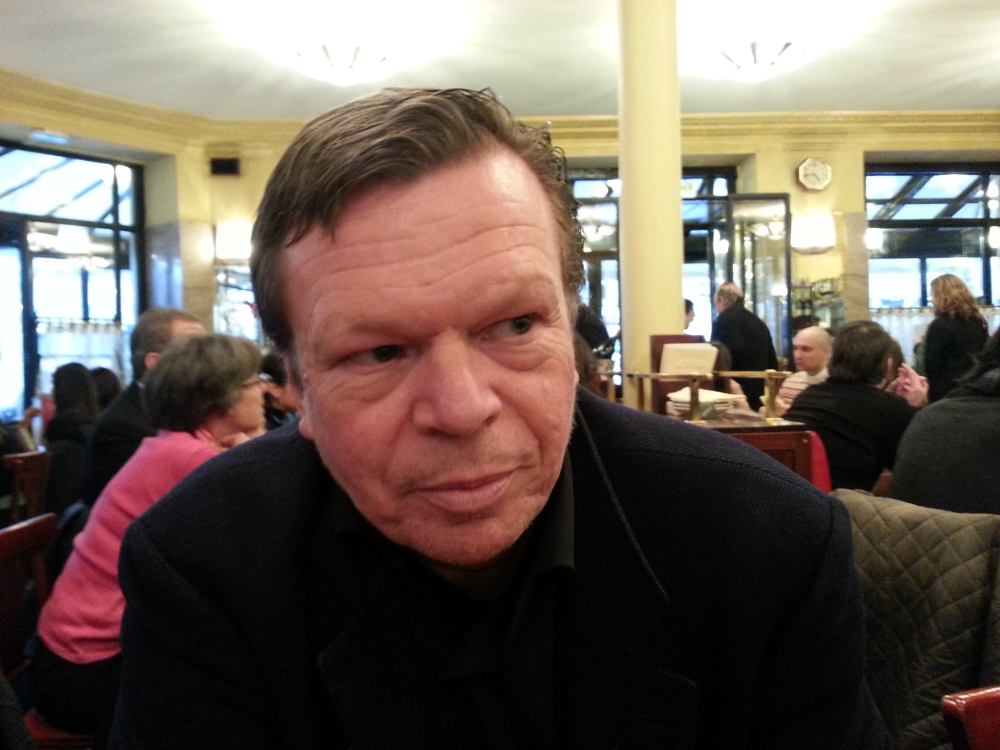
Peter is founder of the Heroine’s Journey and Hero’s Journey project where worldwide thousands of professionals shared their story of making money doing what you love. He wrote 50+ books. Peter has an MBA in Marketing, MBA in Financial Economics and graduated at university in Sociology and Communication Sciences.
Practical Info
The price of this three day tour with Peter de Kuster is Euro 2.850 excluding VAT per person.
There are special prices when you come with three or more travellers.
You can reach Peter for questions about dates and the program by mailing him at peterdekuster@hotmail.nl
TIMETABLE
09.40 Tea & Coffee on arrival
10.00 Morning Session
13.00 Lunch Break
14.00 Afternoon Session
17.00 Drinks
Introduction
Some people, se say, have “soul”. They have loved, they have suffered, they have a deep sense of life’s meaning. Perhaps most important, they know who they are.
Other people seem to have lost their souls. They may have material possessions – the right house, the right car, the right job, the right clothes; they may even have a stable family life and be religious. But inside themselves, they feel empty. Even when they go through the right motions, it is movement without meaning.
Still other people love and suffer and feel life intensely; but they never really get their lives together. They cannot seem to find work or personal relationships that truly satisfy them, and so they feel constantly constrained. Although they may be connected to their souls, they feel cut off from the world.
Saddest of all are people who never learn how to make their way in the world or how to be true to their own souls. Their lives are empty and unrewarding – yet unnecessarily so: virtually all of us are capable of finding meaning and purpose in our lives and in the life of the human community.
We find a model for learning how to live in stories about heroism. The heroic quest is about saying yest to yourself and in doing so, becoming more fully alive and more effective in the world. For the hero’s journey is first about taking a journey to find the treasure of your true self, and then about returning home to give your gift to help transform the kingdom – and, in the process our own life. The quest itself is replete with dangers and pitfalls, but it offers great rewards: the capacity to be successful in the world, knowledge of the mysteries of the human soul, the opportunity to find and express your unique gifts in the world and to live in loving community with other people.
The Storyteller Within is for people at all stages of life’s journey: it is a call to the quest for those just considering or beginning the journey: it provides reinforcement for longtime journeyers; and it is a tool for people already far along on their journeys who are looking for ways to share and pass on what they have learned. Each journey is unique, and each seeker charts a new path. But it is infinitely easier to do soe having at least some knowledge about the experiences of those who have gone before. When we learn about the many different heroic paths available to us, we understand that there is room for all of us to be heroic in our own unique ways.
Stories about heroes are deep and eternal. They link our own longing and pain and passion with those who have come before in such a way that we learn something about the essence of what it means to be human. The myths that can give our lives significance are deeply primal and archetypal and can strike terror into our hearts, but they can also free us from unauthentic lives and make us real.
The paradox of modern life is that at the same time that we are living in ways never done before and therefore daily recreating our world, our actions often feel rootless and empty. To transcend this state, we need to feel rooted simultaneously in history and eternity.
This is why the myth of the hero is so important in the contemporary world. It is a timeless myth that links us to peopls of all times and places. It is about fearlessly leaping off the edge of the known to confront the unknow, and trusting that when the time comes, we will have what we need to face our dragons, discover our treasures, and return to transform the kingdom. It is also about learning to be true to ourselves and live in responsible community with one another.
In classical myth, the health of the kingdom reflected the health of the King or Queen. When the Ruler was wounded the kingdom became a wasteland. To heal the kingdom it was necessary for a hero to undertake a quest, find a sacred object and return to heal or replace the Ruler. Our world reflects many of the classic symptoms of the wasteland kingdom: famine, environmental damage, economic uncertainty, rampant injustice, personal despair and alienation and the threat of war and annihiliation. Our ‘kingdoms’ reflect the state of our collective souls, not just those of our leaders. This is a time in human history where heroism is greatly needed. Like heroes of old, we aid in restoring life, health and fecundity to the kingdom as a side benefit of taking our own journeys, finding our own destinies and giving our unique gifts. It is as if the world were a giant puzzle and each of us who takes a journey returns with one piece. Collectively, as we contribute our part, the kingdom is transformed.
The transformation of the kingdom depends upon all of us. Understanding this helps us move beyond a competitive stance into a concern with empowering ourselves and others. If some people “lose” and do not make their potential contribution, we all lose. If we lack the courage to take our journeys, we create a void where our piece of the puzzle could have been, to the colletive as well our personal detriment.
THE JOURNEY
Heroism is also not just about finding a new truth, but about having the courage to act on that vision. That is, in a very practical way, why heroes need to have the courage and care associated with strong ego development and the vision and clarity of mind and spirit that come from having taken their soul’s journeys and gained the treasure of their true selves.
Most people know that heroes slay dragons, rescue damsels (or other victims) in distress, and find an bring back treasures. At the close of the journey, they often find love. They have reached a ‘happy ending’ to their journey in which their ‘new renewing truth’ becomes manifested in the life they now live – in community with their new family and with other people . This new truth they bring back renews their own lives and also the lives of their kingdoms, and therefore affects everyone they touch.
This mythic pattern is true for our personal journeys, although the happy ending is usually short lived. As soon as we return from one journey and enter a new phase of our lives, we are immediately propelled into a new sort of journey; the pattern is not linear or circular but spiral. We never really stop journeying, but we do have marker events when things come together as a result of the new reality we have encountered. And each time we begin our journeys, we do so at a new level and return with a new treasure and newfound transformative abilities.
What the Journey Requires
When we believe that our journeys are not important and fail to confront our dragons and seek our treasures we feel empty inside and leave a void that hurts us all. Psychologists in the leveling modern world have a name for the rare case of someone with ‘delusions of grandeur’ but do not even have a category for the most pervasive sickness, the delusion that we do not matter. While it is true that no one of us is more important than anyone else, we each have an important gift to give – a gift we are incapable of giving if we fail to take our journeys.
This book is designed to help you and others understand your significance and potential heroism. Perhaps most of all, it offers the potential to leave behing a shrunken sense of possibilities and choose to live a big life. Many of us try to achieve a big life by amassing material possessions or achievements or property or experiences, but this never works. We can have big lives only if we are willing bo become big ourselves and in the process give up the illussions of powerlessness and take responsibility for our lives.
There is a profound disrespect for human beings in modern life. Business encourages us to think of ourselves as human capital. Advertising appeals to our fears and insecurities to try to get us to buy products we do not need. Too many religious institutions teach people to be good but do not help them know who they are. Too many psychologists see their job as helping people learn to accommodate to what is, not to take their journeys and find out what could be. Too many educational institutaions train people to be cogs in the economic machine rather than educating them about how to be fully human.
Basically, we are viewed as products or commodities, to be either sold to the highest bidder or improved so that eventually we will be more valuable. Neither view respects the human soul or the human mind except as used as an acquisitive tool. As a consequence, people increasingly are disrespectful of themselves. Too many of us seek to fill our emptiness with food, or drink, or drugs or obsessive and frantic activity. The much-lamented pace of modern life is not inevitable – it is a cover for its emptiness. If we keep in motion, we create the illusion of meaning.
We are subtly and not so subtly discouraged from seeking our own grails and finding our own uniqueness by an ongoing pressure to “measure up”to preexisting standards. And, of course when we try to measure up rather than to find ourselves, it is unlikely that we will ever discover and share our unique gifts. Instead of finding out who we are, we worry about whether we are good-looking eough, smart enough, personable enough, moral enough, healthy enough, working hard enough, or successful enough.
We look outside ourselves for others to tell us if we have lived up to some version of perfection. How many of us aspire to the perfect face and body, the entrepreneurial winning mindset, the goodness or mental clarity of a great enlightened being or the financial success of a millionaire? It is no surprise that so many of us spend our lives alternately striving and flailing ourselves for our inability to measure up.
As long as this is our process, we will never find ourselves. Instead we will become compliant consumers, paying all the people who claim that they can help us overcome our ugliness, sinfulness, sickness and poverty. And, in the process we will keep them as stuck as we are – striving for something above us, rather than searching to know what is genuinely in us and ours.
Initially we may be called to the quest by a desire to achieve some image of perfection. Ultimately, however we need to let go of whatever predetermined ideal holds us captive and just allow ourselves to take our own unique journeys. The hero’s journey is not another self-improvement project. It is an aid in finding and honoring what is really true about you.
Knowing that you are a hero means that you are not wrong. You have the right mind. You have the right body. You have the right instincts. The issue is not to become someone else, but to find out what you are for. It means asking yourself some questions: What do I want to do? What does my mind want to learn? How does my body want to move? What does my heart love? Even problems and pathologis can be responded to as “calls from the gods” to a previously denied or avoided stage in your journey. So you might also ask yourself, “What does this problem or illness help me learn that can aid my journey?”
The rewards of self-discovery are great. When we find ourselves, everything seems to fall into place. We are able to see our beauty, intelligence, and goodness. We are able to use them productively, so we are successful. We are less caught up in proving ourselves so we can relax and love and be loved. We have everything we need to claim our full humanity, our full heroism.
ARCHETYPES: OUR INNER GUIDES
We are aided on our journey by inner guides, or archetypes, each of which exemplifies a way of being on the journey. Awakening the Inner Storyteller explores twelve such inner guides: the Dreamer, the Indepedent, the Warrior, the Caregiver, the Explorer, the Destroyer, the Lover, the Creator, the Ruler, the Magician, the Sage and the Player. Each has a lesson to teach us and each presides over a stage of the journey.
The inner guides are archetypes that have been with us since the dawn of time. We see them reflected in recurring images in art, literature, myth, film and religion and we know they are archetypal because they are found everywhere in all times and places.
Because the guides are truly archetypal and hence reside as energy within the unconscious psychological life of all people everywhere, they exist both inside and outside the individual human soul. They live in us but even more importantly, we live in them. We can, therefore find them by going inward (to our own dreams, fantasies and often actions as well) or by going outward (to myth, legend, art, film, literature and religion). Thus they provide images of the hero within and beyond ourselves.
We each experience the archetypes according to our own perspective. I have found at least three different ways to explain what an archetype is:
- Spiritual seekers may conceive of archetypes as gods and goddesses, encoded in the collective unconscious, whom we scorn at our own risk.
- Academics or other rationalists, who typically are suspicious of anything that sounds mystic, may conceive of archetypes as controlling paradigms or metaphors, the invisible patterns in the mind that control how we experience the world.
- Finally, people who are interested in human growth and development may understand the archetypes as guides on our journeys. Each archetype that comes into our lives brings with it a task, a lesson and ultimately a gift The archetypes together teach us how to live. And the best part about it is that all the archetypes reside in each of us. That means we all have this full human potential within ourselves.
THE GUIDES AND THE HERO’S JOURNEY
Although we are heroes at every stage of the journey, how we define and experience heroism is affected by which guide is most active in our lives, culturally and individually. For example in our culture, when we think of the hero, we usually think of a warrior, slaying dragons and rescuing people in disgress. Because the Warrior archetype is also associated in our cultural mind with masculinity, we are likely to think of the hero as male – and often (in Western culture) as a white male at that. Women, and men who are now white are seen as supporting characters on the journey: sidekicks, villains, victims to be rescued, servants, and so on.
The Warrior archetype is an important aspect of heroism – for all people, whatever their age or gender – but it is not the only or even the most essential one. All twelve archetypes are important to the heroic journey, and to the individuation process.
How we view the world is defined by what archetype currently dominates our thinking and acting. If the Warrior is dominant, we see challenges to be overcome. When the Caregiver is dominant we see people in need of our care. When the Sage is dominant, we see illusion and complexity and strive to find truth. When the Player is dominant we see ways to have a good time.
Each of the twelve archetypes then, is both a guide on the hero’s journey and a stage within it – offering a lesson to be learned and a gift or treasure to enrich our lives.
Once we have opened to learning from all twelve archetypes, we might experience all twelve in a single day; or hour. Suppose for instance something goes wrong – you become ill or your job or primary relationship is in jeopardy. For the first few minutes, you do not want to look dat the problem (shadow dreamer) but then your optimism returns (Dreamer) and you plunge into investigating the situation. Your next experience is to feel powerlessness and pain, but then you take responsibility (the Responsible) . You marshall your resources and develop a plan to deal with the problem (Warrior). As you implement it, you also pay attention to what you and others need in the way of emotional support (Caregiver).
You gather more information (Explorer), let go of the illusions and false hopes to focus on solutions (Destroyer) and make new commitments to change (Lover) in order to come up with a solution (Creator). That is you respond to the crisis as a way of growing and becoming more than you were. Once the crisis is handled you also look fto see how you might have contributed to creating the problem (Ruler) if you did and act to transform that part of you (Magician) so that you will n ot create such a difficulty again. Or you may simply transform the part of you in pain over a situation you had no part in creating. This allows you to see what can be learned from the situation (Sage). Learning it frees you up to go back to enjoying your life (Player) and trusting life’s processes (Dreamer).
When one or more archetypes ar enot activated in our lives, we skip steps. For example, if we have no Warrior, we will fail to develop a plan for dealing with the problem. If we have no Sage, we may neglect to gain the lesson the situation could teach us. Or we might express the archetype in the shadow forms. INstead of making a plan, we indulge in blaming others. Instead of gaining the lesson of the situation we judge ourselves or others.
The movement through the twelve archetypal stages is an archetypal process that helps us develop invaluable skills for day-to -day living.
STAGES OF THE JOURNEY
The hero’s journey includes three major stages, preparation, the journey, and the return. During the preparation stage, we are challenged to prove our competence, our courage, our humanity, and our fidelity to high ideals. On the journey we leave the safety of the family or tribe and embark on a quest where we encounter death, suffering and love. But most important, our selves are transformed. In myth, that transformation is often symbolized by the finding of a treasure or sacred object. On our return from the quest, we become rulers of our kingdoms, which are transformed because we are changed. But we must also continually be reborn and renewed, or we become ogre tyrants, clinging dogmatically to our old truts to the detriment of our kingdoms. Whenever we lose our sense of integrity and wholeness or begin to feel inadequate to current life challengs, we must embark on the quest again.
Preparation
The first four archetypes help us prepare for the journey. We begin in innocence, and from the Dreamer we learn optimism and trust. When we experience ‘the fall’, we become Independent, disappointed, abandoned, betrayed by life and especially by the people who were supposed to care for us. The Independent teaches us that we need to provide for ourselves and stop relying on others to take care of us, but the shadow of the Independent feels so powerless and helpless that its best strategy for survival is to band together with others for mutual aid.
When the Warrior comes into our lives, we learn to set goals and develop strategies for achieving them, strategies that almost always require the development of discipline and courage. When the Caregiver becomes active, we learn to take care of others, and eventually to are for ourselves as well.
These four attributes – basic optimism, the capacity to band together for support, the courage to fight for yourself and others and compassion and care for yourself and others – together provide the basic skills for living in a society. Bt almost always, we still feel unsatisfied if this is all we can do, even though we have learned what is necessary to be both moral and successful in the world.
The Journey
We begin to yearn for something beyond ourselves, and become Exploreres, searching for that ineffable something that will satisfy. Answering the call and embarking on the journey, we find that soon we are experiencing privation and suffering as the Destroyer takes away much that had seemed essential to our lives. initiation through suffering, however is complemented by an initiation into Eros, the Lover, as we find ourselves in love with people, causes, places, work. This love is so strong it requires commitment – and we are no longer free. The treasure that emerges out of this encounter with death and love is the birth of the true self. The Creator helps us begin to express this self in the world and prepares us to return to the kingdom. These four abilities – to strive, to let go, to love and to create – teach us the basic process of dying to the old self and giving birth to the new. The process prepares us to return to the kingdom and change our lives.
The Return
When we return, we realize we are the Rulers of our kingdoms. At first we may be disappointed at the state of this realm. But as we act on our new wisdom and are more fully true to our deeper sense of identity, the wasteland begins to bloom. As the Magician is activated in our lives, we become adept at healing and transforming ourselves and others so that the kingdom can continually be renewed.
However, we are not completely fulfilled or happy until we face our own subjectivity, and so the Sage helps us know what truth really is. As we learn to both accept our subjectivity and let go of imprisonment to illusions and petty desires, we are able to reach a state of nonattachment in which we can be free. We are then ready to open to the Player and learn to live joyously in the moment without worrying about tomorrow.
This final set of attainments – taking total responsibility for our lives, transforming ourselves and others, nonattachment and a commitment to truth, and a capacity for joy and spontaneity – is itself the reward for our journey.
The Spiral Nature of the Journey
Thinking of the hero moving through stages of preparation, journey and return and being aided by twelve archetypes in order, is useful as a teaching devie, but in most cases, ofcourse growth really does not happen in such a defined, linear way. Our guides come to us when they – and at some level we – choose.
The pattern is more like a spiral: the final stage of the journey, epitomized by the archetype of the Player folds back into the first archetype, the Dreamer, but at a higher level than before. This time the Dreamer is wiser about life. On the spiral journey we may encounter each archetype many times, and in the prodess gain new gifts at higher or deeper levels of development. Each enounter leaves a psychic imprint. When we experience reality we can take in that experience and make meaning of it. the archetypes we have not yet experienced are like holes in the net, experiences that we have little or no way of understanding simply pass through.
How to Use this Seminar
The Storyteller Within seminar is organized in five parts. Part I introduces the heroic quest as a journey of consciousness. It traces ways the archetypes aid in constructing and balancing the psyche itself as they help us form our Egos, connect with our Souls and then both develop a sense of our true Selves and express these Selves in the world. The first five parts provide a basic understanding of the process of individuation and consciousness expansion, which forms the basis for learning to realize fully your human potential.
Parts II, III and IV explore, in detail, the archetypal guides that help us on our journeys. Part II describes the archetypes that help us prepare for the journey: The Innocent, the Orphan, the Warrior and the Caregiver. Part III considers the archetypes that aid us in the journey itself: the Discoverer, the Rule Breaker, the Lover and the Creator. Part IV focuses on the archetypes that facilitate a successful and transformative return of the journey: the Ruler, the Magician, the Sage and the Fool.
Each part discusses how one archetype expresses itself in our individual and cultural lives: the skills it teaches us, its negative or shadow forms, and the gifts and lessons it offers. Since each archetype can manifest itself in relatively primitive or more sophisticated forms, each part also explores stages of development of the archetypes.
Part IV looks at how our journeys are affected by age, gender, culture and our own unique experience – factors that serve as a prism that diffuses this monomyth into thousands of unique patterns and forms, providing adequate room for individual variation and creativity.
I have written this book for coaches. The Hero’s Journey is meant for those who want to awaken the heroes within themselves and others. These theories are designed to be applied in the following ways:
- As a developmental transpersonal psychology
- As a description of twelve key stages to human development each with its own lesson, task and gift.
- As a way of understanding and appreciating human diversity by dominant archetype, gender, age, psychological type and cultural background.
- As a non-pathology based diagnostic and intervention model to be used by educators and coaches for determining an individual’s current developmental challenge
- As an aid in educating individuals for success, citizenship and leadership in a democratic society
- As an investigation of archetypal, timeless spiritual truths found in religion, myth, literature, film and psychology, and hence, as a psychologically rather than theologically based guide to spiritual development
- As a tool for self-understanding and personal growth
Individual readers may use these theories to recognize where they may be possessed by shadow forms of the archetypes to the detriment of their lives and how they might analyze the heroic ‘guides’ within them. Most of all, they can use the theories to recognize the stages of their journeys, so they can gain the lessons of each archetype.
Recognizing the Shadow Forms of the Guides
For some people the whole area of the inner life is an undiscovered country. They may feel real fear about taking any kind of psychological journey. This is partly because they fear what they do not know, and partly because the more unknown the territory is to them, the more likely it is that they are pushing down archetypes that would like to be expressed in their lives. If so, these people will feel them initially in their negative forms, of course, this just makes them intensify further their efforts to repress the archetypes because otherwise they might be opening the door to monsters.
Indeed, if this is the case for you, just read this book without any intention of applying it to your own psyche. Reading it will educate your ego and in due time allow some orderly integration of the more positive sides of the archetypes into your psyche. It will also allow you to recognize the archetypes that already are expressed in your life, and to see the richness you have gained from them. Very likely you are still reaping their benefits. When you are ready to incorporate some new lessons into your life, it will not be difficult to do so.
Heroes confront dragons, and these dragons can be of many kinds. Indeed for those who have not allowed many. If any, of the archetypes from the collective unconscious into their lives both the inner and outer worlds seem populated with dragons – and the world seems a very frightening place to be.
The twelve heads of the dragons are the shadow sides of each archetype they can be as lethal as the seven deadly sins. If we do not find the treasure they are hiding from us. Many times when we feel awful, we are stuck expressing an archetype in the negative guise. To feel empowered once again, we need simply to examine what archeteype has possessed us, and then refuse to be possessed by it. However, usually we can do that only if we honor the archetype by expressing it in some way. In this case, what we want to do is more to expressing its more positive side.
THE SHADOW SIDE OF THE ARCHETYPE
Innocent
Evidenced in a capacity for denial so that you do not let yourself know what is really going on. You may be hurting yourself and others, but you will not acknowledge as well. Or, you believe what others say even when their perspective is directly counter to your own inner knowledge.
Orphan
The victim, who blames his oer her incompetence, irresponsibility, or even predatory behavior on others and expects special treatment and exemption from life because he or she has been so victimized or is so fragile. When this Shadow of the positive Orphan is in control of our lives, we will attack even people who are trying to hellp us, harming them and ourselves simultaneously. or we may collapse and become dysfuntional
Warrior
The villain, who uses Warrior skills for personal gain without thoughts of morality, ethics, or the good of the whole group. It is also active in our lives any time we feel compelled to compromise our principles in order to compete, win, or get out our own way. It is also seen in a tendency to be continually embattled, so that one perceives virtually everything that happens as a slight, a threat, or a challenge to be confronted.
Caregiver
The suffering martyr, who controls others by making them feel guilty. “Look at all I have sacrificed for you”. It evidences itself in all manipulative or devouring behaviors, in which the individual uses caretaking to control or smother others. (It is also found in codependence, a compulsive need to take care of or rescue others)
Seeker
The perfectionist, always striving to measure up to an impossible goal or to find the ‘right’ solution. We see this in people whoe main life activity is self improvement, going from the health club to yet another self-improvement course, etc. yet who never feel ready to commit to accomplishing anything ( this is the pathological underside of the human potential movement)
Destroyer
Includes all self-destructive behaviors – addictions, compulsions or activities that undermine intimacy, career succes, or self esteem and all behaviors – such as emotioinal or physical abuse, murder, rape – that have destructive effects on others.
Lover
Includes all sirens (luring others from their quests) seduces (using love for conquest), sex or relationship addicts (feeling addicted to love) and anyone who is unable to say no when passion descents, or is totally destroyed when a lover leaves.
Creator
Shows itself as obsessive, creating so that so many possibilities are being imagined that none can be acted upon fully. One variety is workaholism, in which we can always think of just one more thing to do.
Ruler
The ogre tyrant, insisting on his or her own way and banishing creative elements of the kingdom (or the psyche) to gain control at any price. This is the King or Queen who indulges in self-righteous rages and yells ‘Off with his head”. Often people act this way when they are in positions of authority but do not know how to handle the attendant responsibility. This also includes people who are motivated by a strong need to control.
Magician
The evil sorcerer, transforming better into lesser options. We engage in such evil sorcery anytime we belittle ourselves or another, or lessen options and possibilities, resulting in diminished self-esteem. The shadow Magician is also the part of us capable of making ourselves and others ill through negative thoughts and actions.
Sage
The unfeeling judge – cold, rational, heartless, dogmatic, often pompous – evaluating us or others and saying we (or they) are not good enough or are not doing it right.
Fool
A glutton, sloth or lecher wholly defined by the lusts and urges of the body without any sense of dignity or self-control
Any of us at any time can have a whole slew of inner dragons telling us we are not good enough (shadow Sage) we cannot live without that lover (shadow lover), we are imagining all our problems and everything is fine (shadow innocent) and so on. And we will identify as dragons whomever or whatever we meet in the outside world that triggers those inner voices.
In the early journey, we may try to slay these dragons, seeing them as entirely outside ourselves; as the journey progresses, we come to understand that they are inside us as well. When we learn to integrate the positive side of the archetype within ourselves, the dragons within (sometimes also without) become transformed into allies. For example, when people who judge us trigger our inner shadow Sage, we can learn to respond with our positive Sage and explain that we are living up to our own standards, if not theirs. At the end of the journey, then, there is no dragon. We feel authentic and free.
Shadow possession is not always related to the negative Shadow. We can also be possessed by the positive form of the archetype. For instance, you could be a very high-level Caregiver: you love to give. You have no hidden agenda’s and you get joy from helping others. You still can be possessed by the archetype if you are always a Caregiver, and never battle, or seek your own bliss, or just have fun. Until we have given birth to a sense of authentic Self, the archetypes are likely to possess us. Ideally, we want not only to express many different archetypes in our lives without being possessed by any. Freeing ourselves from possession by our Shadows allows us to live freer lives.
Awakening the Heroes Within
The way to free ourselves of shadow possession is to awaken our heroic potential. Each of us has a hero within is essentially, sleeping. Our task is to awaken that hero The most natural way to arise in the morning is to wake up when the sun shines in the room. The natural way to activate inner potential is to shine the light of consciousness upon it. When we begin to see that we have a hero within, the hero, quite naturally, wakes up.
So too, with the archetypes. As we shine the light of consciousness upon them, recognizing that they are within us. they awaken to enrich our lives. If they are already active but in shadow form, consciousness can turn the beastly side of the archetype into the royal prospering prince or princess it could be.
Some of us, as a result of a fast – paced contemporary life-style, do not awaken when the sun shines in our window. We are too exhausted or simply to out of touch with natural processes, and we need an alarm clock. Our psyche also provides alarm clocks – usually called symptoms – to wake us up and tell us that something is wrong.
 The Hero's Journey