“Your story is your life,” says Peter. As human beings, we continually tell ourselves stories — of success or failure; of power or victimhood; stories that endure for an hour, or a day, or an entire lifetime. We have stories about ourselves, our creative business, our customers ; about what we want and what we’re capable of achieving. Yet, while our stories profoundly affect how others see us and we see ourselves, too few of us even recognize that we’re telling stories, or what they are, or that we can change them — and, in turn, transform our very destinies.
Telling ourselves stories provides structure and direction as we navigate life’s challenges and opportunities, and helps us interpret our goals and skills. Stories make sense of chaos; they organize our many divergent experiences into a coherent thread; they shape our entire reality. And far too many of our stories, says Peter, are dysfunctional, in need of serious editing. First, he asks you to answer the question, “In which areas of my life is it clear that I cannot achieve my goals with the story I’ve got?” He then shows you how to create new, reality-based stories that inspire you to action, and take you where you want to go both in your work and personal life.
Our capacity to tell stories is one of our profoundest gifts. Peter’s approach to creating deeply engaging stories will give you the tools to wield the power of storytelling and forever change your business and personal life.
Join Peter for a truly transformational vacation for the mind.
Practical Info
Tour Details:
- Duration: 1 day
- Start Time: 09:30 AM
- End Time: 5:00 PM
- Cost: € 995 per person excluding VAT (there are special prices for two or more persons)
You can book this tour by sending Peter an email with details at peterdekuster@hotmail.nl
TIMETABLE
09.40 Tea & Coffee on arrival
10.00 Morning Session
13.00 Lunch Break
14.00 Afternoon Session
17.00 Drinks
What Can I Expect?
Here’s an outline of The Hero’s Journey in Musée Uffizi Florence
Journey Outline
OLD STORIES
- The Power of your Story
- Your Story is Your Life, Your Life is Your Story
- What is Your Story?
- Your Hero’s Journey
- Is It Really Your Story You Are Living?
- Old Stories (stories about you, your art, your clients, your money, your self promotion, your happiness, your health)
- Tell your current Story
YOUR NEW STORY
- The Premise of your Story. The Purpose of your Life and Art
- The words on your tombstone
- You ultimate mission, out loud
- The Seven Great Plots
- The Twelve Archetypal Heroes
- The One Great Story
- Purpose is Never Forgettable
- Questioning the Premise
- Lining up
- Flawed Alignment, Tragic Ending
- The Three Rules in Storytelling
- Write Your New Story
TURNING STORY INTO ACTION
- Turning your story into action
- Story Ritualizing
- The Storyteller and the art of story
- The Power of Your Story
- Storyboarding your creative process
- They Created and Lived Happily Ever After.
About Peter de Kuster
Peter de Kuster is the founder of The Heroine’s Journey & Hero’s Journey project, a storyteller who helps creative professionals to create careers and lives based on whatever story is most integral to their lives and careers (values, traits, skills and experiences). Peter’s approach combines in-depth storytelling and marketing expertise, and for over 20 years clients have found it effective with a wide range of creative business issues.

Peter is writer of the series The Heroine’s Journey and Hero’s Journey books, he has an MBA in Marketing, MBA in Financial Economics and graduated at university in Sociology and Communication Sciences.
The Power of Your Story
What do I mean with ‘story’? I don’t intend to offer tips on how to fine-tine the mechanics of telling stories to enhance the desired effect on listeners.
I wish to examine the most compelling story about storytelling – namely, how we tell stories about ourselves to ourselves. Indeed, the idea of ‘one’s own story’ is so powerful, so native, that I hardly consider it a metaphor, as if it is some new lens through which to look at life. Your story is your life. Your life is your story.
When stories we watch touch us, they do so because they fundamentally remind us of what is most true or possible in life – even when it is a escapist romantic story or fairy tale or myth. If you are human, then you tell yourself stories – positive ones and negative, consciously and, far more than not, subconsciously. Stories that span a single episode, or a year, or a semester, or a weekend, or a relationship, or a season, or an entire tenure on this planet.
Botticelli’s “Primavera” powerfully illuminates the concept of story as not just a way we tell others but as the stories we tell ourselves—our internal narratives that shape our life and identity. This masterpiece, housed in the Uffizi Gallery, is filled with rich symbolism and mythological references to fertility, love, transformation, and renewal, making it an evocative metaphor for the human experience of storytelling.
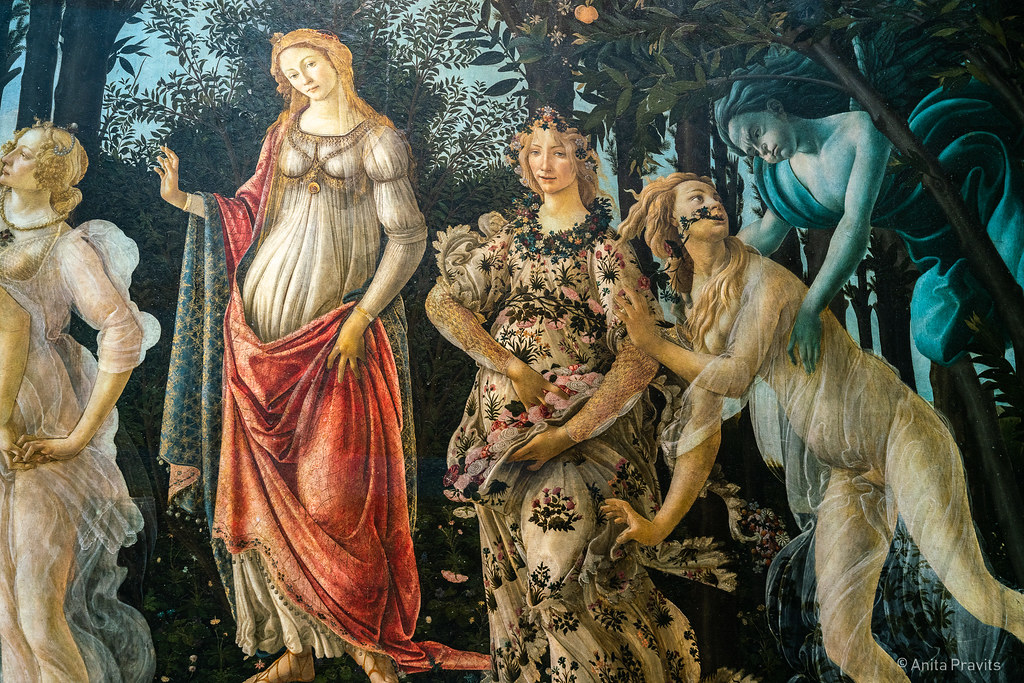
“Primavera” portrays mythic figures in a lush garden setting: Zephyrus, the biting March wind, abducts the nymph Chloris, who transforms into Flora, the goddess of spring, scattering flowers; Venus, centrally placed, presides over the scene, embodying love and harmony; Cupid aims his blindfolded arrow toward the Three Graces, who dance in a harmony symbolizing beauty, chastity, and pleasure; and Mercury, at the far left, wards away clouds to usher in spring warmth. Each figure embodies stages in the seasonal and metaphorical cycle of growth, renewal, and enlightenment.
Interpreted through the lens of personal story, this painting reflects how human beings weave narratives about themselves—complex, often layered, symbolic, and deeply personal. Just as Botticelli’s figures embody abstract concepts that cycle through transformation, renewal, and love, individuals tell themselves stories that move through stages of challenge, change, hope, and understanding. The painting’s progression from right to left mirrors how stories evolve over time—from the initial struggles or disruptions symbolized by Zephyrus’s harsh winds to the blossoming of new life and possibility seen in Flora and the central harmony of Venus and the Graces.
This aligns with the idea that one’s story is not simply a chronological retelling of events but a dynamic and symbolic construction shaped by perception and meaning-making. For a viewer, encountering “Primavera” can trigger deeply personal reflections—on relationships, growth, loss, and potential. The painting’s mythological tales resonate because they touch universal human experiences, like love’s unpredictable power suggested by Cupid’s blindfolded aim, or the interplay of chastity and desire in the graceful dance of the Three Graces.
In life, as in the painting, our stories are filled with moments of transformation—times when we must interpret and re-interpret our experiences to make sense of who we are and where we’re headed. The allegory of Spring’s arrival is a metaphor for renewal and hope, reminding us that even after hardship or emotional winter, there is potential for growth and new beginnings. Similarly, the human storytelling process oscillates between conscious narrative shaping and subconscious symbolism, blending reality with desire, fear with hope, and memory with aspiration.
Botticelli’s “Primavera” teaches us that stories, like seasons, are cyclical and layered. They encompass not just external events but internal evolutions—our ongoing dialogue with ourselves about what is true and possible. Just as the Medici family embraced the orange tree depicted in the orange grove as a symbol of legacy and prosperity, we each cultivate symbols and stories that define our identity and choices.
Ultimately, the power of your story lies in its capacity to carry meaning and hope, to shape your destiny by the way you frame your experiences and aspirations. “Primavera” stands as a timeless reminder that our lives are not merely lived but continually narrated and re-narrated through the stories we tell ourselves, stories that span moments, relationships, seasons, and lifetimes. It invites us to recognize the power we hold in crafting our stories—to choose which narratives nourish growth, love, and harmony, just as the figures in Botticelli’s enchanted garden embody the eternal dance of life’s potential and transformation.
Stories to Navigate Our Way Through Life
Telling ourselves stories helps us navigate our way through life because they provide structure and direction. We are actually wired to tell stories. The human brain has evolved into a narrative-creating machine that takes whatever it encounters, no matter how apparently random and imposes on it ‘chronology and cause – and – effect logic’. We automatically and often unconsciously, look for an explanation of why things happen to us and ‘stuff just happens’ is no explanation.
Stories impose meaning on the chaos; they organize and give context to our sensory experiences, which otherwise might seem like no more than a fairly colorless sequence of facts. Facts are meaningless until you create a story arond them.
A great story that vividly illustrates how storytelling helps us navigate life, especially through the artwork at the Uffizi Gallery in Florence, is that of Artemisia Gentileschi and her painting “Judith Beheading Holofernes.”
Artemisia Gentileschi was a pioneering female artist of the Baroque period who lived in Rome and Florence. Her life story, marked by trauma (including surviving a rape trial) and resilience, profoundly informs the dramatic power of her artwork housed in the Uffizi. “Judith Beheading Holofernes” depicts the biblical heroine Judith’s decisive act of courage in beheading the Assyrian general Holofernes to save her people. The painting is brutal and raw—blood splatters, tense muscles, and grim determination dominate the scene, conveying a powerful narrative of female strength and survival.
This artwork exemplifies how stories impose meaning on chaos. Gentileschi’s painting transforms a biblical episode into a deeply personal, almost autobiographical tale of overcoming trauma and reclaiming agency. The artist’s story—one of suffering, courage, and survival—is embedded in the painting’s intense emotion and realism, creating a rich narrative frame for viewers to navigate complex human experience.

Moreover, the painting’s presence in the Uffizi, among masterpieces telling the grand narrative of Florence and the Renaissance, situates Gentileschi’s personal story within a larger historical and cultural context. Viewers are drawn into a layered storytelling experience where sensory details—the dramatic light and shadow, the visceral physicality, the intense facial expressions—are organized into a coherent story of struggle and triumph.
In essence, Gentileschi’s “Judith Beheading Holofernes” beautifully illustrates the text’s idea that we are wired to create stories to understand and navigate life. Facts alone—the artist’s biography, the biblical narrative, the violent act depicted—gain their full meaning only when woven into a story that offers direction, emotional resonance, and insight into human strength and vulnerability. This story also shows the deep editing and reframing often necessary for stories to guide destiny and inspire hope, demonstrating the transformative power of storytelling through art.
What Do I Mean with Story?
By ‘story’ I mean those tales we create and tell ourselves and others, and which form the only reality we will ever know in this life. Our stories may or may not conform to the real world. They may or may not inspire us to take hope – filled action to better our lives. They may or may not take us where we ultimately want to go. But since our destiny follows our stories, it is imperative that we do everything in our power to get our stories right.
For most of us, that means some serious editing.
Leonardo da Vinci’s Annunciation
A great story from the Uffizi that illustrates the concept of story as the tales we create and which shape our reality and destiny is that of Leonardo da Vinci’s “Annunciation.” This early masterpiece by Leonardo is not just a depiction of the biblical moment when the Angel Gabriel announces to the Virgin Mary that she will bear the Son of God, but it also symbolizes the artist’s own story of growth, artistic exploration, and the struggle to bring vision to life.
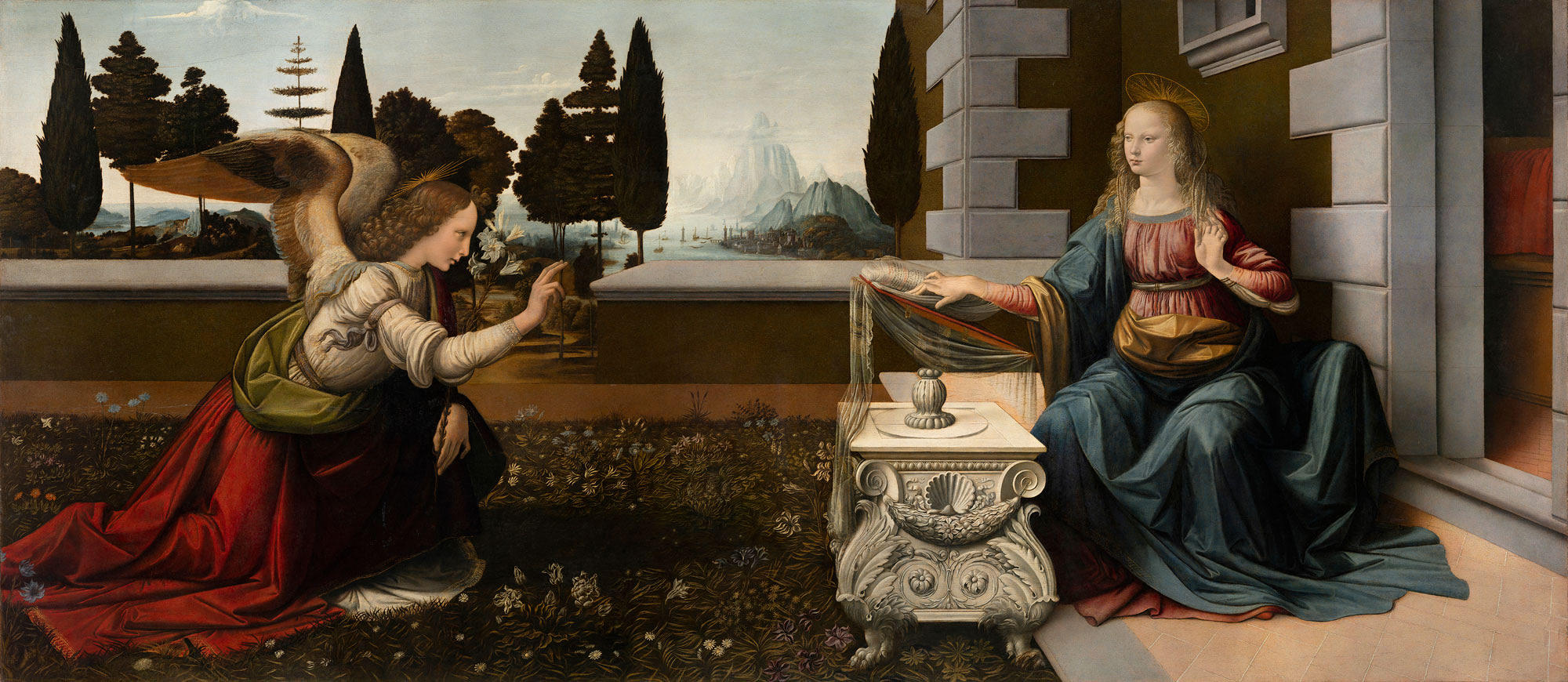
Leonardo painted the “Annunciation” when he was still a young apprentice, embarking on his journey to find his artistic voice. The work captures a moment suspended between the divine and the earthly—a narrative about transformation and possibility much like the stories we tell ourselves about change and calling in life. The detailed wings of the angel, the serene yet contemplative Mary, and the garden setting all convey symbolic meanings that reflect inner realities alongside external events, emphasizing that reality is partly shaped by the interpretations and stories we construct.
Leonardo’s story is a powerful testament to the necessity of “serious editing” in life and art. Throughout his career, Leonardo constantly revised and rethought his work, embodying the idea that our stories are drafts we must refine deliberately. His notebooks reveal continuous questioning and rewriting of his own narratives, demonstrating that destiny follows those stories we choose to nurture and develop. Leonardo’s life reflects the importance of editing both artistic creations and personal stories so that they inspire hope, action, and ultimately guide us toward our desired outcomes.
Thus, “Annunciation” at the Uffizi becomes more than a religious painting—it is a metaphor for the constant creative and personal labor involved in shaping the stories that define who we are and where we go. Like Leonardo’s evolving artistic journey, our lives require us to actively engage in reshaping our narratives, understanding that although stories may diverge from an objective reality, they form the very fabric of our lived experience and destiny.
This story from the Uffizi perfectly encapsulates the idea that to get our stories right, we must engage in thoughtful editing, embrace transformation, and acknowledge that our sense of reality and future is crafted through the stories we choose to tell and live by. Leonardo’s “Annunciation” invites viewers to reflect not only on the divine story it depicts but also on their own stories, emphasizing that our lives and destinies are the outcomes of the narratives we author and revise.
 The Hero's Journey