If you want to get results, start connecting with the right side of the brain.
Peter de Kuster will learn you to be a better storyteller. As successful leaders know, it’s all about making human connections—and it takes more than mathematical, selling, and organizational skills to make those connections. It takes intuitive insight and a desire to know who your clients are, so you can begin speaking a language they will understand.
In this affecting and illuminating seminar, Peter talks about the three aspects of becoming a more intuitive financial advisor
- Understanding the power of emotion in the decision-making process
- Understanding your client’s story before attempting to tell your own story
- Understanding the power of the analogy and metaphor in explaining your products and services
Practical Info
The price of twp day tour with Peter de Kuster is Euro 1.095 excluding VAT per person.
There are special prices when you come with three or more travellers.
You can reach Peter for questions about dates and the program by mailing him at peterdekuster@hotmail.nl
TIMETABLE
09.40 Tea & Coffee on arrival
10.00 Morning Session
13.00 Lunch Break
14.00 Afternoon Session
17.00 Drinks
Read on for a detailed breakdown of the StorySelling for Financial Advisors itinerary.
What Can I Expect?
Here’s an outline of StorySelling for Financial Advisors in Paris
Journey Outline
PART I HOW TO PUT HALF OF YOUR CLEINT’S BRAIN TO SLEEP
- Why Statistics Don’ t Sell and Stories Do
- Learning to Speak the Language of the Right Brain
- What is your Gut Feeling? How Decisions Really Get Made
PART II BECOMING A BETTER STORYTELLER
- Reading and Leading Others
- Getting Others to Tell their Story
- How Humor Get You Further than Self Promotion
- Making The Intuitive Leap with Your Audience
- Using Analogies and Metaphors to Move Your Clients and Products
PART III STORYTELLING IN DESIRABLE MARKETS
- Telling the Story of the Affluent
- Telling the Story of the 65+
- Telling the Woman’ s Story
- Telling the Story of Creatives
- Let Me Tell You A Story
About Peter de Kuster
Peter de Kuster is the founder of StorySelling for Leaders can engage their clients with the power of story.

Peter is founder of the Heroine’s Journey and Hero’s Journey project where worldwide thousands of professionals shared their story of making money doing what you love. He wrote 50+ books. Peter has an MBA in Marketing, MBA in Financial Economics and graduated at university in Sociology and Communication Sciences.
You can reach Peter by mailing him at peterdekuster@hotmail.nl
Why Statistics Don’t Sell and Stories Do
How To Put Half of Your Client’s Brain in Sleep
Learning to Speak the Language of the Right Brain
What’s Your Gut Feeling? How Decisions Really Get Made
Why Statistics Don’t Sell and Stories Do.
- If you rely on facts, statistics, and charts to sell, you’re putting your clients to sleep
- The financial storyteller that appeals to both sides of the brain has twice the odds of winning the customer
- With the right stories and metaphors, you’ll see better results
You might have to start telling stories, drawing pictures and illustrations and using metaphors. You might start paying more attention to the individuality and personality of your clients and start focusing on discovering their story, who they are and what’s right for them. You might spend a lot less time talking and a lot more time listening. You might learn to intuitively read between the lines of what they are saying instead of force-feeding every client the same intellectual data.
Guess what? These are the things that successful companies in the financial service industry are doing right now. They have crafted the art of storytelling, They came by it naturally. They intuitively solved the riddle of how to reach and teach clients what they need to know. Once that connection was made, they had found clients who trusted them for the long term.
It is Time for Stories
In an age of online, do – it – yourself finance, people still yearn for mentoring, for guidance, and for affirmation. Many have gone the Lone Ranger route in finance because they haven’t been able to find a financial services partner who knows how to communicate effectively. Your success as innovator in financial services hings on your ability to communicate. Make the complex simple and understandable and you will never lack for clients. The storytelling truths and examples in this One Day seminar will revolutionize the way you sell financial services and yourself.

Your success with clients doesn’t hinge on being a better analyst, insurer, investor or banker but rather on being a better teacher, a better storyteller and a master of the metaphor. Individuals will no longer tolerate being left in the dark, and they will gravitate to the people who excel in illuminating and communicating. In this One Day seminar you will find the examples and techniques necessary to become an expert storyteller yourself.

Telling the Financial Story will help you become more expert at communicating, at relating and at penetrating profitable markets – and make money in the process! Storytelling is about making an emotional connection with your client’s hopes and dreams by using illustrations and stories they can understand.
StorySelling: Science and Art

Warren Buffett once said that investing is part art and part science. The marketing of financial services is also part art and part science, but the majority of those marketing financial services put far too much emphasis om the science. Which is not only boring clients to death, but, because financial professionals are all using the same scientific charts and facts, have begun to sound like every other financial service provider out there.

Financial services providers are familiar with the science of insurance, banking, investments. However, an exclusively analytical scientific approach in explaining and selling financial services has a half – brain approach and, in fact, may be counterproductive. It may be counterproductive because when we get caught up in any form of analytical science, we begin to speak in jargon, which tends to confuse and intimidate most people. Many financial services providers are spewing jargon and cliches to uninitiated clients and don’t realize the confusion and intimidation they are causing.
Highly successful storysellers have learned to simplify complex financial services strategies and products. They have learned to relate these strategies and products to matters their clients can understand by using the phrase ‘It’s kind of like’. In this seminar we will share many of the stories, analogies, and metaphors that these successful financial professionals use to their own benefit and the benefit of their clients.

Why Stories Sell
Why are some financial service companies thriving in an age while others are struggling to survive? Whey do some seem to never get over the hump of building a bigger book of business? Why so some financial services companies have lots of referrals when others have to claw and dig just to get one referral?

I loved to look at the great storytellers to find exactly how they sell. The characteristics I found were both profound and simple:
- The way they told the financial story was illustrative and simple.
- They excelled in relating and communicating with others
- They developed specialized audiences for their services.
The way top financial services companies tell stories is by simplifying matters, not complicating them. By using simple illustrations, anecdotes and metaphors they bring themselves and their ideas into the mental grasp of every client. Consequently, clients love talking to them and referring their friends as well.

I call this Telling the Financial Story. I have come to believe that storytelling is the key to building a large and loyal customer base. It is a proven psychological fact that storytelling puts the mind in a flow-like state and makes us more able to learn, be inspired, move to action. Everyone loves a good story. I will teach you how to tell the financial story.
In an age of online, do-it-yourself personal finance and investing, people still yearn for mentoring, for guidance, for affirmation. Many have gone the Lone Ranger route in investing because they haven’t been able to find a financial services company they trust, who knows how to communicate effectively. Your succes as an financial services company hinges on your ability to communicate. Make the complex simple and understandable and you will never lack for clients. The storytelling truths and examples I offer will revolutionize the way you sell financial services and yourself.
Your success with clients doesn’t hinge on being a better analyst or being tech-savy but rather on being a better teacher, a better storyteller, and a master of the metaphor. Individuals will no longer tolerate being left in the dark, and they will gravitate to financial services companies who excel in illuminating and communicating.

Top financial services companies have a sincere concern and respect for people. Clients feel good after meetings with people of these companies because they sense these people have their best interests at heart. All the people I have ever met had a sign hanging on their neck. The sign around each person’s neck actually says ‘help me feel important’. No matter who they were, no matter how they’d risen or how much they had, they all wear the same sign. Those who learn to recognize and respond to that sign will succeed. This world has a way of wearing people down – it can be hard on them. It stereotypes them, categorizes them, and assigns numbers to them. But we want others to see us for the unique individuals we are. I will show you with ‘Your Clients Story’ how to demonstrate that sort of respect.
Finally, I found that top financial services companies have learned to focus and specialize their business into profitable ‘niches’. The Woman’s market, the Babyboomer’s market, the Affluent market, the Creatives market. By moving from a jack-of-all-trades, anybody-will-do financial services company to a specialized expertise in profitable niches, these financial services companies have seen their business grow faster and larger than they ever imagined possible. I will show you how to communicate with the growing markets of women, creatives, babyboomers, affluent respectively.

Storytelling will help you become more expert at communicating, at relating, and at penetrating profitable markets – and make money in the process! Storytelling is about making an emotional connection with your clients’ hopes and dreams by using illustrations and stories they can understand.
Illumminate
It is important for financial services professionals to not only be knowledgeable but to be able to communicate as well. All the knowledge and understanding in the world is useless if you can’t effectively transfer and relate that understanding to your clients. To become a more effective communicator, you must
- Understand how the human brain works and how to capture and keep people’s interest; and
- Learn to integrate visual, imaginative, sensory and emotive aspects in your client presentation through the art of storytelling

As a result you will gain tremendous confidence in your ability to communicate and connect with your clients. Your clients will feel a stronger bond to you because you are not just an advisor who directs their finances but you are a teacher who simplifies and illuminates concepts they once found confusing. Their personal confidence level is now raised because of their increased understanding, and their confidence and trust in you is raised because of this connection you have established. You have turned on the light about a topic that has confounded and perplexed them in the past.
There are many examples of storyselling, the use of metaphors to increase illumination, stir the imagination and promote a decision that fits each client’s comfort zone.
Why does this storytelling approach work? Because it appeals to both sides of the brain. It gets us fully involved in the matter, the decision, the action – intellectually, imaginatively, emotionally and intuitively.

Before we go any further, we must explain what it is about the human brain that makes this approach so effective. We will also use a storyselling approach (metaphor) to make the lesson more memorable.
The Map of Your Brain

Think of your brain as the interaction between the right and left part of your brain. On the left side of your brain are the rules, regulations, technology and with a need to control. Number crunching. Some basic functions of the left side of your brain are logic, reasoning, counting, planning, organizing, inspecting and analyzing.
On the right side of your brain is imagination, visual stimulation and emotion packed stories about relationship and experiences. The right side stirs us, entertains us and moves us in dramatic fashion. Some basic functions of the right side of your brain are imagining, seeing the big picture, relating, laughing, remembering and feeling.
The two sides of your brain are joined by 300 to 400 million fiber-optic connectors. At any given time those connectors are transmitting millions of pieces of information from the two sides of our brain with their two distinct ways of viewing our world. A computer has not been built that can mimic the instantaneous and diverse processing that takes place in our brain spontaneously. In a conversation with a client our brain is receiving and sorting input from the client’s words and body language while simultaneously preparing and organizing the information and ideas we wish to communicate. We take this complex process for granted but it is an amazing process. The truth is that we have not come close to utilizing the capabilities we possess in our thinking or communicating skills.

Our concern is the possibility that we might be off the mark 90 percent of the time in the way we communicate financial concepts and solutions to our clients. We know we are usually off by 50 percent because presentation materials and dialogue are predominately tailored to the left side of the brain – the number-crunching center. We believe this seminar will help you to expand your brain’s potential to think and therefore communicate in clearer, more understandable ways to your clients.
Clients in the Dark
The more knowledgeable you become about how human brains work, the simpler but more effective your presentations will become. This is just the opposite of what many people would expect. Usually, the more people know about a given topic, the more complex and detailed their explanations become, which is why we often fail to truly connect with the audience in our presentations. We have presented over their heads – and that causes mistrust.
What mistakes do we make that cause clients to walk away confused and in the dark? Some advisors purposely use complex language, thinking they elevate themselves in the eyes of the client. This approach often produces intimidation and confusion. Other advisors unwittingly confuse and intimidate clients by
- using too much trade jargon; or
- assuming clients know or understand more than they actually do (clients will often act as though they understand matters when they actually don’t).
When bringing up the issue of simplifying presentations, there might even be some who buck up and say ‘I’m a professional. I don’t want to appear simplistic or average. Clients come to me because I know more than they do’. Of course you are a professional. So are doctors and lawyers but we still prefer the ones who can come down off their soapbox and speak to us in a way that illuminates rather than confounds
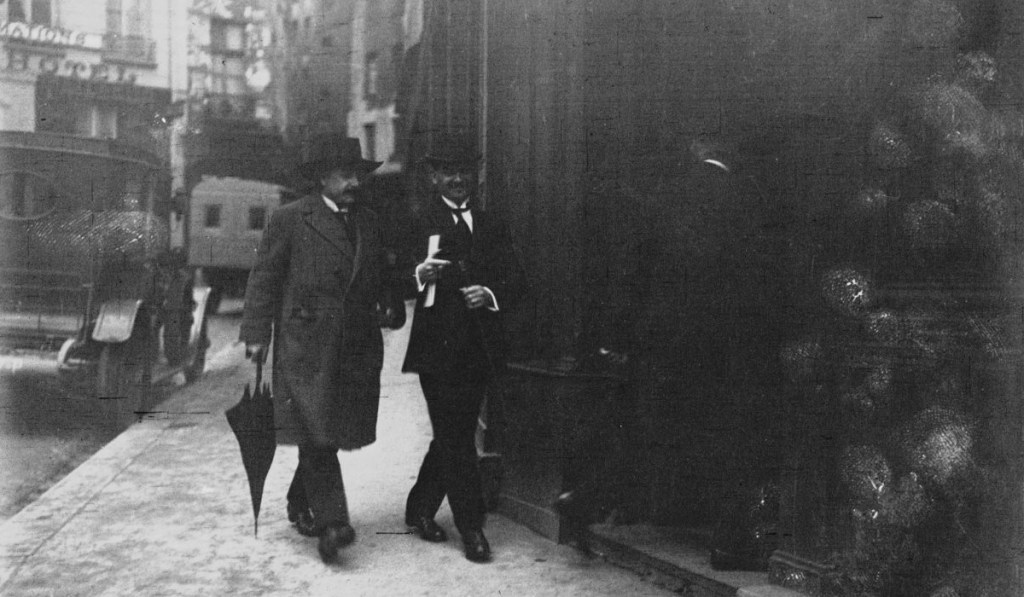
When pondering the pure intelligence of simplicity, ponder some of history’s greatest minds. Einstein knew how to explain complex scientific principles in ways everyone could relate to. Consider this gem from Einstein on the theory of relativity: ‘When you place your hand on a hot stove for a second it feels like an hour. When you sit on a bench with a pretty girl for an hour it feels like a second – that’s relativity!” It was also Einstein who said “Things should be made as simple as possible but not any simpler”. The world’s greatest minds have known that metaphors, anecdotes, humor and illustrations are the more potent tools of teaching and persuasion.
We are confronting this idea of simplicity in presentation early on because, at its roots, this is what telling the financial story is all about – making complex ideas understandable. Once these ideas are understood, the next step is establishing relevance into the life of the client. The KISS rule – keep it simple, stupid – is a foundational rule practiced by top producers in every sales realm. If you break that rule, you do so at your own risk.
The Great Imbalance in Your Business
One major reason we are not better communicators is because of the way we have been trained to think. Had we been taught to think with all our brain, we would also have learned to communicate to the whole brain as well. Our educational and business cultures place a heavy emphasis on left-brain functions to the neglect of the right-brain functions that are critical to our success. Communication, of which selling is one form, is just one area where the imbalance has cost us dearly.
Our education has been heavily weighted toward left-brain functions. The farther down the educational road we go, the more left leaning the focus. By the time one exits the education system thinking processes have become something like the leaning tower of Pisa. Our educational system aims to produce graduates who can crunch numbers, analyze facts, argue logically, find problems and implement logical solutions.

Most businesses perpetuate the left – brain obsession by emphasizing the bottom line and by aiming to reach that bottom line through organizing, managing, inspecting and controlling. These left-brain processes are necessary in any successful business, but the irony here is that these same companies tell their people that what they need to increase their bottom line are creativity, innovation, vision for the future, customer insight, persuasive selling and sensitive service. These profit building attributes are exclusive functions of the right brain and are hindered, if not totally crippled, by narrow left-brain thinking and many management practices.
Learning To Speak the Language of the Right Brain

The classic mistake we make in persuasion is trying to evoke right-brain responses (action, risk, decision) by using left-brain stimuli (numbers, facts, history). This is equal to asking individuals to look into their future by using a microscope – they can’t see past their noses. Storytelling uses the telescopic mental tools that help clients see and feel – before they act.

Left Brain – breaks into pieces, backward looking, looks at text, seeks detail, taks everything literally, literal, proven examples, triggered with information, businesslike (judging/critical,rational, gathers information), stirred by facts, statistics and claims, Analyzes, Stimulated by data, seeks detail, focused on words, auditory, finds problems.

Right Brain – Forms into whole, forward looking, Looks at context, Seeks big picture, understands humor, metaphorical examples, triggered with images, relational, intuitive, understands meaning and relevance, stirred by emotions, beliefs and hopes, decides, stimulated by stories, seeks big picture, focused on tone of voice and body language, visual, searches for solutions.
The Roots of Sales Success

In selling, there is no denying that analysis, number crunching, logic and organization play a necessary role. However, these left-brain functions constitute, at best, about 10 to 20 percent of the critical mass necessary for sales success. The other 89 to 90 percent comes from right-brain functions, which play primary roles in the sales realm. In sales, we talk about the need for people skills because we are selling ourselves. People skills are a right-brain function. We talk about being able to read people. This reading is a right-brain function. We talk about sensing, skilled listening, communication flair and skill, intuitive problem solving, innovation, and humor when describing highly successful salespeople – and the very best do possess these traits. All of these traits and abilities are based in the right side of the brain.

Most people are fairly balanced in their right-brain and left-brain orientation. Many people who naturally excel in sales, however, lean toward a left-brain dominance from whence these necessary sales skills are rooted. The prototype sales achiever is an imaginative and motivated risk taker, a colorful communicator, an incisive questioner, an insightful listener and a likable personality. Chances are this person also likes to have a lot of things going on (multitasker), is passionate and persuasive, abhors detail and needless paperwork, can’t stand being on a short leash (micromanaged) and needs freedom to improvise and try our creative strategies. These individuals detest being boxed in and love to respond spontaneously to situations and solve problems intuitively. The more an individual leans to this right-brain orientation, the more necessary it becomes to be surrounded by administrative assistance to attend to detail, manage multiple activities, organize ambitious schedules and generally keep aware of the linear world in which the individual lives.
Capturing Your Clients Attention

Storytelling focuses on influencing the right side of the client’s brain. Why? Because that is where decisions get made, where people picture and buy into what we are telling. This technique will help you to exponentially improve your ability to articulate, clarify and persuade about financial concepts and products. This technique will literally double the impact your presentations are having on your clients because the technique is based on brain science that demonstrates how to engage the whole brain in our presentations.
How do you mesmerize your client’s interest? How is trust developed? the answers to these questions are evident once you see the discoveries of modern brain science and how these discoveries relate to storytelling.

Ned herrmann in his book The Whole Brain Business Book offers the concept of ‘Our Four Different Selves’ that shows the different shades of personality we display from the two sides of our brain:
- Our rational self
- Our safekeeping self
- Our experimental self
- Our feeling self
As is customary in our culture, we pay an inordinate amount of attention to the left brain issues of rationale and safekeeping and often neglect the experimental and feeling side of ourselves. We direct clients to volumes of numbers, statistics and small print. Many of these clients give the materials a cursory glance or ignore it. They want you to illuminate them and relate to them on a personal basis. They want you to discover the individuals that they are. They want you to tailor a program that is specific for their unique circumstances. Their circumstances may not seem unique to you, but clients feel that they are in specifically unique circumstances.

Note that speculation and risk taking are actions that come from the right brain experimental self What is investing if it is not about speculating and taking risks? To properly communicate to those right brain functions, we need to speak a language the right side of the brain can relate to. Statistics, numbers and prospectuses are not that language! Yes, they play a role – a supporting role, not a leading one.

What is my point? The materials and presentation style many financial professionals use is a half brained approach to selling because it only engages 50 percent of the potential attention the client has to give. Half the client’s brain remains asleep.
Risk and Decisions

We want clients to measure risk, to look into the future and visualize how today’s decision will affect them 20 years from now. These are abilities that they possess in the right side of their head and we simply need to learn the language that will trigger those abilities.
Typically when we sell financial products we speak the language of the rational left brain, which is fine to a point, but the left side of the brain does not decide on anything! It will analyze from there to eternity. The more information you give the left brain to analyze, the more it will procrastinate. Left brain dominant people are those who can’t get enough information and have a terrible time making decisions.

People analyze with their left side. They agonize over information and numbers, but they don’t decide. The right side puts it all together and forms a picture, gets a feeling and then makes the leap. Once the decision has been made, the left side kicks in and wants to get it done with planning and organizing.
Once you understand this point – that decision making and risk taking are a right brain function – you will immediately see the relevance of learning to speak the language of the right brain. Your livelihood depends on your ability to do so. Our next part of the seminar will show you how to speak this right – brain language of persuasion.
StorySelling Triggers

Here are some triggers that release the “paralysis by analysis” stress clients feel when they are trying to make a decision. In selling situations, the right brain needs and desires the following:
- Context (personal relevance)
- The big picture (long term relevance)
- Humor
- Images
- Visual stimulation
- Emotional affirmation
- Affirmation of values
- Metaphors
- Stories
- A comfortable feeling about you

Establish Context
Think of establishing context in this way “we are going to read the last page of the book before we try to write a table of contents. We’re going to start with an end in mind. Now, tell me everything you want to accomplish … that is how we want this story to turn out.”

Like the archeologist who discovers a piece and immediately begins to visualize the entire object, so the brain searches for the personal significance of the idea or suggestions it hears.
If context is not clearly established up front, the client will start questioning (internally) the relevance of the various products and ideas you are talking about. This sounds like an elementary point, but we can’t count the number of presentations we have witnessed where the context was not established up front and the client had to stop and ask halfway through the presentation, “Now how does this tie in”? Establish the context at the beginning clearly and continue to refer back to it at key points in your presentation. The right side of the brain wants to know how each piece of text fits into the context. If it does not recognize the context, the right side of the brain ignores the information.

Humor
Ponder this physiological fact: laughter and stress cannot occupy the same space at the same tie. Financial decisions are stressful to make. Even after a decision is made, the mind begins to second guess with a litany of ‘what ifs’. Laughter diffuses stress. Humor puts matters into their proper perspective. By using humor, we don’t mean telling canned jokes or presenting puns. Humor is better introduced into the atmosphere by our attitude, manner, and approach. Start by smiling. Check your own tension in the mirror before your client walks in the room. Laugh easily. Don’t hurry. Share a good story that has humorous aspects. People can relate to stories.
Humor opens the door to emotional buy-in. Laughter puts the audience at ease and creates a bond with the presenter. It puts them on the same page. Thoughts of ‘I can relate to that’, he is one of us ‘i have had that thought myself’is what the twinkle in the eye of the person laughing is saying. Discomfort is dissipated. Stress is released. After people laugh, their attention level becomes heightened and magnetic. They don’t want to miss the next punch line. People love being entertained in situations where they don’t expect it.
Images, Pictures, Drawings, Cartoons

If a good picture is worth a thousand words, then a few good pictures could save you a lot of time and talk. When we speak of images, we don’t refer exclusively to printed images but to images in the mind as well.

Pictures formed by the imagination of your clients are exceedingly more powerful than any picture you could show them. You help to paint these pictures in their imagination with provocative questions about their life and experience with entertaining and interesting stories, and by the application of relevant metaphors.
Visual Stimulation
The pencil may be your most powerful selling tool! If you know how to use it, that is. A presenter who know how to integrate the drawing of images and outlining of ideas into his or her client presentation is like a teacher before a captive class.

I have studied the dynamic shift in attention level and body language when the pencil on paper technique is used. If the audience had been leaning backward, they are now leaning forward. If their eyes were starting to drift or gloss over, they are now drawn to the pencil’s movements and the logic and lessons it brings.

I have watched advisors draw pyramids, houses, cars, chairs, trees and a plethora of other analogies for the plan they are developing and the philosophy on which it is based. The analogy doesn’t matter as long as you can make it relevant. The audience participates like students. They will point to the analogy on the board at different junctures and refer back to it. By using this method, the presenter is able to establish a ‘language’ with which their client’s right brain can connect.
Emotional Confirmation

No question is as important as, How do you feel about this? That question is more incisive than, What do you think about this? Why? Because emotion precedes logic when we hear other’s ideas. The choices we make are based on about 80 percent emotion and 20 percent logic or rationale.
If every advisor were properly trained to read the body language of their clients (eyes, facial movement, posture) they would realize that many of the ideas they present, companies they mention or stocks they recommend trigger a veiled, emotional reaction. Usually clients won’t state this reaction aloud unlesss asked about it. If advisors don’t know how to pick up on these tacit messages, they will venture onto thin ice or even sep on land mines, thus sabotaging their hopes for success.
Research has revealed that when people are questioned about their experiences, the associated emotion in the brain is triggered first, followed by the associated facts. Emotion always precedes fact in the human brain’s response. People feel first and rationalize later.

We warn of negative emotions, but clients come for positive emotional affirmation. Theave suspicions about what they might or could do but need someone to send the motion. Even well studied, do it yourself investors will come to advisors for affirmation. One advisor mentioned that one of these do it came to him to ask how much he would charge for an hour of his time once a year to get feedback on his investment strategies. The investor knew as much as the advisor on many topics, but what he needed was to lie on the coach of a financial psychiatrist. everyone looks for emotional affirmation and are willing to pay for it, figuring it is a small price to pay for curing insomnia.

Emotions play a much greater role than logic in the average person’s investment decisions. Your ability to sense is just as important as your ability to rationalize. Empathy will, in the long run pay you richer dividends than will intelligence.
Storytelling in Attractive Markets
Telling the Story of the Affluent
Telling the Story of the 60+
Telling the Woman’s Story
So far in this seminar Peter will explain how the best financial storytellers operate. These successful financial services professionals have learned to truly listen to and understand their clients and are skilled in telling the financial story with easy to understand metaphors and stories. Now, Peter will show in which attractive markets they practices these skills. He highlights the three top sectors of society where burgeoning wealth is to be found: The Affluent market, the 60+ market and the Women’s market.

Although these fast-growing markets are obvious to the financial services professional, they are not always easy to penetrate or prosper in. Peter believes that you, by taking a storyteller’s approach to these markets, can positively differentiate yourself from all the other professionals they have heard. Any financial advisor can quote returns and recommend asset allocation, but it takes an exceptional advisor to really listen to client’s stories, connect with their core personality, and describe financial matters in a language they understand. This and the following stories on the 60+ market and Women’s market will give you an emotional blueprint to work with to better connect with each of these prospering groups.
 The Hero's Journey