“The hero’s journey is about saying ‘yes’ to yourself and in so doing, becoming more fully alive and have more impact in the world…The quest is replete with dangers and pitfalls, but it offers great rewards: the capacity to be successful in the world, knowledge of the mysteries of the human soul, and the opportunity to find and express your unique gifts in the world”.

In this bold and original seminar, Peter de Kuster shows that the hero’s journey isn’t just for certain people under special circumstances. Exploring the many heroic paths available to each of us, at every point in our lives, his innovative program enables us to live heroically by activating and applying twelve archetypes in our lives.
This journey in the footsteps of heroes of past and present outlines twelve archetypal patterns that can aid inner development and the quest for wholeness.
‘These archetypes are inner guides that can help us:’
• prepare for the journey, by learning how to become successful members of society
• embark upon the quest, by becoming initiated into the mysteries of the human soul; and
• return to transform our lives as a result of claiming our uniqueness and personal power
Writing for individuals seeking to realize their full potential and professionals engaged in empowering others, Peter shows how journeys differ by the age, gender, and cultural background of the seeker, and how archetypes help awaken the capacities of our psyches. A unique diagnostic test, the Hero’s Journey Index, and exercises are included to help us understand and awaken our inner guides.
About Peter de Kuster
Peter de Kuster is the founder of The Heroine’ s Journey & The Hero’s Journey
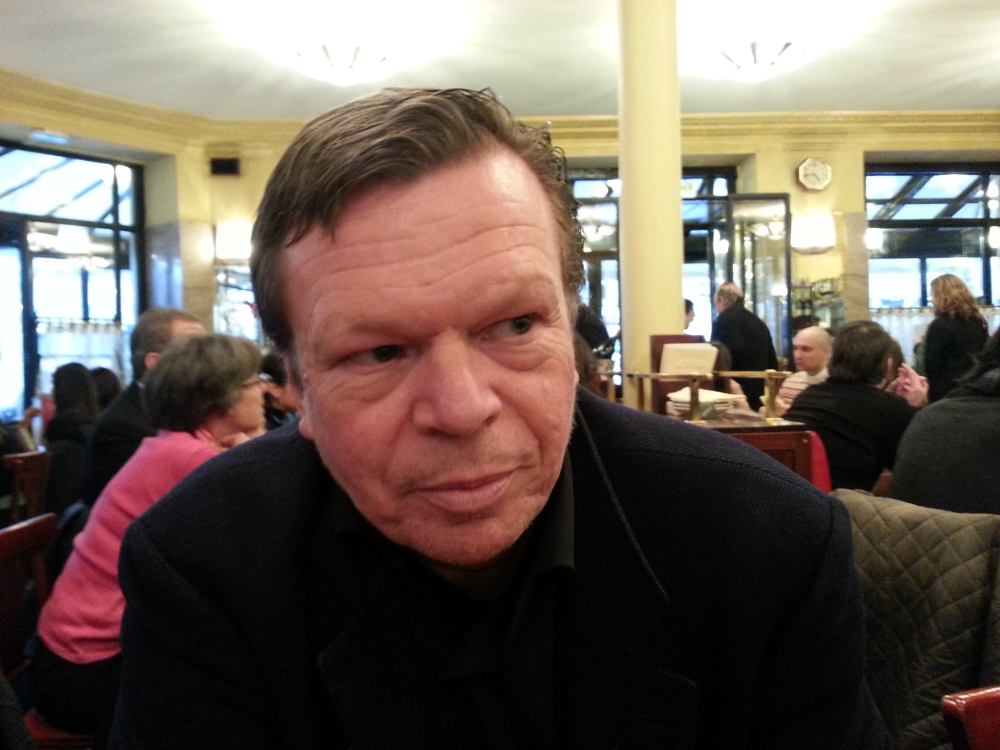
Peter is founder of the Heroine’s Journey and Hero’s Journey project where worldwide thousands of professionals shared their story of making money doing what you love. He wrote 50+ books. Peter has an MBA in Marketing, MBA in Financial Economics and graduated at university in Sociology and Communication Sciences.
Practical Info
The price of this five day tour with Peter de Kuster is Euro 3.450 excluding VAT per person.
There are special prices when you come with three or more travellers.
You can reach Peter for questions about dates and the program by mailing him at peterdekuster2023@gmail.com
TIMETABLE
09.40 Tea & Coffee on arrival
10.00 Morning Session
13.00 Lunch Break
14.00 Afternoon Session
17.00 Drinks
Introduction
Some people, se say, have “soul”. They have loved, they have suffered, they have a deep sense of life’s meaning. Perhaps most important, they know who they are.
Other people seem to have lost their souls. They may have material possessions – the right house, the right car, the right job, the right clothes; they may even have a stable family life and be religious. But inside themselves, they feel empty. Even when they go through the right motions, it is movement without meaning.
Still other people love and suffer and feel life intensely; but they never really get their lives together. They cannot seem to find work or personal relationships that truly satisfy them, and so they feel constantly constrained. Although they may be connected to their souls, they feel cut off from the world.
Saddest of all are people who never learn how to make their way in the world or how to be true to their own souls. Their lives are empty and unrewarding – yet unnecessarily so: virtually all of us are capable of finding meaning and purpose in our lives and in the life of the human community.
We find a model for learning how to live in stories about heroism. The heroic quest is about saying yest to yourself and in doing so, becoming more fully alive and more effective in the world. For the hero’s journey is first about taking a journey to find the treasure of your true self, and then about returning home to give your gift to help transform the kingdom – and, in the process our own life. The quest itself is replete with dangers and pitfalls, but it offers great rewards: the capacity to be successful in the world, knowledge of the mysteries of the human soul, the opportunity to find and express your unique gifts in the world and to live in loving community with other people.
The Storyteller Within is for people at all stages of life’s journey: it is a call to the quest for those just considering or beginning the journey: it provides reinforcement for longtime journeyers; and it is a tool for people already far along on their journeys who are looking for ways to share and pass on what they have learned. Each journey is unique, and each seeker charts a new path. But it is infinitely easier to do soe having at least some knowledge about the experiences of those who have gone before. When we learn about the many different heroic paths available to us, we understand that there is room for all of us to be heroic in our own unique ways.
Stories about heroes are deep and eternal. They link our own longing and pain and passion with those who have come before in such a way that we learn something about the essence of what it means to be human. The myths that can give our lives significance are deeply primal and archetypal and can strike terror into our hearts, but they can also free us from unauthentic lives and make us real.
The paradox of modern life is that at the same time that we are living in ways never done before and therefore daily recreating our world, our actions often feel rootless and empty. To transcend this state, we need to feel rooted simultaneously in history and eternity.
This is why the myth of the hero is so important in the contemporary world. It is a timeless myth that links us to peopls of all times and places. It is about fearlessly leaping off the edge of the known to confront the unknow, and trusting that when the time comes, we will have what we need to face our dragons, discover our treasures, and return to transform the kingdom. It is also about learning to be true to ourselves and live in responsible community with one another.
In classical myth, the health of the kingdom reflected the health of the King or Queen. When the Ruler was wounded the kingdom became a wasteland. To heal the kingdom it was necessary for a hero to undertake a quest, find a sacred object and return to heal or replace the Ruler. Our world reflects many of the classic symptoms of the wasteland kingdom: famine, environmental damage, economic uncertainty, rampant injustice, personal despair and alienation and the threat of war and annihiliation. Our ‘kingdoms’ reflect the state of our collective souls, not just those of our leaders. This is a time in human history where heroism is greatly needed. Like heroes of old, we aid in restoring life, health and fecundity to the kingdom as a side benefit of taking our own journeys, finding our own destinies and giving our unique gifts. It is as if the world were a giant puzzle and each of us who takes a journey returns with one piece. Collectively, as we contribute our part, the kingdom is transformed.
The transformation of the kingdom depends upon all of us. Understanding this helps us move beyond a competitive stance into a concern with empowering ourselves and others. If some people “lose” and do not make their potential contribution, we all lose. If we lack the courage to take our journeys, we create a void where our piece of the puzzle could have been, to the colletive as well our personal detriment.
THE JOURNEY
Heroism is also not just about finding a new truth, but about having the courage to act on that vision. That is, in a very practical way, why heroes need to have the courage and care associated with strong ego development and the vision and clarity of mind and spirit that come from having taken their soul’s journeys and gained the treasure of their true selves.
Most people know that heroes slay dragons, rescue damsels (or other victims) in distress, and find an bring back treasures. At the close of the journey, they often find love. They have reached a ‘happy ending’ to their journey in which their ‘new renewing truth’ becomes manifested in the life they now live – in community with their new family and with other people . This new truth they bring back renews their own lives and also the lives of their kingdoms, and therefore affects everyone they touch.
This mythic pattern is true for our personal journeys, although the happy ending is usually short lived. As soon as we return from one journey and enter a new phase of our lives, we are immediately propelled into a new sort of journey; the pattern is not linear or circular but spiral. We never really stop journeying, but we do have marker events when things come together as a result of the new reality we have encountered. And each time we begin our journeys, we do so at a new level and return with a new treasure and newfound transformative abilities.
What the Journey Requires
When we believe that our journeys are not important and fail to confront our dragons and seek our treasures we feel empty inside and leave a void that hurts us all. Psychologists in the leveling modern world have a name for the rare case of someone with ‘delusions of grandeur’ but do not even have a category for the most pervasive sickness, the delusion that we do not matter. While it is true that no one of us is more important than anyone else, we each have an important gift to give – a gift we are incapable of giving if we fail to take our journeys.
This book is designed to help you and others understand your significance and potential heroism. Perhaps most of all, it offers the potential to leave behing a shrunken sense of possibilities and choose to live a big life. Many of us try to achieve a big life by amassing material possessions or achievements or property or experiences, but this never works. We can have big lives only if we are willing bo become big ourselves and in the process give up the illussions of powerlessness and take responsibility for our lives.
There is a profound disrespect for human beings in modern life. Business encourages us to think of ourselves as human capital. Advertising appeals to our fears and insecurities to try to get us to buy products we do not need. Too many religious institutions teach people to be good but do not help them know who they are. Too many psychologists see their job as helping people learn to accommodate to what is, not to take their journeys and find out what could be. Too many educational institutaions train people to be cogs in the economic machine rather than educating them about how to be fully human.
Basically, we are viewed as products or commodities, to be either sold to the highest bidder or improved so that eventually we will be more valuable. Neither view respects the human soul or the human mind except as used as an acquisitive tool. As a consequence, people increasingly are disrespectful of themselves. Too many of us seek to fill our emptiness with food, or drink, or drugs or obsessive and frantic activity. The much-lamented pace of modern life is not inevitable – it is a cover for its emptiness. If we keep in motion, we create the illusion of meaning.
We are subtly and not so subtly discouraged from seeking our own grails and finding our own uniqueness by an ongoing pressure to “measure up”to preexisting standards. And, of course when we try to measure up rather than to find ourselves, it is unlikely that we will ever discover and share our unique gifts. Instead of finding out who we are, we worry about whether we are good-looking eough, smart enough, personable enough, moral enough, healthy enough, working hard enough, or successful enough.
We look outside ourselves for others to tell us if we have lived up to some version of perfection. How many of us aspire to the perfect face and body, the entrepreneurial winning mindset, the goodness or mental clarity of a great enlightened being or the financial success of a millionaire? It is no surprise that so many of us spend our lives alternately striving and flailing ourselves for our inability to measure up.
As long as this is our process, we will never find ourselves. Instead we will become compliant consumers, paying all the people who claim that they can help us overcome our ugliness, sinfulness, sickness and poverty. And, in the process we will keep them as stuck as we are – striving for something above us, rather than searching to know what is genuinely in us and ours.
Initially we may be called to the quest by a desire to achieve some image of perfection. Ultimately, however we need to let go of whatever predetermined ideal holds us captive and just allow ourselves to take our own unique journeys. The hero’s journey is not another self-improvement project. It is an aid in finding and honoring what is really true about you.
Knowing that you are a hero means that you are not wrong. You have the right mind. You have the right body. You have the right instincts. The issue is not to become someone else, but to find out what you are for. It means asking yourself some questions: What do I want to do? What does my mind want to learn? How does my body want to move? What does my heart love? Even problems and pathologis can be responded to as “calls from the gods” to a previously denied or avoided stage in your journey. So you might also ask yourself, “What does this problem or illness help me learn that can aid my journey?”
The rewards of self-discovery are great. When we find ourselves, everything seems to fall into place. We are able to see our beauty, intelligence, and goodness. We are able to use them productively, so we are successful. We are less caught up in proving ourselves so we can relax and love and be loved. We have everything we need to claim our full humanity, our full heroism.
ARCHETYPES: OUR INNER GUIDES
We are aided on our journey by inner guides, or archetypes, each of which exemplifies a way of being on the journey. Awakening the Inner Storyteller explores twelve such inner guides: the Dreamer, the Indepedent, the Warrior, the Caregiver, the Explorer, the Destroyer, the Lover, the Creator, the Ruler, the Magician, the Sage and the Player. Each has a lesson to teach us and each presides over a stage of the journey.
The inner guides are archetypes that have been with us since the dawn of time. We see them reflected in recurring images in art, literature, myth, film and religion and we know they are archetypal because they are found everywhere in all times and places.
Because the guides are truly archetypal and hence reside as energy within the unconscious psychological life of all people everywhere, they exist both inside and outside the individual human soul. They live in us but even more importantly, we live in them. We can, therefore find them by going inward (to our own dreams, fantasies and often actions as well) or by going outward (to myth, legend, art, film, literature and religion). Thus they provide images of the hero within and beyond ourselves.
We each experience the archetypes according to our own perspective. I have found at least three different ways to explain what an archetype is:
- Spiritual seekers may conceive of archetypes as gods and goddesses, encoded in the collective unconscious, whom we scorn at our own risk.
- Academics or other rationalists, who typically are suspicious of anything that sounds mystic, may conceive of archetypes as controlling paradigms or metaphors, the invisible patterns in the mind that control how we experience the world.
- Finally, people who are interested in human growth and development may understand the archetypes as guides on our journeys. Each archetype that comes into our lives brings with it a task, a lesson and ultimately a gift The archetypes together teach us how to live. And the best part about it is that all the archetypes reside in each of us. That means we all have this full human potential within ourselves.
THE GUIDES AND THE HERO’S JOURNEY
Although we are heroes at every stage of the journey, how we define and experience heroism is affected by which guide is most active in our lives, culturally and individually. For example in our culture, when we think of the hero, we usually think of a warrior, slaying dragons and rescuing people in disgress. Because the Warrior archetype is also associated in our cultural mind with masculinity, we are likely to think of the hero as male – and often (in Western culture) as a white male at that. Women, and men who are now white are seen as supporting characters on the journey: sidekicks, villains, victims to be rescued, servants, and so on.
The Warrior archetype is an important aspect of heroism – for all people, whatever their age or gender – but it is not the only or even the most essential one. All twelve archetypes are important to the heroic journey, and to the individuation process.
How we view the world is defined by what archetype currently dominates our thinking and acting. If the Warrior is dominant, we see challenges to be overcome. When the Caregiver is dominant we see people in need of our care. When the Sage is dominant, we see illusion and complexity and strive to find truth. When the Player is dominant we see ways to have a good time.
Each of the twelve archetypes then, is both a guide on the hero’s journey and a stage within it – offering a lesson to be learned and a gift or treasure to enrich our lives.
Once we have opened to learning from all twelve archetypes, we might experience all twelve in a single day; or hour. Suppose for instance something goes wrong – you become ill or your job or primary relationship is in jeopardy. For the first few minutes, you do not want to look dat the problem (shadow dreamer) but then your optimism returns (Dreamer) and you plunge into investigating the situation. Your next experience is to feel powerlessness and pain, but then you take responsibility (the Responsible) . You marshall your resources and develop a plan to deal with the problem (Warrior). As you implement it, you also pay attention to what you and others need in the way of emotional support (Caregiver).
You gather more information (Explorer), let go of the illusions and false hopes to focus on solutions (Destroyer) and make new commitments to change (Lover) in order to come up with a solution (Creator). That is you respond to the crisis as a way of growing and becoming more than you were. Once the crisis is handled you also look fto see how you might have contributed to creating the problem (Ruler) if you did and act to transform that part of you (Magician) so that you will n ot create such a difficulty again. Or you may simply transform the part of you in pain over a situation you had no part in creating. This allows you to see what can be learned from the situation (Sage). Learning it frees you up to go back to enjoying your life (Player) and trusting life’s processes (Dreamer).
When one or more archetypes ar enot activated in our lives, we skip steps. For example, if we have no Warrior, we will fail to develop a plan for dealing with the problem. If we have no Sage, we may neglect to gain the lesson the situation could teach us. Or we might express the archetype in the shadow forms. INstead of making a plan, we indulge in blaming others. Instead of gaining the lesson of the situation we judge ourselves or others.
The movement through the twelve archetypal stages is an archetypal process that helps us develop invaluable skills for day-to -day living.
STAGES OF THE JOURNEY
The hero’s journey includes three major stages, preparation, the journey, and the return. During the preparation stage, we are challenged to prove our competence, our courage, our humanity, and our fidelity to high ideals. On the journey we leave the safety of the family or tribe and embark on a quest where we encounter death, suffering and love. But most important, our selves are transformed. In myth, that transformation is often symbolized by the finding of a treasure or sacred object. On our return from the quest, we become rulers of our kingdoms, which are transformed because we are changed. But we must also continually be reborn and renewed, or we become ogre tyrants, clinging dogmatically to our old truts to the detriment of our kingdoms. Whenever we lose our sense of integrity and wholeness or begin to feel inadequate to current life challengs, we must embark on the quest again.
Preparation
The first four archetypes help us prepare for the journey. We begin in innocence, and from the Dreamer we learn optimism and trust. When we experience ‘the fall’, we become Independent, disappointed, abandoned, betrayed by life and especially by the people who were supposed to care for us. The Independent teaches us that we need to provide for ourselves and stop relying on others to take care of us, but the shadow of the Independent feels so powerless and helpless that its best strategy for survival is to band together with others for mutual aid.
When the Warrior comes into our lives, we learn to set goals and develop strategies for achieving them, strategies that almost always require the development of discipline and courage. When the Caregiver becomes active, we learn to take care of others, and eventually to are for ourselves as well.
These four attributes – basic optimism, the capacity to band together for support, the courage to fight for yourself and others and compassion and care for yourself and others – together provide the basic skills for living in a society. Bt almost always, we still feel unsatisfied if this is all we can do, even though we have learned what is necessary to be both moral and successful in the world.
The Journey
We begin to yearn for something beyond ourselves, and become Exploreres, searching for that ineffable something that will satisfy. Answering the call and embarking on the journey, we find that soon we are experiencing privation and suffering as the Destroyer takes away much that had seemed essential to our lives. initiation through suffering, however is complemented by an initiation into Eros, the Lover, as we find ourselves in love with people, causes, places, work. This love is so strong it requires commitment – and we are no longer free. The treasure that emerges out of this encounter with death and love is the birth of the true self. The Creator helps us begin to express this self in the world and prepares us to return to the kingdom. These four abilities – to strive, to let go, to love and to create – teach us the basic process of dying to the old self and giving birth to the new. The process prepares us to return to the kingdom and change our lives.
The Return
When we return, we realize we are the Rulers of our kingdoms. At first we may be disappointed at the state of this realm. But as we act on our new wisdom and are more fully true to our deeper sense of identity, the wasteland begins to bloom. As the Magician is activated in our lives, we become adept at healing and transforming ourselves and others so that the kingdom can continually be renewed.
However, we are not completely fulfilled or happy until we face our own subjectivity, and so the Sage helps us know what truth really is. As we learn to both accept our subjectivity and let go of imprisonment to illusions and petty desires, we are able to reach a state of nonattachment in which we can be free. We are then ready to open to the Player and learn to live joyously in the moment without worrying about tomorrow.
This final set of attainments – taking total responsibility for our lives, transforming ourselves and others, nonattachment and a commitment to truth, and a capacity for joy and spontaneity – is itself the reward for our journey.
The Spiral Nature of the Journey
Thinking of the hero moving through stages of preparation, journey and return and being aided by twelve archetypes in order, is useful as a teaching devie, but in most cases, ofcourse growth really does not happen in such a defined, linear way. Our guides come to us when they – and at some level we – choose.
The pattern is more like a spiral: the final stage of the journey, epitomized by the archetype of the Player folds back into the first archetype, the Dreamer, but at a higher level than before. This time the Dreamer is wiser about life. On the spiral journey we may encounter each archetype many times, and in the prodess gain new gifts at higher or deeper levels of development. Each enounter leaves a psychic imprint. When we experience reality we can take in that experience and make meaning of it. the archetypes we have not yet experienced are like holes in the net, experiences that we have little or no way of understanding simply pass through.
How to Use this Seminar
The Storyteller Within seminar is organized in five parts. Part I introduces the heroic quest as a journey of consciousness. It traces ways the archetypes aid in constructing and balancing the psyche itself as they help us form our Egos, connect with our Souls and then both develop a sense of our true Selves and express these Selves in the world. The first five parts provide a basic understanding of the process of individuation and consciousness expansion, which forms the basis for learning to realize fully your human potential.
Parts II, III and IV explore, in detail, the archetypal guides that help us on our journeys. Part II describes the archetypes that help us prepare for the journey: The Innocent, the Orphan, the Warrior and the Caregiver. Part III considers the archetypes that aid us in the journey itself: the Discoverer, the Rule Breaker, the Lover and the Creator. Part IV focuses on the archetypes that facilitate a successful and transformative return of the journey: the Ruler, the Magician, the Sage and the Fool.
Each part discusses how one archetype expresses itself in our individual and cultural lives: the skills it teaches us, its negative or shadow forms, and the gifts and lessons it offers. Since each archetype can manifest itself in relatively primitive or more sophisticated forms, each part also explores stages of development of the archetypes.
Part IV looks at how our journeys are affected by age, gender, culture and our own unique experience – factors that serve as a prism that diffuses this monomyth into thousands of unique patterns and forms, providing adequate room for individual variation and creativity.
I have written this book for coaches. The Hero’s Journey is meant for those who want to awaken the heroes within themselves and others. These theories are designed to be applied in the following ways:
- As a developmental transpersonal psychology
- As a description of twelve key stages to human development each with its own lesson, task and gift.
- As a way of understanding and appreciating human diversity by dominant archetype, gender, age, psychological type and cultural background.
- As a non-pathology based diagnostic and intervention model to be used by educators and coaches for determining an individual’s current developmental challenge
- As an aid in educating individuals for success, citizenship and leadership in a democratic society
- As an investigation of archetypal, timeless spiritual truths found in religion, myth, literature, film and psychology, and hence, as a psychologically rather than theologically based guide to spiritual development
- As a tool for self-understanding and personal growth
Individual readers may use these theories to recognize where they may be possessed by shadow forms of the archetypes to the detriment of their lives and how they might analyze the heroic ‘guides’ within them. Most of all, they can use the theories to recognize the stages of their journeys, so they can gain the lessons of each archetype.
Recognizing the Shadow Forms of the Guides
For some people the whole area of the inner life is an undiscovered country. They may feel real fear about taking any kind of psychological journey. This is partly because they fear what they do not know, and partly because the more unknown the territory is to them, the more likely it is that they are pushing down archetypes that would like to be expressed in their lives. If so, these people will feel them initially in their negative forms, of course, this just makes them intensify further their efforts to repress the archetypes because otherwise they might be opening the door to monsters.
Indeed, if this is the case for you, just read this book without any intention of applying it to your own psyche. Reading it will educate your ego and in due time allow some orderly integration of the more positive sides of the archetypes into your psyche. It will also allow you to recognize the archetypes that already are expressed in your life, and to see the richness you have gained from them. Very likely you are still reaping their benefits. When you are ready to incorporate some new lessons into your life, it will not be difficult to do so.
Heroes confront dragons, and these dragons can be of many kinds. Indeed for those who have not allowed many. If any, of the archetypes from the collective unconscious into their lives both the inner and outer worlds seem populated with dragons – and the world seems a very frightening place to be.
The twelve heads of the dragons are the shadow sides of each archetype they can be as lethal as the seven deadly sins. If we do not find the treasure they are hiding from us. Many times when we feel awful, we are stuck expressing an archetype in the negative guise. To feel empowered once again, we need simply to examine what archeteype has possessed us, and then refuse to be possessed by it. However, usually we can do that only if we honor the archetype by expressing it in some way. In this case, what we want to do is more to expressing its more positive side.
THE SHADOW SIDE OF THE ARCHETYPE
Innocent
Evidenced in a capacity for denial so that you do not let yourself know what is really going on. You may be hurting yourself and others, but you will not acknowledge as well. Or, you believe what others say even when their perspective is directly counter to your own inner knowledge.
Orphan
The victim, who blames his oer her incompetence, irresponsibility, or even predatory behavior on others and expects special treatment and exemption from life because he or she has been so victimized or is so fragile. When this Shadow of the positive Orphan is in control of our lives, we will attack even people who are trying to hellp us, harming them and ourselves simultaneously. or we may collapse and become dysfuntional
Warrior
The villain, who uses Warrior skills for personal gain without thoughts of morality, ethics, or the good of the whole group. It is also active in our lives any time we feel compelled to compromise our principles in order to compete, win, or get out our own way. It is also seen in a tendency to be continually embattled, so that one perceives virtually everything that happens as a slight, a threat, or a challenge to be confronted.
Caregiver
The suffering martyr, who controls others by making them feel guilty. “Look at all I have sacrificed for you”. It evidences itself in all manipulative or devouring behaviors, in which the individual uses caretaking to control or smother others. (It is also found in codependence, a compulsive need to take care of or rescue others)
Seeker
The perfectionist, always striving to measure up to an impossible goal or to find the ‘right’ solution. We see this in people whoe main life activity is self improvement, going from the health club to yet another self-improvement course, etc. yet who never feel ready to commit to accomplishing anything ( this is the pathological underside of the human potential movement)
Destroyer
Includes all self-destructive behaviors – addictions, compulsions or activities that undermine intimacy, career succes, or self esteem and all behaviors – such as emotioinal or physical abuse, murder, rape – that have destructive effects on others.
Lover
Includes all sirens (luring others from their quests) seduces (using love for conquest), sex or relationship addicts (feeling addicted to love) and anyone who is unable to say no when passion descents, or is totally destroyed when a lover leaves.
Creator
Shows itself as obsessive, creating so that so many possibilities are being imagined that none can be acted upon fully. One variety is workaholism, in which we can always think of just one more thing to do.
Ruler
The ogre tyrant, insisting on his or her own way and banishing creative elements of the kingdom (or the psyche) to gain control at any price. This is the King or Queen who indulges in self-righteous rages and yells ‘Off with his head”. Often people act this way when they are in positions of authority but do not know how to handle the attendant responsibility. This also includes people who are motivated by a strong need to control.
Magician
The evil sorcerer, transforming better into lesser options. We engage in such evil sorcery anytime we belittle ourselves or another, or lessen options and possibilities, resulting in diminished self-esteem. The shadow Magician is also the part of us capable of making ourselves and others ill through negative thoughts and actions.
Sage
The unfeeling judge – cold, rational, heartless, dogmatic, often pompous – evaluating us or others and saying we (or they) are not good enough or are not doing it right.
Fool
A glutton, sloth or lecher wholly defined by the lusts and urges of the body without any sense of dignity or self-control
Any of us at any time can have a whole slew of inner dragons telling us we are not good enough (shadow Sage) we cannot live without that lover (shadow lover), we are imagining all our problems and everything is fine (shadow innocent) and so on. And we will identify as dragons whomever or whatever we meet in the outside world that triggers those inner voices.
In the early journey, we may try to slay these dragons, seeing them as entirely outside ourselves; as the journey progresses, we come to understand that they are inside us as well. When we learn to integrate the positive side of the archetype within ourselves, the dragons within (sometimes also without) become transformed into allies. For example, when people who judge us trigger our inner shadow Sage, we can learn to respond with our positive Sage and explain that we are living up to our own standards, if not theirs. At the end of the journey, then, there is no dragon. We feel authentic and free.
Shadow possession is not always related to the negative Shadow. We can also be possessed by the positive form of the archetype. For instance, you could be a very high-level Caregiver: you love to give. You have no hidden agenda’s and you get joy from helping others. You still can be possessed by the archetype if you are always a Caregiver, and never battle, or seek your own bliss, or just have fun. Until we have given birth to a sense of authentic Self, the archetypes are likely to possess us. Ideally, we want not only to express many different archetypes in our lives without being possessed by any. Freeing ourselves from possession by our Shadows allows us to live freer lives.
Awakening the Heroes Within
The way to free ourselves of shadow possession is to awaken our heroic potential. Each of us has a hero within is essentially, sleeping. Our task is to awaken that hero The most natural way to arise in the morning is to wake up when the sun shines in the room. The natural way to activate inner potential is to shine the light of consciousness upon it. When we begin to see that we have a hero within, the hero, quite naturally, wakes up.
So too, with the archetypes. As we shine the light of consciousness upon them, recognizing that they are within us. they awaken to enrich our lives. If they are already active but in shadow form, consciousness can turn the beastly side of the archetype into the royal prospering prince or princess it could be.
Some of us, as a result of a fast – paced contemporary life-style, do not awaken when the sun shines in our window. We are too exhausted or simply to out of touch with natural processes, and we need an alarm clock. Our psyche also provides alarm clocks – usually called symptoms – to wake us up and tell us that something is wrong. If we are willing to pay attention to these symptoms, we can move ourselves out of our sleep into wakefulness.
The archetypes in their roles as gods and godesses historically were invoked through ritual, prayer and meditation, and by creting temples to them. Even today we erect places where the archetypes will feel at home. For example competititve activities and organizations – from athletic events, to political debates, to the armed forces – are located in stadiums, capitols which serve as auspicious temples to the Warrior. Churches, which teach primarily the virtues of compasssion and giving, are temples to the Caregiver. Colleges and universities are temples to the Sage. To contact different archetypes it is useful to go to their modern-day temples.
You can literally ask the archetype to come into your life. Or, you may prefer to act out its rites and rituals. For example to invoke the Warrior, you can engage in confrontation, competition or struggle. To awaken the Caregiver, give to others without thought of return. To activate the Sage, study, work to improve your thinking skills, and become aware of your subjective biases. At first, you may feel that you are just going through the motions of some activity that does not really fit you. But then, one day, the inner Warrior, Caregiver or Sage graces your acitivities with its presence and what has felt forced and awkward feels like an organic expression of who you are.
Whether an archetype is active or in the process of being awakened, it is important to recognize the unique form of its expression in your life. Not all Warriors, for example, are alike. Some are primitive and ruthless, driven by a desire for conquest. Some are competitive game players Some engage in crusades for the good of humanity. And so on. One purpose of shing the light of consciousness on the archetype is to see the specific form it takes in your life.
Finally, while awakening all twelve archetypes fosters a whole and rich life, it is not realistic to think they all will be equally active. As the ancients often honored all the gods and godessess but had a special relationship with one or two, we may awaken all twelve archetypes in this pantheon but find a sense of the uniqueness of our own journeys through the specific mix of the two or three that are most dominant in our lives.
Some travellers may want to take the time to do the exercises provided in this guide to the seminar to focus on awakening the archetypes within; some may not. Either way, simply reading about a n archetype serves to awaken it because doing so moves it into your consciousness. You may do best simply to pay attention to the archetypes currently active in your life, opening to gaining their gifts without trying to awaken others. If you do so consciously, so that the organic emergence of a different archetype is nourished and supported rather than weeded out, the effect can enrich your life.
TIPS ON READING THIS GUIDE
You may wish to read the guide to the seminar straight through – and doing so, as with most guides, is desirable. However, different parts of the guide are designed with different readers in mind. Part I, for instance, is of interest primarily to those concerned with the workings of the human psyche, and how the hero’s journey fosters its development. Part II, III and IV provide detail about each archetype and how it is evidenced in our lives as we move through the three major phases of the journey.
Take the What Story Are You Living Now? Questionnaire
Before you begin, I advise you to fill out the What Story Are You Living Questionnaire, which you will receive when booking this journey at peterdekuster2023@gmailcom. An instrument designed to measure archetypes active in people’s lives. Also fill out the pie chart. By doing so , you can inform your reading about the archetypes with both the instrument’s and your own appraisal of which ones are active in your life. Record your scores in the boxes provided for that purpose. Some travellers may want to concentrate their energy on the parts of the guide most relevant to their own lives right now.
Those motivated by a desire for personal understanding and growth undoubtedly will want to avail themselves of the exercises provided throughout to apply these understandings directly to their own life experiences. For such travellers, working alone or in groups, the guide can be read over a period of weeks or months to greatly increase self-awareness and effectiveness in the world. Some parts may be important to your life right now; others might be more relevant in a few weeks or months or years. Work with the guide at your own pace and in your own way.
Charting your What Story Are You Living Now? Scores
Take the What Story Are You Living NOw? questionnaire, and follow the self-scoring instructions. Write your score for each archetype below:
Archetype Score
Dreamer
Independent
Warrior
Caregiver
Explorer
Rule Breaker
Lover
Creator
Leader
Magician
Sage
Jester
Ethics
The main rule to follow in applying these theories and models is never to use them to manipulate, label, judge, or put down yourself or another. All parts of this model should be used only to honor yourself and respect others, for implicit in the metaphor of the quest is the awareness that we all matter – and matter profoundly. Knowledge implies responsibility. The responsibility that comes with this model is to commit yourself to claiming your own power and, in so doing, to refrain from actions that make you or others feel demeaned or belittled. Instead, use your power and your wisdom to ennoble yourself and exert a transformative influence on those around you.
The Stages of the Journey
The messages our culture gives us about the relative roles of Ego, Self and Soul can be confusing and contradictory. Most management literature focuses on a healthy Ego, to the exclusion of both Self and Soul. Political theory tends to focus on such Ego concerns as equal access to jobs, pay, education and status. Psychology generally emphasizes healthy Ego development, and many psychologies do nothing else.
Transpersonal psychology, as well as the better part of contemporary religion (whether Eastern or Western), develops the Soul and Spirit, but many times to the detriment of the Ego. Often this takes the form of a conscious and explicit desire to get rid of the EGO so that the individual can bow completely to God’s will. Only archetypal psychology honors all three, and sometimes even in it practical Ego concerns don’t get their proper emphasis.
There is a crying need in the contemporary world to honor Ego, Self and Soul and to recognize the ways that the Ego should be reeducated (not eliminated) when higher order transcendent functions are developed. Indeed, it is the union of Ego and Soul that makes possible the birth of the Self. I have become more convinced that it is possible for each of us to be happy, successful, ‘self-actualized’ and spiritual. It is also possible to ‘follow our bliss’ and still be a responsible citizen, parent, and friend and to live in responsible and loving community with others. The secret is to take the journey and find yourself.
The twelve heroic archetypes described in this guide help our psyches develop. The three stages of the hero’s journey – preparation, journey, return – parallel exactly the stages of human psychological development: we first develop the Ego, then encounter the Soul, and finally give birth to a unique sense of Self. The journey of the Ego teaches us how to be safe and successful in the world; the journey of the Soul helps us to become real and authentic as we encounter the deepest mysteries of life; and the journey of the Self shows us the way to find and express our authenticity, power and freedom.
The Ego is the ‘container’ for our life. The Ego creates a boundary between us and everything else and mediates our relationship with the world. It also helps us to learn to fit into the world as we know it and to act to change that world to better meet our needs.
The Souls, which Jungians equate with the unconscious or the psyche itself, connects us with the transpersonal. the Soul is also the repository of all the potential of the human species, potential that lies within each one of us, like seeds germinating and ready to sprout if external conditions are propitious (analogous to enough sun, water and fertile soil). For people who believe in an afterlife, the Soul is the part of us that lives on after the body dies. But it is not necessary to believe in an afterlife to connect with Soul or to use the concepts in this guide.
The Self signifies the achievement of a sense of genuine identity. When the Self is born, we know who we are, the disjointed parts of our psyche come together and we experience wholeness and integrity. Our task then becomes to find adequate ways to express ourselves in the world and in doing so make the contributions we alone can make to bring joy to your lives and help the wasteland bloom.
The first four archetypes – The Dreamer, the Independent, the Warrior and the Caregiver – help us prepare for the journey. From these four guides, we learn to survive in the world as it is, to develop Ego strength and, beyond that, to be productive citizens and good people, with high moral character.
The second four archetypes – The Explorer, the Rule Breaker, the Lover and the Creator – help us on the journey itself, as we encounter our souls and become ‘real’. The final four archetypes – the Ruler, the Magician, the Sage and the Jester – mediate the return to the kingdom. In the process, they help us learn to express our true selves and transform our lives. They take us beyond heroism into freedom and joy.
THE EGO: PROTECTING THE INNER CHILD
The hero is often said to be the archetype of the Ego, but this is only a partial truth. The heroic journey of individuation encompasses Ego, Soul and Self. Establishing a healthy Ego, however is the prerequisite for taking the journey safely.
The Ego is the seat of consciousness, the recognition that there is an ‘I’ separate fromt he mother and the rest of the world, an “I’ that can affect the world. The mature adult Ego develops its capabilities in order to fulfill all our needs, not just the need for safety. the developed Ego helps us meet our needs not only for survival, satisfaction, safety, love, and belongingness, but also for self-esteem, self-actualization and even transcendence. It also balances our individual needs with the needs of others and in that way contributes to the survival and development of the individual, the family, the community, the nation and the species.
In the beginning of life, however, the Ego is unformed. We come into the world small, fragile and helpless. We have little or no control over our environment, only the ability to cry in pain or to inspire love and care by looking cute, vulnerable, and innocent. We are left in the care of parents or other adults who, however hard they may try, do not always guess right about what we need. As we gain some control over our movements, sounds, and actions, we begin to learn that what we do can affect what happens to us. With this awareness, Ego is born.
No matter how old, wise, or mature we become, each of us has within us a vulnerable little child who still bears the scars – whether great or few – of our formative years. The Ego’s first task is to protect that inner child. At some point during childhood, the Ego begins to take on some of the protective function from the parents and gradually, with maturation , assumes that task completely.
The Ego’s next task, and its basic function, is to mediate our relationship with the outside world. It begins by ensuring our survival, and then concentrates on acquiring worldly success. In healthy situations, children can trust parents and other adults to look after their safety. Then they can focus on exploring the world and learning to interact effectively with it. In dysfunctional families, however, children’s Ego development may be hampered if they have to take over responsibility for survival and safety needs too early. Nonetheless, the experience of some hardship or difficulty is critical to the development of Ego strength. Whether or not the externals of our lives are difficult, the period of preparation for the journey often seems very hard – if only because we do not yet possess the skills that can make life easier.
The Ego and the Hero’s Journey
Because the challenge of the past few centuries has been the development of the Ego, the stories we identify most readily with the hero are those about Ego development. The classic hero on a white horse, the knight slaying the dragon and rescuing the damsel in distress, and the damsel in distress defending herself against the onslaughts of the would-be-rapist or seducer are all versions of this classic story.
Whether the hero is a knight, cowboy, explorer, saint or political activist, the story is essentially the same. The hero and the kingdom are in danger from some hostile force. The victim to be rescued may be inside oneself (one’s inner child or inner damsel, one’s virginity or liberty) or in the world beyond, but the key is having the courage and ability to defend the gates. The hero protects and defends the boundaries of the kingdom so that life within can flourish and grow.
The hero is often also the conqueror, the man or woman who goes after what he or she wants – new land, fame, fortune, love, liberty – and gets it. But the capacity to get what we want and protect our boundaries does not, in itself, make us heroes. Indeed, we share these qualities with great villains. What makes a hero a hero is a nobility of spirit manifested as concern and compassion for others. That is what causes heroes to rescue victims.
In the modern world, we act out this plot daily. Few of us literally slay dragons or even villains. The swords we use are less often literal weapons and more often money, status, image, power, influence, and highly developed communication skills. But the pattern remains the same.
Preparation for the journey requires each of us to be socialized adequately to be effective in the society in which we live, and then to separate from the collective view of the world enough to assert independent values, opinions, and desires. Finally, it demands that we use this capacity for autonomy and independence, not simply for selfish ends – although we do want to seek our own good – but for the good of the whole as well.
Archetypal Influences on Ego Development
The archetypes associated with Ego development – The Dreamer, the Independent, Warrior and Caregiver – help us to take responsibility for our lives , even when we do not yet know how to do so. Together they teach us the components of character; the trust required to learn the basic skills of living; a sense of interdependence of human life and the ability to do our parts; the courage to fight for ourselves and others ; and an identification with the greter good, which allows us to give to, and even sacrifice for, others.
These archetypes also help us establish the fundamental components of Ego consciousness. The Dreamer helps us develop the persona, the mask we wear to establish our social role. The Independent presides over the parts of our psyches we repress, deny, or simply hide so that we can establish a persona acceptable to ourselves and to others. The Warrior establishes the Ego per se, with its focus on protecting the boundaries and getting our needs met. It also acts in the service of the Superego, or Ego ideal, to squelch or punish tendencies it sees as unethical, self-destructive, or harmful to others. The Caregiver presides over the opening of our heart so that our goodness is motivated by genuine compassion for self or others. Together, these four archetypes help establish a container – for brevity we can call it the Ego – that can allow the Soul to flow through.
The Dreamer
The Dreamer helps establish the persona – the mask we wear in the world, our personality, our social role. Although this external image lacks depth and complexity, it provides us and others with a sense of who we are and what can be expected of us.
The pressure to have a persona starts early with the question ‘What are you going to be when you grow up?” Adolescents may seek a primary sense of identity in popular music, current fashions, and enjoyable activities. As adults, we identify ourselves by the jobs we do and perhaps also by our life-styles. The fact is, as every Dreamer knows, we must have a persona to fit into the society.
Early in life, the Dreamer in each of us looks around at available options and chooses a persona. The Dreamer within wants to be loved and be a part of things. It wants us to be socially acceptable, to fit in, to make others love and be proud of us. Like a child, it is not particularly critical of the group it wants to join. At best, it will choose a persona that is positive and socially adaptive . At worst, it may choose a criminal persona to fit into an environment that perceives honesty as a sign of naïveté. Whatever the choice, the reason for having a persona is always to help us have a social place or place in the family and ideally to be admired and well liked. Unless we do, we cannot engage in the world around us.
The Independent
Once the Dreamer chooses the persona, the Independent within, who is a survivor and a bit of a cynic, sizes up the situation and sees which of our qualities will have to be sacrificed or go underground to fulfill that new image. For example, a child who chooses a conservative life-style will have to sacrifice his flamboyancy, while one who chooses a criminar persona will have to repress her concern for others. The third child in a family might think, ‘My big sister is the smart one and my brother is the talented one; I’ll be the personable one’ – thus repressing intelligence and talent in the interest of being fun or charming.
The Independent is also the part of us that learns to recognize and thus avoid situations that are likely to hurt us – from the potential kidnapper, to the bully down the street, to the emotionally abusive relative. It tries to protect us from being abandoned, hurt, or victimized. To do this, it may act on knowledge the persona cannot even acknowledge having, thus becoming a secret and valuable, but hidden, sidekick.
We all have a collection of orphaned or banished selves living in the personal or collective unconscious. Many of these can be brought back into consciousness through analysis and other forms of therapy, greatly enriching the psyche. Others may remain unconscious. And some occupy a border zone. We know about them but because (perhaps rightly) we disapprove of them, we do not allow them freedom of action. Or because of our culture’s values, we rarely allow them to be viewed by others.
The Warrior
The Id is the part of the psyche characterized by undifferentiated instinctual life. In it reside our primal passions and urges, and from it comes all desire. The Ego splits off from the Id and works to control it. Actually, its goals are not so different. The Ego wants to get its needs met, too, but also cares how they are met. It mediates between the Id and the outer world, providing some rational restraint on focus and harness the Id’s desires. The Warrior helps with this task.
When the Warrior is acting strictly in terms of our self-interest, it is helping develop our Ego strength; when it is urging us to act morally or to assist others. it is helping develop the Superego. At the lower levels the Superego is determined by the values of parents and the community and their notions about what might be good for others. Their opinions form an Ego ideal. This ideal may be oppresive to us, because we tend to repress or deny elements of our own natures that do not fit it. As we take those attitudes into ourselves, the Superego may punish us when we violate them. For example, if we are in a relationship of which the Superego does not approve, we may get sick or even unconsciously sabotage the relationship to punish the deviation from the Ego ideal. At a higher level, the Superego reflects our own values, not just our parents’ or the culture’s and is essentially very like the conscience.
The Caregiver
The Caregiver is associated with more kindly aspects of the Superego and helps us develop a sense of morality and care for others. It is concerned about the good of others as well as ourselves. It may well be a form of Ego that looks out for the survival, not just of the individual but of the family tribe, community or species. The Superego will push us to sacrifice our own good for others so that ultimately the group may survive. As we mature and grow and become less dualistic, we also learn to balance our own good with that of others so there is less and less conflict between the Ego and the Superego.
The Caregiver is concerned not only with our own children and the people with whom we work, but with the good of humanity. It feels compassion for the planet and concern over the harm humankind has done to it and is willing to sacrifice to heal wounds. It aches when it learns that people in other parts of the world are starving, or people in our own cities are homeless, and urges us to do something about it. The ability of the Caregiver to sacrifice the lesser for the greater good and the capacity to comfort and educate others are critical o developing a psyche with room for both Ego and Soul.
Readiness for the Journey
The Dreamer and the Independent prepare us fro the journey by teaching discernment and helping us differentiate helpers from tempters. The Warrior trains for battle and develops courage, and the Caregiver teaches humanity and compassion. While we are building these attributes, we often experience the road of trials. Ordinarily, we do not sense its role as a heroic initiation: we just feel that life is very hard!
When we hear the ‘call to the quest’ and begin our journeys as Explorers, we usually are tested to see if we are adequately prepared. For example, we find out whether we have learned the lessons of the Dreamer and the Independent by whether we can tell tempters from guides – knowing whom to flee and whom to follow. We almost always need to prove our courage by facing a dragon (some thing, person or situation that greatly frightens us). And, almost always, we are put in a position to demonstrate our compassion. For example, in many fairy tales, the hero meets an old beggar and shares his or her last bit of food with that person. The beggar of course, ends up giving the hero some magical tool that helps the journey come to a good end. In ordinary life, this translates into passing up competitive advantage of following a heartfelt response to help someone, even when it requires considerable sacrifice, or simply practicing daily kindnesses to those we meet.
Generally, our journeys do not progress further until, through the way we handle these trials, we demonstrate successful preparation. When we have passed all these tests, we are ready to experience metamorphosis, to die to what we have been and be reborn into a new level of experience.
The Ego: Container for the Soul
Although the Ego has often been thought to be the enemy of the Soul, it actually helps us create and maintain our boundaries – our sense of where we end and others begin. This strength allows us to open to spiritual vision. Properly developed, the Ego grows but then empties itself, becoming the containter that can house the Soul without threatening mental, emotional or physical collapse. Without the well-built container there can be no real psychological or spiritual development, because there is no safe place to put it. A confrontation with the unconscious or with the transpersonal can crack an inadequately developed Ego and result in psychosis.
Why then, has so much negative been said about the Ego? Why is it often linked with egotism? Why have so many wise men and women argued that we must renounce Ego to find our true selves or to find spiritual enlightement?
The answer is that we have misunderstood the nature of the Ego. First, most Egos we encounter are not very developed. They are threatened by the process of individuation, by the attendant exploration of previously repressed material, and by any sense of union with another. The primitive Ego is simply afraid in the first instance that the emerging qualities will get us in trouble in the external world, and in the second and third cases that they will swallow us up. The primitive Ego is also egotistical. It wants to take credit for all the achievements of our deeper sense of Self or, conversely, to deny the existence of anything beyond itself. Then the Ego can turn on the psyche. Because the Ego’s job is to defend and to protect the psyche. It knows its every vulnerable place. Therefore, if it wants to stop action, it knows just which button to push.
The simplest way to deal with the underdeveloped Ego’s terror at change is to observe it with detachment. The most effective way, however, is to remember that the Ego is our ally and needs to be brought on board to work for and not against the new need. The Ego may also need to be inspired to work at strengthening the container by developing a clearer structure and sense of who we are so that it is strong enough to allow for genuine intimacy, spiritual insight, and greater authenticity and wholeness. This usually is a matter of strengthening our boundaries by increasing our awareness of where we end and someone else begins, or where our conscious mind has lost control and our unconscious has driven our life.
The second reason the Ego has been misunderstood is that a mature Ego threatens many of our social institutions. Most people move from unquestioning dependency on parents or other adults to dependence on schools and colleges, health care, the media, government, religious organizations, or charismatic leaders. Many times and places in history put no value or emphasis on developing the Ego as an individualized container. Institutions served this purpose for most people. Soul and spirit were channeled through the container of a religious institution, ‘truth’ through schools, universities, religious or political bodies and so on.
The idea of individuals taking responsibility for making their own decisions is historically new – a part of the political rise of democracy, the philosophical rise of individualism, and the relatively new psychological emphasis on the development of individuality. Today just as maturity demands that we draw our dependency from our parents so that we grow up and depend upon ourselves, eventually we must become capable of exercising judgment independent of our major social institutions.
This does not mean, of course, that we flout legitimate authority, break laws, burn books, behave unethically, or abuse our health. Maturity requires the ability to balance independence with continuing care and concern for one’s parents – a recognition of human interdependence; it also demands care and concern for the social institutions designed to ensure our safety, educate and inform us or help us live virtuous lives. What it does not require of us, however is unthinking compliance.
As important as these institutions have been in developing the capacity to respond to the heroic call, the heroic life requires going beyond dependency. For some, this may mean leaving those institutions. But for most, it simply means changing one’s relationship to them, moving from childlike dependency to adult responsibility and interdependence.
The next chapter provides an introduction to the world of Soul and an invitation to enter its mysteries. Before you embark on this journey, however, it is wise to remember the importance of the Ego. The most apparent cultural crises of our time is that people whose Egos have not developed sufficiently are expected or even compelled to be autonomous and independent. In the absence of institutional support to contain this development, they flail about ineffectually, fall prey to charismatic leaders, or succumb to addiction.
The demands on the individual in our time are great. This guide is one support for your journey; undertaking that journey with the help of a group can be another. Before you can take the hero’s journey, your rational Ego needs to say yes. The Soul does not need this guide; it knows the way. But the Soul needs the Ego to come along, because it is the practical, down-to-earth Ego that will see to it that our Soul journeys do not unduly ravage our lives.
The Soul: Entering the Mysteries
Soul is the part of the psyche that connects us with the eternal and provides a sense of meaning and value in our lives. In Jungian psychology, Soul is often used as a synonym for the psyche itself, or, variably for the collective unconscious from which the archetypes emerge. In religious thought, the Soul is the part of each person that is immortal and that is capable of spiritual growth and development. In popular usage, Soul is associated with the capacity for deep feeling (as in the expression ‘soulful’) or, as in soul-loss with the sense of meaning, value and purpose.
It is not necessary to believe in God in a conventionally religious sense or even to believe in an afterlife to develop our Souls. We move to a concern with Soul when we feel the need to know the meanin gof life or of our own lives, when we feel a yearning for some connection with the cosmos, or when we contemplate our mortality.
Sometimes the Soul makes possible a sense of Oneness or spiritual connection, or, more often, a sense of intimacy with another human being. Paradoxically, the Ego’s accomplishment of boundaries allows us to risk connection because we no longer fear we will be swallowed up and lose ourselves.
In the modern world, we often lack even respectable categories in which we think about our Souls. Our main experience of Soul may be negative, a sense of something is missing in our lives. Because our society denies Soul, wwe experience it primarily between the cracks – the cracks in our health and our morality and the cracks brought on by crises. Many people, for example, experience Soul only through self-destructiveness: addictions, cravings, obsessive behaviors. Yet it is during the great crises of life that the individual suddenly years for meaning and cosmic connection.
Soul is evident in the transitions of human life from childhood to puberty, from adolescence to young adulthood, to parenthood, mid-life, advancing age and finally death. These are the moments of ‘liminality’ or ‘standing on the threshold’, having shed one identity but not having attained another. These also are the moments when we most predictably and assuredly yearn for contact with some transcendent element.
Many cultures have developed rituals and sacred myths to mediate and help soften these transitions, to ease our movement from one reality to another. It is certainly the lack of such rituals and the relative lack of regard for the spiritual dimension in modern secular society that make these passages so difficult and lonely. Although to some degree suffering and loneliness are inevitable in all cultures, the pain can be lessened if we have a framework that helps us understand what is happening to us.
Inititation
Some cultures have provided special initiatory experiences, unrelated to other life passages, into the sacred mysteries of the Soul. The great mystery cultus of the Hellenistic period in Greece, Syria, Anatolia, Egypt and Persia, for example, were secret initiations meant to help people disengage from ordinary, consensual realities and see and hear ancient spiritual truths.
The purpose of initiation is to help us recognize the meaning and significance of the experiences it symbolizes in our own lives. The uninitiated do not lack the experience of Soul, but they fail to recognize its power and meaning. Initiation makes such experiences conscious, not in the language of the Ego but in the language of the Soul – through myth, symbol, song, art, literature, ritual.
The hero’s journey is an initiation into the realities of the Soul journey. The journey requires us to establish and then let go of control over our lives; to put aside our horror at confronting death, pain, and loss to experience life’s wholeness. To do this, we must expand our Ego’s narrow view. We must let go of sentiment, safety, and predictability, and even our concern with physical safety, effectiveness and virtue. In doing so, we moe out of the dualisms of good/bad, me/you, us/them, light/dark, right/wrong and into a world of paradox.
The morality of the journey is demanding and absolute, but it is a different morality than the Ego’s. Our normal Ego consciousness wants to be immortal, to be safe from all suffering, to be successful, prosperous, loved. Above all, the Ego wants the world to make sense.
The journey requires us to put all these desires aside and see the Soul’s truth: the essence of life is mystery. The Soul’s truth does not necessarily make any sense from a rational Ego point of view. It is good to be ‘healthy, wealthy and wise’ but what makes us alive and real is journeying into the central mysteries of life, where we learn about dismemberment, death, dissolution, sex, passion and ecstasy, and see the beauty of it all.
Without Soul, we feel like automatons. We go through the right motions, but it is movement witout meaning. We may even wal through many of the experiences of initiation, but we are so out of touch with our Souls that we are unaffected and untransformed. Yet we get many chances. It is genuinely never too late. We enter and reenter the mysteries many times at deeper and deeper levels of understanding. There is no punishment for failing to connect with one’s Soul except the ever-present sense of meaninglessness in one’s life, which is punishment enough.
Becoming Real
Initiation begins in childhood with our first experiences of confusion, suffering, intense love, longing and frustration. For children, the readiest metaphor in this initiatory experience is the process of an object or a toy coming alive. Most children, like most adults, relate on some level to stories about objects coming alive; for until we confront our Souls we may be good, we may even be succesful, but we will not feel truly real because we are, in fact, not ourselves.
Pinocchio is a well know example of children’s literature dealing with the process of becoming real. In Pinocchio, Gepetto longs for a son and carves the puppet Pinocchio out of a block of wood. Then the Blue Fairy appears and grants the puppet the capacity to move on his own. Together Gepetto and the Blue Fairy (symbolic respectively of Ego and Spirit) can make a well-behaved puppet, but only Pinocchio can earn the right to be real.
At first he is a ‘good’ little puppet and does everything he is supposed to do. His first sign of independence is an act of disobedience and betrayal of Gepetto, the Blue Fairy and his little cricket conscience. He goes off with the rowdy Lampwick to Pleasure Island. Like most of us, when he begins trying to follow his bliss, he is sidetracked by trivial pleasures (eating candy and destroying property).
Pinocchio descends into the depths of instinctual pleasure sekking, but escapes just in time when he recognizes that he and his friends are turning into donkeys. This disorienting experience so shocks Pinocchio that he begins to see the world very differently.
Pinocchio’s inititiation into the mysteries has four parts. First, he sees the Blue Fairy and learns that he has the potential to become a ‘real boy’ This is the call to the quest. Second, he allows himself to experience his own shadow qualities and the destruction they cause. Third, in the whale’s body he becomes aware of how much he loves Gepetto and how much he is loved. Finally, upon his return, the Blue Fairy turns him into a real boy because he has earned it: He has experienced life. He has suffered. He has learned to see with wiser eyes, and therefore to differentiate base pleasures from real bliss, and he has gained a capacity for genuine love. And he has learned to take responsibility for his actions without being debilitated by shame or regret. He has, in short, become real.
On the symbolic level, living life only at the level of the Ego is like being a robot, toy, or other inanimate object. The hunger we feel is for a more genuine experience. The quest with its call to Spirit is only the first step in finding such genuineness. Initiation shakes up our way of seeing the world and requires us to connect with our deeper wisdom to understand what is happening to us. This initiation may in some way anticipate the experiences of suffering, deprivation, and loss brought by the archetype of the Rule Breaker, the capacity for genuine and passionate love and connection associated with the archetype of the Lover (Eros) and finally, the union with one’s Soul, which allows for the birth of the new Self (the Creator).
Entering the Mysteries
Entering the mysteries – through analysis or mysticism, or by directly experiencing death and love in your life – is about learning to acccept and love life in the body and on this earth. Being fully present in the body in no way negates the possibility of the immortality of the Soul, because the body is the expression of the Soul and hence part of it. Our Souls need our bodies to enable us to particpate in the cycle of cosmic birthing and dying and thus become more fully our own Selves. When we let go of everything in our lives and consciousness that needs to die, and when we open to what needs to be born, we learn to feel the awe and wonder that our own willing participation in these cosmic cycles can bring.
It is difficult for our Egos, however, to understand Soul suffering in any form. The Dreamer wants to deny unpleasant truths, and just have faith. The Independent takes death and suffering as further indication that life is not fair and you are on your own. The Caregiver and the Warrior both try to protect the world from suffering – the Warrior though trying to find and slay the cause of that suffering and the Caregiver by taking all suffering on itself to save others.
Even our spirits just want to transcend such experiences and quest for that state of bliss that transcends them all. There is ample testimony from mystics and sages of all times and places that it is possible to do so, but not at first. The only way out of paradox is through it.
Disorientation as Initiatory Experience
A shift of perspective is basic to all initiatory experiences. We must learn to see, hear and think in ways that make new levels of experience accessible to us. Various kinds of initiatory practices designed to alter perception are availabe to those who seek them out. Most of us, however, do not consciously choose our initiation. It appears just to happen, and often is quite a shock.
Sometimes the shock is physical. Paul is struck blind on the way to Damascus. The shaman in Jean Auel’s Clan of the Cave Bear is struck by lightning as a boy. But the shock may also be psychic. In the book of Genesis, Jacob, fleeing his brother’s wrath, goes to sleep and dreams of a ladder to heaven. He is struck with fear, reconizing that he is in the spot where the divine touches earth. Actually, we are all in sacred space all the time, but usually we have to be shocked out of our normal way of seeing to feel or know this.
You may be shocked into disorientation by sudden suffering, loss, or pain. You have have an experience that cannot be explained by our ordinary way of viewing the world, such as premonition, or an out-of-body experience, or a vivid dream of a spiritual being.
You could also become disoriented through pathology, disability, or betrayal. Some people are initiated through drug-induced highs and some through mental illness. Others become disoriented by an overload of stress and an inability to cope with their lives. Still others become disoriented when someone else undercuts their sense of what is real.
The hectic pace of modern life may be a strategy that we use, as a culture, to overwhelm ourselves into disorientation. Such strategies, however can backfire. Disorientation by itself is not initiation. Initiation happens only when we are thrown enough that we begin to search for meaning at a deeper level. The challenge to the initiate is not to try to pretend that your life at that moment is under control, but to stay with the sense of disorientation and powerlessness and open to a deep inner knowing of what you need to see that you have not been seeing.
In these moments the rational mind is tempted to try to figure it all out. There is nothing wrong with analyzing and rationally thinking things through but this skill is part of Ego development. Rationalize as we will, the Ego’s hard won strategies are simply inadequate to understanding life at a Soul level.
If you are unsettled by an initiatory experience, you can quiet your mind by saying. ‘This seems like an initiatory experience to me. I know I cannot figure it our. I also cannot push harder and get the situation under control. I can use my Ego to act responsibly in the world while this is going on: take care of my kinds get to my job on time, be kind to my friends. But it is my Soul that is being awakened by these experiences. All I can do to deal with this is to wait until the learning I need comes to me”.
And come it always does. Sometimes it is a new insight, percolating up from within, experiessed in dreams or in a waking ‘Aha’ or ‘Oh, yes! experience. Sometimes it comes to us, by synchronicity, through a friend, a book, a letter, a speaker who ‘just happens’ to say what we need to hear. Or may come to us through a natural object or symbol. We look at it, and suddenly we just know what we need to know.
The language of the Soul is right-brain, metaphorical, narrative and paradoxical, very unlike the left-brain, logical, discursive, dualistic language of the Ego. Soul insights usually come not as a result of hard work but as a gestalt born out of one’s yearning to know an answer. Staying in one’s confusion and feeling one’s powerlessness and frustration hel open us to such moments of sudden clarity. We cannot control what is happening to us at such times; but if we are lucky, we learn to sink beneath the confusion to a deeper level of wisdom that is always available to each of us.
The Ancient Mystery Religions and Alchemy
In the modern world, we are not generally encouraged to talk about our initiatory experiences. And although Jungian analysis is a modern form of initiation, most people who go to psychologists today go to Ego psychologists and just learn to accomodate better to the world around them. Archaic practices in many other times and places, paid more attention to initiation, its role and its function. I want to describe just two such practices: the ancient mystery religions and the ‘science’ of alchemy.
Ancient Mystery Religions as Sources of Psychological Truth
The mysteries were the mystic aspect of fertility religions that celebrated sexuality, birth, and death. Essential to all mystery religions is an assumed parallel between the cycles of nature and of spiritual and psychological life. That is, individual and family life, the processes of nature, and the reality of the divine all were seen to mirror one another, and all were seen as part of an ongoing process that was beautiful.
Some cultures celebrated solar cycles (spring, summer, fall, and winter) and others the lunar cycle (waxing, waning and full moons). The cycles of nature paralleled sacred events, of birthing, coupling and dying. Initially the great spiritual principle was a goddess and later a god. This divine being gave birth to a son (who in the early goddess stories becomes his mother’s consort) or a daughter (as in the myth of Demeter and Kore) who was prized by this parent. Yet this child had to be sacrificed. Kore is abducted to Hades and forever must live there half the year; Dionysus is torn apart by his followers in an orgiastic revel: Christ is crucified.
In these stories, death or sacrifice is followed by images or rebirth or resurrection. The old god dies, and is reborn in the new year. Christ is resurrecting, Osiris is pieced back together; Kore returns to earth, and winter turns to spring. Such patterns of death and rebirth not only parallel seasonal changes, they also mirror the psychological pattern of renewal, as we die to what we were, we can then give birth to what we could be.
Later patriarchal religious stories, such as those of Christianity, retained the sense of mystery around the pattern of death and resurrection, but lost the equally important focus on the great mireacle of sexuality. The earlier fertility religions celebrated not only death and rebirth but the great miracle that birth results from sexual union. Thus, the most sacred objects of the earlier mystery religions celebrated male and female erotic energy in quite explicit ways. Some of this symbolism has carried over into Christian liturgy.
Indeed, in the present day, it might seem heretical to some to think of the intercourse as a major spiritual mystery, especially since the notion of the virgin birth became dogma. To the ancients, however, the celebration of passion, Eros, was as essential as the celebration of rebirth. In some traditions, as with the Hindu Shiva and Shakti, creation comes as a frankly erotic coupling of the gods . Classically, the term Virgin meant a woman who was ‘one-in-herself’, who owned herself. She could be sexual and could have children, but she could not become someone else’s wife or property. Generally, this meant that she knew the goddess within her and honored herself.
The process of initiation into the mysteries of death, passion, and birth venerated by the ancient mystery religions and by native people everywhere reflects the Soul archetypes of Explorer, Rule Breaker, Lover and Creator.
Alchemy as Encoded Psychological Truth
Most people think that the alchemists were simply failed chemists, but their attempts to change lead into gold in the laboratory were not truly their primary purpose – at least not the primary purpose of thos who genuinely knew the tradition. Actually, alchemical processes and journey myths encoded stages of psychological growth and development.
Like many mysterical, initiatory traditions, alchemy was handed down rom master to student primarily in an oral fashion. Documents about alchemy written by masters of the alchemical tradition were purposely obscure so that only those initiated into its language could grasp the meaning. The alchemical masters were being appropriately careful. that people who lacked a good Ego structure and a sense of ethics and morality would not stumble upon these techniques and injure either themselves or another.
The goal of changing lead into gold on the physical plane was always secondary, for genuine alchemists, to the greater spiritual goal of raising leaden consciousness to golden consciousness. That is, we expand Ego consciousness to experience Soul, and in the process give birth to the Self. The achievement of changing lead to gold on the physical plane was thought to be an outer sign of the more important inward, spiritual accomplishment. The various chemical procedures that separate out the essence of the gold (Spirit) from lesser elements (matter) parallel the stages of the hero’s spiritual journey out of consensual, Ego-dominated reality into the transmutable, spiritual domain and then back, to transform physical reality as Spirit is made manifest on earth. The final stage of the alchemical process – symbolized by royalty, gold and the sun – signifies the successful ability to manifest a spiritual truth on the physical plane.
Archetypal Influences on Soul Development in the Modern World
The four archetypes most active on the journey to becoming real – the Explorer, the Rule Breaker, the Lover and the Creator – spoke to humankind through the ancient mystery cults and through alchemy, and they speak to us today through analysis and other processes that connect us to our depths. Together, they help us experience meaning and authenticity in our lives.
Each parallels a different element or aspect of the Soul. The Explorer corresponds to the Spirit; the Rule Breeakr to Thanatos, the death wish; the Lover to Eros, the life force; and the Creator to the imagination (as focused by your own uniqueness). The direction of Spirit is upward. Spirit yearns to transcend physical existence and calls us to the quest to encounter our own Souls. The direction of Thanatos is downward and inward, exemplified in the mythic journey to the underworld and symbolized by the cocooning of a caterpillar in process of transformation into a butterfly. Eros presides over the Soul’s outward motion and serves to connect us with others. The imagination is that part of the Soul that is the meaningmaker, the spinner of stories, images and possibilities; its motion is expansive.
The Explorer
The Explorer seeks enlightenment and transformation, but initially is very controlled by the thinking process of the Ego. Explorers thus assume enlightenment is about becoming ‘better’, more ‘accomplished’, more ‘perfect’. Questing is about transcending our mere humanity. This, as we have seen, is the call of Spirit, upward, onward, a constant challenge for self-improvement. Initiation eventually requires us to give up ascending so that we can descend into the depths of the Soul and the Soul’s truth.
The Explorer’s journey requires courage to break away from dependency and leap ahead into the unknown. We always fear what we do not understand or know. The person who is ignorant of his or her inner reality lives in terror of being alone and being thrust into confrontation with inner demons. The person who is ignorant of the outer world and how it operates lives in terror of being out in the world. Both are afraid of not knowing how to handle what might happen.
As Jung taught us, some of us are relatively more introverted and more at home in the inner world and love to explore it. Others are more at home in the outer world and love to explore that. We tend to be the most risk-taking in the world we at least think we understand. The Explorer in each of us challenges us to explore what we most fear, so that by braving the unknown, we ourselves are transformed.
The Rule Breaker
In our inner jouneys, we may first experience the Rule Breaker within the psyche as the negative Shadow, the potential selves we have repressed. Because they have been oppressed, locked up, hated and reviled, they have not had a chance to grow and develop, so they become twisted, harmful in their expression.
Jung explains that the Shadow provides an opening to the unconscious. Taking responsibility for our own Shadows gives us access to the great riches of the underworld. That is why the underworld often is portrayed as filled with fine jewels and tresures guarded by great monsters. All heroes know we cannot gain the treasure without the willingness to confront the dragon. Where first we do so, we come as Warriors believing the dragon is outside ourselves. We slay it and win the treasure and, of course, Ego strength. When we confront it again, we recognize that the dragon is ourselves, and we gain access to the treasures of our Souls.
Actually, the Shadow is a benign form of the Rule Breaker, even though its eruption in the psyche may be terrifying, when integrated and thereby transformed, it always gives us a great gift. However, the Rule Breaker also comes as Thanatos, the death wish. Thanatos may erupt by way of the Shadow, destroying whatever we believed to be true about ourselves, but it is also the part of our psyche that causes us to age, sicken and die. It is in league with death in its positive and negative guises.
The Lover
The inner Lover archetype is found in erotic life-force energy, symbolized by the marriage of the god and goddess within. A connection has often been made between marriage, psychological unity and the nature of the cosmos.
Jung taught that our entry into the world of the Soul came by way of the contrasexual element within the psyche, for men this is the anima, for women the animus. We can recognize this psychic figure in a number of ways: the anima or animus often figures prominently in our dreams; if we engage in an art form, it often figures in our art as well; and we find ourselves attracted to real men or women who embody the qualities of our inner animus or anima.
We often know about what is going on within us by looking at our external world. We learn to love the woman within through learning to love and respect women outside ourselves, individually and collectively. We learn to love the man within by learning to love and respect men outside ourselves, individually and collectively.
Although the sacred marriage of the god and the godess is no longer a symbol in major Western religions it is a fact of psychological life. The sacred marriage within the psyche is variously imaged as the union of opposing psychological attributes: male and female, body and Spirit, Soul and Ego, conscious and unconscious minds. The unification of each of these polarities – which comes when we are capable of feeling redemptive, compassionate love (agape) not only for another – but for ourselves – results in a deeper and more unified experience of the Self, characterized by greater and greater aspects of wholeness, potency and power.
The Creator.
The Creator archetype helps awaken the seed of our genuine identities deep within us. It presides over the process of birthing our lives. It is part of what we call our ‘imagination’, and it provides focus to our imaginative efforts. Without imagination, we cannot create a life; but without a sense of genuine Self, our imagination is unfocused. It creates many projects and ideas, but they are all over the place and ultimately unsatisfying.
This is each person’s unique, encoded life mission. Connection to this force has always distinguished great men and women – whether artists, musicians, scientists, philosophers or spiritual teachers. They have a sense of genuine uniqueness and mission.
Connecting with our Souls is most deeply about making the connection with this force – our individual destinies – so that we live out what is our own to do and make our unique contribution to the planet. The technology of the force is creative, tapping into our imaginative potential to create lives that emerge out of the truth about who we are.
You may experience these four Soul-related archetypes consciously in analysis (perhaps as they emerge in your dreams); through spiritual searching; or simply through the day-to-day experiences of your life – yearning for more, experiencing great loss or suffering, falling passionately in love, or experiencing great and unconscious authenticity, when suddenly what you are doing emerges organically and easily from who you are. In each of these cases, such experiences cause us, at least for the moment they are happening, to enter the mysteries of the Soul. Almost all of us have had these experiences. If we allow them to change us, we experience initiation
In analysis or other analogous ways of making the inner journey, these archetypes mark different stages of the individuation process, that is the process by which we explore our inner psychological world, claifying our yearnings, integrating shadow elements in the psyche, balancing masculine and feminine aspects, and coming to terms with a deep and profound sense of who we are. The outcome of this process – if we have been conscious as we experienced it – is the birth of the Self. This accomplishment marks the return from the journey, which culminates in the transformation of the kingdom, a transformation that can happen only when we not only give birth to the Self but manifest that Self in real and tangible ways in the world. The process of doing so is the subject of the next chapter of our guide.
The SELF; Expressing Ourselves in the World
The Self is an expression of wholeness, the end point of the individuation process. The journey has been completed, the treasure gained, and the kingdom – one’s life – is being transformed based upon the new ordering principle.
The essence of the Self is paradox; for it is at one and the same time what is most unique about each of us and what connects our Ego to the transpersonal. The Self is also the entry point into a whole new way of living, moving us out of life as struggle and into abundance. Thus, the image of royalty is appropriate to the achievement of this stage. We become Kings and Queens of our kingdoms, and to the degree that we are true to our inner Selves, the areas of wasteland in our lives begin to blossom.
Rulers often hold fast to old ideas about how things should be done or even outdated notions about who we are. But the hero’s journey is spiral, not linear. We need to keep journeying to renew ourselves and our kingdoms. The Ruler who clings too long to the old truth or identity turns into the evil tyrant, strangling the lifeblood out of the kingdom or the individual psyche. To avoid this, we must once again sacrifice the old Ruler and allow the new hero – returned fresh from the journey – to rule instead so that our kingdoms will be abundant and prosperous.
The Grail Story
Many ancient cultures had a regular tradition of sacrificing the Ruler (or some surrogate) to renew the health of the kingdom. Such practices were a literal acting out of a metaphorical psychological truth about the necessity for renewal and change. The sense of death and rebirth inherent in the cycle leadership is encoded in the traditional shout: The King (Queen) is dead. Long live the King (Queen!)
The Fisher King legends were part of the great grail stories, popular in the twelfth century. Psychologically, they are also about the necessity of constant renewal. In these stories, the Ruler is wounded and suffering. It is assumed that the King’s wound is responsible for the kingdom having become a wasteland. The King must be healed for the kingdom to become healthy and prosperous.
The King lives in the Grail Castle. He can be restored only by the actions of a younger knight, who asks the right question or questions to the grail and other related sacred objects. In the Parsifal legend, for example, Parsifal initially fails to ask the magical questions. As a result, he spends years in aimless wandering while the Fisher King continues to suffer and the kingdom remains a wasteland. Eventually, however, Parsial finds his way back to the castle, he asks the questions the King is healed,and the kingdom blossoms and prospers once more.
Many times in our lives, we find ourselves in the position of the Fisher King. Something is not right. We feel wounded, disconnected from ourselves and our kingdoms reflect our inner state. Often we do not initially notice our own wounding; we just find ourselves unhappy with our lives. Answers that previously worked for us no longer serve.
The story of Parsifal and the Fisher King is part of the larger Camelot story – of King Arthur, the Round Table, and the search for the Holy Grail. Idyllic images of Camelot in the golden years provide a good mataphor for the achievement of selfhood. Images of the suffering Fisher King provide a metaphor what happens when the Self is wounded and suffering. Jungians have been fascinated by the grail stories, and especially the story of Parsifal, because encoded within them is so much psychological truth – truth that teaches us how to heal the wounded Ruler within, so that we may experience our own version of Camelot.
The Grail and the Suffering King
The Knights of the Round Table went in search of the Holy Grail, which was said to have served as a goblet at the Last Supper and was supposed to have captured some of Christ’s blood during the Crcifixion. The Grail then speaks to the transformative power of blood (This is my blood, shed for thee and of suffering.
Often dualistic images int he psyche – such as those of the successful Ruler (King Arthur) and the suffering Ruler (the Fisher King) of the wasteland kingdom – are resolved by a third, inclusive image that transforms the duality into unity. One of the Kings implicit in the Grail myth is Christ. But this is not only the Christ as a Risen Lord, but Christ crucified, wearing a crown of thorns having been forced to sit on a throne under a sign that read “King of the Jews’ It is important here to remember that in addition to the historical and theological significance of all great sacred stories, they generally also have deep psychological, metaphorical meaning.
Metaphorically, the Christ story tells us of the process of the birth, death and rebirth of the Self. Therefore, it is possible to gain psychological insight from the Christ story, whether or not one ‘believes’ it in any historical or religious sense. This truth has to do with the essential process of moving through suffering into rebirth, wholeness and redemption.
The experience of ‘crucifixion’ is essential to the Ruler archetype – that is why Christ is envisioned as a King, even when crying out ‘My God, my God, why hast Thou forsaken me’ – and to the psychological component of the birth of the Self. This is what manifesting one’s Soul reality in the world often feels like until the resurrection or rebirth, when conflicts between realities on the physical and spiritual planes are resolved. The symbolic meaning, then , of the Resurrection and prophecies of the Second Coming of Christ is the state of consciousness that allows for full expression of one’s Soul essence on the physical plane so that there is no contradiction between the two.
The archetype of the Self finds positive expression as wholeness; but much of the time we experience it as inner conflict, so intense it can produce real suffering. Until we have fully birthed the Self in times of transition, as well in the evolution of that Self over the lifetime, we will always feel some inner suffering. Allowing this inner pain to emerge into genuine and painful conflict between our Souls and Egos, our masculine and femine natures, or our inner mandate and outer responsibilities and limitations creates the suffering that forges and births the Self. Or to say it more simply, allowing ourselves to feel the pain of our inner conflicts begins a process that generally will resolve them into a new unity.
The Psychological Meaning of the Cross
In alchemy, too, transformation comes only after a painful experience of inner paradox. The similarity of the symbolism suggests that the psychological truth expressed in both Christian and alchemical symbolism is very deep, powerful and archetypal. In alchemy the resolution of the paradox that identifies as ‘the cross’ is symbolized by a sacred inner marriage of masculine and feminine, consciousness and the unconscious, Spirit and Soul.
This symbolic inner marriage is also a death and rebirth experience and is accompanied by profound sufering. It is symbolized by an inverted T or cross. The vertical axis of this T or cross represents the union of consciousness (upper) with unconsciousness (lower). The horizontal axis represents masculine and feminine energy. Consciousness (Ego) and unconsciousness (Soul) are Spirit, which serves as a catalytic agent, and ‘acts on the original agent like a magic word’.
The forces of male and female are represented by two serpents, winding themselves up the vertical axis of the cross until at the level of the horizontal arms they finally meet and embrace one another in the center, subsequently being transmuted into a single serpent fastened upright to the cross.
Translated into the terms of the Grail myth, this means that we begin by searching for the grail in an active, conscious and ‘masculine’ or yang, way. Somewhere on the journey, this conscious, active experience becomes an initiation, opening us up so we become receptive, ensouled, and feminine or yin, like a grail. Doing so awakens us to Spirit, which heals the dualistic split that characterizes the life of the Ego. This healing not only unifies our consciousness and allows for the birth of the Self (when Ego serves Soul), it also allows us to reconcile the contradictions so we accept with joy the responsibility for being the Lords or Rulers of our own lives. But the only way to do so is to stay with the suffering caused by the internal contradictions and paradox, allowing that suffering to heat up the alchemical vial so that Ego and Soul, masculine and feminine can be ‘cooked’ in a way that transmutes and unifies both.
The risen Christ is Christ the Lord. The arisen Self, in alchemy is symbolized by the androgynous monarch. In each of us, the fully realized Self is experienced as a sense of inner depth, peace and wholeness. Most of us know this state only in fleeting moments when we feel completely whole and ourselves. Such moments, however brief, have a magical quality that speaks to us of what life can, and perhaps will, be like.
The Responsibility to Be Conscious

When Parsifal visits the Grail Castle for the first time, his is given a Sword. He ten sees the Grail procession, which includes a Spear dripping blood, carried by a squire; a Grail that blazes with light, carried by a damsel; and a dish or bowl, carried by a maiden. Parsifal could heal the King were he to ask the meaning of this procession and these objects – but he fails to ask.
The experience of visiting the castle, and the symbolic objects and figugures to be found there, corresponds to the archetypes of Soul initiation. The gift of the Sword represents the call to the Quest (the Explorer); the Spear dripping blood represents Death (the Destroyer), the Grail represents Eros, the feminine aspect of spirituality (the Lover); and the dish or bowl represents the archetype of the Creator, because we give birth to our true Selves, not only do we feel ‘fed’ and nourished, but our actions naturally nourish others.
Parsifal and the Wounded King respresent different parts of a psyche. Parsifal has the great Soul experiences – as all of us do – but he fails to inquire about their meaning, hence, he does not heal the King. Thus we see that it is not enough to have the experience of the Quest – of Initiation, Death, Eros, and Birth. We must make the experience conscious. Only in that way do we make the meaning known to ourselves and others.
Most of us have experienced calls to the quest – great loves, passions, and losses; internal and external suffering and conflict; and opportunities to create and miscreate our own lives – but if we take them in stride without recognizing their Soul purpose, we may be untouched by these miracles. To be transformed, we have to wake up and experience wonder. We need to ponder such events, ask to have their meaning revealed to us, and allow ourselves to recognize that we have been touched by the transpersonal world.
Both Parsifal and that other great grail knight Lancelot, initially fail to ask the meaning because they are so overwhelmed by the procession that they get sleepy. As with all of us who are conscious only at the level of the Ego, they were not awake. Even as great knights, they were in some real way sleepwalking.
The Self is not fully realized in the positive image of the healed monarch until we are wiling to accept the burden of consciousness and not only have initiatory experiences, but allow the wisdom they bring to be integrated into consciousness. Living royally is accepting the responsibility of knowing what we know – and inquiring what we might know.
We know we are emerging from the journey when the split stops working for us, and we begin not only to let our conscious minds and Egos know what we have been up to, but to act on what we now know. The Wounded King is, of course, none other than our wounded Self, for all Selves are fundamentally wounded when Ego and Soul are disconnected from each other.
Eros and Knowledge: Beyond Left-Brain Consciousness
The suffering monarch’s wound is always located in the genitals. There are many layers of significance here. First is the cultural devaluation of Eros, which spiritually cripples all of us. Healing the wound to Eros – literally and figuratively associated with genitalia – heals the Souls because it is the aspect of Soul that has been systematically devalued and denigrated by the culture.
Eros is associated with Soul and also with the feminine. Marion Zimmer Bradley’s best-selling novel The Mists of Avalon tells the Camelot story from the point of view of Morgan le Faye, a priestess of the old godess religioin, which is being destroyed as patriarchal Christianity takes over the Round Table. The denial of the goddess is part of the creation of the new order; it is also responsible for its woundedness. Without the goddess, without the principle of Eros and the feminine as sacred forces, passion becomes destructive (the aldulterous love of Guinevere and Lancelot creates a schism in the kingdom). But beyond that there can be no real health or wholeness until Eros, the goddess, and women are restored to their rightful place of honor.
The grail itself is a symbol of the proper relationship of the masculine and the feminine; that is whey the knights had to search for it. The kingdom had become overly male and, as Christianity replaced earlier fertility religions, disrespectful of the sacred energy of Eros. The chalice itself symbolizes ‘Feminine’ energies, filled with ‘masculine spirit’. The grail, then represents sexual union between the masculine and the feminine on a psychological rather than bodily level.
The genitals also are associated with generativity and fertility. The wasteland suggests a failure of fertility at every level: barrennesss of womb, of land and of vision.
Rulers at this time and in this ancient tradition were seen as symbolically married to the kingdom. Any major problem within the kingdom – and certainly the kingdom’s becoming a wasteland – signifies a failure of that marriage. Like the sacred marriage of alchemy or Christ’s marriage to the Church, the Ruler’s marriage to the land signifies the union of a number of opposite principles: male and female, Ego and Soul, inner reality and outer manifestation. The failture of this marriage is evidenced by a lack of fertility and prosperity in either the outer or the inner life.
The healing of the wound to the genitals begins with aconnecting all our disparate parts so that one’s spirit, mind, emotions and sexuality will work together and cooperate with one another. Earlier in life, we split off in order to create the Ego so that our sexuality can come under the control of consciousness. We do this for good reason: to develop a sense of discipline or self-restraint, responsibility to self and others – and to be sure we are not all overrun with children.
This is an important and good lesson, but it leaves us all wounded. When we remember that Eros governs relatedness, we understand that we cannot have a fully integrated consciousness until the primary wound in the genitals is healed. It is also Eros, or Love that connects up the discrete parts of the psyche Ego and Soul, ,consciousness and unconsciousness, masculinity and feminity.
Healing this wound restores a unity beyond the split of spirit and flesh, mind and body. A result of this inner connection of heart and genitals, generative and excremental power, is a capacity for relationship based on the knowledge that we cannot create the new (including the new Self) without to some extent destroying or letting go of the old.
The unity that is the result of Eros, healing internal conflicts and tension, provides the capacity for a different kind of consciousness than that which is mental only. The requirement of consciousness, which is the prerequisite to claiming power over one’s own life, is not just mind or left-brain knowing. The biblical usage of the verb ‘to know’ as a way of describing sexual intercourse is key here. We need to become conscious in a way that combines mind, body, heart and Soul. We need to experience our suffering and our transformation with the same body/mind connectedness that characterizes sexual intimacy at its most profound and beautiful. This is the kind of knowing, the kind of consciousness and opening to life and experience that makes alchemical transformation of consciousness possible. In this knowledge the crucified Lord becomes the Risen King; the alchemical douple disintegrated in the vial become the androgynous Monarch; and you and I fully experience our suffering, make it conscious, and emerge the Rulers of our own lives.
Asking the Sacred Questions
In the Fisher King legends, the King is healed when the grail seeker asks the meaning of the grail and other symbols (signifying the process of making the unconscious conscious). In many versions of the Parsifal story, that question focused on the relationship of humankind to the grail and the grail to God. The traditional question ‘Who does the grail serve?’ and sometimes also ‘Who serves the grail?’ reminds us that the grail serves us, we serve the grail, and the grail is in the service of God. This has a cautionary meaning. The Ruler must always serve God (rather than rule for Ego gratification) and it is God’s grace (symbolized by the grail) that then preserves the kingdom and the Ruler. On a more psychological level, the grail serves Soul.
Modern seekers need to ask these same questions. As we ask the sacred questions, we open to our Souls and to living life from a deeper level. Each sacred object calls a question from us. The gift of the sword calls us to ask what to do with that sword and with our lives. The wounded Ruler inside ourselves calls us to ask with compassion, ‘What ails you?’ which signifies our readiness to be healed. The spear dripping blood requires us to ask what we must sacrifice, and the dish or bowl, which gives everyone the food they most love, calls us to ask to know what we truly need so that we can separate that from what we think we need or want. The Grail calls up to open to the sense of enlightenment and wholeness and to ask what our Souls then require of us.
When we ask the proper question elicited by each of these objects – and hence find their archetypal meaning in our lives – the King or Queen within is healed and the wasteland is transformed.
To be conscious is to wake up and take a new kind of responsibility for being true to ourselves and constructive members of the human race. This is what it means to be royal – to be fully awake, conscious, in your body, feeling your feelings, able to express who you are in the world, and willing to take full responsibility for your life.
Experiencing the Self is not simply about being virtuous. It is also about tapping into the fullness of one’s capacities, including one’s capacities to do harm. And no integration of conflicting qualities lasts forever. However unified our consciousness, sooner or later that consciousness will split, and the journey will begin again. Even King Arthur’s Round Table did not last forever, one epoch in history gave way to another.