Your brand story ― how it resonates in the public heart and mind―is your most valuable competitive advantage.
Yet, few professionals really know how brand storytelling works, how to manage it, and how to use brand storytelling strategically.
Created by Peter de Kuster this groundbreaking What is Your Brand Story? seminar provides the illusive and compelling answer. Using studies drawn from the great stories in the movies, literature, art, life and powerhouse brand stories in business, Peter shows that the most successful brand stories are those that most effectively correspond to fundamental patterns in the unconscious mind known as archetypes.
The What is Your Brand Story? seminar provides tools and strategies to:
• Implement a proven storytelling system for identifying the most appropriate and leverageable archetypes for any professional and/or company
• Harness the power of the archetype to align your brand story to sustain competitive advantage
Join us for a truly transformational vacation for the mind.
Practical Info
The price of this five day tour with Peter de Kuster is Euro 2.950 excluding VAT per person.
There are special prices when you come with three or more travellers.
You can reach Peter for questions about dates and the program by mailing him at peterdekuster@hotmail.nl
TIMETABLE
09.40 Tea & Coffee on arrival
10.00 Morning Session
13.00 Lunch Break
14.00 Afternoon Session
17.00 Drinks
What Can I Expect?
Here’s an outline of the What is Your Brand Story?
Journey Outline
PART I STORIES: A SYSTEM FOR THE MANAGEMENT OF MEANING
- The First System – Ever – for the Management of Meaning
- Archetypes: The Heartbeat of Powerful Brands
- Postmodern Marketing
PART II THE YEARNING FOR PARADISE: DREAMER, DISCOVERER, SAGE
- The Dreamer
- The Discoverer
- The Sage
PART III LEAVING A THUMBPRINT ON THE WORLD: WARRIOR, REBEL, MAGICIAN
- The Warrior
- The Rebel
- The Magician
PART IV NO MAN IS AN ISLAND: INDEPENDENT, LOVER, PLAYER
- The Independent
- The Lover
- The Player
PART V PROVIDING STRUCTURE TO THE WORLD: CAREGIVER, CREATOR, LEADER
- The Caregiver
- The Creator
- The Leader
PART VI FINDING TRUE NORTH: POSITIONING YOUR ARCHETYPAL BRAND
- Authenticity: Uncovering the Archetypal Meaning of your Brand
- Telling your Brand Story
- The Hero’s Journey example story
PART VII DEEPER WATERS
- May the Force Be With You: Capturing Category Essence
- Story Inside, Story Outside Congruence
- Leaving a Legacy. Ethics of Storytelling
Investment & Invitation
Price:
- One-Day Workshop: €950 (excl. VAT, includes sessions, materials, lunch, and refreshments)4.
- Two-Day Private Tour: €2,150 (excl. VAT, personalized coaching).
- Group Rate: For teams, inquire at peter@wearesomeone.nl.
Contact: Begin your odyssey at peter@wearesomeone.nl.
About Peter de Kuster
Peter de Kuster is the founder of The Heroine’ s Journey & The Hero’s Journey
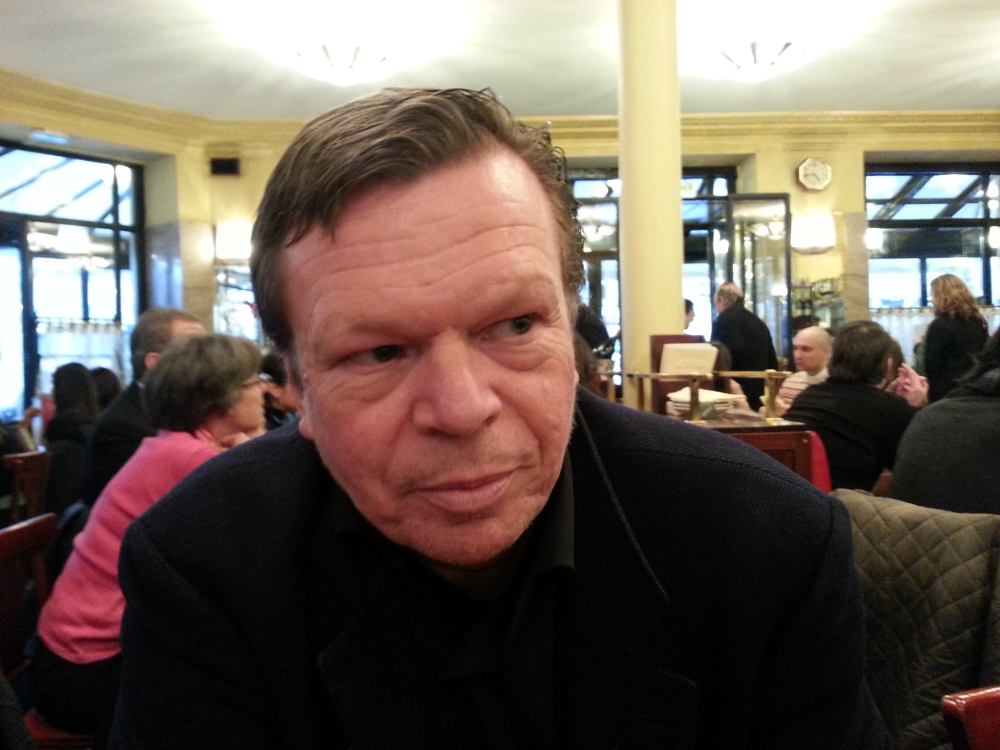
Peter is founder of the Heroine’s Journey and Hero’s Journey project where worldwide thousands of professionals shared their story of making money doing what you love. He wrote 50+ books. Peter has an MBA in Marketing, MBA in Financial Economics and graduated at university in Sociology and Communication Sciences.
INTRODUCTION
A System for the Management of Meaning
Brands are as much a part of our daily lives as our workplaces and neighborhood landmarks.
Big, enduring brands become icons – not just of corporations, but of whole cultures.
Today the brand is a repository, not merely of functional characteristics but of meaning and value. But if we are to identify and effectively leverage the essential elements, or ‘immutables’ of our bbrands, we must become fluent in the visual and verbal language of archetypes.

The creaters of great brands have intuited this simple truth. For example, superstars in the film and entertainment industry, and the agents who manage them, understand that their continued popularity does not hinge simply on the quality of sucess of the films they make or the visibility they attain. Rather, it depends on creating, nourishing, and continuously reinterpreting a unique and compelling identity or ‘meaning’. Madonna changes her lifestyles and hairstyles, but she is always the outrageous Rebel. Hugh Grant imbues every role he plays with the spirit of the wide-eyed Dreamer.
These identities are not only consistent – they are compelling. Love ’em or ‘hate ’em, you can’t help but notice ’em. In fact, we can’t hellp but be mesmerized by who they are and what they implicitly stand for. In her life and in her death, Diana Spencer held sway over the world. The power of her tale may remind you of the magnetic appeal of the Cinderella story – the beautiful, but vulnerable girl who gets the prince, but must live under the ever-watchful eye of the witholding stepmother. Even iin the aftermath of her divorce, Diana’s story evolves in Romeo-and-Juliet style: She breaks social convention to find love and meets with an untimely death.

The case of Princess Di also shows how compelling people find the evolution of an archetypal story. What happens if the girl marries Prince Charming, but does not live happily ever after? She divorces, adjusts, and becomes a great lover of humanity, motivating humankind to show its love for her.
Even though Diana’s life story has many chapters, styles and reifications, it always dances around the archetypal theme of the princess lover. Absent this essential archetypal unity, she would not have captured our attention so profoundly.
News stories that really grip public attention always have an archetypal quality. When the next big story breaks we’ll all be caught again. Because each story that so mysteriously grabs us is some version of ‘Once upon a time” – a mythic tale acted out in real life. Similarly films that are box office hits always have archetypal structures. Academy Award winners for ‘Best Motion Picture’ as Braveheart, The English Patient, Titanic and Shakespeare in Love all exemplify classic archetypal stories. Sometimes the writer, director, and producer simply intuit the archetype. Sometimes they are guided by a conscious system.

Products grab – and keep our attention for the same reason: They embody an archetype. For example, throughout the ages, cleansing rituals have signified more than physical cleanliness: They also symbolize the removal of sin or shame, bestowing rectification and worthiness upon the person who has performed the ritual. The ‘English Soap Company’ has drawn from this well. The English Soap company is not just about getting clean: it is about renewal, purity and innocence. Their communication is deeply symbolic and constant. It succeeds because its brand meaning is consistent with the deep essence of cleansing.
Brands that capture the essential meaning of their category – and comunicate that message in subtle and refined ways – dominate the market.
 The Hero's Journey