“Your story is your life,” says Peter. As human beings, we continually tell ourselves stories — of success or failure; of power or victimhood; stories that endure for an hour, or a day, or an entire lifetime. We have stories about ourselves, our creative business, our customers ; about what we want and what we’re capable of achieving. Yet, while our stories profoundly affect how others see us and we see ourselves, too few of us even recognize that we’re telling stories, or what they are, or that we can change them — and, in turn, transform our very destinies.
Telling ourselves stories provides structure and direction as we navigate life’s challenges and opportunities, and helps us interpret our goals and skills. Stories make sense of chaos; they organize our many divergent experiences into a coherent thread; they shape our entire reality. And far too many of our stories, says Peter, are dysfunctional, in need of serious editing. First, he asks you to answer the question, “In which areas of my life is it clear that I cannot achieve my goals with the story I’ve got?” He then shows you how to create new, reality-based stories that inspire you to action, and take you where you want to go both in your work and personal life.
Our capacity to tell stories is one of our profoundest gifts. Peter’s approach to creating deeply engaging stories will give you the tools to wield the power of storytelling and forever change your business and personal life.
Join Peter for a truly transformational vacation for the mind.
Practical Info
Tour Details:
- Duration: 1 day
- Start Time: 09:30 AM
- End Time: 5:00 PM
- Cost: € 995 per person excluding VAT (there are special prices for two or more persons)
You can book this tour by sending Peter an email with details at peterdekuster@hotmail.nl
TIMETABLE
09.40 Tea & Coffee on arrival
10.00 Morning Session
13.00 Lunch Break
14.00 Afternoon Session
17.00 Drinks
What Can I Expect?
Here’s an outline of The Hero’s Journey in French Cinema in Paris
Journey Outline
OLD STORIES
- The Power of your Story
- Your Story is Your Life, Your Life is Your Story
- What is Your Story?
- Your Hero’s Journey
- Is It Really Your Story You Are Living?
- Old Stories (stories about you, your art, your clients, your money, your self promotion, your happiness, your health)
- Tell your current Story
YOUR NEW STORY
- The Premise of your Story. The Purpose of your Life and Art
- The words on your tombstone
- You ultimate mission, out loud
- The Seven Great Plots
- The Twelve Archetypal Heroes
- The One Great Story
- Purpose is Never Forgettable
- Questioning the Premise
- Lining up
- Flawed Alignment, Tragic Ending
- The Three Rules in Storytelling
- Write Your New Story
TURNING STORY INTO ACTION
- Turning your story into action
- Story Ritualizing
- The Storyteller and the art of story
- The Power of Your Story
- Storyboarding your creative process
- They Created and Lived Happily Ever After.
About Peter de Kuster
Peter de Kuster is the founder of The Heroine’s Journey & Hero’s Journey project, a storyteller who helps creative professionals to create careers and lives based on whatever story is most integral to their lives and careers (values, traits, skills and experiences). Peter’s approach combines in-depth storytelling and marketing expertise, and for over 20 years clients have found it effective with a wide range of creative business issues.

Peter is writer of the series The Heroine’s Journey and Hero’s Journey books, he has an MBA in Marketing, MBA in Financial Economics.
The Power of Your Story
What do I mean with ‘story’? I don’t intend to offer tips on how to fine-tine the mechanics of telling stories to enhance the desired effect on listeners.
I wish to examine the most compelling story about storytelling – namely, how we tell stories about ourselves to ourselves. Indeed, the idea of ‘one’s own story’ is so powerful, so native, that I hardly consider it a metaphor, as if it is some new lens through which to look at life. Your story is your life. Your life is your story.
When stories we watch touch us, they do so because they fundamentally remind us of what is most true or possible in life – even when it is a escapist romantic story or fairy tale or myth. If you are human, then you tell yourself stories – positive ones and negative, consciously and, far more than not, subconsciously. Stories that span a single episode, or a year, or a semester, or a weekend, or a relationship, or a season, or an entire tenure on this planet.
The 400 Blows
François Truffaut’s The 400 Blows is a landmark of French cinema that beautifully illustrates the philosophical idea that our lives are the stories we tell ourselves, consciously and unconsciously—a theme that echoes in the text provided.
The film centers on Antoine Doinel, a Parisian adolescent navigating a world defined by unstable family relations, punitive educators, and the looming judgment of society. His experiences are episodic rather than strictly linear, presenting life as a sequence of moments—some apparently random, some deeply formative—that together demand narrative interpretation both from Antoine and the audience. Through his journey, the film reflects the fundamental drive to impose meaning on chaos: Antoine’s actions, whether mischievous or desperate, are attempts to craft a sense of identity and agency amid neglect and misunderstanding.
A crucial example occurs when Antoine, caught skipping school, concocts an elaborate lie that his mother has died—an impulsive story that snowballs and dictates his fate for much of the film. Here, storytelling becomes a survival tool and a means of self-definition: Antoine’s narrative, whether accurate or not, exerts real power over his present and future. In showing us his lies, hopes, and disappointments, Truffaut reveals that these “tales we create and tell ourselves and others… form the only reality we will ever know in this life,” as the quoted text suggests. Whether comforting or damaging, the stories Antoine tells (and believes) guide his choices and shape his destiny.
The 400 Blows is masterful in that it doesn’t offer a tidy, resolved story—it “starts where you arrive” and invites the viewer into Antoine’s world without insisting on artificial structure. The film’s celebrated final sequence, with Antoine escaping to the sea and turning to face the camera, is a powerful, open-ended image: a boy still editing the story of who he is and what his life means. This ambiguity reflects the relentless, unfinished process by which we construct and reconstruct our own narratives throughout our lives.
Truffaut’s compassionate realism, his refusal to moralize or sentimentalize Antoine’s fate, allows for a richly layered meditation on the power—and risk—of self-authored stories. By depicting a character whose “destiny follows his story,” The 400 Blows asks viewers to consider not only the stories we inhabit, but the responsibility we have to revise and “get our stories right” in order to seek hope, agency, and growth.
In summary, The 400 Blows stands as one of the most compelling cinematic explorations of the idea that “your life is your story, and your story is your life,” embodying the creative, often chaotic, but always essential act of making meaning from our experiences.
Stories to Navigate Our Way Through Life
Telling ourselves stories helps us navigate our way through life because they provide structure and direction. We are actually wired to tell stories. The human brain has evolved into a narrative-creating machine that takes whatever it encounters, no matter how apparently random and imposes on it ‘chronology and cause – and – effect logic’. We automatically and often unconsciously, look for an explanation of why things happen to us and ‘stuff just happens’ is no explanation.
Stories impose meaning on the chaos; they organize and give context to our sensory experiences, which otherwise might seem like no more than a fairly colorless sequence of facts. Facts are meaningless until you create a story arond them.
A great French movie that illustrates the concept of “Stories to Navigate Our Way Through Life” is Jean-Pierre Jeunet’s “Le Fabuleux Destin d’Amélie Poulain” (2001), commonly known simply as “Amélie.”
This film beautifully captures how humans are wired to create stories to give structure and meaning to life. Amélie, a shy and imaginative young woman living in Paris, crafts a whimsical narrative around her own life and the lives of those around her, using her stories to navigate loneliness, connection, and personal transformation.
The film’s narrative revolves around Amélie’s decision to intervene in the lives of strangers in small but profound ways, imagining the stories behind their actions and circumstances. She creates meaning and direction out of everyday facts—an unseen photograph, a lost treasure box, a lonely waiter—and her stories drive her to actions that bring joy and new connections. The way Amélie connects disparate events into a meaningful whole perfectly exemplifies how our brains impose chronology, cause, and effect logic on seemingly random experiences.
Moreover, “Amélie”’s visual style and narrative voiceover underscore how stories transform sensory experiences from mere facts into emotionally rich journeys. The iconic scenes of Montmartre, the quirky soundtrack, and surreal touches help frame Amélie’s internal and external worlds, making us feel how stories give context and coherence to human experience.
In short, “Amélie” is an exemplary French film that illustrates how storytelling is fundamental to making sense of life, structuring our reality, and inspiring hope-filled navigation toward connection and happiness. It embodies the idea that facts alone lack meaning until woven into the stories we tell ourselves and others
What Do I Mean with Story?
By ‘story’ I mean those tales we create and tell ourselves and others, and which form the only reality we will ever know in this life. Our stories may or may not conform to the real world. They may or may not inspire us to take hope – filled action to better our lives. They may or may not take us where we ultimately want to go. But since our destiny follows our stories, it is imperative that we do everything in our power to get our stories right.
For most of us, that means some serious editing.
Jean Cocteau’s Orphée
The 1950 French film “Orphée,” directed by Jean Cocteau, is an exemplary illustration for the concept of story as the tales we create, which shape our reality, destiny, and perception of life. The film intricately weaves myth with reality and symbolically explores how the narratives we live by profoundly influence our existence and creative expression.
At its core, “Orphée” retells the ancient Greek myth of Orpheus, a poet who journeys into the underworld to rescue his deceased wife, Eurydice, with the condition that he must never look upon her face if he wishes to bring her back to life. Cocteau adapts this myth into a modern Parisian setting, blending reality with the supernatural to create a liminal “zone”—a mythical, shadowy realm constructed from memories and ruins that acts as a metaphor for the poet’s internal creative and existential journey. This “zone” is an artistic space where reality, memory, death, and creativity intersect, embodying the idea that our stories are neither strictly real nor entirely fantastical but a hybrid of both, shaping the only reality we inhabit.
Cocteau himself described the film’s key themes as the successive deaths a poet undergoes before achieving immortality, the concept of immortality through sacrifice, and the symbolic power of mirrors as gateways between life and death, reality and unreality. Mirrors in the film serve as portals to this suspended state where death wanders the streets of Paris, and the afterlife takes on a very this-worldly character through ritual interrogations and negotiations. This evokes the idea that our stories—like reflections—show fragments of ourselves changed over time, and confronting these narratives is essential for transformation or redemption.
The story of Orphée in the film is not just a myth retelling but an allegory for the creative process and the necessity of editing our lives and stories to find meaning and hope. Orphée’s journey is fraught with personal flaws and mistakes; his interactions with other characters—like the mysterious Princess who symbolizes death and sacrifice—underscore the difficulty in getting our stories “right.” The Princess sacrifices herself, erasing even her memory to permit Orphée’s immortality as a poet, symbolizing the painful yet necessary sacrifices in the creative and existential process to transcend ordinary life and rewrite our destinies.
The film also explores the tension between artistic inspiration and domestic realities. Orphée struggles with his role as a poet and his personal life, including his relationship with Eurydice and the impending birth of their child. This dynamic illustrates how our life stories are continuously edited, shaped by choices, challenges, and sacrifices that often require balancing hope-filled action with acceptance of reality. Cocteau’s film suggests that destiny—our ultimate path—is not fixed but closely follows the stories we craft, revise, and live by, highlighting the imperative of actively shaping these stories to align with our deeper aspirations and truths.
Orphée’s tragic flaw—looking back on Eurydice—results in her disappearance and his own eventual death, leading him back to the underworld where love, sacrifice, and rebirth occur once more, emphasising the notion that stories are cyclical and require constant renewal. The film’s final resurrection and erasure of memory metaphorically propose that to live meaningfully, we must sometimes forget past failures and rewrite our narratives anew, reinforcing the idea that serious editing is vital in crafting the stories that will ultimately determine our destiny.
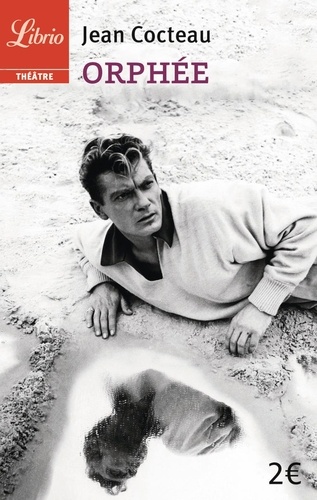
In summary, Jean Cocteau’s “Orphée” is a profound cinematic exploration of how the stories we tell ourselves and others shape the only reality we will ever know. It eloquently captures the idea that while our stories may not completely conform to the external world, they direct our destiny. The film’s fusion of myth, poetic imagery, and existential themes serves as a cinematic metaphor for how humans must continually edit and refine their inner narratives to find immortality in the artistic, spiritual, or personal sense. “Orphée” teaches us that understanding and owning our stories, with all their flaws and sacrifices, is imperative to live authentically and with hope for a meaningful life and destiny.
 The Hero's Journey