Your story about yourself and business―how it resonates in the public heart and mind―is your most valuable competitive advantage. Yet, few professionals really know how brand meaning works, how to manage it, and how to use brand meaning strategically.
Created by the founder of The Hero’s Journey, Peter de Kuster this groundbreaking seminar provides the illusive and compelling answer. Peter shows that the most successful brands are those that most effectively correspond to fundamental patterns in the unconscious mind known as archetypes.
The seminar provides tools and strategies to:
• Implement a proven system for identifying the most appropriate and leverageable archetypes for any company and/or brand
• Harness the power of the archetype to align corporate strategy to sustain competitive advantage
Join us for a truly transformational vacation for the mind.
Practical Info
The price of this one day storytelling seminar in Paris is Euro 995 excluding VAT per person
When you come with three or more people there are special prices
You can reach Peter for questions about dates and the program by mailing him at peterdekuster2023@gmail.com
TIMETABLE
09.40 Tea & Coffee on arrival
10.00 Morning Session
13.00 Lunch Break
14.00 Afternoon Session
18.00 Drinks
Read on for a detailed breakdown of The Hero’s Journey: ‘What is Our Brand Story?’ itinerary.
What Can I Expect?
Here’s an outline of The Hero’s Journey: What is Your Brand Story? journey.
Journey Outline
PART I STORIES: A SYSTEM FOR THE MANAGEMENT OF MEANING
- The First System – Ever – for the Management of Meaning
- Archetypes: The Heartbeat of Powerful Brands
- Postmodern Marketing
PART II THE YEARNING FOR PARADISE: DREAMER, DISCOVERER, SAGE
- The Dreamer
- The Discoverer
- The Sage
PART III LEAVING A THUMBPRINT ON THE WORLD: HERO, OUTLAW, MAGICIAN
- The Heroine
- The Outlaw
- The Magician
PART IV NO WOMAN IS AN ISLAND: REGULAR GAL, LOVER, PLAYER
- The Regular Gal
- The Lover
- The Player
PART V PROVIDING STRUCTURE TO THE WORLD: CAREGIVER, CREATOR, MASTER
- The Caregiver
- The Creator
- The Master
PART VI FINDING TRUE NORTH: POSITIONING YOUR ARCHETYPAL BRAND
- Authenticity: Uncovering the Archetypal Meaning of your Brand
- Telling your Brand Story
- The Heroine’s Journey example story
PART VII DEEPER WATERS
- May the Force Be With You: Capturing Category Essence
- Story Inside, Story Outside Congruence
- Leaving a Legacy. Ethics of Storytelling
About Peter de Kuster
Peter de Kuster is the founder of The Heroine’ s Journey & The Hero’s Journey
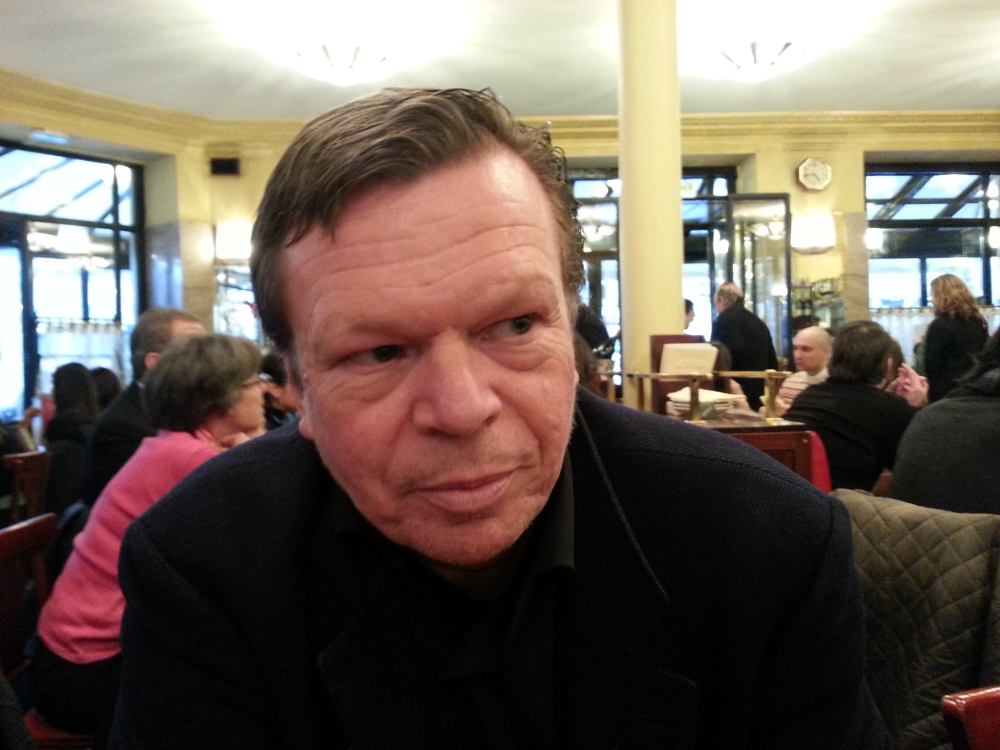
Peter is founder of the Heroine’s Journey and Hero’s Journey project where worldwide thousands of professionals shared their story of making money doing what you love. He wrote 50+ books. Peter has an MBA in Marketing, MBA in Financial Economics and graduated at university in Sociology and Communication Sciences.
Introduction: A System for the Management of Meaning
Brands are as much a part of our daily lives as our workplaces and neighborhood landmarks.
BIg, enduring brands become icons – not just of corporations, but of whole cultures. Coca-Cola not only has the most recognized logo in the world, but the logo has become a symbol of the Western way of life.
Today the brand is a repository, not merely of functional characteristics, but of meaning and value. But if we are to identify and effectively leverage the essential elements or ‘immutables’ of our brands, we must become fluent in the visual and verbal language of archetypes.
The creators of great brands have intuited this simple truth. For example, superstars in the film and entertainment industry and the agents who manage them, understand that their continued popularity does not hinge simply on the quality or success of the films they make or the visibility they attain. Rather ,it depends on creating, nourishing and continuously reintepreting a unique and compelling identity or ‘meaning’. Lady Gaga and Madonna change their lifestyles and hairstyles but they are always the outrageous Rebel. Offscreen and on, Jack Nicholson is the bad-boy Outlaw. Tom Hanks imbues in every role he plays with the spirit of the wide-eyed Innocent or Dreamer. Robin Williams is everytime the Jester. These identities are not only consistent – they are compelling. love them or hate them, you can’t help but notice them. In fact, we can’t help but he mesmerized by who they are and what they implicityly stand for.
News stories that really grip public attention always have an archetypal quality; when the next big story breaks, we’ll be caught again because each story that so mysteriously grabs us is some version of ‘Once upon a time….’ a mythic tale acted out in real life. Similarly films that are box office hits almost always have archetypal structures. For example six Academy Award winners for ‘Best Motion Picture” all exemplify classic archetypal stories: Forrest Gump (1994) the power of the Wise Fool; Braveheart (1995), the triumphant Warrior, The English Patient (1996) and Titanic (1997), the transformative Lover, Shakespeare in Love (1998) , the Creator (writer) transmuting the suffering of lost love into ennobling art, and finally American Beauty (1999), the Regular Guy as mystic (a midlife crisis in which the dark night of the soul leads to the experience of mystic enlightement – and sadly in this case, death).
What is an archetype?
Forms or images of a collective nature which occur practically all over the earth as constituents of myths and at the same time as individual products of unconscious origin – C.G. Jung, Psychology and Religion
The concept of archetypes was borrowed by Jung from classic sources, including Cicero, Pliny and Augustine. Adolf Bastian called them “Elementary Ideas’. In Sanskrit, they were called ‘subjectively known forms’ and in Australia, they were known as the ‘Eternal Ones of the Dream’ – Joseph Campbell, The Hero with a Thousand Faces
Jung to some extent took the opposite approach to that of the behaviorists, that is, he did not observe people from the outside, did not ask how we behave, how we greet one another, how we mate, how we take care of our uoung. Instead, he studied what we feel and what we fantasize while we are doing those things. For Jung, archetypes are not only elementary ideas, but just as much elementary feelings, elementary fantasies, elementary visions. – Marie – Louise Von Franz, Psyche and Matter
Sometimes the writer, director, and producer simply intuit the archetype. Sometimes they are guided by a conscious system. The Star Wars series – as well as spin-off action figures and other products – holds endless appeal. In making these films, George Lucas has been guided by Joseph Campbell’s The Hero with a Thousand Faces, which outlines all the rich and evocative stages of the Hero’s Journey,. The popularity of each episode is derived in large part from the way Lucas consciously crafts the entire series to convey archetypal characters and mythic plots.
Products grab – and keep – our attention for the same reason. They embody an archetype. For example, throughout the ages, cleansing rituals have signified more than physical cleanliness. They also symbolize the removal of sin or shame, bestowing rectification and worthiness upon the person who has performed the ritual. Brands that capture the essential meaning of their category – and communicate that message in subtle and refined ways – dominate the market. But only if and when their story is authentic
PART I THE FIRST SYSTEM FOR THE MANAGEMENT OF MEANING
Advertising always has used archetypal imagery to market products. The judicious use of such symbolism can fuel a leading brand. Brand icons go further. It is not just that archetypal symbols and images are used to position the brand, but over time, the brand itself takes on symbolic significance. To comprehend the power of this phenomenon we must understand the nature of symbols. Some symbols have the deepest religious or spiritual meaning. For example, within Christianity, Baptism is the ritual of purification, while Communion provides a ritual for the acceptance of divine grace. It would, of course, be sacrilegious to exploit any faith’s particular symbolism in order to sell products. Yet both sacred and secular symbols of renewal exist on a continuum unified by an archetype. While the conscious power of a religious symbol is inordinately greater, the unconscious power of an archetype, even in an entirely secular context, is immense.
Meaning as a Brand Asset
Understanding and leveraging archetypal meaning, once an interesting ‘bonus’ to effective marketing, is now a prerequisite. Why?
There was a time when successfully creating, building and marketing brands required neither endless inspiration nor endless capital. Demand exceeded supply, and markets were uncluttered. In the main, products were physically different from each other and brands were built on those differences.
Such was the case, for ages and ages in the marketing, or selling world. But once competition reached a certain threshold, every business encountered a new challenge. No matter how effective the company’s manufacturing and distribution systems, or how state of the art its processes, its competitors could imitate or duplicate them. In this circumstance, businesses found that they had only two broad strategic routes to go: reduce their prices or imbue their products with meaning.
Clearly; the creation and management of meaning was the more desirable option.
Ironically though, as critical as meaning has become, no system has been developed until now for understanding or managing the meaning of brands – be they products, services, companies or causes. We have had manifacturing systems for producing products, message development systems for creating candidates platforms, and business systems for marketing goods, but no system for managing what had become a brand’s most leverageable asset.
Why not? Partly because the need to manage meaning was a relatively new phenomenon. If you were the only soft drink in town you could market your product on the basis of its features and benefits. And if you were the only dry cleaner in the neighborhood, you could market your store on the merits of its convenience, environmentally sound packaging, and effective cleaning.
However, in increasingly crowded and highly competitive categories, the cases in which brand differentiation could be based on discernible product differences became rare or nonexistent. And even if a corporation was successful in creating a legitimate product-based point of difference, it was quickly imitated and duplicated by competitors.
As early as in 1983, Paul Hawken identified a profound change in the relative importance of product ‘mass’ versus product ‘meaning’ that required a corresponding shift in business models. Soon after the investment market made a comparable discovery, whereupon whole corporations were acquired simply to obtain their powerhouse brands – even though other brands offered virtually identical products. Something new was happening. Capitals were spent to purchase certain brands because they possessed a trait or property that was not fully understood and that caught the purchasers totally off guard.
The truth was that these brands had become phenomenally valuable not only because of their innovative features or benefits, but also because these properties had been translated into powerful meanings. They were worth millions because they had gained a kind of meaning that was universal, larger than life, iconic.
Whether the new managers understood it consciously or not, they had become the stewards of archetypal brands. The meanings these brands hold are like primal assets that must be managed as carefully as financial investments. And most companies have not been prepared to do so, because, quite simply, no system was available to guide them.
Levi’s once a strong and clear Explorer brand, drifted from Outlaw to Warrior, back to Explorer then to Regular Guy or Gal, then to Jester – and sometimes presented a patchwork quilt of archetypal identities all at once, reflective of the confused management of both the parent and the subbrands. The company’s market share declined accordingly.
Nike, one of the great Warrior brands of all times, cbecame clichéd and self-conscious in that role and publicly demonstrated a loss of confidence, changing advertising agencies and brand managers – when the real solution was to tap more deeply and surely into the Hero’s Journey, a never-ending soure of inspiraton for each of the twelve archetypes.